
Mindful Breathing Exercises: Simple Steps for Beginners


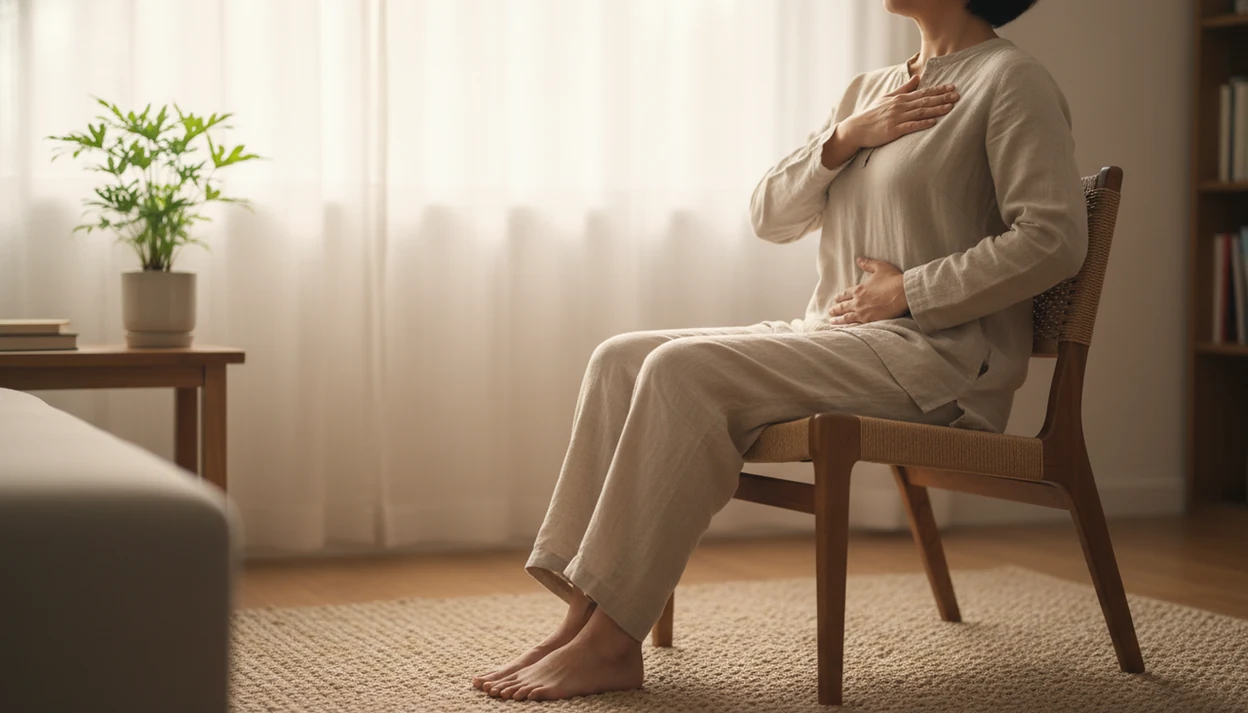
Mindful breathing exercises are short practices that use the inhale and exhale as an anchor for attention, calm, and present-moment awareness. Start with one to five minutes of natural breath noticing, counting, belly breathing, a slightly longer exhale, or comfortable paced breathing. You do not need to empty your mind. The practice is to notice breathing in real time and gently return to it whenever attention wanders.
A breathing break can fit between everyday tasks, not just into a formal meditation session. Begin by feeling the breath as it is rather than forcing it deeper. If focusing on breathing feels uncomfortable, keep your eyes open, shorten the practice, or switch to sounds, the contact of your feet with the floor, or touch.
At a glance
- Use mindful breathing as a short daily reset, not only as a formal meditation session.
- The easiest beginner options are natural breath awareness, counted breathing, long-exhale breathing, belly breathing, and paced breathing.
- If breath focus feels uncomfortable, keep your eyes open, shorten the practice, or anchor attention to sounds, feet, or touch instead.
Compare breathing exercises by time, purpose, and comfort
| exercise | time | best for | not for | beginner script cue |
|---|---|---|---|---|
| Natural breath awareness | 1-5 min | first practice | intense agitation | “Feel one inhale, then one exhale.” |
| Counting breaths | 1-3 min | racing thoughts | number perfectionism | “Count one full breath, then begin again.” |
| Long-exhale breathing | 1-5 min | downshifting | breath-holding discomfort | “Let the exhale last a little longer.” |
| Belly breathing | 2-5 min | body awareness | some pregnancy or respiratory concerns | “Feel the belly soften outward.” |
| Paced breathing | 1-5 min | structure | pressure from fixed counts | “Inhale four, exhale four.” |
| 4-7-8 breathing | 1-4 rounds | bedtime wind-down | dizziness or strain | “Stop if the hold feels too much.” |
| Walking breath | 2-10 min | restless bodies | unsafe walking areas | “Match steps to breathing.” |
These are informal breath exercises for mindfulness, not a requirement to sit through a full formal meditation. Three quiet minutes beside the refrigerator hum, with a warm coffee mug in your palms, can be enough.
Suggested image caption: Beginner mindful breathing exercises can be practiced sitting in a chair, standing, walking, or pausing between daily tasks.
Mindful breathing means noticing and returning
Mindful breathing exercises are brief attention practices that use the breath as a steady place to notice, return, and begin again. You are not trying to force deep breathing, perform calm, or empty the mind; you are learning to feel the breath as it is and coach your attention back when it drifts.
That wandering will happen. A budget number, the dog leash by the door, or the coffee aroma in the next room may pull attention away.
Formal breath awareness meditation usually asks you to sit for a set period and stay with the breath as the main object. Informal breathing mindfulness is shorter and more flexible. You can use it at a desk, in a parked car before driving, in the kitchen, while standing in line, or before sleep. If you want a wider set of everyday options, our guide to mindfulness exercises covers non-breath anchors too.
How Mindful Breathing Exercises Work in the Body
Mindful breathing works by giving attention a concrete present-moment object, then pairing that attention with a slower body rhythm. In plain terms, the breath becomes one simple task for the mind.
- The breath acts as an attention anchor because it is always happening and easy to feel.
- Slow breathing can influence the autonomic nervous system, the body system that shifts between alertness and settling. A 2017 review of slow-breathing techniques links slower breathing with autonomic and emotional-regulation changes Full.
- Longer exhalations may support a relaxation response, especially when they are gentle rather than forced.
- Breath focus may reduce stress reactivity by interrupting rumination and giving attention one job.
- A 2018 meta-analysis found small to moderate stress reductions in mindfulness-based interventions, many of which include breath-focused practice NIH research.
The NHS also recommends at least five minutes of slow, deep breathing as a self-help practice for stress and anxiety Breathing Exercises For Stress. Clinicians typically frame breathing practice as supportive self-care, not a replacement for assessment or treatment.
Observing your breath and changing it are different practices
Natural breath awareness asks you to feel breathing without changing its depth or speed. Paced breathing and longer-exhale exercises add a second task: deliberately adjusting the rhythm. These practices have different aims, so a finding about one method should not be treated as evidence for every breathing exercise. Choose natural observation when you want to practice returning attention without managing a breathing pattern.
A 2023 randomized study comparing breathwork with mindfulness meditation assigned five minutes of daily practice for one month. Breathwork, particularly exhale-focused cyclic sighing, produced greater improvements in mood and reductions in respiratory rate. That result does not establish superiority for sustained attention or rumination. Nor does it mean beginners should force an exhale: breath control can increase discomfort, dizziness, or panic sensations for some people.
How to Use Simple Breathing Exercises During the Day
Use simple breathing exercises by choosing one ordinary moment, setting a short timer, and returning to the breath each time attention drifts. One to five minutes is a good beginner range.
- Choose a place where you can pause safely, such as a kitchen chair, bus seat, or office stairwell.
- Set a timer for 1 to 5 minutes, or choose five natural breaths if time is tight.
- Notice where breathing is easiest to feel, such as the nose, chest, belly, or fingertips moving with the inhale.
- Return to that spot each time the mind wanders; returning is the practice, not a mistake.
- Resume your day slowly, and stop or switch anchors if breath focus increases discomfort.
One simple way to try it is during budget planning. Pause with both hands resting easily, notice three natural breaths, let your calves soften if they want to, then continue with the next line item.
Choose a first exercise: natural breath, counting, or pacing
The most useful beginner mindful breathing exercises are the ones that feel simple enough to repeat when life is not quiet. Pick one method for a week before comparing too many options.
Natural Breath Awareness
Natural Breath Awareness is best for first practice because it asks you to notice breathing without changing it. It is not ideal for intense agitation if stillness feels hard, so walking or sound awareness may fit better.
Counting Breaths
Counting Breaths is best for racing thoughts because the numbers give the mind a light structure. It is not for perfectionism around numbers; if you lose count, start again at one.
Long-Exhale Breathing
Long-Exhale Breathing is best for downshifting after a busy moment. It is not for people who feel discomfort with breath holds or strain, so keep the exhale easy.
Belly Breathing
Belly Breathing is best for body awareness because it connects attention with movement. During pregnancy or with respiratory concerns, modify it or ask a clinician.
Paced Breathing
Paced Breathing is best for people who like structure. It is not ideal if fixed counts feel like pressure. For more variations, compare mindfulness exercises and techniques.
Short breathing cues for emails, meetings, and bedtime
What should I say to myself during mindful breathing? Use short, plain cues: feel, inhale, exhale, count, return.
Before a Difficult Email
Take 60 seconds before you respond to a message or finish a sentence. Before replying, breathe in naturally, let the exhale be unhurried, count three complete breaths, and then choose your next words with a little more space. Parents can practice parent and child breathing exercises together before responding to tense moments at home.
Between Meetings
Try two minutes before the next calendar alert. Let the conference room chair creak softly if it does. Feel the inhale, exhale for one extra beat, count to five breaths, and return when planning starts. For younger learners, mindful breathing for teens offers short practices that can fit between classes and homework.
Before Sleep
For three minutes, lie down and feel tight calves against the mattress. Inhale gently, exhale without pushing, count each exhale up to ten, then return to one. For a gentler bedtime routine, try breathing for sleep with comfortable, unforced breaths.
While Walking
Walk at a normal pace. Feel two steps on the inhale, three steps on the exhale, count one cycle, and return to the feet when the mind runs ahead.
Try a three-minute practice that includes more than breathing
The Three-Minute Breathing Space used in mindfulness-based cognitive therapy has three parts: notice your current experience, gather attention around breathing, then widen awareness to the whole body. It offers a structured alternative to spending the entire break watching the breath. The protocol is part of a broader therapeutic program, not a stand-alone replacement for treatment.
For roughly the first minute, notice thoughts, feelings, and bodily sensations without trying to fix them. During the second, feel the sensations of inhaling and exhaling, returning when attention wanders. In the third, include your whole body in awareness. Standard MBCT materials assign this practice three times daily, plus a version used when unpleasant feelings arise; that schedule is a program instruction, not a requirement for every beginner.
Mindful Breathing Benefits and Evidence
Mindful breathing may support a stress reset, steadier attention, an emotional pause, and clearer body awareness. The evidence is promising, but much of it comes from broader programs that include breathing along with other practices.
- In the 2017 National Health Interview Survey, 14.2% of U.S. adults reported using meditation in the previous 12 months; use that as context for mainstream mindfulness use, not proof that mindful breathing alone works CDC guidance.
- A randomized trial of mindfulness-based stress reduction found a 58% reduction in self-reported anxiety symptoms; the program included mindful breathing and body awareness within a broader course JAMA study.
- A clinical trial of a breathing-based yoga program reported a 33% reduction in perceived stress, but that is not identical to every mindful breathing exercise.
- Regular short practice usually matters more than a single long session.
- Practical mindfulness practices and meditation techniques for beginners and daily life offer repeatable attention training, not instant calm or medical treatment.
Tools like Mindful.net’s Mindfulness Practices App, Calm, and Headspace can help people compare guided options, but the basic skill can start without an app.
One to five minutes is a starting point, not a proven minimum
A one-minute pause is a practical way to begin, but research has not established a universal minimum effective session. A 2019 systematic review of 85 brief mindfulness studies found that single-session practices typically lasted five to twenty minutes. Nearly half of studies measuring psychological outcomes reported significant improvements, especially in negative mood, anxiety, and rumination. These findings do not guarantee that any particular one-minute breathing exercise will produce the same effects.
Longer is not automatically better, either. A 2023 meta-analysis of 12 breathwork trials found a small-to-moderate reduction in self-reported stress but no significant relationship between estimated practice duration and effect size. Start with a duration you can repeat comfortably, linked to an existing routine. Increase it if you want more time to practice, rather than treating extra minutes as a promise of greater benefit.
Avoid forced breaths and treating distraction as failure
Most beginner mistakes come from trying to perform mindful breathing instead of practicing it. The breath is an anchor, not a test.
A common mistake is trying to empty the mind. Thoughts will show up, and noticing them is part of the exercise. Another mistake is forcing deep breaths when natural breathing would be kinder. If your shoulders lift and your jaw tightens, soften the effort.
Many people practice only when overwhelmed. Neutral moments matter too, such as waiting for a file to upload or standing near the sink after lunch. You also do not need to sit cross-legged. A chair is fine. So is standing.
Counts are supports, not strict performance goals. For tiny resets, 1 minute mindfulness exercises can be easier than a full meditation session.
Between tasks: give a breathing break a clear endpoint
Between tasks, a short breathing break can be easier to follow with a clear start and finish. Mindful.net's free breathing timer provides timing for a paced exercise, while the app offers breathing exercises and short guided meditations. For natural breath awareness, you can simply notice a few breaths without following a pace. When breath focus increases discomfort, grounding through sounds or contact with the floor is a better choice than continuing the exercise.
Mindful Breathing Limits
- Seek professional care when medical, mental health, medication, or crisis support is needed, rather than relying on mindful breathing.
- Panic, trauma histories, and respiratory conditions can make focusing on breathing uncomfortable.
- Some evidence comes from broader mindfulness programs, and benefits often depend on regular practice rather than occasional use.
- If breath attention feels overwhelming, mindfulness grounding exercises may feel safer and more concrete.
Mindful breathing questions
How do I start mindful breathing if I have never meditated?
Sit or stand somewhere you can pause safely. For one minute, notice where breathing is easiest to feel, such as the nose, chest, or belly. Let the breath stay natural. When a thought pulls attention away, notice that and return to the next inhale or exhale.
Should I breathe deeply during mindful breathing?
Not necessarily. Natural breath awareness means noticing ordinary breathing, not making each breath bigger. Lengthening the exhale or following a pace is a separate option. Avoid forcing depth or speed, especially if it creates strain, dizziness, or a feeling that you cannot get enough air.
How do I count breaths without losing track?
Count one complete inhale and exhale as one breath, then continue to five and begin again. If you lose track, return to one without trying to reconstruct the count. The numbers are a simple attention cue, not a score. Drop counting if getting it right becomes distracting.
Is one minute of mindful breathing enough?
One minute is a reasonable starting point for a breathing break, but it is not a scientifically proven minimum for benefits. Brief mindfulness studies commonly use five to twenty minutes. Begin with an amount you can repeat comfortably, and add time if you want a longer practice.
Why do I still have thoughts during breathing meditation?
Mindful breathing does not require an empty mind. Thoughts, plans, and distractions are expected. Noticing that attention has moved and bringing it back is the core exercise. A session can include many returns without producing immediate calm; that does not mean you have done it incorrectly.
What should I do if mindful breathing makes me anxious or dizzy?
Stop the breathing exercise rather than pushing through. Open your eyes and shift attention to external sounds, your feet, or contact with the chair. Dizziness, numbness, escalating panic, or feeling disconnected are reasons to stop and reorient. Panic, trauma histories, or respiratory and cardiovascular concerns may call for individualized clinical guidance.
Can mindful breathing help with stress or replace anxiety treatment?
Mindful breathing may help create a pause and reduce stress, but results vary by technique and person. Research on broader mindfulness programs cannot be applied directly to every short breathing exercise. Use it as self-support, not as a replacement for mental health treatment, medication, medical care, or crisis support.