
Mindfulness Exercises and Techniques: Choose a Practice That Fits Your Day


Mindfulness exercises and techniques are ways to practice present-moment attention, from breathing meditation and body scans to mindful walking, eating, and brief phone-based pauses. Mindfulness means paying attention on purpose, with curiosity, without judging or immediately trying to change what you notice. Choose a practice by your setting, available time, and comfort level rather than looking for one perfect method.
Formal practice sets aside time for meditation; informal practice brings the same attention into showering, commuting, chores, or work transitions. For beginners, a repeatable practice of 30 seconds to 10 minutes is a useful starting point. Feel your feet, notice a sound, or follow your breathing. When attention wanders, notice that and return.
At a glance
- Formal mindfulness practices include sitting meditation, body scans, mindful breathing, and structured walking meditation.
- Informal mindfulness activities bring the same attention skills into ordinary moments such as eating, showering, commuting, chores, and work transitions.
- Beginners usually do best with 30-second to 10-minute practices that are concrete, repeatable, and easy to attach to daily routines.
Choose a practice by time, setting, and difficulty

Mindfulness exercises and techniques fit different moments, so the useful question is not “Which one is best?” but “Which one can I actually repeat today?” A phone timer set for 5 minutes on a kitchen chair often beats an ambitious plan that never happens.
| Practice type | Formal or informal | Typical duration | Best setting | Beginner fit |
|---|---|---|---|---|
| Mindful breathing | Formal or micro-practice | 30 seconds to 10 minutes | Chair, bed, office stairwell | Easiest |
| Body scan | Formal | 5 to 30 minutes | Bed, floor, quiet room | Moderate |
| Sitting meditation | Formal | 5 to 30 minutes | Cushion, chair, bus seat | More structured |
| Mindful walking | Formal or informal | 2 to 20 minutes | Hallway, sidewalk, park | Moderate |
| Mindful eating | Informal | 1 bite to full meal | Table, lunch break | Easiest |
| Sensory grounding | Micro-practice | 30 seconds to 5 minutes | Anywhere | Easiest |
| Chores | Informal | 2 to 15 minutes | Home | Moderate |
| App-based micro-practices | Guided micro-practice | 1 to 5 minutes | Phone, headphones | Easiest |
No category wins everywhere. Fit depends on the setting, your energy, and whether the practice is simple enough to repeat when the day gets messy.
Train attention by noticing distraction and returning
Mindfulness works by training attention through a simple loop: choose an anchor, notice distraction, recognize that the mind wandered, and return. That returning is the practice, not a sign that you did it wrong.
The anchor can be breath, body pressure, sound, movement, or an ordinary activity. Shoulder blades pressing the chair can be enough. So can the sound of traffic through a window, the feeling of feet on tile, or the first bite of lunch.
Wandering thoughts are part of attention practice. The mind may jump to a grocery list, a tense message, or tomorrow’s meeting. You notice and return, again and again. With mindful noting practice, briefly label a thought as planning or remembering, then return to your chosen anchor.
Research is cautious but useful here. Regular mindfulness programs show small to moderate or moderate benefits for stress, anxiety symptoms, depression symptoms, pain, and well-being. The most reliable benefits usually come from repeated practice over weeks, not from one heroic session.
For beginners, mindfulness practice offers repeated chances to train attention and pause during the day, not instant calm or a cure for distress.
Focused attention and open awareness: two different instructions
Focused attention gives you one object to return to, such as breathing, sound, or bodily sensation. Open monitoring, also called open awareness, asks you to notice changing thoughts, feelings, sensations, and sounds without making one object the sole focus. A 2022 meta-analysis of these two approaches found improvements in attentional capability with both, although results varied by task and study quality.
For a beginner, one clear object can make the instruction easier to follow: notice the breath, recognize distraction, then return. A randomized comparison within mindfulness-based cognitive therapy suggested greater benefit from focused-attention training than open-monitoring training. That supports starting with a concrete anchor, but it does not establish that focused attention is better for every person or purpose. Open awareness is an option, not a required next level.
Start with one anchor and a short practice
Use mindfulness exercises by making the practice small, concrete, and easy to repeat. You are not trying to force calm; you are practicing the loop of noticing and returning.
- Choose one anchor that fits the moment: breath, body sensation, sound, movement, or a daily activity such as washing a cup or opening a door. You can also try a short visualization practice, picturing one simple object and noticing its imagined details.
- Set a short duration you can repeat without bargaining with yourself. Thirty seconds, 2 minutes, or 5 minutes is enough when it is realistic.
- Notice wandering attention as soon as you can. A thought about dinner, a tight chest, or the urge to check your phone is not failure; it is the moment practice becomes visible.
- Return gently to the anchor and continue. Use a plain phrase like “back to breathing” or “feet on floor” if that helps.
- Adjust the technique for the setting, your energy, and comfort. Keep eyes open at work, use sound if breath feels tense, or choose walking when sitting still feels like too much.
Start with the version you will actually do again tomorrow.
Formal and informal mindfulness techniques for daily life
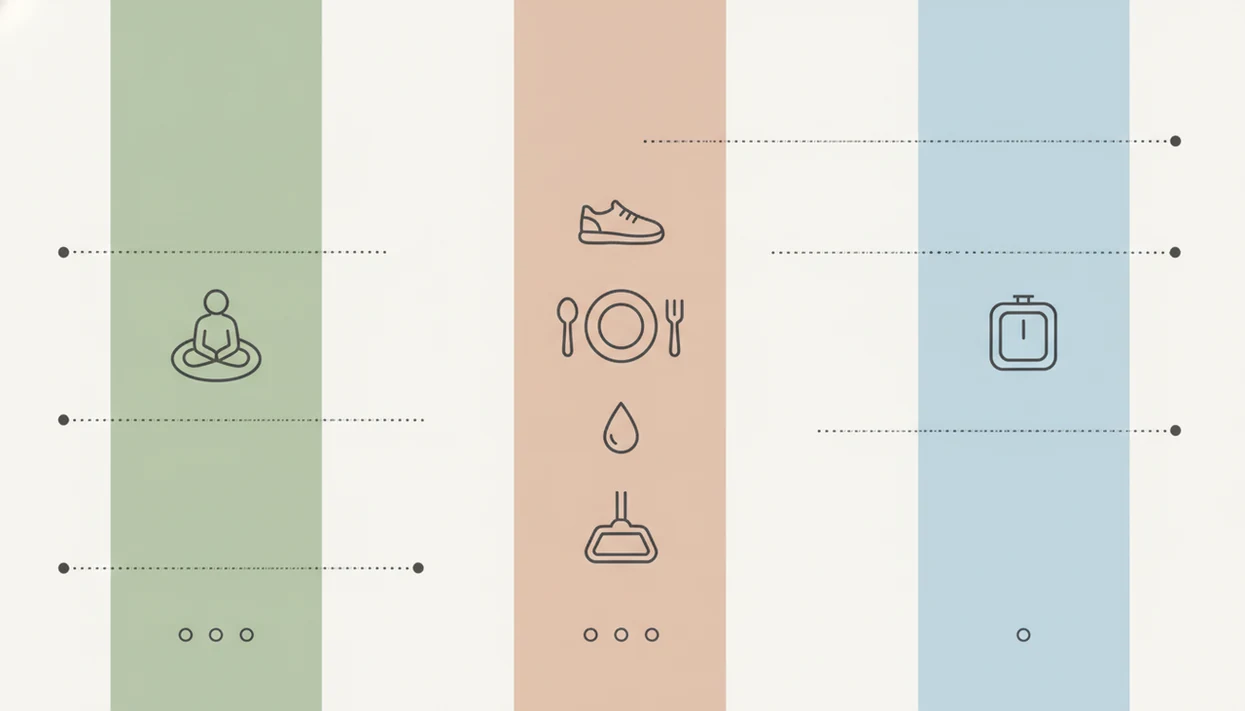
Formal and informal mindfulness train the same attention skill in different containers. Formal practice sets aside time; informal practice brings awareness into the day you already have.
- Formal mindfulness uses dedicated time. Examples include sitting meditation, breathing meditation, body scan, and structured walking meditation.
- Informal mindfulness uses ordinary activities. Brushing teeth, eating, showering, commuting, and washing dishes can become practice. Try mindful handwashing by noticing the water temperature, soap texture, and hand movements during an ordinary bathroom break.
- Formal practice builds repetition. A clear start and finish helps beginners learn the “notice and return” loop.
- Informal practice transfers the skill. It helps mindfulness leave the cushion and show up before sending the sharp email.
- Both can be short. A three-minute breathing pause before opening a laptop is still real practice.
Formal mindfulness practices
Best for: people who like structure, guided audio, timers, or a clear practice container. Not ideal for: people who feel overwhelmed by stillness or who need movement first.
Informal mindfulness activities
Best for: busy schedules, restless beginners, and people who want everyday mindfulness. Not ideal for: people who need a stronger boundary between practice time and task time.
Best mindfulness activities for beginners by time available
The easiest beginner practice is the one that matches the time you actually have. Seconds count, especially when you are learning to pause without making mindfulness feel like another job.
30-second mindfulness exercises
Under 1 minute: take one conscious breath, feel both feet, name one sound, or unclench the jaw. These fit anxious beginners because they do not require closing the eyes or sitting still. In a grocery line with a clenched basket, feeling the fingers soften can be the whole practice.
5-minute mindfulness techniques
2 to 5 minutes: try sensory grounding, three slow breaths, a phone pause before opening an app, mindful breathing, a short body scan, or mindful walking around a room. Restless beginners often do better with movement or a 5 senses mindfulness exercise than with silent sitting.
10-minute mindfulness practices
10 minutes or more: seated meditation, a longer body scan, or outdoor walking meditation gives more time to settle. Busy workers may prefer a compact 3 minute meditation first, then build gradually.
Start small. Keep it repeatable.
Build a daily routine around one reliable cue
A daily routine works best when it combines one cue, one micro-practice, one short formal practice, and one ordinary-life practice. The goal is realistic repetition, not forcing a streak.
- Set one daily anchor such as waking, coffee, lunch, commute, or bedtime.
- Choose one micro-practice under 2 minutes, such as one slow breath or feet-on-floor awareness.
- Add one 5-minute formal practice such as mindful breathing, a short body scan, or sitting meditation.
- Attach one informal practice to a routine activity, such as eating lunch or walking to the car.
- Review what was realistic at the end of the day and adjust rather than forcing consistency.
One simple day might look like this: morning breath before standing up, a work transition pause before opening email, mindful lunch for the first three bites, and an evening body scan. If the evening practice gets skipped, shorten it tomorrow.
Reset the plan.
For people with inconsistent schedules, 1 minute mindfulness exercises can keep the routine alive without pretending every day has spare time.
Phone-based mindfulness techniques and micro-practices
Does a phone help or hurt mindfulness practice? It can do either, so use the phone as a cue for short practice rather than a doorway into endless content.
Useful examples include one-minute guided breathing, a lock-screen intention, a transition bell, an app-based body scan, and a mindful notification check. A paused audio beside a water glass can remind you to finish one practice before opening three more tabs.
A randomized trial of an app-based mindfulness program for stressed workers found significant reductions in perceived stress and improved well-being after 8 weeks compared with a wait-list group (NIH research).
The friction is real, though. Overtracking, streak pressure, and multitasking during guided sessions can turn mindfulness apps into another attention drain. The Mindfulness Practices App approach is most useful when it helps you practice, then put the phone down.
Choose exercises for home, work, and other daily settings
Mindfulness is easier to choose when you start with the context. A practice that fits bedtime may not fit a meeting day, a commute, or a classroom.
Mindfulness activities at home
At home, try a body scan, mindful showering, dishwashing, or bedtime breathing. Tea steam before bedtime can become a simple cue: notice warmth, scent, and the first exhale before reaching for the next task.
Mindfulness techniques at work
At work, use a transition pause, mindful email opening, one breath before meetings, or a posture check. Stale office air during an exhale is not glamorous, but it is specific enough to anchor attention. For broader routines, mindfulness practices for daily life can help connect short pauses across the day.
Mindfulness exercises while commuting
During a commute, try sound awareness, hands-on-wheel awareness, or mindful walking from parking or transit. In nature, use mindful walking, listening practice, or sight-based grounding. With groups or students, keep it simple: short sensory grounding, bell listening, or mindful movement without therapy claims.
5 common myths about mindfulness exercises and activities
Beginners often quit because they think mindfulness should feel quiet, calm, or impressive. Most real practice is more ordinary than that.
- Mindfulness is not emptying the mind. Thoughts continue; the skill is noticing them without automatically following each one.
- Mindfulness does not require sitting cross-legged. A chair, bus seat, hallway, or standing posture can work. For a seated alternative, try mirror gazing meditation while gently noticing your reflection and any reactions that arise.
- Mindfulness is not forcing calm or positivity. You can notice irritation, sadness, boredom, or tension without pretending it feels good.
- Mindfulness is not a cure-all. It should not replace needed medical care, psychotherapy, medication, or crisis support.
- Mindfulness can be active, ordinary, secular, and short. Walking, eating, stretching, or washing a cup can become practice.
For anxious beginners, sensory grounding is often easier than breath focus because it gives attention several concrete objects to rest on.
Know when to shorten or stop a mindfulness exercise
More time is not automatically more helpful. A 2020 systematic review of 83 studies estimated meditation-related adverse events in 8.3% of participants overall, with estimates differing substantially by study type. These findings cover varied meditation practices, not just short everyday exercises. Anxiety, depression, and cognitive anomalies were among the reported events, and difficulties could occur without a prior mental-health diagnosis.
Shorten or stop a session if panic escalates, surroundings feel unreal, agitation becomes marked, or traumatic material feels overwhelming. Do not treat those reactions as proof that you should push harder. Seek qualified clinical help when symptoms persist or become unsafe. People with a history of trauma-related dissociation, mania, psychosis, or severe depression should avoid abruptly increasing to hours of intensive practice and consider clinical guidance before doing so.
Evidence for mindfulness techniques and everyday practice benefits
The evidence for mindfulness is strongest when claims stay modest. Regular practice can help some people with stress and symptoms, but it does not fix productivity, happiness, trauma, or mental illness by itself.
- A 2014 JAMA Internal Medicine meta-analysis found moderate improvements in anxiety, depression, and pain, with effect sizes around 0.3 compared with control conditions (JAMA study).
- A 2011 randomized trial of MBSR found reduced perceived stress and improved psychological well-being in healthy adults after an 8-week program.
- A 2016 AHRQ review found small to moderate improvements in anxiety and depression symptoms compared with usual care or nonspecific controls (Research).
- Benefits are more likely with regular, sustained practice. A few minutes most days usually gives better information than one long session every few weeks.
- The evidence does not support broad lifestyle promises. Mindfulness is an attention practice, not a guarantee of happiness, performance, or recovery.
Clinicians typically recommend mindfulness as a supportive skill when appropriate, not as a stand-alone replacement for professional assessment or treatment.
Read mindfulness findings by asking what the comparison was
A study comparing mindfulness with a waitlist answers a different question from one comparing it with exercise or psychotherapy. The first asks what happens when people receive a program rather than wait. The second asks whether that program offers an advantage over another active option. In a review of 47 randomized clinical trials, researchers found no evidence that meditation programs were better than active treatments.
The practice being studied matters too. Evidence is generally stronger for structured programs such as mindfulness-based stress reduction and mindfulness-based cognitive therapy than for broad claims about meditation. The AHRQ evidence review found low or insufficient evidence for several outcomes, including sleep, attention, and positive mood. A result from a structured course should not become a promise that any brief exercise will produce the same benefit.
Set a clear start and finish for practice
For a five-minute breathing practice between tasks, the free online meditation timer gives the session a clear endpoint without needing to watch the clock. Mindful.net's app also offers short guided meditations when spoken instructions help you stay with the exercise. Neither replaces clinical support: persistent distress, dissociation, or worsening symptoms call for qualified guidance rather than a longer timer.
Mindfulness Limits and Support
- Mindfulness does not work equally well for every person, setting, or symptom pattern.
- People with severe depression, active trauma, psychosis, dissociation, or destabilizing symptoms may need clinician guidance before some practices.
- Long silent practices can overwhelm beginners, so use the smallest workable practice and reassess.
- Evidence is stronger for stress, anxiety symptoms, depression symptoms, pain, and wellbeing than for broad lifestyle claims.
Mindfulness practice questions
What is the easiest mindfulness exercise for beginners?
Try feeling both feet on the floor for 30 seconds. Notice pressure, contact, and any shifting sensations. When a thought pulls your attention away, return to your feet. This gives you a concrete anchor without requiring closed eyes, a special posture, or a quiet mind.
How long should I practice mindfulness each day?
Start with 30 seconds to five minutes if that is what you can repeat. Beginner guidance also includes sessions of 10 to 15 minutes or around 20 minutes. These are practical options, not a proven ideal dose. Extend the session only when the shorter practice feels manageable.
What should I do when my mind keeps wandering?
Notice that attention has moved, then return to the breath, sound, movement, or other anchor you chose. You do not need to finish the thought or argue with it. Repeated wandering does not make the session a failure; recognizing distraction and returning is the attention practice.
What is the difference between mindfulness and meditation?
Mindfulness is paying attention to present experience on purpose, with curiosity and without immediately judging or changing it. Meditation sets aside time for a practice. Mindfulness meditation is one formal way to train that attention; mindful eating, walking, or washing dishes brings it into ordinary activities.
Can mindfulness make anxiety worse?
It can for some people. Meditation-related adverse experiences include anxiety, and turning attention inward may feel overwhelming. Shorten or stop a practice if panic escalates or you feel detached from your surroundings. Persistent or destabilizing symptoms need qualified clinical support, not an instruction to meditate for longer.
Does mindfulness work better than exercise or therapy for stress?
Not necessarily. Research supports some benefits from mindfulness programs, but a major review found no evidence that meditation was better than active treatments. Comparisons with a waitlist do not show superiority to therapy or exercise. Mindfulness can be one option, but it should not replace needed treatment.