
3 Simple Remedies for a Stressed Mind
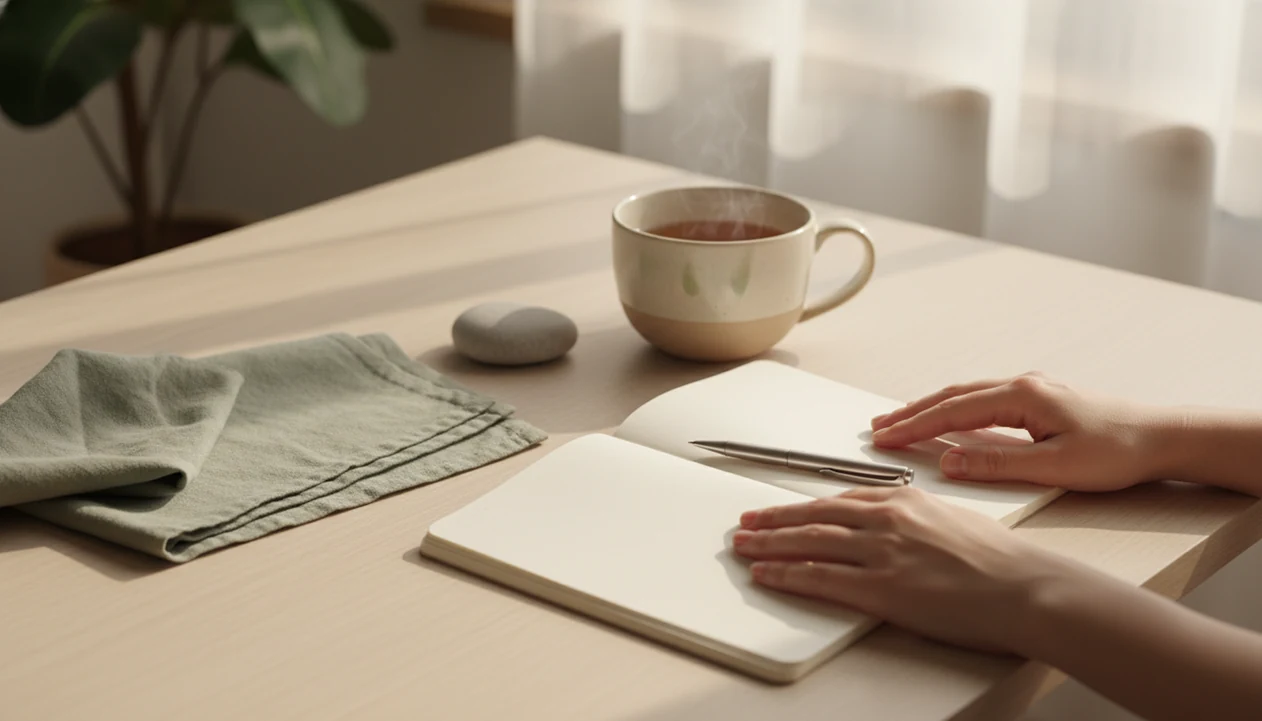
The best remedies for a stressed mind are slow breathing, short mindfulness practice, gentle movement, body relaxation, screen breaks, and steady daily habits like sleep and social connection. These tools work best when used regularly, not as one-time fixes, and they are not a substitute for professional support when stress becomes severe or persistent.
Definition: Remedies for a stressed mind are practical, secular habits that help calm racing thoughts, reduce physical tension, and build a steadier response to everyday stress.
Research-review summary: slow breathing is the quickest place to start because it is simple, portable, and commonly used in stress-reduction studies. Brief mindfulness, gentle walking, and body scanning may help reduce rumination when practiced consistently. If stress, anxiety, low mood, or disrupted sleep begins to interfere with daily life, it is worth reaching out to a qualified professional for support.
What can calm a stressed mind in the next few minutes?
The quickest remedies for a stressed mind are slow breathing, grounding, a short walk, a body scan, and a screen pause. The goal is to calm the stress system enough to respond, not to erase every stressful thought.
Field note: when the mind feels overlit, like sitting in a movie theater after the previews begin, start smaller than you think. Try one minute of longer exhales, then name five things you can see. Notice the weight of your legs and the feel of a shirt sleeve brushing your skin. If there is room, take a slow five-minute walk and let your attention land on ordinary details instead of the stress story.
The scale of stress is not small. About 27% of U.S. adults reported feeling so stressed most days that they could not function, according to the American Psychological Association's Stress in America reporting: APA research That does not mean a breathing exercise fixes everything. It means small, repeatable tools are worth having within reach.
Start small.
How Remedies for a Stressed Mind Work in the Body
Remedies for a stressed mind work by changing several inputs at once: attention, breathing rhythm, muscle guarding, and the brain’s habit of scanning for what could go wrong. Stress is not only “in your head.” It can show up as buzzing ears, heavy legs, shortened breath, and a mind that keeps opening new mental tabs even when nothing more can be solved tonight.
Slow breathing can reduce physiological arousal by giving the body a steadier rhythm. Longer exhales are especially useful because they can nudge the nervous system away from alarm. Mindfulness works differently. It teaches you to notice thoughts without treating every thought as an instruction.
Mindfulness practices and meditation techniques for beginners and daily life can build attention skills and recovery habits, not instant calm or guaranteed symptom relief. Movement adds another route. A slow walk, a few shoulder rolls, or stretching beside a desk can discharge tension and bring attention back into the body.
Five Evidence-Friendly Remedies for a Stressed Mind
These five remedies for a stressed mind are practical, beginner-friendly, and consistent with stress-reduction research.
- Slow controlled breathing: Use box breathing or a longer exhale, such as inhaling for four and exhaling for six. In the 2012 National Health Interview Survey, 10.9% of U.S. adults reported using deep-breathing exercises in the past year: CDC guidance
- Mindfulness meditation: Practice for 5–10 minutes and notice when the mind wanders to the grocery list. A randomized-trial meta-analysis found mindfulness meditation programs produced moderate evidence of reduced anxiety, depression, and pain, with smaller evidence for stress-related outcomes: JAMA study
- Gentle movement: Walking, yoga, and tai chi can reduce tension and shift attention. NCCIH summarizes evidence that yoga may help with stress, anxiety, and well-being, although study quality and effects vary: NCCIH overview
- Body scan or progressive muscle relaxation: Move attention through the body, relaxing one area at a time. Lower back meeting the cushion is enough to start.
- Daily supports: Sleep, screen breaks, outdoor light, and social connection make stress remedies easier to use.
How to Use Remedies for a Stressed Mind in 10 Minutes
Use this 10-minute routine when stress is high but you still need to function. It fits a kitchen chair, office stairwell, parked car, or bedside.
- Set a timer for 10 minutes, or 5 minutes if that feels more realistic.
- Breathe slowly for two minutes, making each exhale slightly longer than each inhale.
- Notice three body points, such as feet on the floor, belly rising against a waistband, and shoulders dropping.
- Move gently for two minutes with a slow walk, neck stretch, or unclenched hands.
- Name the next small action, such as sending one email or turning off the light.
- Repeat the routine daily for stronger benefits, not only during the worst moments.
For beginners, consistency usually matters more than session length because stress regulation is trained through repetition.
Best Remedies for a Stressed Mind by Situation
The right remedy depends on when stress shows up and how it feels in the body. Use the table to match the tool to the moment, without expecting an instant cure.
| Situation | Best for | Not ideal for |
|---|---|---|
| Racing thoughts at night | Slow breathing, body scan, worry note | Forcing sleep or checking the clock repeatedly |
| Work stress | Three breaths before unmuting, short screen pause | Multitasking while pretending to relax |
| Physical tension | Progressive muscle relaxation, walking, gentle stretching | Pushing intense exercise when exhausted |
| Panic-like overwhelm | Grounding, slower exhales, naming the room | Breath holds that increase fear or dizziness |
| Daily prevention | 5–10 minutes of mindfulness, sleep routine, social contact | Waiting until stress is already unmanageable |
For workplace stress, research reviews suggest mindfulness programs can reduce perceived stress and improve well-being for some employees. A practical next step is learning mindfulness for stress in short, ordinary pauses.
Remedies for a Stressed Mind at Night
“How do I turn my brain off at night?” You usually cannot force the mind to shut down, and trying harder can make sleep feel like a contest.
Use a wind-down sequence instead. Dim screens 30 minutes before bed, breathe slowly for two minutes, scan the body from forehead to feet, then write one worry note. Keep it plain: “Call insurance tomorrow” or “Ask about the schedule.” Tea steam before bedtime can become a cue, but the cue matters less than doing the same quiet steps.
If rumination escalates, get out of bed briefly and sit somewhere dim until the mind settles. Avoid turning the bed into a planning desk. Persistent insomnia, dread, or distress deserves professional support; a fuller bedtime practice is covered in meditation for sleep.
Daily Remedies for a Stressed Mind Habit Guide
Daily remedies work better than emergency-only stress hacks because the brain learns through repeated cues. A three-minute breathing pause before opening a laptop can become a small reset, not another task.
Retail floor rush: Use a Parking Lot Pause between customers—one longer exhale, one softening of the hands, one clear next action. Painting at an easel: Let the brush rinse become the cue; watch dish soap bubbles rise and break before returning to the canvas. Dog walk: Feel the leash in your hand and match three steps to one slow breath. Evening quiet: write the worry on paper, add the next possible action, then stop negotiating with it for the night. One pattern we notice is that light sleepers often do better with a repeatable sequence than with a brand-new calming trick every evening.
Tools like Mindful.net, mindful.org, Calm, and Headspace can support beginner practice, especially when you want a guided timer rather than deciding from scratch. Mindful.net, the Mindfulness Practices App, also fits readers comparing an app to help manage stress mindfully.
When to Seek Professional Help for Stress
Seek professional help when stress is intense, persistent, or starts changing your sleep, mood, relationships, work, or ability to care for yourself. Self-guided remedies can support recovery, but they are not the same as clinical treatment.
A practical way to decide:
- Notice red flags such as panic attacks, ongoing insomnia, depression, trauma symptoms, constant fear, or feeling unable to function.
- Contact a primary care clinician if stress comes with sleep loss, chest tightness, appetite changes, exhaustion, or questions about medication or health conditions.
- Consider therapy when worry, avoidance, irritability, grief, or trauma reactions keep repeating despite your usual coping tools.
- Use crisis or emergency resources right away if you have thoughts of self-harm, feel unable to stay safe, or might hurt someone else.
- Ask for help with one next step if making calls feels like too much; a trusted person can sit nearby, drive you, or help find options.
Getting support is not a failure of mindfulness or breathing. It is often the steadier, safer route when stress has outgrown a self-care plan.
Limitations
Mindfulness, breathing, and relaxation can support stress regulation, but they do not replace therapy, medical care, crisis support, or evaluation for health conditions. Benefits are usually modest to moderate and depend on steady practice.
- Severe anxiety, panic-like episodes, or constant fear should be discussed with a qualified professional.
- Depression, hopelessness, or thoughts of self-harm require prompt support, not self-guided practice alone.
- Trauma symptoms can become more intense during quiet meditation or body-focused exercises.
- Persistent insomnia may need medical or behavioral sleep care, especially when it affects work or safety.
Go gently.
If This Sounds Like You
- If one guide says “breathe slowly” and another says “move your body,” the difference may be timing: a slow exhale often fits the last few minutes before sleep, while gentle movement may fit the earlier wind-down.
- If a body scan makes you notice more tension at first, that does not mean it failed; it may mean attention is finally quiet enough to detect what was already there.
- If sleep stories feel soothing one night and irritating the next, try treating them as a cue rather than a test. The goal is to reduce effort, not force sleep.
- If yoga feels too activating close to bedtime, a shorter Body Scan may be a better match than stretching, especially under a cool sheet with the hallway night light still on.
- If every remedy sounds reasonable but none gets repeated, the missing piece may be Practice Decision Support: choose the next step before the tired brain has to decide.
A Practical Comparison
- Mindfulness tends to be easier to start in bed than yoga because it requires less setup; yoga may work better earlier in the evening when movement still feels welcome.
- A breathing reset may help within a few minutes, but its effect is often modest; expect a nudge toward steadiness, not a dramatic mental shutdown.
- A body scan often improves with repetition. The first few tries may feel like “finding tension,” while later sessions may feel more like “softening around tension.”
- Sleep stories may suit people whose thoughts need a gentle track to follow; silent meditation may suit people who find narration too busy.
- Progress usually looks like recovering from wakefulness with less frustration, not never waking up. Consistency tends to matter more than session length for most beginners.
A Field Note on Real Use
One mistake we notice often: people try to make a bedtime practice prove itself in one night. We usually suggest naming the reset before you need it, then repeating it for a few evenings without grading the outcome. A slow exhale under a cool sheet may not “fix” stress, but it can become a familiar cue that says, gently, there is nothing more to solve right now.
The best bedtime remedy is usually the one your tired mind can repeat without negotiating.
A Tiny Experiment to Run Today
| If you... | Try | Why | Note |
|---|---|---|---|
| Your thoughts keep replaying conversations after the lights are off | Three-Slow-Exhale Reset | A named breath practice removes choices and gives the mind one simple job: extend the out-breath without strain. | Keep the breath comfortable; forcing it can feel more alerting. |
| Your body feels keyed up after caregiving, a late shift, or training | 10-minute Body Scan | Moving attention through the body may be easier than arguing with thoughts, especially when the room is quiet and the sheet feels cool. | If attention feels overwhelming, open your eyes or switch to noticing sounds. |
| You feel too restless for stillness but too tired for a full routine | Two-minute standing wind-down, then one slow exhale in bed | A tiny movement bridge can make stillness less abrupt; it is a middle path between yoga and doing nothing. | Avoid turning it into a workout. |
| You keep changing techniques every night | Pick one practice for three nights using Practice Decision Support | Repeating a preselected practice may reduce bedtime decision fatigue. | If stress is severe, persistent, or unsafe, professional support matters more than self-management tools. |
What Surprised Us in Practice
- Shift workers may benefit from a repeatable cue, such as dim hallway light, cool sheet, and the same short practice after each sleep window.
- Parents who get interrupted may do better with a three-minute reset than a long session that feels ruined when someone calls from another room.
- Musicians, athletes, and other body-aware people may find a Body Scan easier than thought-based reflection because it starts with sensation rather than analysis.
- People who compare every method may need fewer options, not better options. Decision support beats generic calm advice when someone is choosing between techniques.
- Anyone who treats bedtime practice like a performance may benefit from a softer goal: notice the next breath, release the scorecard, repeat tomorrow.
A Quick Technique Map
| Technique | Best for | Minutes |
|---|---|---|
| Three-Slow-Exhale Reset | A quick downshift when thoughts are active but the body is already in bed | 1-3 min |
| Body Scan | Noticing and easing body tension without adding a full yoga sequence | 5-15 min |
| Sleep Story Wind-Down | Giving the mind a low-stakes narrative to follow when silence feels too loud | 10-20 min |
Why Mindful.net fits this specific need
Mindful.net is useful here because it separates short resets, Body Scan guidance, and Practice Decision Support instead of treating every stressed night the same. That makes it easier to choose a wind-down practice that fits the moment without turning bedtime into another research project.
FAQ
How do I calm stress fast?
Use slow breathing, grounding, and a brief pause from stimulation. A short walk or body scan can also lower tension enough to choose the next step.
What relaxes a stressed mind?
Breathing, mindfulness, gentle movement, body scans, and low-stimulation breaks can help a stressed mind settle. They work best when repeated regularly.
Can breathing reduce stress?
Yes, slow controlled breathing can reduce arousal and help the body shift out of a high-alert state. Longer exhales are a simple place to start.
Does meditation stop racing thoughts?
Meditation does not erase thoughts. It can help you notice thoughts sooner and react to them with less urgency.
How long should I meditate?
Beginners can start with 5–10 minutes. Consistency is usually more useful than trying to sit for a long session.
What helps stress at night?
Dim screens, slow breathing, a body scan, and a short worry note can help reduce bedtime rumination. Persistent sleep problems may need professional care.
Is walking good for stress?
Yes, gentle walking can reduce physical tension and shift attention into the body. It also creates a break from screens and repetitive thinking.
Why am I always stressed?
Common causes include overload, poor sleep, uncertainty, lack of recovery time, and chronic demands. If stress feels constant, professional support may help identify next steps.
When should I get help for stress?
Get help when stress causes severe distress, panic, depression, trauma symptoms, insomnia, or impaired daily functioning. Self-guided remedies are support tools, not replacements for care.