
How to Reduce Anxiety Quickly With Breathing and Grounding


To reduce anxiety quickly, slow your breathing, name what is happening, and anchor attention in your senses or body for 2 to 5 minutes. These brief techniques can lower anxiety’s intensity enough to help you think and act more clearly. They do not erase its cause. Start with one comfortable breathing pattern or a grounding exercise rather than trying several methods at once.
Think of breathing, grounding, muscle relaxation, and mindful attention as a rapid-calming kit, not a cure for ongoing anxiety. This guide is educational, not a diagnosis or a substitute for care. If anxiety feels unmanageable, involves self-harm thoughts, or comes with chest pain, fainting, or possible medical symptoms, seek professional or emergency help instead of relying on an exercise.
The essentials
- Start with one slow breathing pattern, such as box breathing or a longer exhale.
- Use your senses to interrupt spiraling thoughts and return attention to the present moment.
- Quick tools work best as a rapid-calming kit, not as a cure for ongoing or severe anxiety.
Lowering anxiety’s intensity, not eliminating it
Defusing anxiety quickly means lowering the intensity of anxiety in the moment, not curing anxiety permanently. It is a short reset for racing thoughts, panic feelings, overwhelm, or nighttime anxiety.
In plain language, it means using a brief technique, such as slow breathing, grounding, muscle relaxation, or mindful attention, to help the body come down from alarm. You might use it before opening a laptop, after a tense message, or when thoughts start looping in bed.
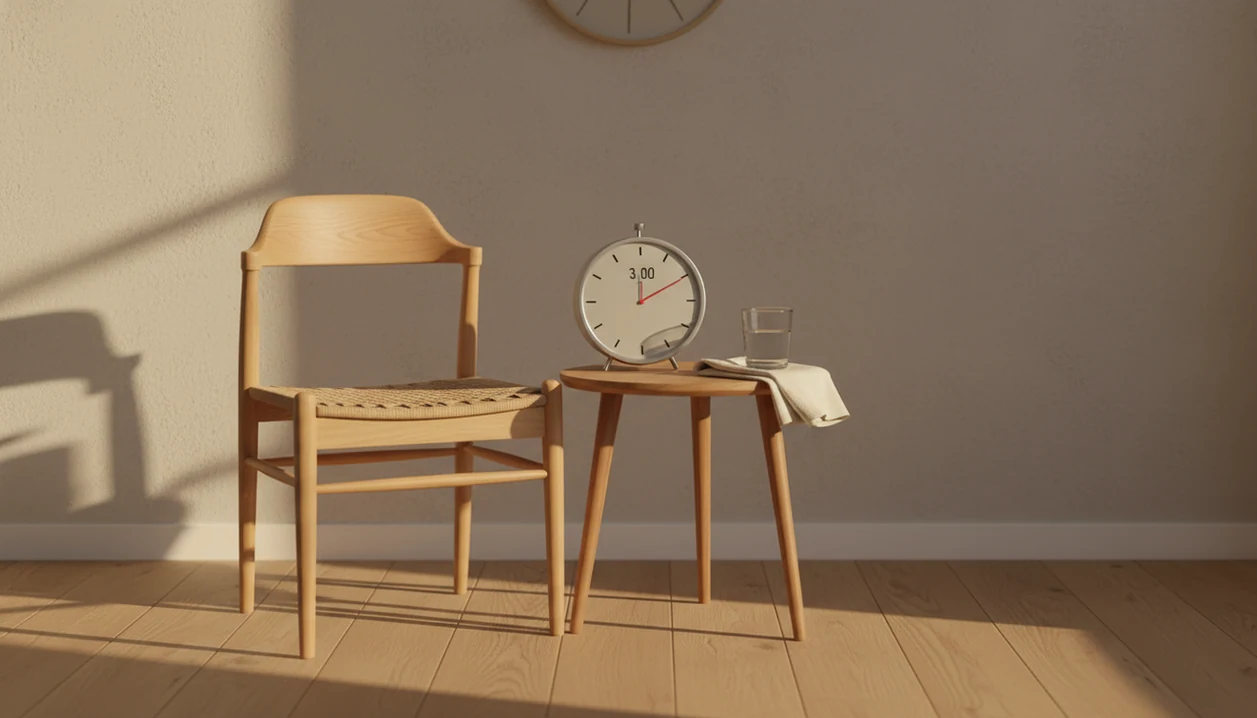
No special gear is required. No spiritual belief is required. No app is required. A kitchen chair, a phone timer set for 5 minutes, and your feet on the floor are enough to begin.
Quick relief is not fake relief. It is just limited relief.
Before you start: when quick anxiety tools are safe to try
Quick anxiety tools are safest for mild to moderate anxiety spikes, such as racing thoughts, tension, or a stress surge you recognize. They are not meant to handle emergencies, possible medical symptoms, or moments when you might hurt yourself.
Before you start, do a quick safety check:
- Use these tools for manageable anxiety. Try breathing, grounding, or muscle release when you feel anxious but still able to follow simple steps.
- Seek urgent help for red flags. Get emergency or professional support for chest pain, fainting, self-harm thoughts, sudden severe symptoms, or any medical concern that feels uncertain.
- Choose eyes-open grounding if inward focus feels unsafe. If body scanning, closed eyes, or breath attention increases panic or trauma distress, orient to the room instead.
- Stop strained breathing. End any breathing exercise that causes dizziness, air hunger, pressure, or a sense of forcing the breath.
- Contact a professional for frequent anxiety. If anxiety is recurring, disabling, worsening, or shaping your life around avoidance, quick tools can be a bridge, not the whole plan.
How anxiety defusing works in the nervous system
Anxiety defusing works by changing signals in the body and attention system. Anxiety often acts like a body alarm: breathing gets shallow, muscles tighten, attention scans for threat, and thoughts start predicting what could go wrong.
Slower breathing, especially with a longer exhale, can nudge the autonomic nervous system toward a calmer state. That means the body gets fewer “danger now” cues from fast breathing and tense muscles. Sensory grounding works differently. It redirects attention from spiraling thoughts to present-moment information, such as tile under your feet or the hum of a refrigerator.
Mindfulness is not emptying the mind. It is noticing thoughts and sensations without judging them, then returning to one chosen anchor. Mindfulness and beginner meditation practices train you to return attention to the present; they do not give you instant control over emotions. Practicing emotional detachment for resilience can help you observe anxious thoughts without treating every thought as a command.
What breathing, grounding, and muscle release can do
- Slow controlled breathing can reduce acute anxiety symptoms within minutes for many people, especially when the exhale is unhurried.
- Five-senses grounding anchors attention in the present by naming what you see, hear, feel, smell, and taste.
- Progressive muscle relaxation and body scans can reduce physical tension, such as a clenched jaw or tight shoulders.
- Repeated mindfulness practice has stronger evidence than one-off use during a hard moment.
- Ongoing, severe, or disabling anxiety may need longer-term support, including therapy, medical care, sleep changes, movement, or social support.
For anxious beginners, grounding is often easier than silent meditation because it gives attention concrete objects to notice. If you want a broader educational starting point, our guide to mindfulness for anxiety support explains what mindfulness can and cannot do.
How to use a quick anxiety defusing routine
Use this 5-step routine when anxiety spikes at home, at work, in bed, or when you are alone. Keep it simple enough to remember when your mind is busy. For example, do it with both feet under a desk, one hand around a glass of water, or your eyes resting on one ordinary object across the room. If anxiety affects your speech, explore mindfulness for stuttering for gentle speaking support without demanding perfect fluency.
- Pause and name anxiety. Say, “This is anxiety,” or “My body is in alarm.” Naming it creates a little space. When emotions feel intense, practicing pausing before reacting can help you choose a response instead of acting immediately.
- Slow your breathing. Inhale for 4 counts and exhale for 6 counts. Repeat for 6 to 10 breaths.
- Ground through your senses. Name 5 things you see, 4 you feel, 3 you hear, 2 you smell, and 1 you taste.
- Release one muscle group. Lift your shoulders toward your ears, hold briefly, then let them drop. Notice the difference.
- Choose the next small action. Sit up, drink water, send one message, or step into the hallway.
The most useful quick routine is the one you can do while anxious, not the one that looks neat on paper. Examples of perfectionism and mental resilience in tennis offer perspective on handling mistakes without demanding flawless performance.
Best anxiety defusing tools for different moments
Different anxiety moments need different tools. Pick one technique that matches what is happening, rather than trying every tip at once.
If a breathing pattern makes you lightheaded, panicky, or more focused on body sensations, stop counting and switch to eyes-open grounding. For trauma-related anxiety, orienting to the room can feel safer than closing your eyes or scanning the body.
| Moment | Tool | Best for | Not ideal for |
|---|---|---|---|
| Body alarm, pounding heart, shaky feeling | Box breathing or 4-7-8 breathing | Slowing the stress response | Anyone who feels strained or dizzy while counting |
| Spiraling thoughts | 5-4-3-2-1 grounding | Returning attention to the room | Very noisy settings where sensory input feels overwhelming |
| Tight jaw, shoulders, or stomach | Progressive muscle relaxation | Releasing body tension | Painful areas or injuries |
| Restless anxiety | Mindful walking or routine activity | Moving anxious energy gently | Situations where you must stay still |
For bedtime anxiety, a low-stimulation routine usually works better than scrolling for reassurance. A simple meditation for sleep practice can pair longer exhales with a slow body scan.
How to build a 3-part anxiety defusing kit
A useful anxiety defusing kit has three parts: one breath practice, one grounding method, and one movement or body practice. A small kit is easier to remember than a long list of hacks.
- Breath practice: Choose box breathing, 4-7-8 breathing, or a 4-in, 6-out pattern.
- Grounding method: Use 5-4-3-2-1 grounding, feet on the floor, or naming objects in the room.
- Body practice: Try shoulder release, a short body scan, or a slow walk to the end of the hallway.
Practice once when you feel calm. It feels awkward at first.
Common mistakes with quick anxiety defusing tips
The biggest mistake is expecting a permanent cure in a few minutes. Quick anxiety defusing tips are meant to lower intensity, not remove every anxious thought. Understanding the costs of perfectionism can help you recognize when demanding immediate calm adds pressure to anxiety.
Another mistake is forcing the mind to go blank. That usually creates more tension. Instead, notice the thought, label it gently, and return to breathing, sound, or contact with the floor. If your mind wanders to a grocery list, that is not failure. That is the practice.
Do not judge a technique as useless after one try. Many people need repetition before it feels natural. Also avoid over-breathing or straining during breathing exercises. If body-focused awareness feels too intense, switch to eyes-open grounding or a simple task, such as folding a towel slowly.
For more safety context, read about meditation side effects before pushing through discomfort.
Evidence behind mindfulness and anxiety relief
Anxiety is common. In a large U.S. survey, 31.1% of adults experienced an anxiety disorder at some time in life, and 19.1% had one in the past year, according to NIMH Any Anxiety Disorder.
Research is stronger for structured, repeated practice than for a single quick exercise. A 2022 randomized clinical trial found that an 8-week mindfulness-based stress reduction program produced anxiety reductions that were non-inferior to escitalopram in adults with anxiety disorders NIH research. A 2014 JAMA Internal Medicine systematic review reported moderate evidence that meditation programs can improve anxiety symptoms NIH research. A separate review of relaxation-based approaches also supports progressive muscle relaxation for reducing anxiety symptoms, though effects vary by population and study design PubMed research.
Clinicians typically recommend urgent evaluation for severe panic symptoms that may be medical, self-harm risk, or chest pain. For everyday stress spikes, repeated attention practice is often more reliable than searching for a new trick each time; our mindfulness for stress guide covers that bigger pattern.
Quick Anxiety Relief Limits
- Quick anxiety tools can reduce intensity, but cannot treat chronic, severe, or disabling anxiety by themselves.
- Severe panic, risk of self harm, chest pain, fainting, or possible medical emergencies require urgent professional support.
- Body awareness may worsen panic or trauma stress, so read can meditation make anxiety worse for warning signs and adjustments.
- Methods may not suit every setting, and evidence is stronger for repeated mindfulness training than for isolated exercises.
Quick anxiety relief questions
What is the fastest way to reduce anxiety?
There is no single fastest method for everyone. Try one manageable action: breathe gently with a comfortable, longer exhale, or name objects around you while feeling your feet on the floor. Spend 2 to 5 minutes on it. The aim is to lower the intensity enough to take your next step, not eliminate every anxious feeling.
How do I do 5-4-3-2-1 grounding for anxiety?
Name five things you can see, four things you can feel, three things you can hear, two things you can smell, and one thing you can taste. Focus on ordinary details, such as a chair against your back or a nearby sound. Grounding redirects attention to your surroundings; it does not resolve the cause of anxiety.
How should I breathe when I feel anxious?
Keep the breath gentle rather than taking large, forced breaths. You can try inhaling for four counts and exhaling for six, but only if that feels comfortable. Counting is optional. If a pattern causes dizziness, strain, or more panic, stop the exercise, let breathing return to its natural rhythm, and use eyes-open grounding instead.
What if breathing exercises make my anxiety worse?
Stop counting and shift attention away from internal sensations. Keep your eyes open, name a few objects in the room, or notice your feet touching the floor. Focusing closely on breathing or the body can feel worse during panic or trauma-related stress. You do not need to force a technique that increases distress.
How can I calm anxiety at night?
Try gentle breathing with a longer, comfortable exhale, or notice the contact between your body and the bed. Avoid forcing a count that keeps you alert or uncomfortable. These strategies may help you settle, but breathing alone is not a treatment for insomnia or an anxiety disorder. Recurring sleep-disrupting anxiety deserves professional assessment.
How long does it take for mindfulness to help anxiety?
A brief exercise may help you regain attention or reduce tension within a few minutes, but relief is not guaranteed. Research on anxiety benefits mainly examines structured practice over weeks. One systematic review found benefits at about eight weeks, with smaller effects at later follow-up. A quick reset and longer-term treatment are different things.
When should I get help instead of using anxiety exercises?
Seek urgent help for chest pain, fainting, sudden severe symptoms, possible medical emergencies, or thoughts of harming yourself. Arrange a clinical assessment if anxiety repeatedly disrupts sleep, limits daily activities, feels panic-like, or keeps worsening. Breathing and grounding can support coping, but they should not replace assessment or treatment when symptoms are persistent or severe.