
Grounding Meditation for Anxiety: Short Steps and Stop Rules


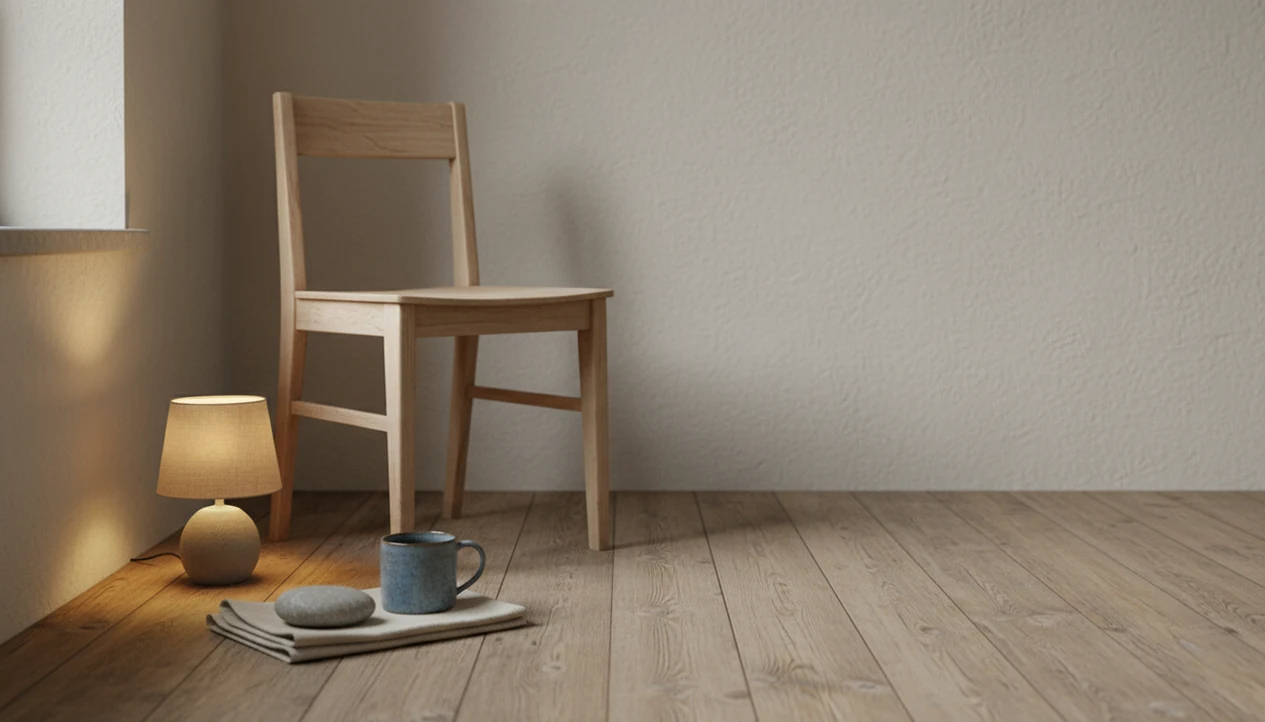
Grounding meditation for anxiety is a short, eyes-open practice that uses sights, sounds, touch, or posture to bring attention back to the present moment. Instead of suppressing or debating anxious thoughts, you give attention something concrete to notice: a doorway, a steady sound, the floor beneath your feet. It is a secular mindfulness practice and a supportive coping tool, not a replacement for mental health care.
Start with one external anchor and keep the practice brief. Breath focus and body scanning are optional, especially if they make anxiety worse. Stop or change anchors if distress rises, you feel numb or unreal, or continuing feels easier than stopping. The task is to notice your surroundings, not to force yourself to feel calm.
Definition: An anxiety grounding meditation is a secular mindfulness practice that steadies attention through present-moment sensory anchors instead of trying to suppress or debate anxious thoughts.
The essentials
- Use external anchors first: feet on the floor, sounds in the room, visible objects, or a textured item in your hand.
- Keep the practice short, eyes open, and adjustable if breath focus or body scanning makes anxiety worse.
- Stop or switch anchors if distress rises, you feel numb or unreal, or the practice feels harder to leave than to continue.
Grounding Meditation for Anxiety in One Minute
Field note: for a light sleeper, grounding often works best with eyes open and attention pointed outward. Let the room carry some of the work: name three shapes you can see, two steady sounds such as a refrigerator hum or distant traffic, and one texture you can feel through your hands or clothing.
Keep it plain: “dark doorway, curtain line, book spine; hum, pipe noise; blanket seam.” The aim is not to manufacture calm. It is to give attention a simple assignment when anxious thinking starts taking over the whole room.
If you notice tingling fingers, cold fingertips, or a small change in the breath, treat it as information rather than a problem to solve.
Anxiety is common, not a personal failure. Among U.S. adults, an estimated 31.1% experience an anxiety disorder at some time in their lives, according to NIMH Any Anxiety Disorder.
Before You Start a Grounding Meditation for Anxiety
Before you start, make sure this is the right kind of support for the moment. Grounding works best when you are physically safe enough to pause and can still notice the room around you. Review mindfulness safety guidance when deciding whether grounding, practical support, or professional care best fits the moment.
- Check your setting. Sit or stand where you are stable, with both feet supported if possible. Look around and name where you are before beginning.
- Keep your eyes open. If closing your eyes feels unsafe, trapping, or too intense, let the room stay visible. A wall, lamp, doorway, or floor can be the anchor.
- Skip breath focus at first. If heartbeat, air hunger, stomach tension, or other body sensations tend to trigger panic or dissociation, begin with sights, sounds, or touch instead.
- Set a clear ending. Use a short timer, even 30 to 60 seconds, so the practice does not feel endless.
- Choose support in advance. Decide who you would text, call, or move toward if distress rises instead of settling. If you feel less present, more panicked, or unsafe, stop the practice and use that support.
How Sensory Anchors in Grounding Mindfulness for Anxiety Work
Grounding mindfulness for anxiety works by redirecting attention from threat predictions to stable sensory input. In plain terms, it asks the mind to track what is actually here, not what might happen next.
Anxious states often pull attention inward. Heartbeat, breath, stomach tension, and racing thoughts can become the whole screen. External anchors reduce that inward monitoring by giving attention something visible, audible, or touchable. Light on a wall. Shoulder blades pressing the chair. The edge of a desk under one finger.
This is an attentional task, not a cure. Grounding does not erase anxiety or solve the reason anxiety arrived. It can help some people steady themselves long enough to choose a next step. For beginners and everyday practice, mindfulness and meditation teach repeatable attention skills rather than instant symptom control. For a cautious evidence overview, NCCIH notes that meditation and mindfulness practices may help anxiety symptoms for some people, while study quality and effects vary NCCIH overview.
For broader context, our guide to mindfulness for anxiety support explains the same supportive-tool boundary.
Mild Anxiety Spikes, Panic Episodes, and Poor Fits for Grounding Meditation
Grounding meditation is usually a better fit for mild to moderate anxiety spikes than for situations that need urgent care. It can also support steadiness during panic if you can still orient to the room.
| Situation | Fit | Practical note |
|---|---|---|
| Pre-meeting jitters | Good | Use visible objects and feet on the floor before entering. |
| Commuting stress | Good | Track sounds, colors, and contact with the seat. |
| Early worry spiral | Good | Name details before the story grows. |
| Panic episode | Sometimes | Use only if you can stay oriented to the environment. |
| Severe dissociation or danger | Poor fit | Seek human support or professional help. |
Best for
✓ Mild anxiety spikes, grocery-line tension with a clenched basket, commuting stress, and early worry spirals.
Not for
✕ Emergency care, trauma therapy, medical evaluation, or inward breath meditation when focusing inside makes you feel more flooded.
External Anchor Meditation Options for Anxious Moments
External anchor meditation gives you several safe places to put attention, so you can switch if one anchor feels wrong. Eyes-open options may feel safer because the room stays available.
- Visual anchor: Notice colors, edges, light, shadows, or objects in the room. A doorframe works better than an abstract idea.
- Sound anchor: Listen for one near sound, one far sound, one steady sound, and one changing sound.
- Touch anchor: Feel your feet, the chair, a textured object, or a cool cup. Palms tingling in the lap can be noticed, then left alone.
- Posture anchor: Stand, widen your stance, and notice contact points through the soles of your feet.
- Plain-language guidance:
For a wider set of stress practices, compare this with mindfulness for stress.
How to Use a Sensory Grounding Meditation
Use a sensory grounding meditation as a short practice, not a performance review for your nervous system. Choose a natural boundary: one song at rehearsal, one slow pass while vacuuming the hallway, or the time it takes to notice five objects in dim movie-theater light. During a spike, 60 seconds may be more workable than a longer session. For a timed option, try a five minute grounding meditation with external anchors and a clear stopping point.
- Set a short window. Choose 30 to 60 seconds, or set a timer for up to five minutes.
- Open your eyes. Orient to the room by naming where you are and what time of day it is.
- Choose one external anchor. Start with feet, a visible object, or a steady sound before adding more.
- Name sensory details. Say them silently or out loud: color, shape, pressure, temperature, distance.
- Return gently. When thoughts pull away, notice that and return to the anchor without arguing.
- Choose one next action. Drink water, send a message, step outside, or sit down at your desk.
Start small. The skill is the return.
Five choices that keep grounding brief and adjustable
Use these five facts as decision points for grounding mindfulness during an anxious spike: keep your eyes open if closing them intensifies symptoms, favor external anchors over inner scanning, stop if the practice feels destabilizing, keep the time short, and choose ordinary sensory details over anything dramatic.
- Grounding is sensory attention, not positive thinking or arguing with anxious thoughts.
- Short practices can be more useful than long sessions when anxiety is already high.
- Eyes open is allowed and often preferred, especially if closing the eyes feels unsafe.
- External anchors can be changed at any time; the anchor serves you, not the other way around.
- Rehearsing during mild stress improves access during stronger anxiety, like practicing in an office stairwell before a hard call.
Worldwide, an estimated 301 million people were living with an anxiety disorder in 2019, according to the World Health Organization WHO report. For beginners, external grounding often fits better than breath-only meditation because it reduces inward monitoring when body sensations feel alarming.
Evidence Behind Grounding Meditation for Anxiety
The evidence is strongest for mindfulness-based approaches as support for anxiety symptoms, not for sensory grounding meditation as a stand-alone treatment. Grounding is best understood as an adjunct coping skill: useful for some moments, limited in scope, and not a replacement for therapy, medication decisions, or crisis care.
Research summaries from groups such as NCCIH, NIMH, WHO, and peer-reviewed reviews generally suggest that mindfulness practices may help some people relate differently to worry, avoidance, and anxious arousal. The mechanism is practical: attention training, meaning the ability to notice where the mind has gone and return it to a chosen anchor. Grounding uses that same attention skill, but the grounding-specific evidence base is thinner because studies often combine it with broader mindfulness, CBT, trauma therapy, or coping-skills programs.
For many anxious people, external anchors are the safer first choice. If interoception, or attention to internal body sensations, makes heartbeat, breath, or stomach tension feel more threatening, a visible object, sound, floor contact, or textured item can reduce the inward checking loop. Use grounding to steady the next minute, then choose the next useful action. If worries about illness drive repeated checking, mindfulness for health anxiety offers ways to respond without reinforcing that habit.
Research on longer programs does not prove a one-minute effect
A 2014 systematic review of 47 randomized clinical trials found that mindfulness-meditation programs improved anxiety, with an average effect size of 0.38 at about eight weeks and 0.22 at three to six months. Those results describe structured programs over time. They do not establish that a one-minute sensory grounding exercise produces the same benefit.
Keep two goals separate: getting through the next few minutes and treating recurring anxiety. A brief grounding practice may help you return attention to the room or take a practical next step, even if anxiety remains. Longer-term improvement requires a different assessment. Repeated panic-like episodes, disrupted sleep, worsening symptoms, or anxiety that limits daily activities warrant discussion with a qualified clinician.
Stop Rules for Anxiety Grounding Meditation
Does anxiety grounding meditation ever need to stop? Yes. Stop or switch if distress rises for more than about one minute, or if the practice starts to feel harder to leave than to continue.
Open your eyes if they were closed. Stand up if sitting feels trapping. Switch from breath or body focus to a visible object, such as a sign, shelf, shoe, or window. If you feel unreal, numb, far away, trapped, or more panicked, stop the meditation part and use practical support.
That may mean texting a trusted person, moving toward a safer environment, or contacting a clinician. Crisis risk, self-harm thoughts, psychosis symptoms, or severe panic that does not subside require immediate support, not meditation. In the U.S., call or text 988 for the Suicide & Crisis Lifeline if there is self-harm risk, immediate danger, or a mental-health crisis Reference.
If this pattern happens often, our article on can meditation make anxiety worse covers warning signs in more detail.
Everyday Micro-Practices for External Anchor Meditation
Everyday external anchor meditation works best when you practice before anxiety peaks. Use 30 to 60 seconds while waiting in line, before opening email, during commuting, or after a long scroll.
Pair the practice with one repeatable cue. Touching a door handle before entering a room. Sitting down at a desk. Placing hands off the keyboard before the first message. These cues make the practice less dramatic and more available. Before conversations or gatherings, meditation for social anxiety can offer another way to practice brief, outward attention.
One simple way to try it: feel both feet on carpet or tile, name one color, and listen for one sound. Done.
Apps such as Mindful.net can support this kind of short practice when you want a guided prompt, and an app to help manage stress mindfully may be useful if you like reminders.
A steady sound for an external anchor
During an anxious moment, a steady sound can give attention a concrete task without focusing on breathing or heartbeat. The free white noise and ambient sound player offers one possible anchor: notice the sound, then return to it when attention wanders. An ordinary room sound works too, with no device needed. Stop the audio if it feels unsettling. Rising distress, feeling unreal, or recurring anxiety that disrupts daily life calls for human support or clinical assessment, not more audio.
Grounding Limits for Anxiety
- Grounding may ease momentary distress but does not treat anxiety’s root causes or replace professional treatment.
- Seek professional help for severe PTSD, dissociation, or panic, since certain grounding anchors may worsen symptoms.
- Breath focus and body scans can be activating when they increase attention to heartbeat, air hunger, or tension.
- Evidence for specific sensory grounding techniques remains limited, particularly as standalone anxiety treatment: NCCIH overview.
Grounding for anxiety questions
How do I do grounding meditation when I feel anxious?
Sit or stand somewhere stable and keep your eyes open. Name where you are, then choose one external anchor: an object, a steady sound, or the contact of your feet with the floor. Notice its details for 30 to 60 seconds. Stop or switch anchors if distress increases.
Do I need to close my eyes or focus on my breathing?
No. Grounding can stay eyes open and focused on the room. Try the edge of a doorway, a nearby sound, or a textured object in your hand. Skip breath focus if it increases attention to air hunger, heartbeat, or tension. You do not need to add it later.
Can grounding stop a panic attack?
Grounding may help you stay oriented during panic, but it cannot guarantee that an attack stops. Use a simple external anchor only if you can still notice your surroundings. Stop if the practice increases distress. Repeated panic-like episodes need clinical assessment rather than reliance on grounding alone.
Why does grounding make me feel more anxious or unreal?
Some anchors can intensify inward monitoring, especially breathing or body sensations. Certain practices may also feel destabilizing for people with panic, trauma-related symptoms, or dissociation. Stop if you feel numb, unreal, trapped, or more panicked. Look around, move toward a safer setting, and contact a trusted person or clinician.
How long should a grounding meditation last?
Start with 30 to 60 seconds during an anxiety spike. A longer session is not automatically better, and you do not need to finish a timer. Continue only while the practice feels manageable and easy to leave. If distress rises, change the anchor or stop rather than pushing through.
Does grounding treat an anxiety disorder?
Grounding is a coping skill, not a diagnosis or stand-alone treatment for an anxiety disorder. Research on structured mindfulness programs suggests benefits for some people, but evidence for specific sensory grounding techniques is limited. Anxiety that persists, worsens, disrupts sleep, or restricts daily life deserves assessment by a qualified clinician.
Can I use grounding for anxiety at night?
You can try a short practice with your eyes open, noticing a visible object, a room sound, or the texture of bedding. Avoid breath focus if it makes you monitor bodily sensations more closely. Grounding may support the moment, but recurring nighttime anxiety or sleep disruption needs attention beyond a calming exercise.