
How Mindfulness May Affect the Brain in Depression


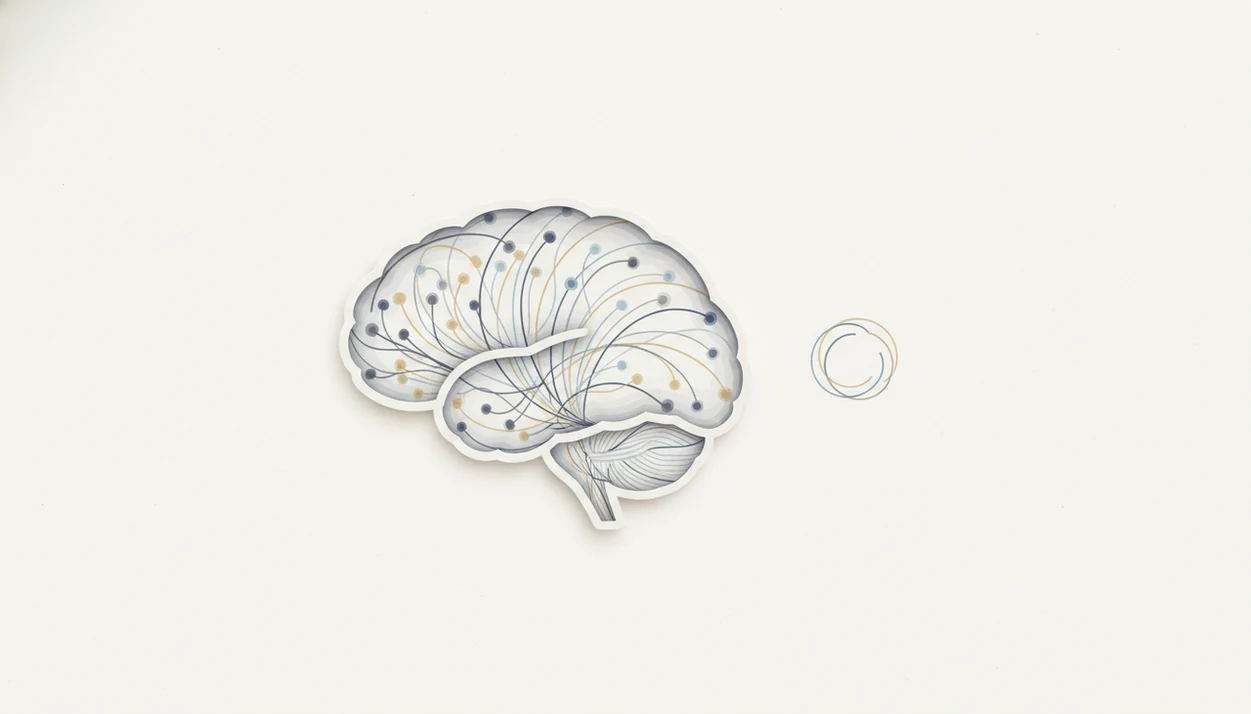
Mindfulness may help with depression by training attention away from rumination and toward present-moment experience, with possible changes in brain systems involved in stress and emotion regulation. In secular mental-health care, mindfulness means noticing thoughts, feelings, and sensations with curiosity and less judgment. The evidence is promising but moderate: it supports mindfulness as a skill alongside professional care, not a stand-alone cure.
Repeated practice offers a way to notice self-critical thoughts without automatically following them. Structured programs such as MBCT and MBSR have stronger evidence than occasional meditation. This guide explains the research; it is not a diagnosis or treatment plan. If depression worsens, contact a clinician. Suicidal thoughts or feeling unable to stay safe call for urgent crisis or emergency support, not another meditation session.
What matters most
- Mindfulness may affect depression by calming threat circuits, reducing rumination, and strengthening attention and emotion-regulation networks.
- The strongest evidence is for structured programs such as MBCT and MBSR, usually practiced over about 8 weeks.
- Mindfulness can support therapy, medication, and daily coping, but severe depression, suicidality, or psychosis require professional care.
Brain changes do not guarantee relief from depression
Mindfulness can change brain activity, and sometimes brain structure, in regions linked to depression. The main areas discussed in research are the amygdala, hippocampus, and prefrontal cortex.
If you are new to insomnia, low mood, or both, the useful claim is modest: mindfulness practice can train the brain to notice mood-colored thoughts without automatically following them. Depression often pulls attention toward self-criticism, threat scanning, and old memory loops. One quiet pause while rain taps the glass will not “rewire” the brain by itself, but repeated practice can build the habit of noticing, naming, and returning.
Clinical effects are usually moderate, not dramatic. They appear strongest in structured programs such as mindfulness-based cognitive therapy, or MBCT, and mindfulness-based stress reduction, or MBSR. Clinicians typically recommend mindfulness as a complement to therapy, medication, relapse-prevention planning, sleep support, and crisis care when needed.
Small practice counts. One session is not the mechanism.
Depression Brain Circuits Affected by Mindfulness Practice
Mindfulness may affect depression by changing how attention, threat detection, memory, and emotion regulation interact during repetitive negative thinking.
Depression often involves loops: a sad feeling triggers self-critical thought, the thought triggers threat reactivity, and memory supplies more evidence that things are hopeless. The amygdala helps detect threat and emotional salience. The hippocampus supports memory and context. The prefrontal cortex helps with attention, perspective, and regulation. Learning how the brain creates your sense of self can add context to these patterns without defining you by depression.
Mindfulness practice does not erase those systems. It offers a different move. While folding laundry, holding the warmth of a ceramic mug, or standing with a dog leash in hand, you might silently note “worrying,” “remembering,” or “judging,” then return attention to breath, sound, or the contact of your body with the room around you. Over time, that may reduce the sense of being fused with every negative thought.
Imaging studies suggest changes in brain activity and sometimes gray matter after training. However, a brain-scan finding is not a personal guarantee. For people learning more general stress skills, mindfulness for stress follows a similar attention-and-return pattern.
Five findings about mindfulness, rumination, and depression
- MBCT and MBSR have clinical-trial support. These structured programs show moderate benefits for depressive symptoms and relapse prevention, especially when practiced regularly.
- Mindfulness is linked with mood-related brain regions. Research often focuses on the amygdala, hippocampus, and prefrontal cortex because they relate to threat, memory, attention, and regulation.
- The key target is often rumination. Mindfulness is not just relaxation; it changes how someone relates to repetitive negative thinking.
- Typical programs run about 8 weeks. Many studied courses involve weekly teaching plus regular home practice, not occasional audio sessions.
- Effects vary by person. Some people notice steadier attention and fewer rumination spirals, while others notice little change or need a different form of care. Small habits that support happiness may complement daily practice, without requiring you to force positive feelings during depression.
For many people with mild to moderate symptoms, MBCT-style thought labeling is often easier than open-ended meditation because it gives rumination a clear name and a next step.
Mindfulness and Depression Research Studies on Brain Change
Several research lines support mindfulness for depression, but none make it a cure. The strongest findings come from structured programs, relapse-prevention trials, and brain-imaging studies.
- APA review of 209 studies. A review summarized by the American Psychological Association found moderate improvements in anxiety, depression, and stress across clinical and nonclinical groups APA research.
- MBCT relapse meta-analysis. A meta-analysis of 9 randomized controlled trials with 1,258 participants found a 31% lower relapse risk with MBCT versus usual care or placebo in recurrent depression NIH research.
- 2015 randomized trial. A randomized trial of MBCT for recurrent depression found MBCT was not superior to maintenance antidepressants for relapse prevention, but it was a viable option for some patients when delivered in structured care PubMed research.
- 2011 MRI study. An 8-week MBSR course was associated with increased gray matter concentration in the hippocampus and other regions involved in learning, memory, and emotion regulation NIH research.
- Newer intracranial EEG work. Recent experimental work suggests meditation can alter amygdala and hippocampus activity, but this research is still developing.
Evidence is stronger for structured mindfulness programs than for casual practice.
The comparison group changes what a benefit means
A study comparing mindfulness with no intervention answers a different question from one comparing it with another credible intervention. In a 2019 review of 51 randomized trials in university students, benefits were generally stronger against passive controls. Against active controls, mindfulness did not consistently improve depression or emotion regulation, although it improved distress and state anxiety.
These student findings do not settle treatment choices for people with diagnosed depression. They do show why a positive result is not proof that mindfulness is better than established care. Consider what participants received in the comparison group, how severe their symptoms were, and how long researchers followed them before applying a study's conclusion to your own care.
A 5 to 10 minute attention practice for low mood
A safe beginner routine should be short, specific, and not built around forcing calm. The aim is attention practice, not passing a meditation test.
- Set a 5 to 10 minute window. Use a phone timer, and choose a kitchen chair, bus seat, or quiet corner rather than waiting for ideal conditions.
- Choose one anchor. Feel the breath, the seat under you, or the contact of your feet with the floor without demanding relaxation.
- Label thoughts lightly. Use simple words such as “planning,” “judging,” “remembering,” or “worrying” when the mind moves.
- Return gently. Bring attention back after rumination as many times as needed; the return is the practice.
- Add one daily pause. Try one breath before replying to a message, standing up from bed, or entering a meeting.
Tools like Mindful.net offer beginner-friendly secular mindfulness practices and meditation techniques without replacing clinical care. Beginner mindfulness practices can provide repeatable cues for attention and daily coping, but they cannot guarantee relief from depression.
Choosing a practice when mood, anxiety, or trauma affects attention
Different mindfulness practices suit different depression patterns. The better fit depends on energy level, trauma history, anxiety sensitivity, and whether rumination is the main problem.
| Practice | Best for | Not ideal for |
|---|---|---|
| Breath awareness | Attention training and noticing wandering | People whose anxiety rises when focusing on breath |
| Body scan | Interoception and emotional awareness | Trauma-sensitive readers who feel unsafe turning inward |
| Mindful walking | Low energy, agitation, or difficulty sitting still | People who need very structured cognitive guidance |
| MBCT-style thought labeling | Rumination and relapse-prevention skills | People wanting only relaxation or sleep audio |
People with severe symptoms, suicidal thoughts, psychosis, mania, or trauma activation should seek professional guidance before relying on mindfulness. If inward focus brings panic or agitation, it is reasonable to use eyes-open grounding or stop. Our guide to meditation side effects explains warning signs beginners should know.
Mindfulness Tips for Depression Rumination Loops
Mindfulness tips for depression work best when they target rumination gently and concretely. The goal is not to suppress thoughts; it is to observe them as mental events and return to something steadier.
Try these when the loop starts:
- Name the loop. Say “rumination is here” instead of arguing with every thought.
- Feel the body. Notice pressure in the chair, toes in socks, or the jaw unclenching behind closed lips. Mindfulness for pain management can also use body awareness, though persistent or worsening pain deserves appropriate medical evaluation.
- Return to one sound or breath. Keep the anchor simple when mood is low.
- Shorten the session. Two minutes done safely is better than 20 minutes spent spiraling.
- Write one next action afterward. If the thought contains a real task, put it on paper after practice.
Do not use mindfulness to analyze depression endlessly. Consistency beats intensity, especially during a hard week.
Why mindfulness is not instant rewiring or an empty mind
Mindfulness does not instantly rewire the brain. Brain and mood changes, when they happen, usually build through repeated practice over weeks.
It also does not mean clearing the mind. A beginner may spend most of a session noticing the mind drift to laundry, a patch of weeds between clients, an itchy scalp, or a dry mouth, then returning again. That is still practice. Calm may happen, but calm is not required; the training is the return.
Not every meditation app reproduces MBCT or MBSR evidence. A short recording can be useful, but structured programs include teaching, practice, inquiry, and relapse-prevention skills. Apps such as Mindful.net, Calm, and Headspace can support everyday mindfulness, but they should not be treated as the same thing as clinician-led depression care.
Mindfulness also cannot replace medication or therapy for everyone. Moderate benefits can still matter, especially when added to broader care, mindfulness for anxiety support, sleep routines, and social support.
When to Seek Professional Help for Depression
Seek professional help when depression affects safety, reality testing, functioning, or your ability to care for yourself. Suicidal thoughts, urges to self-harm, or impulses that feel unsafe need immediate crisis support, not another mindfulness session.
Mindfulness can be paused. If practice increases panic, numbness, agitation, flashbacks, or distress, stop and use grounding, movement, or contact with another person instead. Severe depression, psychosis, mania, and trauma activation are signals for clinical care, especially if sleep, eating, work, relationships, or judgment are changing sharply. For practical guidance on adapting your practice, review stress, sleep, and mindfulness safety before continuing.
- Call emergency services now if you might harm yourself or someone else, cannot stay safe, or feel out of control.
- Contact a crisis line in your country or region if safety is uncertain or you need immediate support while deciding what to do next.
- Tell a trusted person what is happening, and avoid being alone with means for self-harm when risk is present.
- Book clinical care with a qualified therapist, psychiatrist, primary-care clinician, or local mental-health service for diagnosis, medication decisions, and relapse planning.
- Pause or adapt mindfulness until a clinician helps you choose practices that fit your symptoms and history.
Mindfulness Research Limits
- Many mindfulness brain studies have small samples, design limitations, or need replication.
- Brain imaging changes do not prove depression relief, and some people notice little improvement.
- A minority experience more anxiety, numbness, grief, or distress when turning inward.
- Stop and seek professional support if symptoms worsen; read can meditation make anxiety worse for anxiety during breath practice.
Mindfulness, depression, and brain change questions
Can mindfulness change the brain in people with depression?
Mindfulness may affect activity, and sometimes structure, in brain regions involved in attention, threat detection, memory, and emotion regulation. But brain-imaging findings do not guarantee symptom relief for an individual. Many studies have small samples or design limitations, so claims that meditation reliably rewires a depressed brain go beyond the evidence.
Which brain areas are linked to mindfulness and depression?
Research often discusses the amygdala, hippocampus, and prefrontal cortex. These areas contribute to threat detection, memory and context, attention, and emotion regulation. They work as interacting systems, not isolated switches. A reported change in one region is not enough to show that depression has improved or that a treatment will help everyone.
How long does mindfulness take to help depression?
Research generally examines structured practice over several weeks, often in programs lasting about eight weeks. That is a study schedule, not a deadline for feeling better. Benefits vary, and some people notice little improvement. Do not postpone assessment or treatment while waiting for meditation to work, especially if symptoms are worsening.
Can mindfulness stop depressive rumination?
Mindfulness aims to change your response to repetitive negative thoughts rather than eliminate them. Try naming the pattern briefly, such as 'rumination is here,' then return attention to your feet or a sound nearby. Shorten or stop the practice if you become more distressed. Persistent rumination may need structured therapy or other depression care.
What is the difference between MBCT and a meditation app?
MBCT is mindfulness-based cognitive therapy, a structured program that combines mindfulness practice with cognitive approaches to depression. A meditation app can offer guided practice, but a recording alone does not reproduce the teaching, inquiry, and clinical support of a structured course. Evidence for MBCT should not be treated as evidence for every app.
Can meditation make depression or anxiety worse?
Some people experience more anxiety, numbness, agitation, grief, or distress when focusing inward. Stop if symptoms intensify. Eyes-open grounding, noticing objects in the room, movement, or contact with another person may be a better next step. Flashbacks, dissociation, severe depression, or safety concerns call for clinical support rather than longer meditation.
Can mindfulness replace antidepressants or therapy?
Mindfulness is best treated as a supportive skill, not a reason to stop prescribed medication or therapy. Benefits do not establish that it outperforms established treatments. Discuss changes with your clinician, considering symptom severity, previous treatment response, and safety. Suicidal thoughts or an inability to stay safe require urgent professional help.