
How to Meditate for Beginners: Your First Five-Minute Session


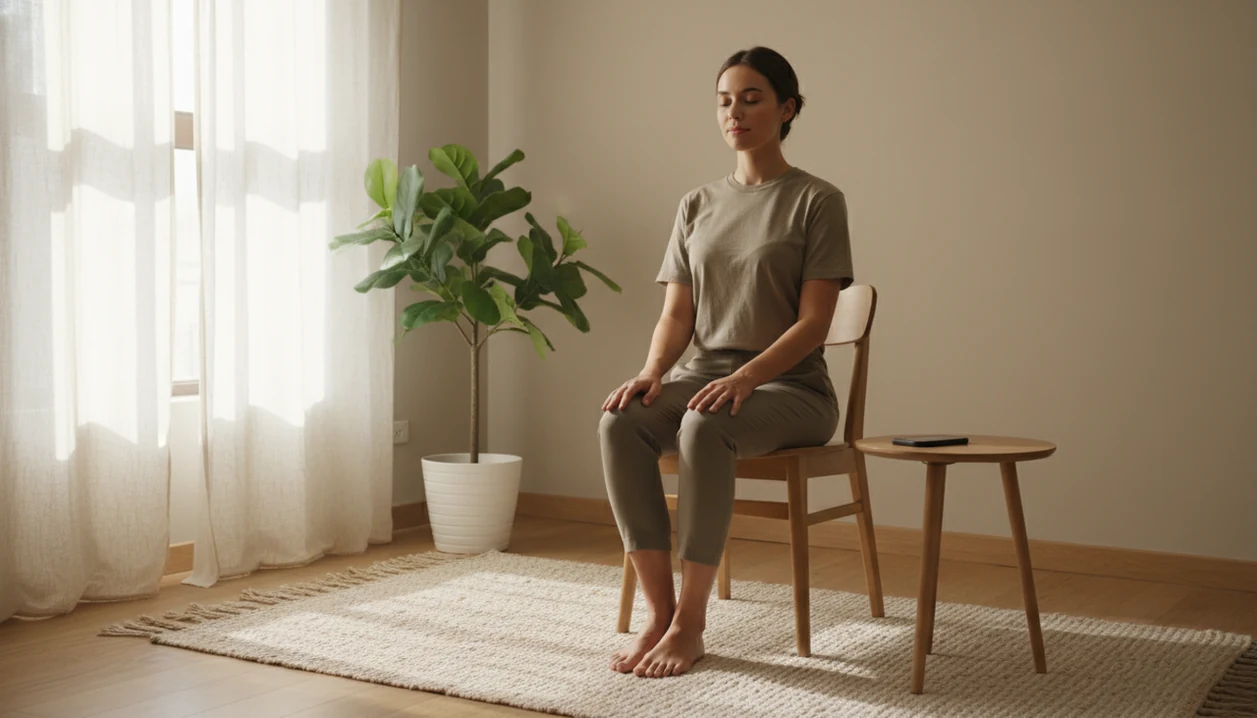
To start meditating, sit upright in a comfortable position, set a five-minute timer, rest attention on one anchor such as the breath, and gently return whenever your mind wanders. Meditation is the practice of noticing where attention goes and bringing it back without judgment. You do not need to clear your mind or feel calm to do it.
Choose a quiet place and use a chair, cushion, or supported seat on a bed that keeps you upright and relaxed. Breath, body sensations, sounds, and the feeling of your hands resting are all possible anchors. Begin with five minutes daily, increasing toward ten when that feels manageable. Distraction is part of the practice, not a mistake to correct.
The essentials
- Start with 5-10 minutes in a quiet place, using a chair, cushion, or bed if it keeps you upright and relaxed.
- Use one attention anchor: breath, body sensations, sounds, or touch points.
- The main beginner skill is not perfect focus; it is noticing wandering and restarting kindly.
Your first meditation: posture, anchor, and return
Before you start, treat meditation for beginners as a secular attention practice: choose a steady posture, rest attention on one anchor, and come back when the mind drifts. The aim is not an empty mind. The useful skill is noticing the drift and beginning again.
For a first session, 5 minutes is enough. Sit on a cushion, stand, or use any supported position that lets you stay alert without bracing. Keep the spine upright but not rigid. Pick one anchor, such as breathing, nearby sound, or the feeling of your hands resting.
Thoughts will arrive. You may remember an airport queue sign, a hospital rounds detail, or the coffee aroma from earlier after only a few breaths. That is normal. The beginner move is simple: notice the thought, allow it to be present, and restart without turning it into a problem.
Quietly restart. Again and again.
Five basics to remember before you meditate
- Start short: Beginners usually do better with 5-10 minutes than with long sessions that feel like a test.
- Sit steady: Use any stable position where the body is upright and relaxed, including a chair, cushion, or bed with support.
- Choose one anchor: Breath, body sensations, sounds, or touch points all work as beginner meditation anchors.
- Expect wandering: Mind wandering is normal and is not a sign that meditation has failed.
- Repeat often: Regular practice over weeks matters more than occasional long sessions.
For beginners, a 5-minute daily session is often easier than a 30-minute session once a week because the skill depends on repetition. Use a simple clock, a short track, or the natural ending of a quiet moment.
How Meditation for Beginners Works in the Mind
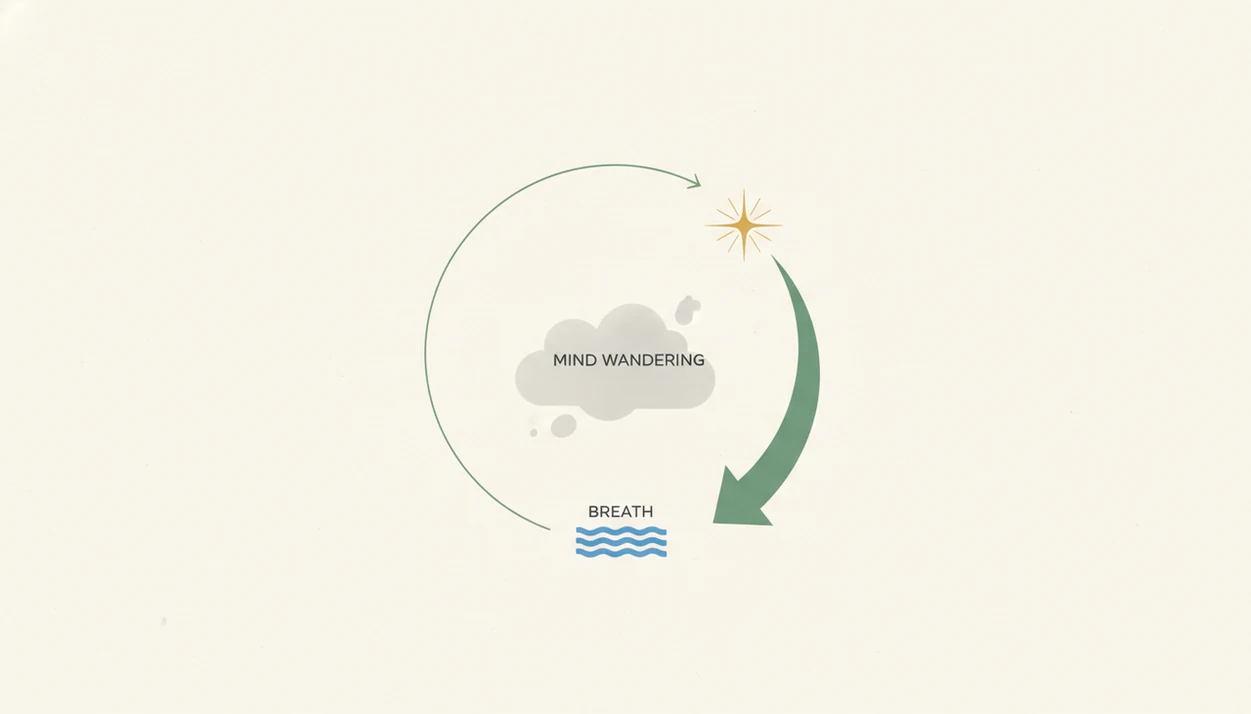
Meditation for beginners works through a simple attention loop: anchor, distraction, noticing, and returning. The anchor gives attention somewhere to land. Distraction shows the mind has moved. Noticing is the moment of awareness. Returning is the practice, whether your fingertips feel cold, your mouth feels dry, or the room is perfectly ordinary.
This is attention training, not thought suppression. You are not trying to force silence. You are practicing metacognition, which means knowing what your mind is doing while it is doing it. In plain language, you catch the drift sooner.
Research usually studies structured practice over weeks, not one relaxed afternoon. A 2014 meta-analysis of 47 randomized clinical trials found moderate improvements in anxiety and depression for mindfulness meditation programs. Source: Goyal et al., JAMA Internal Medicine, 2014: JAMA study Typical programs often use repeated practice across several weeks.
A good beginner session trains one small move: feel the anchor, catch the drift, and return without turning the drift into a problem.
Prepare a quiet spot and a five-minute timer
Before you start, reduce obvious friction. Pick a quiet or low-distraction place, set your phone to do not disturb, and use a gentle timer. Decide in advance that the first session is 5 minutes. A mindfulness checklist for beginners can help you prepare your space, posture, and attention before your first session.
Beginner Meditation Setup Checklist
- Place: Choose a bedroom corner, office stairwell, parked car, or other low-interruption spot.
- Timer: Use a soft bell or vibration rather than an alarm that jolts you.
- Posture: Sit on a chair, cushion, or bed with enough support to stay awake.
- Expectation: Restlessness, boredom, and uncertainty are part of the first week.
If you want a broader plain-language starting point, our mindfulness for beginners guide explains how attention practice fits ordinary life.
Follow this five-minute meditation sequence
Use these beginner meditation steps for one first session, not as a performance checklist. Read them once, then let the timer hold the structure for you.
- Set a 5-minute timer with a gentle sound or vibration.
- Sit upright with your hands resting comfortably, perhaps with thumbs resting on chair arms.
- Soften your eyes or close them if that helps you feel settled and alert.
- Feel the breath at the nose, chest, or belly, choosing only one spot.
- Notice wandering and label it lightly, such as “thinking” or “planning.”
- Return to the anchor without scolding yourself.
- End by sensing the body in the chair, feet, and hands before standing up.
The first session may feel ordinary. That’s fine. Tools like Mindful.net can be useful later when you want guided practice options, but the basic skill starts with one breath and one return.
Step 1: Choose a Beginner Meditation Posture
“How should beginners sit to meditate?” For most beginners, chair meditation is the easiest default because it supports the body without requiring flexibility.
Sit with both feet supported, or let the legs rest in any stable position. Keep the spine upright but relaxed. Let the hands rest on the thighs, lap, or chair arms. If you use a cushion, place it where the hips feel slightly supported. If you meditate on a bed, sit upright against pillows so the session does not turn into a nap.
Pain is useful information. If your knee, back, or foot starts to complain, adjust quietly. Meditation is not a test of stillness through strain.
Step 2: Pick a Meditation Anchor for Beginners
A meditation anchor is the place you return attention to during practice. Breath is common, but it is not the only valid choice. If breath focus feels tight, uncomfortable, or anxiety-provoking, use sound, touch, or a body scan instead.
| Anchor | Good for | Watch for |
|---|---|---|
| Breath at nostrils | Clear, small focus | May feel too intense for some |
| Chest movement | Easy to locate beneath a shirt | Can feel emotional for some people |
| Belly movement | Grounding, slower sensation | Hard to feel at first |
| Body scan | People who like structure | Can become sleepy |
| Sounds | Restless beginners | Easy to chase each sound |
| Touch points | Quick grounding | May feel too subtle |
Stay with one anchor for the session. If you want to compare styles later, our meditation techniques guide lays out several beginner-friendly options.
Step 3: Handle Wandering Thoughts During Meditation
“Why does my mind wander when I meditate?” Because minds produce thoughts. Wandering thoughts are normal, and handling them is the core beginner skill.
Use a three-part loop: notice, name, return. Notice that attention has left the anchor. Name the experience lightly, using a simple label like “thinking,” “planning,” “remembering,” or “judging.” Then return to the breath, sound, body sensation, or touch point.
Do not criticize yourself for thinking. That adds a second layer of struggle. Also avoid forcing mental silence. If the phone buzz is noticed without grabbing it, that is already practice.
One return counts.
Step 4: Build a Daily Beginner Meditation Habit
A daily beginner meditation habit works better when the time, place, and cue stay familiar. Start with 5 minutes for one week before increasing the timer.
Attach meditation to something that already happens. Try after brushing teeth, after coffee, at lunch, or before a bedtime routine if it does not make you too sleepy. A three-minute breathing pause before opening a laptop can also work on crowded mornings.
Consistency beats session length for beginners because attention practice grows through repeated returns. Studied mindfulness programs often last 8 weeks, which is a useful reminder. For example, standard mindfulness-based stress reduction programs are commonly taught over 8 weeks: Mbsr You are building a pattern, not trying to win one session.
For realistic expectations, compare your experience with a meditation benefits timeline.
Common Myths About Meditation for Beginners
- Myth: You must clear your mind. Meditation asks you to notice thoughts and return, not erase thinking.
- Myth: You must sit cross-legged. A chair is often the most practical beginner posture.
- Myth: Meditation is only spiritual. Many people use it as a secular attention practice for stress, focus, and self-awareness.
- Myth: Restlessness means you are doing it wrong. Restlessness is something to notice, not proof of failure.
- Myth: One session should create dramatic benefits. Most meaningful changes come from repeated practice.
If the terms blur together, the mindfulness vs meditation explanation can help. Meditation is a formal practice. Mindfulness can also happen while walking, listening, or pausing before replying to a message.
Beginner Meditation Troubleshooting for the First Week
First-week problems are common, and most have simple fixes. Adjust the practice before deciding meditation is not for you. For practical adjustments to your first sessions, these meditation tips for beginners offer ways to start small.
- Sleepiness: Open your eyes, sit more upright, or meditate earlier in the day.
- Overthinking: Label “thinking” and return to a physical sensation, such as the breath or feet.
- Restlessness: Shorten the timer to 3 minutes or use sounds as the anchor. For a gentler approach to agitation, try meditation for restless beginners and build comfort with shorter sessions.
- Emotional overwhelm: Open your eyes, feel your feet on carpet or tile, and stop if needed.
- Leg discomfort or numbness: Change posture without self-criticism.
- Too many instructions: Use one sentence only: “Feel the breath, notice wandering, return.”
If guided audio helps, pause the audio beside a water glass afterward and sit for one extra quiet breath. That small transition keeps the session from ending too abruptly.
Meditation Benefits for Beginners and Evidence
Common beginner goals include stress reduction, steadier focus, emotional regulation, and better self-awareness. The evidence is strongest for regular, structured mindfulness programs, not a single short session.
A 2014 meta-analysis of 47 randomized clinical trials found that mindfulness meditation programs produced moderate improvements in anxiety and depression compared with control conditions. Source: Goyal et al., JAMA Internal Medicine, 2014: JAMA study A large workplace study also reported a 31% decrease in self-reported stress after an 8-week mindfulness meditation program. Source: Bostock et al., JMIR mHealth and uHealth, 2019: E12188
Clinicians typically recommend mindfulness as a complement to appropriate care, not as a replacement for medical or psychological treatment. The most common evidence-supported format is regular structured practice over several weeks, often with guidance, while short solo sessions fit people building the habit.
For a broader evidence summary, read our guide to the benefits of mindfulness.
A five-minute start is not the same as a clinical program
Five minutes is a manageable starting point, not the practice schedule used in many clinical studies. A systematic review of mindfulness-based stress reduction describes typical courses with eight weekly sessions lasting about two to two and a half hours, plus roughly 45 minutes of home practice on six days each week. Results from those programs should not be treated as promises about a brief daily session.
Even in structured courses, participants do not complete every assigned session. A review of 43 MBSR and MBCT studies found that participants completed approximately 60% of assigned formal home practice. Missing a day is therefore a reason to reconsider the schedule, not declare failure. For a beginner, keep a repeatable short session before taking on a longer commitment.
Set a reminder to pause and practice
A five-minute session is easier to plan when it has a place in your day, such as after brushing your teeth or before lunch. A mindfulness bell can prompt a brief pause to notice your chosen anchor. Mindful.net also offers short guided meditations when spoken instructions help. Persistent distress calls for qualified support, not more reminders or longer sessions.
A short practice you can listen to now
To try a guided start, use your device’s read aloud feature, if available, to play the paragraph below. Select only the practice text, choose a comfortable volume, and start playback. You can leave your eyes open and look away from the screen. Let the recording finish without checking your progress or trying to keep up with every instruction.
Take a moment to arrive. Notice where your body meets the surface supporting it. Let your breathing happen without changing it. Feel one breath come and go. Now notice the next. If you have lost track of these words, pick up at this sentence. You do not need to rewind or catch up. Let the practice end here, then look around before continuing your day.
Beginner Meditation Limits
- Meditation is not a quick fix, and benefits are usually studied over weeks or months.
- Meditation does not replace medical care, therapy, medication, or crisis support.
- Unsupervised intensive practice can be difficult for people with trauma histories or certain psychiatric conditions.
- If meditation worsens symptoms, stop and consider support from a qualified professional.
Beginner meditation questions
How do I meditate for the first time?
Set a five-minute timer and sit comfortably with your spine upright but relaxed. Notice ordinary breathing at one spot, such as your nose or belly. When attention wanders, acknowledge it and return. Finish by noticing your body and the room. A quiet mind is not required.
Should I control my breathing during meditation?
For basic breath meditation, let breathing happen naturally. Notice the sensations of inhaling and exhaling without making each breath slower or deeper. Breath meditation is attention practice, not a breathing exercise. If watching your breath feels uncomfortable or increases anxiety, choose sounds or the contact of your feet with the floor instead.
Why can't I stop thinking when I meditate?
Thinking is expected during meditation. The task is not to stop thoughts but to notice when attention has left your anchor. You can quietly label the distraction as thinking or planning, then return. Repeating this many times still counts as practice; it does not mean the session has failed.
Do I have to sit cross-legged to meditate?
No. A supported chair is a practical starting position, with your feet supported and hands resting comfortably. A cushion, supported seat on a bed, or standing position can also work. Keep your posture alert rather than rigid, and change position if you feel pain or numbness. Discomfort is not something you must endure.
How do I know if I'm meditating correctly?
Look for the basic attention loop: you notice your chosen anchor, recognize that attention has wandered, and return without scolding yourself. Calmness, mental silence, and a special emotional state are not requirements. A restless session can still include this practice. Adjust your posture or shorten the session when needed.
What should I do if I fall asleep during meditation?
Falling asleep during meditation can happen, especially when you are tired or lying down. Try sitting upright, practicing earlier in the day, or keeping your eyes slightly open. If sleepiness keeps returning, consider whether you need more rest. There is no need to judge yourself for getting drowsy.