
How to Meditate for 5 Minutes: A Simple Beginner Practice


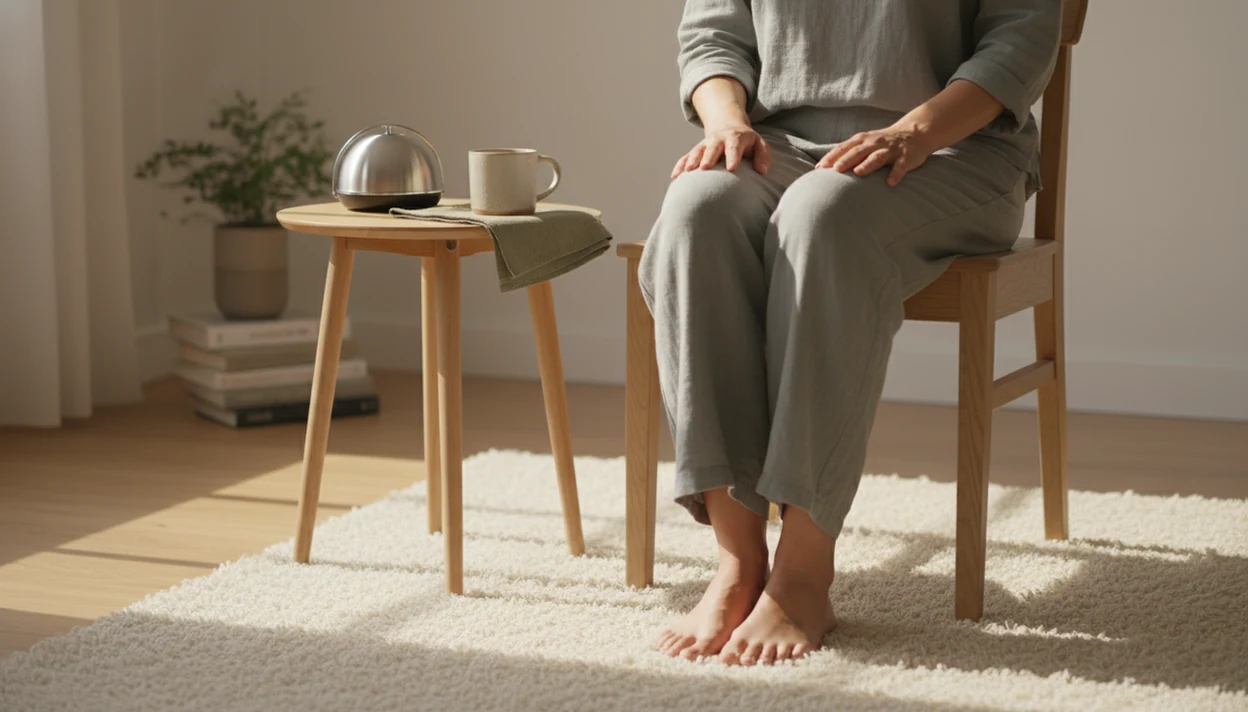
To meditate for five minutes, set a timer, choose one focus such as your breath, and return to it whenever you notice your attention wandering. Find a quiet place if you can, but do not wait for perfect silence. Sit in a stable, comfortable position and let your breathing stay natural. The aim is not to clear your mind or force yourself to feel calm.
A five-minute meditation is a complete short practice built around noticing and returning. Your anchor can be breath, body sensations, sounds, or a guided voice. Choose one for the session so you have a clear place to bring your attention back. A timer removes the need to watch the clock, and each return counts as part of the practice, even when thoughts keep interrupting.
The essentials
- Use one anchor for the whole session: breath, body sensations, sounds, or a guided voice.
- Set a timer so you can stop checking the clock and simply practice returning attention.
- A wandering mind is normal; every return to the anchor is part of the meditation.
Five minutes counts as a complete practice
A five-minute meditation is not a warm-up you failed to extend. It is a complete short practice. If you pause for five minutes, catch your attention drifting, and come back to one chosen anchor, you are meditating.
No special setup is required. You might stand by a bright window, rest a warm coffee mug in your palms, or pause after a wooden floor creak reminds you to slow down. You do not need a chant, a spiritual belief, or an app. A steady-enough body and one clear focus are enough.
The session still counts if your mind jumps to the customer support queue, a paint color on the easel, or ten unfinished errands.
Mindfulness meditation is widely studied, including for stress, anxiety, and pain, according to the National Center for Complementary and Integrative Health NCCIH overview; this guide does not treat it as medical care. For a broader starting point, our mindfulness meditation guide explains the practice in plain language.
The attention loop: notice distraction and return
Five-minute meditation works through a simple loop: choose an anchor, recognize that attention has wandered, and come back. The comeback is the useful repetition, almost like a small attention rep rather than a test of whether your mind stayed perfectly still.
You are not training yourself to have no thoughts. You are training recognition. The moment you notice, “I’m planning lunch,” and feel the breath again, the practice is happening. Tiny, ordinary, repeatable.
Calm may show up, but it is not the only success metric. Some sessions feel settled. Others feel noisy, especially if you try them in stale office air between meetings. Both can still build familiarity with attention.
The National Center for Complementary and Integrative Health says mindfulness meditation is one of the most commonly studied meditation types in research on stress, anxiety, and pain NCCIH overview.
What research says about five-minute sessions
Five minutes is a reasonable starting point, but research does not establish it as the ideal length for everyone. A small randomized trial of 71 participants compared four five-minute sessions with four 20-minute sessions over two weeks. The shorter-session group reported greater improvements in mindfulness and stress. That brief, small study does not prove that five minutes is generally better.
Regularity may matter more than extending each session. A 2025 observational dose-response study found that practice frequency was a stronger predictor of well-being, affect, and distress outcomes than session duration. Because this was an association, it cannot show that adding practice days directly caused those improvements. It does support paying attention to how often you actually practice.
There is also no need to stay at five minutes indefinitely. In a 2023 digital-meditation study, five- to ten-minute sessions were associated with higher mood scores early in training, while longer sessions were associated with higher scores later. Start briefly, then consider more time if it remains comfortable and repeatable. These findings are not a deadline for increasing your session length.
Before You Start a 5 Minute Meditation Session
Before you begin, make the session simple enough that you can actually do it. A 5 minute meditation for beginners works better when the setup removes decisions.
- Posture: Sit in a chair with both feet on the floor, or choose another stable position that keeps you alert.
- Timer: Set five minutes with a gentle ending sound, so you are not checking the clock.
- Anchor: Pick one focus before starting: breath, body sensations, sounds, or guided audio.
- Interruptions: Silence avoidable alerts, but do not wait for perfect silence.
- Expectation: Plan to wander and return many times. That is normal practice, not a mistake.
A folded towel on bedroom carpet works fine if that is what you have. The point is not to create a meditation studio. The point is to start. If sitting on the floor feels uncomfortable, you can meditate in bed while keeping a clear focus.
How to Do a 5 Minute Meditation Step by Step
Use these five steps for a secular, repeatable five minute meditation. If you want a longer version later, the same attention loop appears in our guide on how to meditate.
- Set a timer for five minutes with a soft bell or vibration.
- Sit in a stable posture, with your back upright and shoulders easy.
- Choose one anchor, such as the breath moving at the nose, chest, or belly.
- Notice when attention wanders, name it lightly as “thinking,” and return to the anchor.
- End by hearing the bell, feeling your body, and opening your eyes if they were closed.
For beginners, using one anchor for all five minutes is often easier than switching techniques because it reduces decision-making.
These steps are a practical version of focused-attention meditation: you place attention, notice distraction, and return without treating the distraction as a problem. NCCIH describes mindfulness meditation as a practice that trains present-moment awareness rather than a technique for forcing the mind blank NCCIH overview.
Simple 5 Minute Meditation Script You Can Follow
Can you follow a simple five minute meditation script without memorizing anything? Yes. Read this once, record it in your own voice, or glance at it before starting.
Minute 1: Settle the Body
Sit down and feel the contact points of your body. Notice feet on carpet or tile. Let the shoulders drop a little. You do not need to force relaxation. Just arrive.
Minutes 2 to 4: Return to the Breath
Bring attention to breathing. You might silently repeat, “breathing in, I know I am breathing in.” When the mind moves away, notice that it moved. Then return to the next breath.
Again. Return.
Minute 5: Close the Practice
In the final minute, feel the whole body sitting. Hear sounds around you. When the bell tone ends the practice, pause before reaching for your phone.
Choose an anchor you can return to comfortably
The best anchor is the one you can return to without strain. Breath focus is common, but it is not mandatory.
| Anchor | Good for | May not suit |
|---|---|---|
| Breath | People who like a steady internal focus | Anyone who feels tense watching the breath |
| Body sensations | People who need something concrete, like feet or hands | Anyone distracted by discomfort |
| Sounds | People in ordinary noisy settings | Anyone irritated by unpredictable noise |
| Guided voice | People who want prompts and structure | Anyone who prefers silence |
A phone buzz noticed without grabbing can become part of sound practice, if you leave it alone and return. That small restraint is real training.
In a five-minute practice, the task is to notice where attention has gone and return to your anchor, not to erase stress on command.
Common 5 Minute Meditation Mistakes
Most beginner mistakes come from trying to control the session too tightly. A five minute meditation works better when you practice returning instead of performing calm.
- Empty-mind chasing: You do not need a blank mind. Noticing thought is part of meditation.
- One-distraction panic: A single distraction does not ruin the session. It gives you a return.
- Anchor hopping: Changing from breath to sound to body every few seconds makes attention harder to train.
- Clock checking: Use a timer so the practice is not broken into little countdowns.
- Relaxation forcing: Trying to feel peaceful can create more tension.
- Session judging: “That was bad” is another thought to notice, not a final score.
For more options beyond breath, compare meditation techniques for beginners before choosing your anchor.
How to Make a Short Meditation Practice Repeatable
A short meditation practice becomes repeatable when you remove novelty for the first week. Use the same chair, same timer, and same anchor for seven days.
Attach the five minutes to something that already happens. Try after brushing teeth, before opening email, or before starting the laptop. A three-minute breathing pause can also help on rushed mornings, but keep the formal session at five minutes if that is your plan.
Consistency matters more than having a deeply relaxing session. Some days the mind taps like a pencil during study time. Still practice. For evidence framing, treat five minutes as habit-building practice; clinical mindfulness programs studied in reviews are usually structured programs, not one isolated micro-session JAMA study.
Five minutes is shorter than many research sessions. NCCIH notes that many meditation studies use 10 to 30 minute sessions, so five minutes is a beginner-friendly entry point, not the only useful format. When five minutes feels manageable, try ten minutes of meditation using the same attention loop.
How can I time five minutes without watching the clock?
During a five-minute session, checking how much time remains can pull attention away from your chosen anchor. The free online meditation timer lets you time the practice without repeatedly checking the clock. Mindful.net also offers short guided meditations in its app when spoken prompts would help. A basic phone timer is enough for silent practice; you do not need another app to begin.
Recording a five-minute practice with timed pauses
The transcript below is ready to record, with a total running time of exactly five minutes. Start each spoken cue at its marked time, then leave silence until the next cue. Read only the words in quotation marks, not the timestamps or recording directions. Keep the pace unhurried, with each cue finished within its allotted minute. Begin the closing cue at 04:45 and end the recording at 05:00. The pauses are part of the practice, not gaps to fill with extra guidance.
Minute-by-minute transcript for the five-minute recording
This version uses the feeling of your feet touching a surface as the focus throughout. Before playback, place your feet somewhere they can rest comfortably. Each minute contains a short spoken instruction followed by quiet time. If you are reading rather than listening, read one item at the start of each minute and practice quietly for the time that remains. The final item includes a separate closing cue for the last fifteen seconds.
- 00:00 to 01:00. Say: “Let your feet rest on the floor or another supporting surface. Your eyes can stay open. Notice where your feet make contact. You might feel pressure at your heels, the balls of your feet, or your toes. Let your attention rest on those points of contact.” Leave silence until 01:00.
- 01:00 to 02:00. Say: “Stay with the feeling of contact beneath your feet. Notice whether the pressure feels even or different on each side. There is no need to adjust it or find a particular sensation. Simply feel what is available right now.” Leave silence until 02:00.
- 02:00 to 03:00. Say: “If you notice that you have been following a thought, let that be your cue to feel your feet again. You do not need to finish the thought first. Find one clear point of contact and rest your attention there.” Leave silence until 03:00.
- 03:00 to 04:00. Say: “Continue feeling the contact beneath your feet. Sounds and thoughts can remain in the background. If a sensation changes, notice the change. If it stays much the same, notice that too. Keep your attention with this small area of your body.” Leave silence until 04:00.
- 04:00 to 05:00. At 04:00, say: “For these last moments, stay with the support beneath your feet. There is nothing extra to accomplish before the practice ends.” Leave silence until 04:45. Then say: “Now notice the room around you. Gently move your toes if you wish. Take a moment before your next activity.” Leave silence until the recording ends at 05:00.
Five Minute Meditation Limits
- Five minutes may be too short for dramatic stress relief, especially during high pressure periods.
- Benefits are usually gradual and depend on practice, not guaranteed after one session.
- Seek qualified medical or mental health support when needed, rather than relying on meditation as a substitute.
- The JAMA study found moderate evidence for mindfulness programs, not isolated five minute sessions.
Five-minute meditation questions
What should I focus on during a five-minute meditation?
Choose one anchor: the feeling of breathing, contact between your feet and the floor, surrounding sounds, or a guided voice. Keep that focus for the session rather than changing every few seconds. Breath is common, but not required. Pick something you can return to without strain.
How do I meditate for five minutes without a guide?
Set a five-minute timer and sit in a stable position. Notice your chosen anchor, such as breathing at the nose or belly. When thoughts pull you away, recognize that and return. At the ending sound, feel your body and finish. You do not need a script or a blank mind.
What if I spend the whole five minutes thinking?
Noticing that you are thinking is part of meditation. Each time you recognize a thought and return to your anchor, you are practicing the central skill. Avoid judging the session by how few thoughts appeared. A busy session can still include useful moments of noticing and returning.
Should I meditate for five minutes every day?
Practicing on most days is a reasonable starting plan. Research associates more frequent practice with better outcomes, but that does not mean a missed day cancels your progress. Attach the session to an existing routine, and keep a backup time so missing your preferred slot does not mean skipping altogether.
When should I increase meditation beyond five minutes?
Consider increasing the time when five minutes feels manageable and you want more practice, not because short sessions no longer count. Harvard Health guidance suggests starting with five minutes on most days and gradually moving toward ten to 20 minutes. There is no universal minimum or required date for extending a session.
What should I do if focusing on my breath feels uncomfortable?
You do not have to use the breath. Try noticing your feet on the floor, your hands resting, or sounds around you. Choose the least strained focus rather than forcing yourself through discomfort. You can also stop the session. Meditation is not a substitute for medical or mental health support.