
Meditation for Impatient People: Short Practices for Restlessness


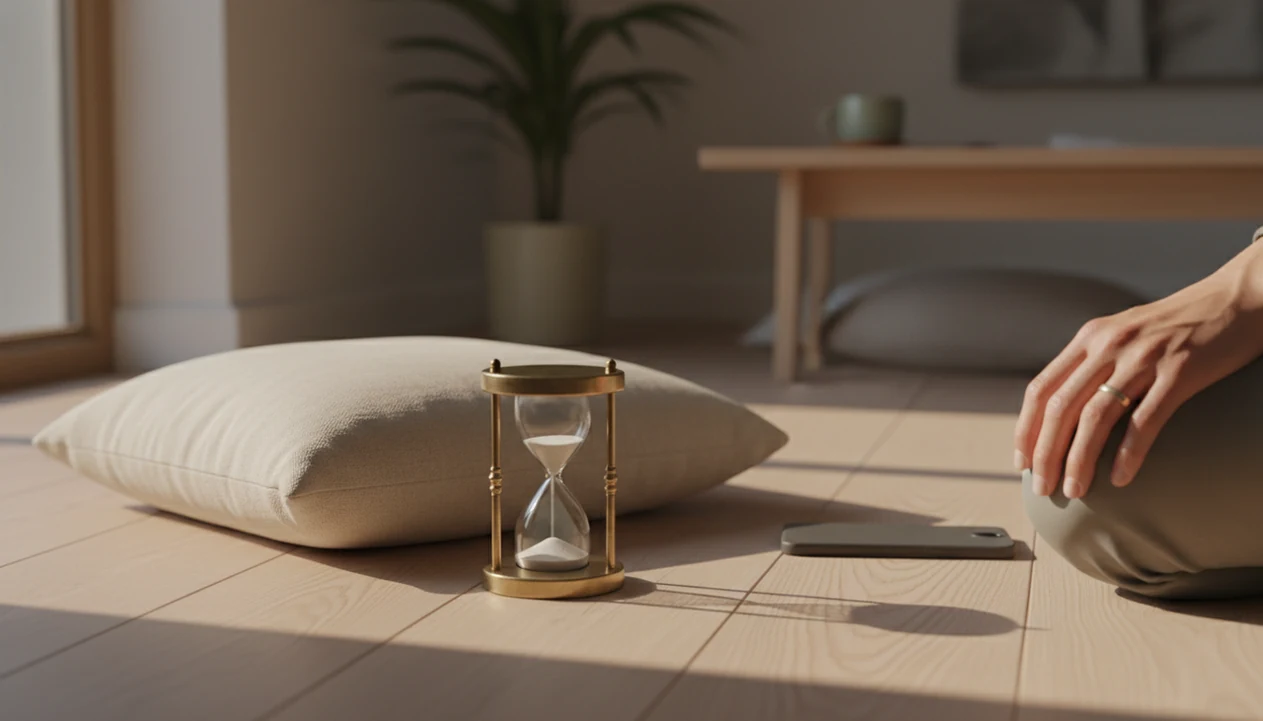
Meditation for impatient people is a brief, structured practice of noticing restlessness, boredom, and the urge to rush without immediately acting on them. The aim is not to erase impatience or force calm. You give attention one clear job, notice when it wanders, and return to an anchor such as sound, breathing, or the feeling of your feet on the floor.
You do not need to begin with 20 minutes of stillness. One to five minutes is a practical starting range, not a proven minimum dose. Breathing pauses, walking meditation, sound practice, body scans, and labeling impatience offer different ways to begin. Boredom does not mean the session has failed; noticing it gives you something concrete to practice with.
The essentials
- You do not need 20 minutes of stillness; 1-5 minute practices are more realistic for impatient beginners.
- Feeling bored during meditation is not failure; it is useful material for training attention and impulse control.
- The best formats are structured micro-practices: breathing pauses, sound meditation, walking meditation, body scans, and labeling impatience.
5 short meditations for impatient people
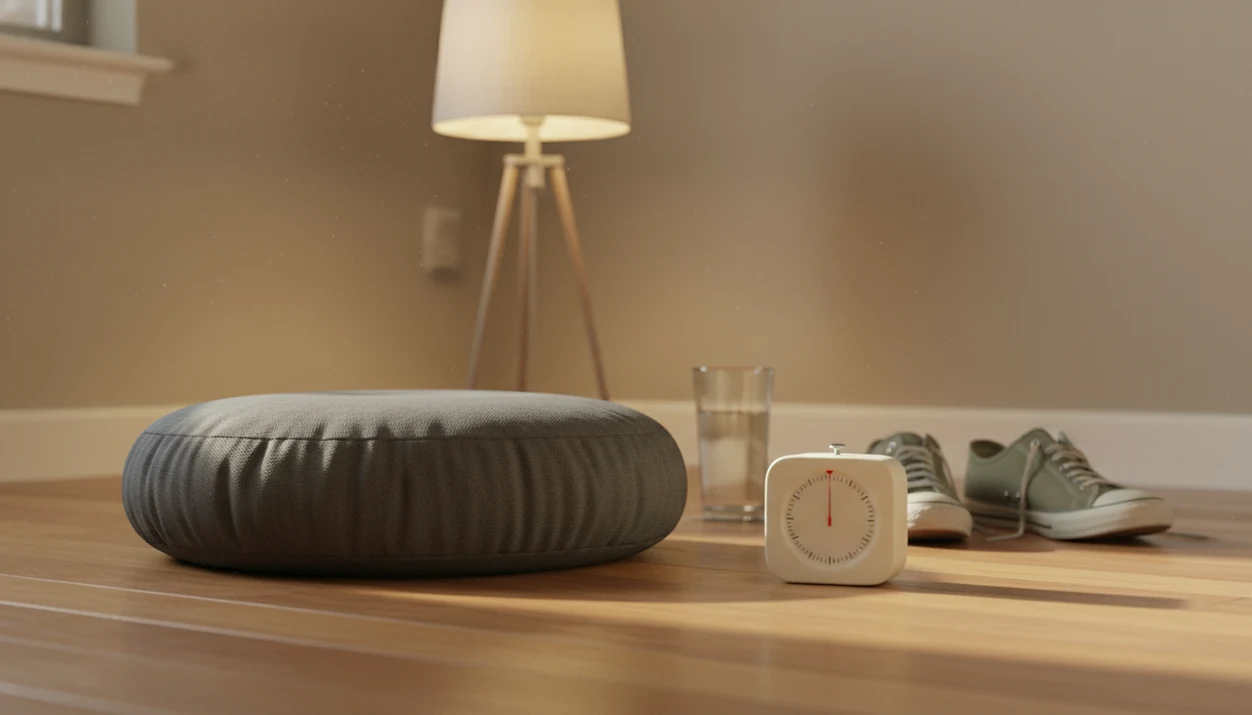
The right short meditation depends on what impatience feels like in your body: restless, bored, trapped, sleepy, or mentally scattered. Short practices have research support in brief mindfulness studies, though ultra-brief sessions under 1-2 minutes have less direct evidence than longer programs. Treat the time ranges in this table as starting points, not clinical thresholds; the evidence is stronger for repeated brief practice than for one-off emergency calming.
| Format | Time needed | Best use case | Who should skip it |
|---|---|---|---|
| 60-second breathing pause | 1 minute | Scattered mind | Anyone who finds breath focus irritating |
| Sound-counting meditation | 2-5 minutes | Bored during meditation | People with sound sensitivity |
| Standing body scan | 1-3 minutes | Trapped or fidgety feeling | Anyone dizzy or unsteady |
| Walking meditation | 3-5 minutes | Restless body | Unsafe or crowded settings |
| Label-the-impatience practice | 30-90 seconds | Phone-checking urges | Intense distress or panic |
Mindful.net includes these kinds of short, secular formats because impatient beginners often need a practice they can finish before they argue with it. A soft lamp in a quiet corner helps, but a hallway works too.
Notice the urge to rush, then return to an anchor
Impatience is a mix of thoughts, body sensations, emotion, and an urge to act quickly. Meditation trains the gap between “I need this to end” and the action that usually follows. Understanding mindfulness versus meditation can clarify how noticing impatience in daily life differs from setting aside practice time.
Before you start, make the job concrete: pick one anchor, catch the rush when it shows up, give it a plain label, come back, and do that again. That is the rep. You are not trying to become instantly serene; you are practicing the ability to steer attention when the stomach flutters and the mind wants the next thing. Restlessness is not failure. It is the training weight.
Research on mindfulness-based approaches links practice with emotional-regulation gains, but effects are usually modest and study designs vary. A 2018 systematic review and meta-analysis of brief mindfulness training found small-to-moderate reductions in negative affect, anxiety, depression, and stress: PubMed research For impatient beginners, the practical next step is often learning how to meditate without adding pressure.
Acceptance is part of attention training
Watching your attention is only part of the practice. In a randomized study of 147 healthy young adults, participants received three days of attention monitoring with acceptance, attention monitoring alone, relaxation training, or a reading control. The monitoring-plus-acceptance group had the lowest mind wandering, significantly below the group taught attention monitoring alone.
For an impatient beginner, the practical distinction is between noticing “I want this to end” and arguing with that thought. Let the urge be present while you return to sound, breath, or contact with the chair. This is an application of the finding, not a tested one-minute treatment for impatience: the study used three days of training and measured mind wandering. If practicing alone leaves you confused or discouraged, consider when to ask a mindfulness teacher for support.
Choose an anchor and a safe place before starting
Before you meditate, make the practice hard to argue with. The setup should lower friction, protect safety, and define success before your restless mind starts negotiating. If you want guided support, learn how to choose a meditation teacher safely before committing to classes.
- Choose a low-distraction place where it is safe to pause and where ending early would not create a problem. A chair, hallway, parked room, or quiet corner is enough; do not practice where you need full alertness.
- Pick one anchor before the timer starts: breath, sound, feet, hands, or the feeling of sitting. Deciding in advance prevents the “which technique is best?” loop from becoming another excuse to quit.
- Set a timer you can finish without bargaining. If 5 minutes turns into a courtroom debate, use 60 seconds.
- Skip breath focus if it reliably makes you more irritated, tight, or panicky. Use sound, contact with the floor, or walking instead.
- Define success as one return. You do not have to feel calm. Notice wandering, come back once, and count that as the practice.
5-step short meditation for impatience
A short meditation for impatience should be small enough that you actually do it. If 5 minutes feels impossible, start with 30-90 seconds and count one return as success. For a simple way to build this skill, try basic awareness meditation with a brief session and one clear anchor.
- Set a tiny timer for 30 seconds, 1 minute, or 5 minutes.
- Choose one anchor such as breath, sound, feet on the floor, or chest movement beneath a shirt.
- Notice the first urge to quit without moving right away.
- Label the feeling with one plain word: “rushing,” “bored,” “tight,” or “done.”
- Return once more to the anchor before you stop.
That last return is the win. Not calm. Not silence. Just returning once.
Mindful.net uses this “notice and return” workflow in the Mindfulness Practices App because it gives impatient users a clear finish line, almost like marking a Parking Lot Pause on a teaching whiteboard: park the urge, return to the anchor, then review what happened. For a broader foundation, the mindfulness meditation starter guide explains the same skill in slower detail.
Walking meditation for restless bodies
Walking meditation is useful when sitting still increases irritation. Movement can preserve the core mindfulness skill without forcing a rigid posture that makes you want to bolt.
Try this: walk slowly and label each phase of the step, “lifting,” “moving,” “placing.” If attention bolts toward the next caregiving task, the garage corner you meant to organize, or the shirt sleeve brushing your skin, begin again with the next step. The ground does not need an apology.
Best for: fidgety people, transition moments, office stairwells, and the space between meetings. Not ideal for: driving, crowded unsafe places, or situations that require eyes-up awareness.
When stillness is the problem, walking practice fits because it trains attention while letting the body move. Mindful.net often points beginners toward movement-based practice before longer sitting sessions because the mechanism matters more than posture. For local support with movement or sitting practice, consider finding a meditation teacher near you who welcomes beginners.
Sound-counting practice for boredom during meditation
Sound can feel easier than breath when you get bored during meditation because it gives attention a changing object. You are still practicing mindfulness, but the anchor has more texture.
Sit or stand, then listen for 10 distinct sounds. Count each one silently. If the mind comments, “car,” “annoying,” “too loud,” or “that was the fridge,” restart at one. The goal is not to identify every sound. The goal is to notice hearing and reaction.
Best for: boredom, mental chatter, and people who dislike watching the breath. Not ideal for: overstimulating environments, migraines, sound sensitivity, or shared spaces where noise already feels sharp.
Mindful.net includes sound-based options alongside breath practices because different anchors suit different nervous systems. If you want more options, compare several meditation techniques for beginners before choosing one format.
Labeling the urge during impatient meditation sessions
What should you do when you are impatient during meditation? Make impatience the object: locate it, name it, rate it, and watch whether it changes before you obey it.
Start by finding the body signal. Is it a stomach flutter, dry lips, tapping fingers, heat in the face, or that forward-leaning feeling of wanting to be finished? Then name the thought: “This is pointless,” “I’m wasting time,” or “I need to move on.” Rate the urge from 1 to 10. Take one breath with it. Rate it again.
Best for: irritation, phone-checking urges, waiting rooms, and the grocery line with a clenched basket. Not ideal for: overwhelming panic, trauma activation, or intense distress without support.
For impatient people, labeling often works better than forcing calm because it turns the urge itself into practice material. Mindful.net treats this as everyday mindfulness, not a personality test.
Common mistakes when meditating impatiently
Trying to become calm quickly can turn meditation into another task to rush through. For impatient people, the practice is noticing the push to hurry, then returning once without making restlessness a problem to solve.
- Notice when you are trying to force calm. If the jaw tightens around “I should be relaxed by now,” label that as pressure and make the pressure the object.
- Shorten sessions before avoidance becomes the habit. A finished 60-second practice teaches more than a 15-minute session you keep postponing.
- Change the anchor when breath focus makes things sharper. Sound, walking, feet on the floor, or hands touching fabric may fit better than watching the inhale.
- Return once when boredom appears instead of quitting on the first wave. You can still stop after that return; the extra moment is the training.
- Treat restlessness as useful material. Fidgeting, irritation, and the urge to check your phone are not signs you failed. They are the exact moments the practice was built for.
When restlessness calls for stopping, not more effort
Ordinary boredom and an urge to move are different from distress that affects daily functioning. A systematic review of 83 studies estimated meditation-related adverse events at 8.3% overall, with estimates varying sharply between experimental and observational studies. Those figures cover varied practices and study methods; they do not establish the risk of the short exercises on this page.
If mild restlessness grows, shorten the session, open your eyes, change posture, or try walking instead of sitting. Do not respond to severe distress by increasing meditation time. Trauma-related re-experiencing, dissociation, mania-like activation, or difficulty functioning warrants stopping unsupervised practice and seeking advice from a qualified clinician. Meditation is not a substitute for appropriate care.
Choose a short practice you can repeat
Good formats for impatient beginners reduce friction and give the mind a clear job. Long silence, complex visualization, and perfect posture were deprioritized because they often create more resistance than attention.
- Short duration: A 1-5 minute practice lowers the starting barrier.
- Clear anchor: Breath, sound, feet, or body sensations give attention somewhere specific to return.
- Low setup: A kitchen chair, bus seat, or office corner should be enough.
- Real-life usability: The practice should work before email, after a call, or while waiting.
- Direct work with impatience: The format should include the urge to rush, not pretend it will vanish.
In a randomized trial of short app-based mindfulness practice, 10 days of Headspace use improved positive affect and reduced depressive symptoms compared with an audiobook control, though this does not prove every 1-minute practice will have the same effect: S12671 016 0610 0 Mindful.net applies that research cautiously: brief practice can help, but consistency matters more than chasing a flawless session. For a daily structure, use a first week meditation plan.
Short Meditation Limits
- Meditation supports attention and emotional regulation, but it is not a quick fix or a source of instant calm.
- Practices under 1 to 2 minutes have less evidence than longer mindfulness programs.
- Some people feel more frustration when slowing down, especially when starting meditation.
- Seek professional help for chronic anger, ADHD, severe anxiety, or crisis level distress rather than relying on meditation alone.
Meditation questions for impatient beginners
Can I meditate if I cannot sit still?
Yes. Walking meditation lets you practice attention while moving: notice each step and return to the feeling of your feet when attention wanders. If you sit, choose a comfortable posture rather than forcing stillness. Use a safe place where you do not need to stay alert to traffic or other hazards.
Why do I get bored during meditation?
A quiet, repetitive anchor can leave you wanting something more interesting. Boredom is not proof that you are doing meditation wrong. Notice the urge to change activities, label it “bored,” and return once. If breath watching feels especially tedious, try listening to sounds or paying attention to walking.
Is one minute of meditation enough?
One minute is enough to practice noticing distraction and returning to an anchor. It is not a proven dose for lasting changes in impatience or anxiety. Ultra-brief sessions have less direct evidence than longer programs. Treat a minute as a manageable starting point, not a promise of immediate relief.
What should I do when I want to quit meditating?
Notice where the urge shows up, such as tapping fingers or tension in your stomach. Name it with a simple word like “rushing” or “done.” If the discomfort is mild, return to your anchor once before stopping. If distress intensifies, adjust or stop rather than forcing yourself to finish.
What meditation is easiest when focusing on breathing annoys me?
Try a different sensory anchor. You can feel your feet on the floor, notice contact with a chair, listen to sounds, or attend to each step while walking. Breath focus is not required. Choose sound practice cautiously if noise is overstimulating or you have sound sensitivity.
How long should an impatient beginner meditate?
Start with 30 to 90 seconds if five minutes feels difficult to attempt. Choose a clear anchor and define success as noticing distraction and returning once, not staying calm throughout. One to five minutes can be a practical starting range, but these durations are not clinical thresholds.
Does meditation actually reduce impatience?
Meditation practices noticing the urge to rush before acting on it. Research supports benefits for attention and mind wandering, including an added benefit from acceptance alongside attention monitoring. That does not establish a guaranteed reduction in impatience from a brief session. Look for changes in how you respond, not instant calm.
Can meditation help with anger when I am impatient?
A short practice can give you a way to notice body tension, label irritation, and pause before reacting. It should not be treated as a stand-alone solution for chronic anger or crisis-level distress. If slowing down increases distress or anger affects daily functioning, seek professional support rather than relying on meditation alone.