
Build an Evening Meditation Habit with Five Minutes and a Nightly Cue


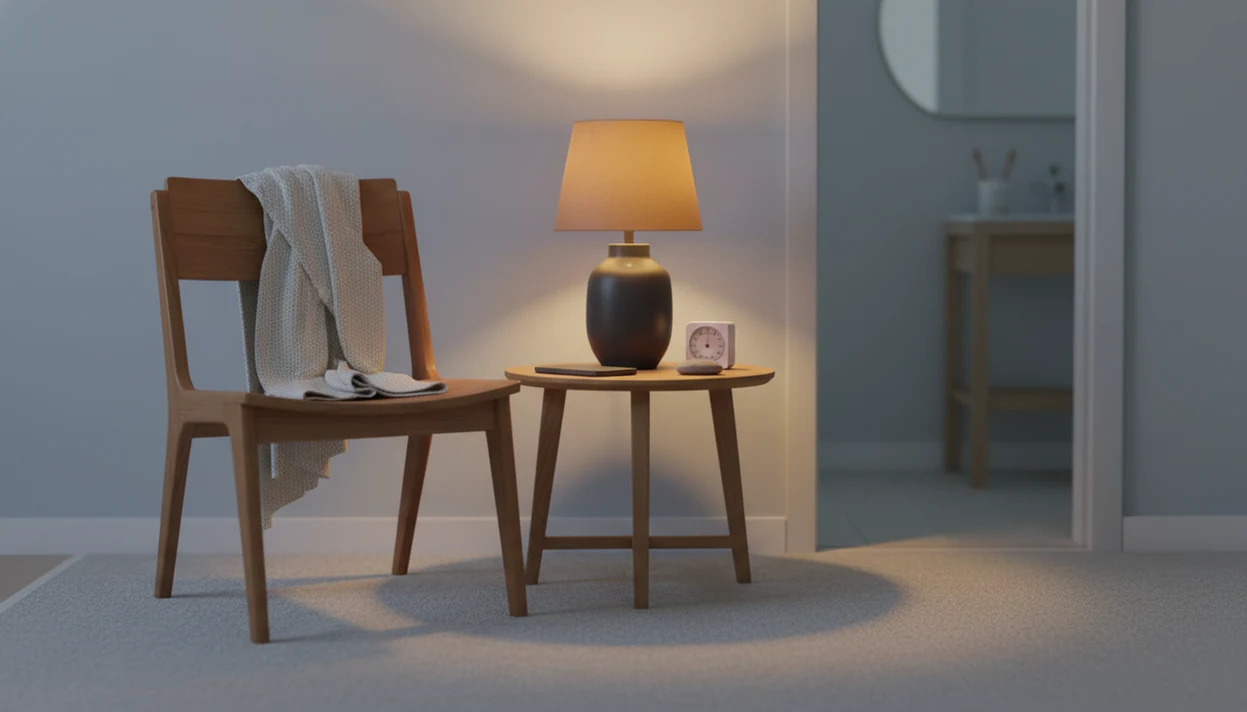
An evening meditation habit is a regular practice of sitting, breathing, and noticing your experience for 5 to 10 quiet minutes on most nights before bed. Build it around something you already do, such as brushing your teeth, turning off the TV, or putting your phone on its charger. Choose one practice and a place where you can sit without much preparation.
Keep the purpose reflection and wind-down, not making yourself fall asleep. Racing thoughts do not mean the session failed: noticing them and returning to your chosen focus is the practice. Start with five minutes that fit an ordinary tired evening, rather than a long session you rarely complete. Meditation is not a cure for insomnia or a guaranteed sleep tool.
The essentials
- Start with 5 minutes most evenings, not a long session you can only do once a week.
- Use a simple cue, same location, and prepared audio or timer to reduce friction.
- Treat evening meditation as mindfulness practice, not a cure for insomnia or a guaranteed sleep tool.
Start with five minutes and one focus
An evening meditation habit is a few quiet minutes most nights to sit, breathe, and notice thoughts and feelings before bed. It is not a test of whether you can become perfectly calm on command.
Beginner-friendly choices include mindful breathing, a body scan, loving-kindness meditation, or a short guided meditation. You might sit on a kitchen chair, set a phone timer for 5 minutes, and notice the mind wander to tomorrow’s grocery list. That still counts.
The point is to notice and return.
If you’re new, start with one plain practice before adding variety. A basic guide to how to meditate can help if sitting still feels confusing at first. Evening meditation gives beginners a repeatable way to practice attention in daily life, not a promise of instant sleep or a blank mind.
Give your attention a focus and your practice a cue
Evening mindfulness works by giving your attention one simple job before bed: notice, breathe, and return. In habit terms, it also builds a cue-routine loop, which means the same nightly signal starts to invite the same calming practice.
During the day, many people stay in go-mode. Emails, errands, family needs, and unfinished tasks keep the mind scanning for the next problem. A short evening practice can shift attention toward breath awareness, body sensation, or gentle phrases. That may reduce pre-sleep arousal, but it does not guarantee sleep.
The shoulder blades press the chair. The exhale gets longer.
A 2015 randomized clinical trial found that a 6-week mindfulness meditation program improved sleep quality and daytime impairment more than sleep-hygiene education in adults with moderate sleep disturbances JAMA study. The practical lesson is modest: mindfulness may help some people relate differently to bedtime stress, especially when practiced over weeks.
Five Evening Meditation Facts Before You Start
Here are five facts worth knowing before you build evening meditation into your routine:
- Consistency matters more than length. A 5-minute practice done most nights usually beats a 30-minute session that happens once.
- Five to 10 minutes is enough to start. Beginners do not need long silence, special clothing, or a perfect room.
- Meditation may support stress reduction and sleep quality. It is not a standalone insomnia treatment.
- Habit cues reduce friction. Use the same chair, same timer, and same after-dinner or after-brushing cue.
- Sleep pressure can backfire. If the goal is “I must fall asleep,” meditation can start feeling like another bedtime performance.
For a broader daily framework, how to practice mindfulness covers simple attention cues outside the evening window too.
5 Steps to Build Evening Meditation Into Your Night
To build evening meditation, make the practice so small and prepared that it survives ordinary tired nights. Use this as a two-week starter plan.
- Set a tiny starting length. Choose 5 minutes, not the longest session you think you “should” do.
- Attach it to a nightly cue. Practice after brushing your teeth, turning off the TV, or setting your phone on the charger.
- Prepare the spot early. Put out headphones, a cushion, or an upright chair before the evening gets away from you.
- Choose one practice. Use mindful breathing, body scan, or guided audio for the first two weeks before changing styles.
- Track and reset gently. Mark completion on paper, then restart after missed nights without making it a moral issue.
A soft lamp in a quiet corner can be enough. No ceremony needed.
Measure progress across weeks, not an unbroken streak
The two-week starter plan is a chance to check your routine, not a deadline for making it automatic. A 90-day study of everyday habit formation found that habit strength grew over time, especially with consistent repetition. It did not establish that every habit becomes automatic after 90 days. Neither 21 nor 90 days is a universal finish line.
Review the week as a whole: how many evenings did you begin, and which cue was easiest to follow? In a longitudinal study of digital meditation use, practicing four to seven days per week was associated with better long-term retention than practicing once weekly. That association does not prove causation or make seven nights a requirement. After several missed evenings, restart with two to five minutes at your original cue rather than compensating with a long session.
Choose an evening practice that suits your energy
A night meditation habit works best when the technique matches your energy level and temperament. Guided audio is acceptable for beginners, especially when silence feels too open-ended.
| Technique | Best for | May not fit when |
|---|---|---|
| Mindful breathing | People who want a simple anchor and minimal setup | Breath focus feels tense or controlling |
| Body scan | People who hold stress in the body after work | Body sensations feel overwhelming at night |
| Loving-kindness meditation | People who replay conversations or self-criticism | Phrases feel forced or emotionally sharp |
| Guided meditation | Beginners who want structure and pacing | Audio becomes another screen-based habit |
For more options, compare meditation techniques for beginners before deciding. For beginners, guided breathing is often easier than silent meditation because the voice provides structure when attention drifts.
When an evening routine fits, and when it does not
An evening meditation habit fits people who want a short reflection ritual, a phone-free transition, or a less reactive end to the day. It also fits beginners who can practice most nights, not necessarily every night.
Best for
- Short wind-down seekers: People who want 5-10 minutes between activity and bed.
- Stress-aware beginners: People who notice evening tension and want a practical next step.
- Phone-bound nights: People who need a replacement cue before scrolling takes over.
- Flexible learners: People willing to miss a night and return without drama.
Not ideal for
- Guaranteed sleep goals: Meditation is not a sleep switch.
- Untreated sleep or mental health concerns: Chronic insomnia, sleep apnea symptoms, severe anxiety, depression, or trauma symptoms deserve professional care.
- Late-night overeffort: If you practice only when exhausted, shorten it or move earlier.
Mindful.net covers this as educational mindfulness support, not diagnosis or treatment.
5 Common Mistakes When You Meditate Every Evening
Most failed evening routines collapse from overeffort, not laziness. Fix the setup before blaming your discipline. Understanding motivation versus discipline can help you rely on simple routines rather than waiting to feel inspired.
- Starting too long: A 25-minute plan sounds serious, but it often fails on tired nights. Start with 5 minutes.
- Waiting until you are already in bed: In-bed meditation can blur into frustration. Try a chair before lights-out.
- Calling racing thoughts failure: Wandering is part of the practice. Notice and return.
- Changing techniques every night: Variety can become avoidance. Pick one method for two weeks.
- Measuring success by fast sleep: That turns meditation into a performance goal. Measure completion instead.
Hands off the keyboard, timer on, one breath counted. That small repeatable action is the habit.
Sleep research studies programs, not a single bedtime session
Mindfulness-based programs have evidence for improving sleep quality in some groups, but most studies examine multi-week programs, not one-off bedtime sessions. That distinction matters.
A 2018 meta-analysis of randomized controlled trials reported small-to-moderate improvements in sleep quality from mindfulness-based interventions in people with insomnia and other conditions 5091655. A 2019 randomized controlled trial in older adults with insomnia also found improvements in insomnia severity and sleep efficiency compared with an active sleep-hygiene control.
Per the CDC, 14.2% of U.S. adults reported using meditation in the past 12 months in a national survey, up from 4.1% in 2012 CDC guidance. Adoption is broad, but outcomes vary.
The practical read is cautious: mindfulness programs may support sleep quality for some people, while chronic sleep problems need proper evaluation. The Mindfulness Practices App category, including Mindful.net, should be treated as practice support, not a guaranteed clinical outcome.
Evening Meditation Limits
- Seek professional evaluation for persistent sleep, anxiety, depression, trauma, or breathing symptoms rather than relying on evening meditation.
- Meditation is not a standalone treatment for chronic insomnia, sleep apnea, restless legs, or other sleep disorders.
- It cannot compensate for heavy late caffeine, bright screens in bed, or a highly irregular sleep schedule.
- If silence intensifies racing thoughts or uncomfortable emotions, try shorter guided sessions, grounding cues, or meditating earlier.
Evening meditation habit questions
How long should I meditate in the evening?
Start with five to ten minutes. Choose a length you can repeat when you are tired, and increase it only once that routine is stable. A two-week randomized trial found no adherence or dropout advantage for approximately 30-minute sessions over approximately 10-minute sessions. Longer is not automatically easier to sustain.
Should I meditate every evening?
You can aim for most evenings without making an uninterrupted streak the goal. Research on long-term digital meditation use linked practice on four to seven days per week with better retention than once-weekly practice. This was an association, not proof that everyone needs the same schedule.
Is it better to meditate before bed or in the morning?
Use the time that has a dependable cue and room for a short session. In one four-week trial with reminders, participants completed 66% of morning sessions and 61% of evening sessions. That small difference does not settle the best time for you. Consider a morning backup if evenings repeatedly get crowded out.
How many days does it take to build an evening meditation habit?
There is no established number that applies to everyone. Habit research describes a gradual process that varies with the behavior, person, context, and consistency. Treat the first two weeks as a trial of your setup, then review what helps you return. Neither 21 nor 90 days guarantees an automatic habit.
What should I do if I miss several nights of meditation?
Return to your original cue with a small session, such as two to five minutes. Do not try to repay missed nights with an unusually long practice. Research does not establish that a broken streak resets habit strength to zero. Look for the practical obstacle, such as timing or session length, and adjust it.
What if evening meditation keeps me awake?
Try practicing earlier in the evening, seated in a chair rather than waiting until you are in bed. Stop treating sleep as the measure of a successful session. If breath focus feels tense, choose another simple focus or guided practice. Persistent sleep difficulties need evaluation, not a longer or more demanding meditation routine.
Is guided meditation okay for an evening routine?
Yes. A short guided meditation is a beginner-friendly option when silence feels too open-ended. Select the audio before your nightly cue so choosing a session does not become another task at bedtime. Keep the same practice for the first two weeks, and judge success by beginning and returning your attention, not by falling asleep.