
Eyes Open Meditation: Soft Gaze, Simple Steps, and Safety


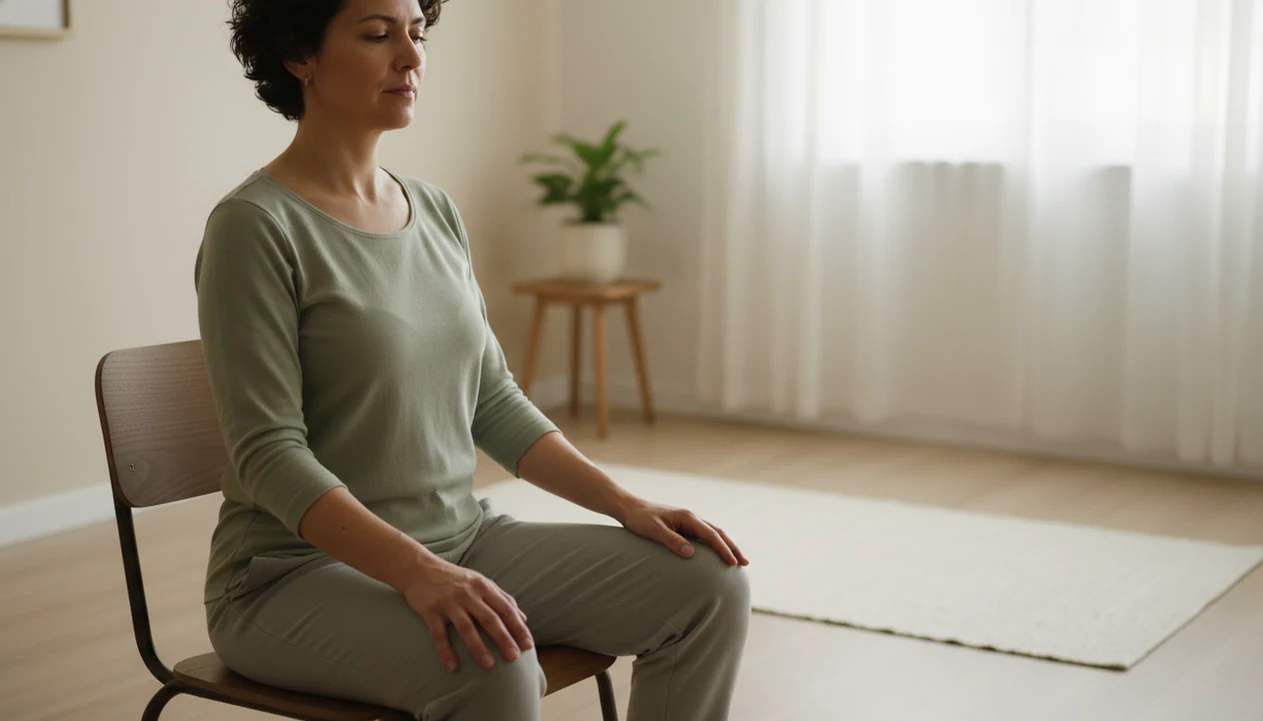
Eyes open meditation is a beginner-friendly mindfulness practice in which you rest your gaze softly on a neutral spot while paying attention to your breath, body, sounds, or surroundings. Instead of staring or scanning the room, let your eyes stay relaxed and slightly unfocused. Closing your eyes is not required. An open gaze may be more comfortable if closed-eye practice leaves you sleepy, restless, anxious, disconnected, or feeling unsafe.
The aim is not to block out what you see. Choose one anchor, such as the contact of your feet with the floor, and return to it when attention wanders. Sights and sounds can remain in the background. Start with two to five minutes in a safe seated place, blink normally, and adjust the gaze if your eyes feel strained.
The essentials
- You can meditate with eyes open by using a soft, unfocused gaze instead of staring or scanning the room.
- This beginner meditation adaptation is useful when closed-eye practice feels unsafe, sleepy, spacey, or too inward.
- The goal is not to block visual input, but to notice sights, sounds, breath, and body sensations without chasing them.
Meditation does not require closed eyes
Can you do eyes open meditation? Yes, you can meditate with your eyes open, and it still counts as real meditation.
Several meditation traditions use a partially open or fully open gaze. For example, many Zen meditation instructions teach a lowered, relaxed gaze rather than tightly closed eyes source. The main point is not whether your eyelids are closed. The point is whether you can notice where attention goes, then gently return to the present moment.
For beginners, open eye meditation can be a practical secular adaptation. It is not a lesser version of practice. It may be more workable on a bus seat, in an office stairwell, or in a kitchen chair before the day gets loud.
Keep the eyes relaxed. Don’t stare hard, squint, or force a fixed look.
Tools like Mindful.net teach practical secular mindfulness practices and meditation techniques for beginners and everyday life, including adaptations like this.
How Eyes Open Meditation Works
Eyes open meditation works by using a soft gaze as a posture for attention, not as a visual task.
Your eyes stay open, but vision does not become the main project. You choose an anchor, such as breath, body contact, sound, or a plain object. Then you notice when attention drifts. You return without scolding yourself. That loop is the practice: choose, notice, return.
A soft open gaze can support alertness, orientation, and environmental safety. For some people, closed eyes make the mind foggy or too inward. Open eyes can help the nervous system register, “I’m here, in this room.” The chair is under you. The floor is still there.
Visual input is allowed in awareness. A color, shadow, or movement may appear, but you don’t have to follow it like a storyline. Practical mindfulness practices and meditation techniques for beginners and daily life build trainable attention, not blankness or forced calm.
Five Eyes Open Meditation Facts Beginners Should Know
- Eyes open meditation is a legitimate meditation method used in several contemplative traditions and modern secular mindfulness settings.
- The gaze is soft, wide, or lightly settled. It is not a hard stare at one dot.
- Meditation with eyes open can help people who feel sleepy, anxious, spacey, or disconnected when they close their eyes.
- Open-eye practice bridges formal meditation and daily-life mindfulness because ordinary life usually happens with eyes open.
- Research supports mindfulness meditation generally more than eyes-open meditation specifically. A 2014 JAMA Internal Medicine meta-analysis of 47 randomized trials with 3,515 participants found moderate improvements in anxiety and depression for mindfulness meditation programs compared with controls JAMA study.
For anxious beginners, eyes open meditation is often easier than closed-eye practice because it keeps the room available as a safety cue.
Before You Start Eyes Open Meditation
Before you start eyes open meditation, make the practice safe, short, and easy on your eyes. The setup matters because this method uses vision without asking you to stare or tune out your surroundings.
- Choose a safe seated place. Sit somewhere stable, such as a chair, cushion, or bench. Do not practice while driving, cycling, cooking, crossing streets, or using tools or equipment.
- Set a brief timer. Begin with two to five minutes so the session feels manageable and you do not keep checking the clock.
- Simplify what you see. When possible, face a plain wall, floor spot, or table edge. Move away from screens, harsh light, flicker, and busy visual clutter.
- Adjust for comfort. Wear your glasses if you need them, soften the lighting, lower your gaze, and change posture before eye strain builds.
- Pause if symptoms increase. Stop the practice if anxiety, dissociation, dizziness, or visual discomfort gets stronger. Open attention to the room, feel your feet, and return to ordinary activity.
How to Use Eyes Open Meditation in 5 Steps
Start with 2 to 5 minutes. A phone timer is enough, and you do not need a special cushion.
- Set a comfortable posture. Sit upright on a chair, cushion, or bench, with your feet or legs supported.
- Choose a neutral gaze point. Look at the floor, wall, table edge, or another plain spot that does not pull much interest.
- Soften the eyes and face. Let the gaze become relaxed and slightly unfocused. Blinking is part of practice.
- Rest attention on breath, body, or sound. Feel the chest movement beneath a shirt, the seat under you, or the sounds around you.
- Return when sights, thoughts, or sounds pull attention away. Notice the pull, name it gently if helpful, and come back. When difficult interactions pull at your attention, try loving kindness for difficult people as a separate practice.
If you want a fuller beginner sequence after this, our how to meditate guide covers posture, timing, and simple anchors.
A 3-Minute Open Eye Meditation Practice Script
Sit in a steady position. Let your shoulders drop a little. Place your gaze on a plain spot in front of you, slightly lower than eye level.
Soften the eyes. You are not trying to stare. Blinking is allowed, and eye strain is not the goal.
Notice one breath coming in. Notice one breath going out. Let the visual field stay open in the background. Shapes, colors, and light are simply here.
Now feel the body. The contact with the chair. The weight of your feet. The small movements that happen as you breathe.
Sounds may arrive. Let them be known without turning them into a story. If a thought pulls you away, notice it. Return to breath, body, or sound.
For the last few breaths, include the room again. See what is in front of you. Feel your posture. Then move back into ordinary activity with some awareness still open. To practice goodwill alongside awareness, try loving kindness meditation with simple phrases directed toward yourself and others.
Eyes Open vs Closed Eye Meditation for Beginners
Neither style is universally better. Beginners can switch between closed-eye and open-eye practice based on setting, energy, and comfort.
| Practice style | Best fit | Common challenge | Adjustment |
|---|---|---|---|
| Eyes open meditation | Sleepy beginners, public settings, daily-life mindfulness | Visual distraction | Use a softer, lower gaze |
| Closed eye meditation | Quiet rooms, body scan, inward attention | Sleepiness or emotional intensity | Sit upright or open the eyes slightly |
| Half-open gaze | People who want alertness with less visual input | Squinting or strain | Relax the eyelids and blink |
| Walking meditation | Movement-based practice | Safety risks if attention narrows | Keep full environmental awareness |
Closed eyes may reduce visual distraction, but they can increase drowsiness or make sensations feel intense. Meditation with eyes open may increase alertness, but it can invite more visual noticing.
Choose the gaze that makes it easier to notice distraction and return to your anchor today.
When an open gaze helps, and when to adjust it
Mindfulness eyes open is best used when staying visually oriented makes practice feel safer, clearer, or easier to bring into daily life.
| Best for | Not ideal without adjustment |
|---|---|
| Sleepy meditators who need more alertness | Visually busy rooms with screens, crowds, or flickering light |
| Anxious beginners who dislike closing their eyes | Migraine, light sensitivity, or eye strain |
| Public settings, such as waiting rooms or transit | Driving, cycling, or operating equipment |
| Daily-life transitions before work or sleep | Intense emotional distress without support |
| Screen breaks between focused tasks | Situations where practice reduces needed attention |
Do not meditate in a way that lowers attention while driving, cycling, or using tools. Keep your eyes and judgment fully available.
For trauma-sensitive practice, open eyes may help some people stay oriented. However, it is not treatment. If practice feels destabilizing, pause and consider qualified support.
The National Center for Complementary and Integrative Health notes that meditation is generally considered safe for healthy people, but people with mental health conditions should discuss it with a qualified clinician if symptoms worsen or unusual experiences appear source.
Posture, Gaze, and Room Setup for Open Eye Meditation
A good setup for open eye meditation reduces strain and gives attention fewer things to chase.
Soft Gaze Options
Try a floor spot, blank wall, table edge, candle-free neutral object, or horizon line. A soft focus means you are not sharply studying the object. A wide gaze lets the whole visual field be present. A downward gaze often feels less stimulating than looking straight ahead.
Blink normally. Dry eyes are not a mindfulness badge.
Posture Options
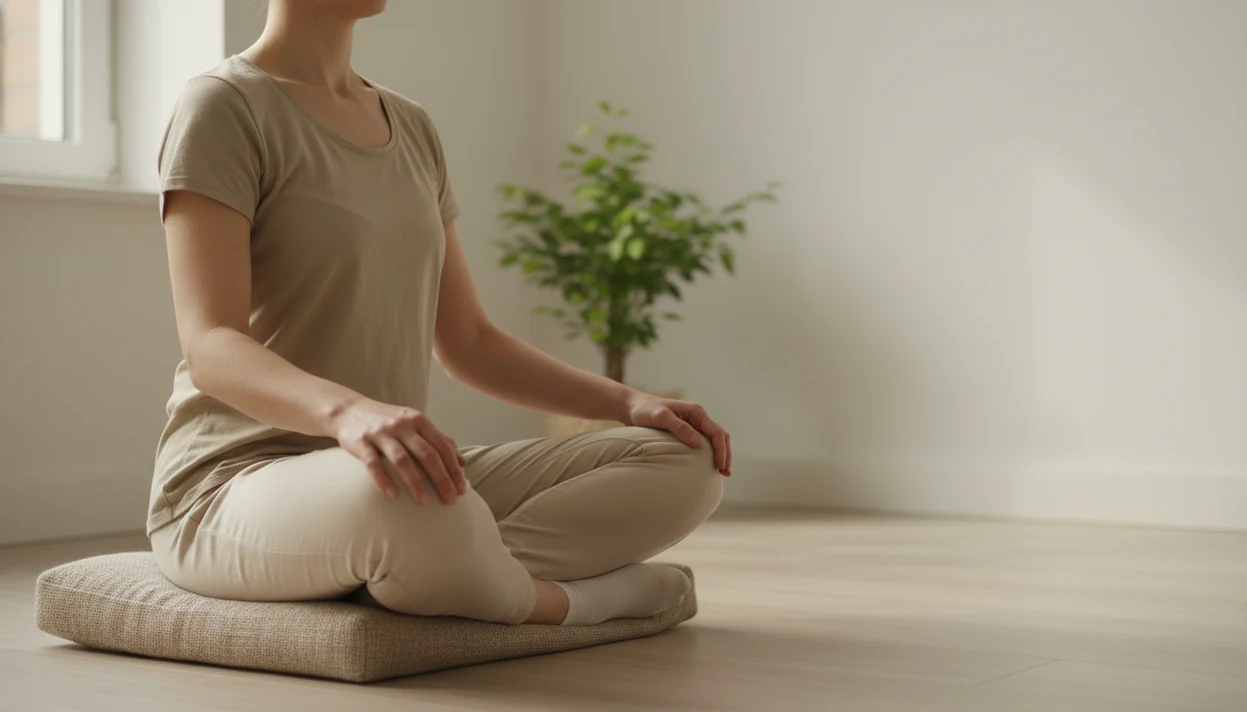
Use a chair, cushion, standing posture, or slow walking when appropriate. An upright chair against a desk can work better than a cushion sliding on hardwood. Feet on tile or carpet can become a simple grounding cue.
Reduce visual clutter, harsh light, movement, and screen notifications. In shared spaces, choose a posture that looks ordinary and keeps you aware of people around you. For more daily setup ideas, the mindfulness checklist for beginners can help. For an offline reminder of these habits, use the free mindfulness booklet with printable pages for regular practice.
Common Open Eye Meditation Problems and Fixes
- Eye fatigue: Lower the gaze, soften focus, blink more often, shorten the session, or reduce bright light.
- Visual overstimulation: Face a blank wall, simplify the room, or use half-open eyes instead of a fully open gaze.
- Getting hooked by movement: Label the experience “seeing” or “movement,” then return to breath or body.
- Sleepiness: Sit more upright, use brighter but comfortable lighting, or practice before lying down.
- Anxiety or dissociation: Orient to the room. Name three visible objects, feel the feet, and notice the chair supporting you.
If practice feels destabilizing, stop. Open your attention to the room, move gently, or talk with a qualified professional if distress continues.
A three-minute breathing pause before opening a laptop is enough practice for many workdays. You can build from there with a first week meditation plan.
Everyday Meditation with Eyes Open Examples
Open-eye mindfulness helps bridge cushion practice and normal life. The goal is mindful participation, not zoning out.
- Screen break, 60 seconds: Look at a neutral wall and feel both feet under the desk before returning to the screen.
- Waiting in line, 2 minutes: Rest your gaze softly ahead and notice standing, breathing, and small sounds.
- Public transit, 3 minutes: Feel the bus seat vibration under your thighs while keeping enough awareness of your stop.
- Walking, 5 minutes: Let your eyes stay open naturally and feel each step. Walking meditation must keep safety first.
- Work transition, 3 breaths: Take three breaths before unmuting, with your gaze resting lightly on the screen edge.
These short practices train the same skill: notice and return while life continues. For broader daily examples, try how to practice mindfulness.
Mindfulness Research Behind Eyes Open Meditation Claims
Most studies examine mindfulness or meditation programs generally, not eyes open meditation as an isolated variable. That matters. Open-eye practice is a format adaptation, not a guaranteed clinical intervention.
The 2014 JAMA Internal Medicine meta-analysis found moderate improvements in anxiety and depression in mindfulness meditation programs. A 2014 review by the U.S. Agency for Healthcare Research and Quality concluded that meditation programs can improve psychological stress outcomes such as anxiety, depression, and pain, but evidence was insufficient or low strength for many physical health outcomes Clinician.
Evidence for brief mindfulness training exists, but it is not eyes-open-specific; for example, a student study linked mindfulness training with reduced mind-wandering and improved working-memory and reading-related performance source.
Clinicians typically recommend meditation as a supportive skill, not a replacement for diagnosis, therapy, medication, or crisis care when those are needed.
Image Guide: Soft Gaze for Open Eye Meditation
The image for this guide should show a beginner seated in a simple chair with relaxed shoulders and a soft downward gaze. The setting should look ordinary: a quiet room, natural light, plain clothing, and no staged spiritual props.
Caption: A soft downward gaze helps open eye meditation feel steady without staring or straining.
Alt text: Beginner practicing eyes open meditation with a soft downward gaze.
Avoid medical framing, glowing effects, exaggerated serenity, incense-heavy styling, or anything that makes the practice look mysterious. A calm person sitting normally is more accurate. This is an everyday attention practice, not a performance.
Open Eye Meditation Limits
- Research specifically on eyes open meditation is limited, with most evidence applying to meditation programs generally.
- Visually sensitive people may find eyes open meditation distracting, tiring, or overstimulating.
- Seek professional mental health care for severe anxiety, depression, trauma symptoms, or crisis, rather than relying on meditation.
- Practice should not reduce attention while driving, cycling, crossing streets, cooking, or operating equipment.
Eyes open meditation questions
Can you meditate with your eyes open?
Yes. Keep a relaxed gaze on a plain spot and place attention on your breath, body contact, sounds, or a chosen object. When attention wanders, gently return. The practice depends on noticing and returning, not on keeping your eyelids closed or shutting out everything around you.
Is eyes open meditation as effective as closed-eye meditation?
Neither approach is universally better. Research supports mindfulness programs more broadly, but evidence specific to eyes-open practice is limited. An open gaze may be more workable if closing your eyes makes you sleepy or uncomfortable. Choose the approach that lets you stay attentive without strain, rather than expecting one to produce stronger results.
Where should I look during eyes open meditation?
Try a plain patch of floor, a blank wall, or a table edge, slightly below eye level. Choose something that does not invite reading, watching, or studying. Let it remain in view without staring at its details. If movement keeps pulling your attention, face a simpler part of the room.
Should my eyes be unfocused, and can I blink?
A soft, slightly unfocused gaze is an option, not a requirement to make your vision blurry. Relax your face and blink normally. You do not need to hold your eyes wide open or keep them still. If your eyes tire, lower the gaze, reduce bright light, or shorten the session.
Can I meditate with my eyes half open?
Yes. A half-open gaze can reduce visual input while keeping some awareness of the room. Let your eyelids rest naturally rather than squinting to hold a particular position. Use breath, body contact, or sound as your anchor, and adjust your eyes whenever the position becomes tiring.
What if closing my eyes during meditation makes me anxious?
Try keeping your eyes open and using an external anchor, such as a neutral shape or ordinary room sounds. Feel your feet on the floor and the chair beneath you. Stop if distress increases. Meditation is not a substitute for professional support when anxiety, trauma symptoms, or other distress is severe or persistent.
How long should a beginner practice eyes open meditation?
Begin with two to five minutes in a stable seated position. That gives you time to choose an anchor, notice distraction, and return without asking your eyes to stay in one position for too long. Shorten the session if you feel strained or overstimulated; completing a timer is not the goal.
Can I practice eyes open meditation on public transit?
A short seated practice can use the contact of the seat, your feet, or ordinary sounds as an anchor. Keep enough awareness to notice your stop and what is happening around you. Do not use meditation to tune out hazards, and do not practice while driving, cycling, or crossing streets.