
Meditation Anchors: Choose a Focus You Can Return To


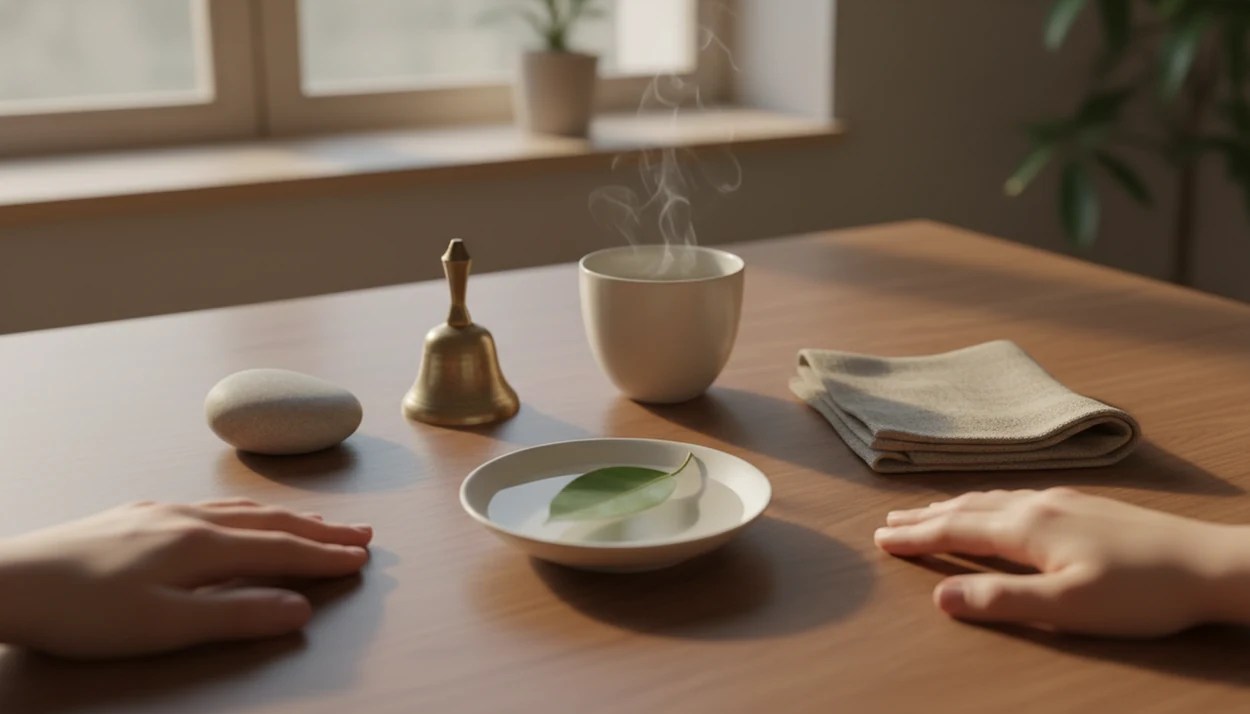
Meditation anchors are simple points of attention you return to during practice, such as the breath, your feet, a sound, or a visual point. A useful anchor feels steady, relatively neutral, and easy enough to notice today. Breath is common, but it is not automatically the best choice for a beginner. Body contact, hearing, sight, or a repeated word can also give attention a clear place to return.
The aim is not to hold your focus perfectly or make thoughts disappear. When you notice that attention has moved into planning, worry, or commentary, return to one detail of your anchor. That return is the core repetition of mindfulness practice. If a focus feels uncomfortable or too intense, you can change it rather than push through.
The essentials
- The breath is common, but it is not automatically the right meditation anchor for every beginner.
- Good beginner anchors are simple, sensory, and relatively neutral: breath, body contact, sound, sight, or a repeated word.
- Getting distracted is not failure; noticing distraction and returning to the anchor is the core repetition of mindfulness practice.
Five beginner anchors and when each fits
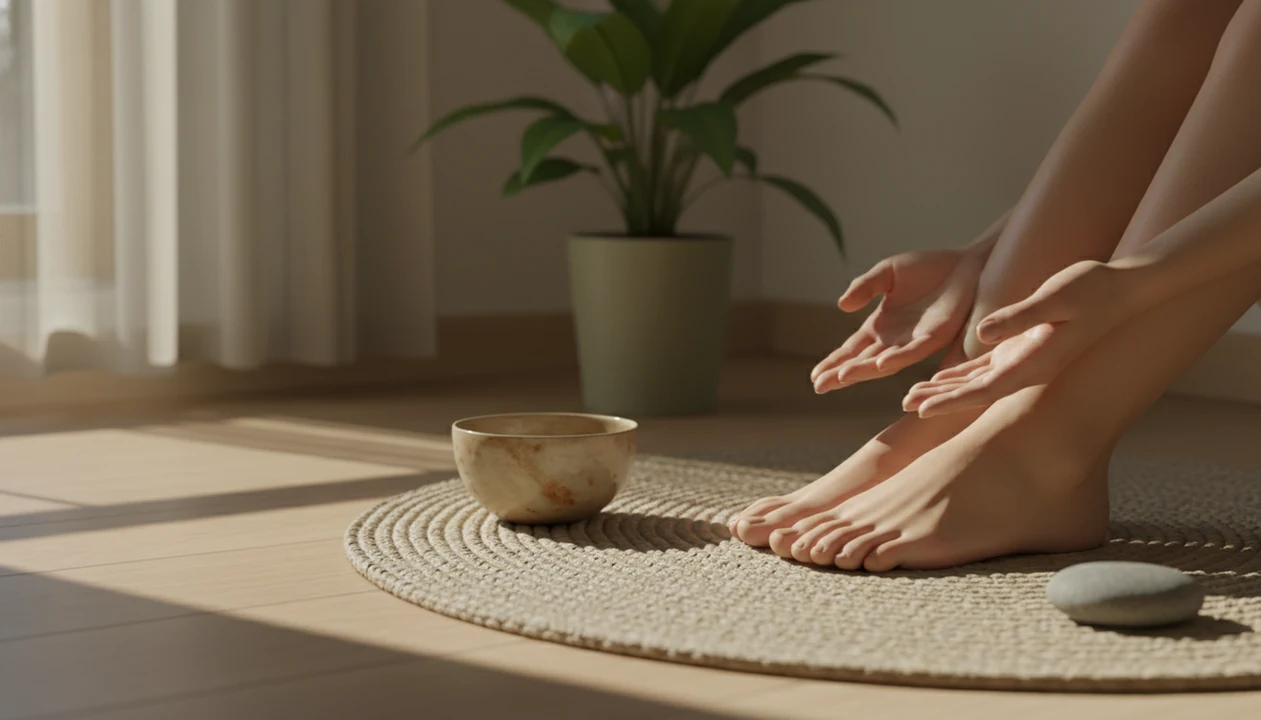
The best meditation anchor for beginners is personal, practical, and based on safety, steadiness, and ease of noticing. Breath is one option, not the rule.
| Meditation anchor | Best for | Not ideal for |
|---|---|---|
| Breath | People who notice a clear rhythm at the nostrils, chest, or belly | Anyone who feels tight, panicky, or overly focused on breathing |
| Body contact | Beginners who want something concrete, like feet, hands, or seat | People who find body sensations uncomfortable or distracting |
| Sound | Restless minds that settle with outside input | Noisy places where sound analysis takes over |
| Visual point | Eyes-open practice, sleepiness, or busy thoughts | People who strain their eyes or become visually fixated |
| Repeated word or phrase | People who like a simple mental cue | Anyone who turns the phrase into forced thinking |
For many beginners, body contact or sound is easier than subtle breath sensations because the target is more noticeable. The weight of heavy legs after vacuuming a hallway, the feel of a cotton sleeve on your wrist, or the hum of a distant appliance can be enough.
Simple beats impressive.
An anchor gives attention a place to return
A meditation anchor is a neutral point of attention you can return to during practice. It helps you see when the mind has wandered and gives present-moment awareness a simple place to restart.
An anchor is not meant to shut thoughts down. It gives attention somewhere clear to land while plans, sounds, moods, and sensations keep appearing. You might use the breath, hands resting together, the support beneath you, a patch of sound in the room, or a visual point such as a movie stub on a shelf.
Returning is the practice, not a repair job after failure. If your mind drifts to a photography edit you still want to finish and you notice it, that moment matters. You recognized wandering. Then you come back without an inner lecture about doing meditation wrong.
For a wider beginner overview, our guide on mindfulness meditation explains how anchors fit inside a full practice.
Before you start: make the anchor safe and workable
Before you test any meditation anchor, make the setup small, ordinary, and easy to leave. A safe anchor is one you can notice without feeling trapped, flooded, or forced to push through.
Try this before the timer starts:
- Choose a short session: Start with 2 to 5 minutes, especially when you are testing a new anchor. You can always stop while things still feel manageable.
- Keep your eyes open if needed: Rest your gaze on the floor, a wall, or a neutral object if closing your eyes feels unsafe, dizzying, or too intense.
- Pick an external anchor when internal focus activates you: Use sound, a visual point, or contact with the chair if breath or body sensations create panic, tightness, or over-monitoring.
- Practice in a normal environment: Let the room be ordinary. A little traffic, a humming fridge, or distant voices can help you learn without needing perfect silence.
- Stop and get support if overwhelmed: Open your eyes, move, drink water, text someone, or seek professional help if practice brings up distress you cannot settle.
Gentle counts. Pausing counts too.
How a meditation anchor works in attention training
A meditation anchor works by giving attention a repeatable target instead of asking the mind to become blank. In research terms, the useful training loop is simple: choose an object, attend to it, notice distraction, recognize what happened, and return with less self-criticism.
- Choose one target: Pick breath, body contact, sound, sight, or a repeated word before you begin.
- Notice the anchor: Feel one clear detail, such as air at the nostrils or the weight of your body on the chair.
- Expect wandering: The mind will move into memory, planning, worry, or commentary.
- Recognize the shift: The useful moment is noticing, “I’m thinking,” “I’m planning,” or “I’m gone.”
- Return without force: Bring attention back to the anchor as gently as setting down a glass.
Per the CDC, 14.2% of U.S. adults reported using meditation in the past 12 months in 2017, up from 4.1% in 2012 CDC guidance. Most research studies evaluate multi-component mindfulness programs, not one anchor by itself. A 2014 JAMA Internal Medicine meta-analysis found moderate improvements in anxiety, depression, and pain in mindfulness meditation programs compared with controls JAMA study.
How to choose a meditation anchor in 5 steps
Choose a meditation anchor by testing what feels steady today, not by searching for the perfect focus.
- Set a short time: Try 3 to 5 minutes so the test feels manageable.
- Test one anchor: Choose breath, feet, hands, sound, sight, or a repeated word.
- Notice comfort level: Ask whether the anchor feels neutral, irritating, calming, dull, or too intense. If body awareness makes you drowsy, try these tips for a body scan without falling asleep while keeping practice gentle.
- Rate steadiness: After practice, give it a simple 1 to 5 score for how easy it was to find again.
- Adjust or switch: Keep the anchor if it works well enough, or try another one next time.
A practical next step is to test one anchor per day for a week. If you want a fuller structure, use a first week meditation plan and make the anchor choice part of the plan.
No gold stars needed.
Practice the return, one sensory detail at a time
Use a meditation anchor by selecting one steady focus, noticing its details, and coming back to it whenever attention moves away. If you are using the breath, you might track one inhale and one exhale. If you are using touch, you might notice the dog leash in your hand during a slow pause at the door. The aim is not perfect holding; it is practicing the return.
- Settle into a workable position: Sit, stand, or rest in a posture you can maintain without bracing. Comfortable does not have to mean motionless. During pregnancy, prenatal body scan meditation offers ways to adjust your position and focus for greater comfort.
- Choose one anchor: Pick breath, feet, hands, sound, sight, or a repeated word before the timer starts. Deciding early prevents the whole session from becoming a search.
- Notice one detail: Feel one specific sensation, hear one layer of sound, repeat one simple word, or rest your gaze on one visual point.
- Label wandering lightly: When attention leaves, use a brief note such as “thinking,” “planning,” “hearing,” or “gone.” Keep it short.
- Return without judgment: Bring attention back to the anchor gently, as if placing a bookmark. No scolding, no reset speech, no need to prove anything.
That is the whole loop: feel the anchor, lose it, realize you lost it, and begin again. Even one clean return counts as practice.
Breath anchor meditation: best for a clear internal rhythm
Breath anchor meditation is useful when the breath feels clear, neutral, and easy to locate. Common spots include the nostrils, chest, belly, or the sense of the whole body breathing.
The instruction is to feel the breath, not manage it. Let the inhale arrive. Let the exhale leave. If you notice you are controlling the pace, soften your effort and return to one sensation. Some people track an inhale with fingertips resting lightly on the ribs, then let the next breath happen on its own.
Breath anchors are best for people who like a natural rhythm and can notice breathing without strain. They are not ideal when breath focus feels tight, activating, claustrophobic, or uncomfortable. In those cases, switch to feet, hands, sounds, or an eyes-open visual point.
An anchor gives you a repeatable cue for returning attention, not a guarantee of calm or a cure for distress.
Body anchor meditation: best for grounding through touch
Body anchor meditation uses contact points as the focus, such as feet, hands, seat, posture, or the feeling of clothing against the skin. For many beginners, these “external-ish” body sensations feel steadier than the breath because they are easier to locate. For a broader practice with changing areas of attention, try body scan meditation and notice each region gently.
One simple way to try it: sit in a chair and feel both feet on the floor. Notice pressure, warmth, coolness, or the edge of a sock. When attention wanders, return to the soles. That’s enough.
Body anchors are best for people who want a concrete focus during everyday mindfulness. They may not fit well if body sensations feel intense, unsafe, numb, or tied to difficult memories. If that happens, open your eyes and use sound or sight instead.
For beginners who struggle with subtle internal sensations, body contact is often easier than breath focus because touch gives attention a clearer physical target. To compare moving attention through the body with following breathing, explore body scan vs breath meditation before choosing.
Sound anchor meditation: best for restless or busy minds
Sound anchor meditation uses hearing as the focus, such as ambient sounds, a bell tone, music-free background noise, or a repeated word. The task is to hear sound as sound, not to solve where it came from.
A car passes. A heater clicks. A bell tone ends the practice. Notice pitch, volume, start, fade, and silence after sound. If the mind says, “That truck is annoying,” label it as thinking and return to hearing.
Sound is best for restless or busy minds that struggle with internal focus. It can be especially useful when breath or body sensations feel too intense. It is not ideal if every sound pulls you into irritation, story, or alertness.
Some guided sessions use sound at the start and then move into breath or body. Apps such as Mindful.net, Calm, and Headspace often include guided options for comparing these styles.
Sound can be an anchor without making you calmer
Listening to a calming recording and meditating with sound are not the same task. In a 2026 study comparing forest and industrial recordings, forest sounds improved mood, restoration, and cognition, but did not produce significant differences in the physiological measures assessed, including heart rate and cortisol. The study tested sound exposure, not the added effect of returning attention after distraction. For anchor practice, the question is whether you can hear a detail, notice wandering, and return without strain.
If you use recorded sound, keep it at the lowest effective volume rather than turning it up to cover every distraction. WHO safe-listening guidance recommends keeping personal-device volume below approximately 60% of maximum; risk also depends on listening duration and frequency. Take breaks and do not mask warning signals. If sound increases discomfort or agitation, stop the recording and try a neutral visual point instead.
Multiple meditation anchors for ADHD, anxiety, and restlessness
Multiple meditation anchors are not cheating. They can make practice more workable when one focus point is too faint, too intense, or too easy to lose.
- Feet plus sound: Feel the feet on the floor while also letting room sounds come and go.
- Eyes open plus breath: Rest your gaze on one point while noticing the breath in the background.
- Hands plus repeated word: Feel the hands in the lap while quietly repeating a neutral word.
- Posture plus hearing: Notice uprightness and the changing soundscape around you.
This approach can help people with restlessness, ADHD traits, anxious arousal, or a busy nervous system, but it is not a treatment claim. Evidence for mindfulness varies by program, population, and condition, so treat anchor-switching as a coping skill rather than a clinical intervention NCCIH overview. If one anchor becomes overwhelming, switch intentionally rather than forcing through. A paused audio session beside a water glass is still practice if you return with care.
For more options, compare several meditation techniques for beginners before choosing your main anchor. If you prefer spoken instructions for exploring body sensations, our guided body scan meditations offer another way to practice.
Daily-life meditation anchors beyond formal sitting practice
Daily-life meditation anchors are ordinary cues that remind you to return to the present for a few seconds. They are useful because practice does not only happen on a cushion.
- Door handles: Feel the hand touch the handle before entering a room.
- Footsteps: Notice three steps while walking down a hall.
- Phone notifications: Take one breath before checking the screen.
- Washing hands: Feel water, soap, temperature, and movement.
- First sip of coffee or tea: Notice warmth, taste, and the pause before the next task.
Cue-based anchors work well because they attach mindfulness to something you already do. The Mindful.net Mindfulness Practices App supports this everyday mindfulness angle by keeping practices short, secular, and tied to normal routines. A three-minute breathing pause before opening a laptop can count.
If you want to build more cues into your day, start with how to practice mindfulness.
Common mistakes with meditation anchors
Trying to empty the mind turns anchor practice into a struggle; the task is to notice wandering and return. Distraction is not the problem; missing the chance to come back kindly is usually where beginners get stuck.
Use this troubleshooting loop when practice feels messy:
- Stop forcing calm: Let thoughts, sounds, and feelings be present while you return to one simple anchor. A blank mind is not the assignment.
- Stay with one anchor briefly: Give your chosen focus a fair test for a few minutes instead of swapping every time frustration appears.
- Switch away from breath when needed: Choose feet, hands, sound, or an eyes-open visual point if breath focus feels tight, panicky, or overcontrolled.
- Treat distraction as the repetition: Notice the wandering, name it lightly, and return. That moment is the training, not evidence that you failed.
- Make the anchor more obvious: In a loud room, tired body, or stressful day, choose something concrete enough to find again, like feet on the floor or room sounds.
Small and workable beats perfect and tense.
Meditation Anchor Limits
- Meditation anchors are practice aids, not cures, and beginners may not feel calm right away.
- Breath focus can be activating, especially when breathing already feels tight or monitored.
- Research rarely identifies one anchor type as scientifically best, because most studies test full mindfulness programs.
- Seek professional care for diagnosis, medication decisions, therapy, or crises, rather than relying on meditation anchors.
Meditation anchor questions
What is a meditation anchor?
A meditation anchor is a neutral point of attention, such as breath, touch, sound, or sight. You notice it, recognize when your mind has wandered, and return. It is a practice aid, not a way to block thoughts or a measure of how calm you should feel.
Which meditation anchor should a beginner try first?
Start with something clear and relatively neutral, such as your feet touching the floor or your hands resting together. Try it for two to five minutes. Breath is another option if it feels comfortable. Choose by ease of noticing and returning, rather than assuming one anchor is best for everyone.
Can I meditate with my eyes open using a visual anchor?
Yes. Rest your gaze on a neutral object, a plant, or a simple shape. Notice color, edges, or brightness without repeatedly judging what you see. When attention wanders, return to one visible detail. Eyes-open practice is an option when closing your eyes feels uncomfortable or internal focus becomes too intense.
Can music or background noise be a meditation anchor?
Yes, if you can hear it without getting pulled into evaluation, memories, or discomfort. Notice a sound's pitch, volume, or fading rather than following a story about it. Keep recordings quiet. Evidence that listening to sound can affect stress does not establish that using it for meditation produces the same effects.
Can I switch anchors during a meditation session?
You can switch if your anchor feels too intense, uncomfortable, or difficult to locate. If it is comfortable but you are simply distracted, try returning for a few minutes before changing. Switching is an adjustment, not a failure. You can also try a simple pair, such as feet plus room sounds.
Why does a meditation anchor work one day but not the next?
An anchor that feels clear today may feel faint, irritating, or too intense another day. Check how easy it is to notice and return to, rather than expecting the same experience every session. Shorten the practice or choose another sensory focus if needed. Feeling scattered does not mean the practice has failed.
Should I keep attention on my anchor for the whole meditation?
Your intention is to return to the anchor, not to maintain unbroken concentration. Thoughts, moods, and sounds will still appear. When you notice attention has moved away, come back to one clear detail. Repeated returns are the practice; you do not need to restart the timer whenever you get distracted.