
How to Sit for Meditation Without Getting Stiff or Distracted
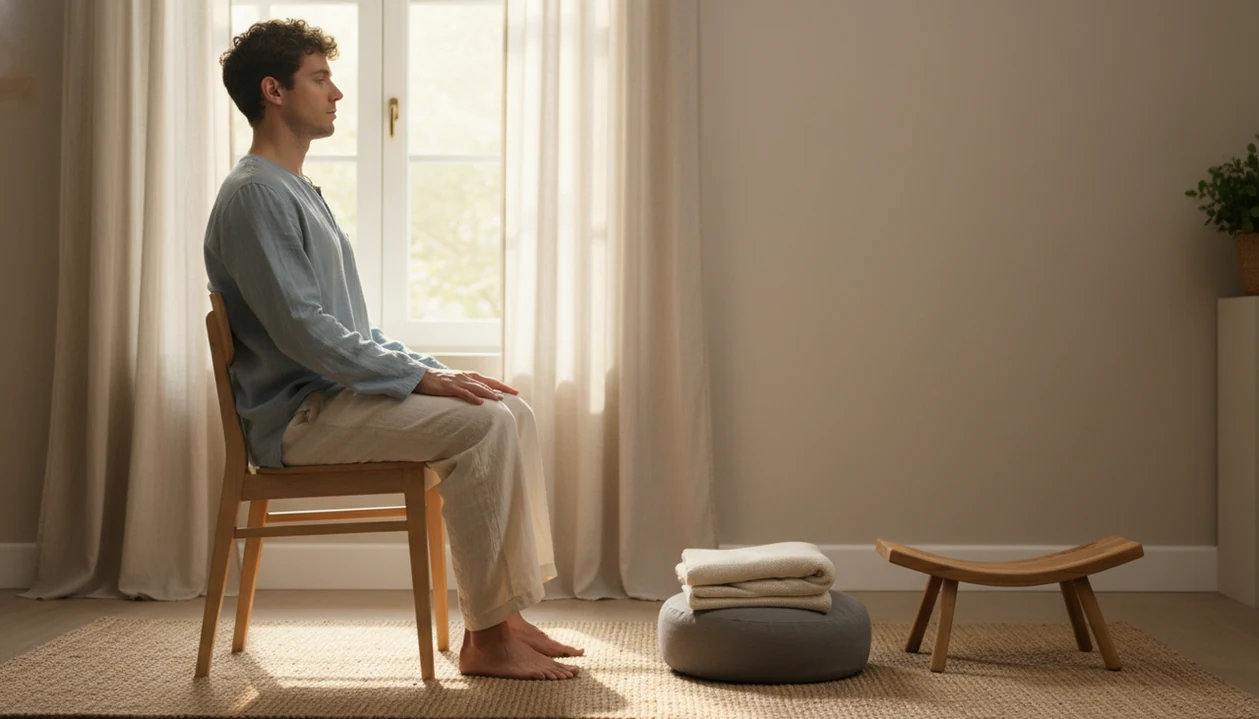
The best way to practice how to sit for meditation is to choose a stable position where your spine is upright but relaxed, your hips are slightly higher than your knees, and your body can stay still without sharp pain. You can sit on a chair, cushion, bench, or folded blanket; comfort and alertness matter more than a perfect pose.
> Definition: Sitting for meditation means arranging the body in a relaxed, upright, stable posture that supports wakeful attention without unnecessary strain.
- You do not need lotus pose; a chair, cushion, kneeling bench, or simple cross-legged seat can all work.
- Raise your hips above your knees to reduce lower-back rounding, hip tension, and knee pressure.
- Adjust slowly if you feel sharp pain, numbness, tingling, or joint strain; mindful movement does not ruin meditation.
Good meditation sitting posture for beginners
Good meditation sitting posture is upright, relaxed, and stable enough that the body can stop asking for attention every few seconds. The simple alignment cue is head over shoulders, shoulders over hips, with the spine long but not held like a military pose.
Your hips should be slightly higher than your knees when possible. That small lift helps the pelvis tip forward, so the lower back does not collapse into a slump. A folded blanket on a kitchen chair can be enough.
Let the hands rest on the thighs or in the lap. Soften the jaw, shoulders, and belly before the timer starts. The tongue can soften away from the palate, and the jaw can unclench behind closed lips.
Comfort, stability, and alertness matter more than lotus position. For beginners, a steady chair seat often works better than copying a photo.
Meditation cushions, chairs, and body checks before sitting
Start with the posture your body already tolerates best, which is often a regular chair. A good setup should make stillness easier, not turn meditation into a flexibility test.
- Firm cushion: Lifts the hips and supports cross-legged sitting without sinking.
- Folded blanket: Works well on a chair or floor when you need a small height change.
- Yoga block: Can support knees, ankles, or a simple kneeling setup.
- Meditation bench: Tilts the pelvis forward while reducing knee bend for some people.
- Regular chair: Keeps both feet grounded and gives beginners a familiar base.
Before sitting, scan knees, hips, lower back, neck, and circulation. Notice any pinching, pulling, or numbness before you commit to the posture.
Start small. A phone timer set for 3 to 5 minutes teaches the body more kindly than forcing a long sit. If you want a wider setup routine, our guide to how to meditate covers the full beginner sequence.
Body mechanics of sitting meditation posture
Sitting meditation works best when the body balances light muscular support with ease. It is not a rigid hold; it is a steady arrangement that lets breathing and attention settle.
- A stacked torso reduces extra work in the lower back, neck, and shoulders.
- Hips slightly above knees help the pelvis stay neutral instead of rolling backward.
- An open chest gives the diaphragm more room to move, which can make breathing feel less forced.
- Soft shoulders and an easy jaw reduce the “bracing” pattern that often pulls attention away.
- Sitting posture is a common question because about 94% of people who meditate report practicing sitting meditation, according to a 2018 analysis of National Health Interview Survey data (PMC research article).
The mechanism is simple: less avoidable strain means fewer body alarms. When the breath can move naturally, attention has one less obstacle.
Good mindfulness practices and meditation techniques for beginners and daily life deliver repeatable attention cues, not a guarantee of calm on command.
How to sit for meditation in 6 beginner steps
Use these steps to build a sitting position before you begin. The goal is a body you can notice, not a body you have to fight.
- Choose a chair, cushion, bench, or floor setup. Pick the option that already feels most workable today.
- Raise your hips slightly above your knees when possible. Add a cushion, folded blanket, or firm support.
- Set your feet, knees, or shins so the base feels stable. Feet can rest flat on tile, or knees can be supported by blankets.
- Lengthen your spine without locking your back. Imagine the crown of the head lifting while the ribs stay easy.
- Soften your shoulders, face, hands, and belly. Let the hands rest without gripping the knees or lap.
- Start the timer and adjust mindfully only when needed. Move slowly if pain, numbness, or tingling becomes distracting.
For most beginners, a chair is often easier than the floor because it removes flexibility from the first lesson.
Best meditation sitting positions for beginners
A good meditation position is one that keeps you upright, steady, and pain-free enough to practice. Full lotus is optional and usually unnecessary for beginners.
| Position | Best for | Not for | Setup cue | Common adjustment |
|---|---|---|---|---|
| Chair sitting | Beginners, tight hips, office practice | Slouching into the backrest | Feet flat, spine upright | Sit near the front edge |
| Cross-legged on cushion | Floor sitters with comfortable hips | Knee or ankle strain | Hips above knees | Add knee support |
| Burmese posture | People who dislike ankle crossing | Severe hip tightness | Both shins on floor | Raise cushion height |
| Kneeling bench | Those who like a forward pelvic tilt | Sensitive knees or ankles | Shins under bench | Add padding under knees |
| Lying down | Painful sitting days | Sleepy practice | Back supported | Bend knees or use a pillow |
Chair meditation position
Sit near the front of the chair with both feet grounded. Feel the feet on carpet or tile before closing the eyes.
Cross-legged meditation position
Use enough height that the knees can drop below the hips. Hands resting on denim knees can be simple and steady.
Kneeling meditation bench position
Let the bench carry your weight instead of sitting back on the heels. Padding matters.
Meditation posture fixes for pain, numbness, and stiffness
“Meditation sitting position hurts” usually means the setup needs adjustment, not that you are bad at meditating. Mild discomfort can happen, but sharp pain, tingling, numbness, or joint strain is a signal to move.
If numbness, tingling, or sharp joint pain appears, treat it as body feedback rather than a concentration challenge. Change the position first; then return to the breath.
Lower-back rounding
Raise the cushion or sit closer to the front of a chair. A higher seat lets the pelvis tilt forward, which reduces the collapsed curve that makes the back work too hard.
Knee and hip pressure
Support the knees with blankets, widen the leg position, or switch to a chair. Hip pinching often means the knees are too high or the seat is too low.
Foot numbness or tingling
Change leg position, uncross the ankles, or move to a chair with feet flat. Do not wait for numbness to become intense.
Neck strain often improves when the chin gently drops and the screen is out of sight. Shoulder tension usually softens when the hands are placed lower. Shorten the session if posture keeps stealing the practice.
5 meditation sitting mistakes that cause distraction
Many distractions start as posture problems. Fixing the setup will not stop all thinking, but it can remove avoidable tension.
- Forcing full lotus. Copying a meditation image can strain knees, hips, or ankles if your body is not built for that shape.
- Sitting too low. When the pelvis rolls back, the spine collapses and the breath feels cramped.
- Holding the back rigidly. A stiff spine often creates shoulder tension, jaw clenching, and a feeling of “trying too hard.”
- Refusing to adjust. Pain becomes louder when you treat movement as failure.
- Starting too long. A 30-minute sit can teach frustration before it teaches attention.
The grocery list will still appear. That is normal. Posture simply gives you a steadier place to notice and return, which is the same skill used when you practice mindful awareness during ordinary tasks.
Meditation posture checklist during practice
A working posture feels stable, upright, breathable, and free of sharp pain. Check it at the start, once in the middle, and again before ending.
- Stable base: Feet, knees, shins, or seat feel supported.
- Upright spine: The back is long without being locked.
- Soft shoulders: The collarbones feel broad, not lifted toward the ears.
- Natural breath: Breathing moves without forcing the chest or belly.
- No sharp pain: Discomfort stays mild, or you adjust slowly.
The breath should feel unforced. The body should feel alert rather than braced, like sitting before opening a laptop after a three-minute breathing pause.
Image caption: upright chair and cushion meditation posture
Image caption guidance: Show one person sitting upright on a chair and one on a cushion, with hips slightly higher than knees, demonstrating how to sit for meditation without strain.
Tools like Mindful.net, mindful.org, Calm, and Headspace can help you compare posture cues, timers, and guided practice styles. If you are still choosing a method, our overview of meditation techniques for beginners can help narrow the options.
Evidence behind meditation posture cues
The evidence is stronger for meditation practice in general than for one exact leg shape. Posture cues here are practical ergonomics: reduce strain, stay awake, and make it easier to return attention.
- Separate benefits from poses. Studies and health summaries may discuss meditation for stress, anxiety, or attention, but they rarely prove that lotus, Burmese, or chair sitting changes the outcome by itself.
- Avoid prolonged strain. General clinical and ergonomic guidance treats persistent pain, numbness, tingling, or pressure as a reason to change position rather than push through.
- Lift your seat when useful. Raising the hips can tip the pelvis slightly forward, which helps the lower back keep its natural curve instead of folding into a slump.
- Aim for comfort plus alertness. A good setup can reduce distraction, but it is not a clinical guarantee of pain relief, calm, or better meditation.
- Choose a chair when safer. If you have tight hips, knee pain, foot numbness, balance issues, pregnancy-related discomfort, or a recent injury, chair sitting is usually the kinder beginner option.
Limitations
Posture guidance is useful, but it has limits. Sitting well supports practice; it does not guarantee deep meditation, steady attention, or a particular emotional result.
- No single sitting position works for every body.
- Long static sitting can aggravate some back, hip, knee, ankle, or circulation problems.
- Evidence supports meditation for some outcomes, including stress and anxiety symptoms, but exact leg position is not clearly proven to change results; see NCCIH’s meditation evidence summary (NCCIH overview).
- Sharp pain, numbness, tingling, neurological symptoms, or a significant injury history should be assessed by a qualified clinician.
Clinicians typically recommend adjusting activities that trigger pain rather than pushing through symptoms. That applies here too. If sitting keeps hurting, change the posture, shorten the session, or ask for qualified help.
One Pattern We Notice
Before you start, it is worth saying that “good posture” is not the same as forcing yourself to stay motionless. If sitting on a cushion turns the whole session into knee pain, back bracing, or a private argument with your body, an ordinary chair may be the more skillful choice. One pattern we notice is that beginners often make meditation harder by trying to look like they are meditating.
A Quick Answer
Set a kitchen timer for two minutes, sit on an ordinary chair with both feet supported, and ask only one question: “Could I repeat this tomorrow without dreading it?” Afterward, write one line in a journal: what felt stable, what felt strained, and what you would adjust by one inch next time. The best posture test is often not how calm you feel today, but whether the setup is repeatable.
What Changes After One Week
The Chair Check Method is a simple retrieval anchor: seat, feet, spine, hands, breath. We usually suggest it when someone keeps fidgeting because it gives the mind a short troubleshooting list instead of a vague command to “relax.” This is mindfulness practice, not therapy; if sitting brings up distress that feels unmanageable, posture tips are not a substitute for professional support.
A Quick Technique Map
| Technique | Best for | Minutes |
|---|---|---|
| Chair Check Method | Beginners who keep adjusting posture and want fewer decisions | 2-5 min |
| One-Line Journal | People who cannot tell whether stiffness is improving across sessions | 1-3 min |
| Before Email Pause from Mindfulness at Work | Practicing upright attention in daily life before returning to longer sits | 1-2 min |
From Our Editorial Review
A field note from practice: We’ve seen many beginners assume distraction means they are doing the posture wrong, when it may simply mean the setup is finally quiet enough to notice restlessness. We usually suggest changing one variable at a time: chair height, cushion support, or session length. Small adjustments tend to teach more than a complete posture overhaul.
The best meditation seat is the one that keeps you alert enough to return tomorrow.
Why Mindful.net fits this specific need
Mindful.net’s how-to guides focus on small, repeatable adjustments rather than perfect poses. If seated practice feels too formal, the Mindfulness at Work guide and Before Email Pause can help you test the same attention skills in ordinary moments.
FAQ
Can I meditate in a chair?
Yes. Sit near the front of the chair with feet flat, spine naturally upright, and hands resting on thighs or in the lap.
Do I need lotus position to meditate?
No. Lotus position is optional and is not recommended if it causes knee, hip, or ankle strain.
Why do my legs go numb when I meditate?
Leg numbness often comes from pressure on nerves or circulation changes. Raise the hips, change the leg position, support the knees, or use a chair.
Should my back be straight during meditation?
Your back should be naturally upright with its normal curves. Do not force a rigid, overarched, or military-style posture.
Where should my hands go while meditating?
Place your hands on your thighs, knees, or lap. No specific hand shape is required for a beginner-friendly, secular practice.
Can I move while meditating?
Yes. Slow, mindful adjustment is appropriate when pain, numbness, or tingling becomes distracting.
How long should beginners sit for meditation?
Beginners can start with a few comfortable minutes. Increase duration gradually as the body adapts.
Is lying down meditation okay if sitting hurts?
Yes. Lying down can work when sitting is painful, although it may make sleepiness more likely.