
How to Start Meditating as a Beginner
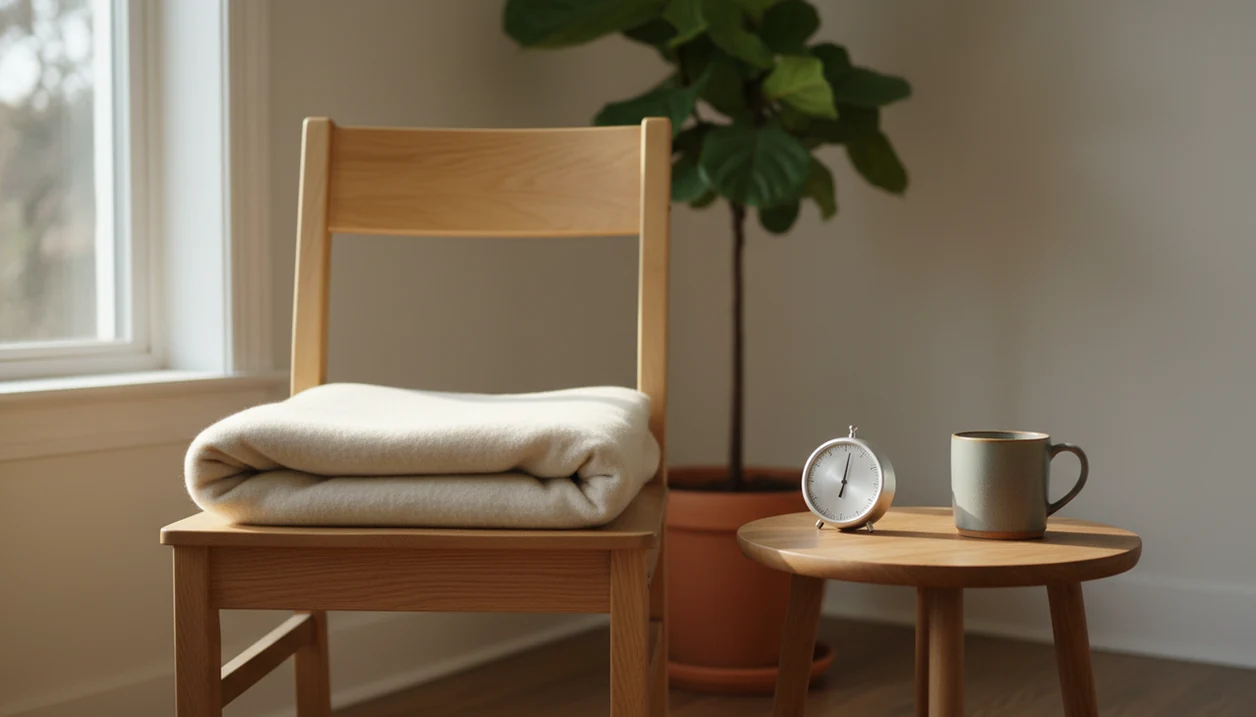
To learn how to start meditating, sit comfortably for 2–10 minutes, focus on the natural feeling of your breath, and gently return whenever your mind wanders. You do not need to empty your mind, sit cross-legged, or believe anything spiritual; the practice is simply noticing and returning.
> Definition: Meditation is a secular attention practice where you choose an anchor, notice when the mind wanders, and return with patience instead of judgment.
TL;DR
- Start with 2–5 minutes if 10 minutes feels too long; consistency matters more than duration.
- Mind wandering is not failure; noticing distraction and returning is the core skill.
- A chair, couch, or bed is fine as long as your body feels stable, relaxed, and awake.
What meditation means for a first-time beginner
Meditation is not the act of forcing your mind to go blank. For a beginner, meditation means placing attention on one anchor, noticing when attention leaves, and returning without scolding yourself.
That anchor can be the breath, a body sensation, a sound, or the feeling of your feet on the floor. Breath meditation is a simple starting point because the breath is always available, but it is not the only valid method.
No costume required.
You do not need special beliefs, white clothing, a floor cushion, incense, or a dramatic posture. A kitchen chair works. So does a couch, if you can stay reasonably awake. Good mindfulness practices and meditation techniques for beginners and daily life build steadier attention and kinder self-awareness, not instant calm or a blank mind.
How meditation works in the beginner mind
Meditation works by training a repeatable attention loop: choose an anchor, notice distraction, and return. The useful part is often the return, not a long stretch of perfect focus.
A beginner mind naturally drifts toward plans, memories, sounds, body sensations, and unfinished messages. You may begin with the breath and, ten seconds later, find yourself planning groceries. That is not a broken session. That is the moment to notice and return.
The return is the mental rep.
Research on meditation is realistic, not magical. Studies often find gradual, small-to-moderate effects on attention, distress, or wellbeing, depending on the program and person. For example, a two-week smartphone-based mindfulness trial found improvements in attention and working memory after 10 minutes a day, but the study was short and does not mean one session will change everything (S41598 019 39371 1).
Before you start meditating: time, place, posture, and timer
Before you meditate, make the setup so simple that you can repeat it tomorrow. The goal is a stable, ordinary practice, not an ideal room or ideal mood.
- Time: Choose a regular cue, such as after waking, after lunch, or before bed. A predictable cue reduces decision-making.
- Place: Pick somewhere quiet enough, but do not wait for silence. A hallway hum or passing car can become part of practice.
- Posture: Sit on a chair, couch, cushion, or bed with your body stable, relaxed, and awake.
- Timer: Set 2, 5, or 10 minutes. A phone timer set for 5 minutes is enough.
- Eyes: Keep your eyes closed or softly open. If closed eyes feel strange or sleepy, look gently at one spot.
If you want a broader daily routine later, our guide to how to practice mindfulness shows how to use the same skill outside formal sitting.
How to start meditating in six simple steps
To start meditating, follow six small steps: set a short timer, sit steadily, notice the body, feel the breath, return from distraction, and close with a brief check-in. This sequence is enough for a first session today.
- Set a short timer. Choose 2, 5, or 10 minutes, and place the phone where you will not keep checking it.
- Sit with a stable relaxed body. Use a chair, couch, cushion, or bed. Let your spine be upright but not stiff.
- Notice contact points and body sensations. Feel the seat underneath you, your feet on carpet or tile, and your hands resting.
- Feel the natural breath without controlling it. Notice air moving in and out, or the belly rising and falling.
- Return gently when thoughts pull attention away. Label it “thinking” if helpful, then come back to the breath.
- Close by noticing body and mind for a few seconds. Ask, “What is here now?” Then continue your day.
For beginners, a short breath practice is often easier than open-ended meditation because it gives attention one clear place to return.
A 10-minute beginner meditation sequence for daily practice
A 10-minute beginner meditation can be divided into four simple parts: settling, breath awareness, open noticing, and reflection. The structure keeps you from wondering what to do next.
- Minutes 0–2, settling: Sit down, feel your contact points, and let the body arrive. Notice shoulder blades pressing the chair.
- Minutes 2–7, breath awareness: Feel the natural breath. When the mind wanders, return to one breath at a time.
- Minutes 7–9, wider noticing: Let sounds, body sensations, or thoughts appear without chasing them. You are practicing “notice and allow.”
- Minutes 9–10, reflection: Sense how the body and mind feel before you move on.
On low-motivation days, use the 2-minute version: one minute feeling the body, one minute feeling the breath. If you want a more detailed progression, try a first week meditation plan instead of improvising every day.
Best meditation style for different beginner situations
The best beginner meditation style depends on your body, attention, and setting. Breath meditation is a useful default, but another anchor may fit better if breath focus feels uncomfortable.
| Beginner situation | Starting style | Why it can help |
|---|---|---|
| You want the simplest default | Breath meditation | The breath is always available and easy to return to. |
| You prefer physical sensation | Body scan | Sensations give attention a concrete place to land. |
| You get sleepy or uneasy with closed eyes | Eyes-open meditation | A soft gaze can support alertness and comfort. |
| Sitting increases restlessness or pain | Walking meditation | Movement can make attention practice more workable. |
| Breath focus feels uncomfortable | Sound or object meditation | An external anchor can feel steadier and less intense. |
There is no prize for choosing the hardest method. For many beginners, body scan or sound practice is a better starting point than breath focus because the anchor feels less personal and easier to locate. A technique library such as meditation techniques for beginners can help you compare options without changing methods every day.
Common beginner meditation mistakes that make practice harder
The most common beginner mistake is trying to stop all thoughts. Meditation becomes easier when you treat thoughts as normal events, then return to the anchor.
Another mistake is starting too big. A 30-minute plan may sound serious, but it often collapses by day three. Start small. Two minutes done daily teaches more than a heroic session you avoid afterward.
Restlessness, boredom, and sleepiness are not proof that you are bad at practice. They are things to notice. Pencil tapping during study time, the urge to check a message, or irritation at a noise can all become part of the training.
Beginners also make practice harder by changing techniques every day. Try one method for a week before judging it. Apps and courses can help, but they are tools, not requirements. Tools like Mindful.net, Calm, and Headspace can provide guidance when silence feels too vague.
Habit plan to keep meditating when you want to quit
“Why do I keep quitting meditation after a few days?” Usually because the plan is too large, too vague, or too dependent on feeling calm before you begin.
Use a two-minute minimum session on difficult days. If you miss a day, restart without making up lost time. No penalty lap. Attach meditation to an existing routine, such as brushing your teeth, closing your laptop, or sitting down after lunch.
Boredom and restlessness are not problems to solve during practice. Make them objects to notice: tight chest, busy hands, “I want this over” thoughts. Then return.
Tiny pauses count too. Try three breaths before opening a laptop, one quiet minute in an office stairwell, or a walking practice from the car to the door. The broader skill is covered in our guide to practice mindful during ordinary transitions.
Signs your beginner meditation practice is working
A beginner meditation practice is working when you notice distraction sooner and return with less self-criticism. Progress is often subtle over weeks, not dramatic after one session.
- You notice wandering sooner. The mind still leaves, but recognition comes faster.
- You return with less harshness. “I’m bad at this” slowly becomes “thinking, return.”
- You pause before reacting. You may feel one breath before answering a tense message.
- You tolerate mild discomfort better. Boredom, restlessness, and sleepiness become workable sensations.
- You stop chasing special experiences. Ordinary steadiness begins to count.
A U.S. National Health Interview Survey analysis found meditation use grew from 4.1% of adults in 2012 to 14.2% in 2017, suggesting many people use it as an everyday wellness practice (CDC guidance). Research reviews often report small-to-moderate average effects on stress, anxiety, depression, or pain, especially in structured programs, but meditation should not be framed as medical treatment (JAMA study).
Mindful.net covers this as secular education, including the Mindfulness Practices App for people who want guided sessions, technique explanations, and safe comparisons in one place.
Limitations
Meditation can be useful, but it has real limits. Treat it as attention practice, not as a cure-all or a replacement for qualified care.
- Meditation is not a substitute for professional mental health care, diagnosis, crisis support, or prescribed treatment.
- Benefits usually build gradually over weeks or months, not after one impressive session.
- Research effects are often small-to-moderate on average, and individual results vary.
- Breath focus may feel uncomfortable for some people with panic, trauma histories, respiratory concerns, or chronic pain.
If practice regularly leaves you overwhelmed, stop and consider support from a qualified clinician or teacher. A secular mindfulness practice can still be adjusted without adding spiritual language or pressure.
A Practical Observation
In our editorial review, many beginners seem to find the opening minute the strangest part, especially when they expect meditation to feel calm right away. We usually suggest making the first week deliberately unimpressive: sit in an ordinary chair, use a kitchen timer, and record one plain observation afterward. One pattern we notice is that lower-pressure practice tends to survive longer than a dramatic first-day routine.
Troubleshooting When It Feels Stuck
- If you are trying to force your mind blank, stop the session and restart with one natural breath; meditation is noticing, not mental erasing.
- If sitting still feels like a contest, use an ordinary chair and shorten the practice to one minute rather than turning discomfort into a rule.
- If the practice becomes a way to avoid a real conversation, deadline, or meal, it may be wiser to handle the practical need first.
- If a technique leaves you more agitated each time, try a different anchor such as sound, walking, or a brief Three-Breath Reset from /5-minute-mindfulness-practice.
- If you keep judging whether you are “good at it,” write one neutral line in a journal afterward: “I noticed ___.” That is enough data for today.
A One-Minute Version
You dislike anything that sounds spiritual
Use plain breath counting: count one exhale, then the next, up to five. No special belief is required, and you can treat it as attention training rather than a ritual.
You already pray and wonder if this replaces it
Mindfulness and prayer can overlap in quietness, but they are not the same activity for everyone. Prayer may involve relationship, meaning, or petition; mindfulness usually asks you to notice present experience without adding a request.
You only have a kitchen timer and a noisy room
Set the timer for one minute and let sound be part of the practice. The point is not to defeat the room; it is to notice when attention leaves and gently come back.
Environmental Setup That Actually Matters
Quiet room vs. realistic room
A quiet room can make practice easier, but waiting for perfect silence often delays the habit. A realistic room may teach you sooner that distraction is part of the training.
Cushion vs. ordinary chair
A cushion is optional and not a badge of seriousness. For many beginners, an ordinary chair supports repeatability better than a posture they secretly dread.
Long session vs. repeatable session
A 20-minute session can be useful, but it is not automatically better for a beginner. The best practice is usually the one you will repeat tomorrow.
Meditation app vs. self-guided timer
Guidance may reduce decision fatigue, while a kitchen timer keeps the session simple. If choosing a style is the hard part, Practice Decision Support at /discover-best-mindfulness-practice can narrow the options.
A Smarter First Week
| If you... | Try | Why | Note |
|---|---|---|---|
| Your thoughts race the second you close your eyes | Eyes-open breath practice, 2 minutes | A soft visual anchor may make the first sessions feel less trapped. | Do not measure success by how quiet your thoughts become. |
| You are an overwhelmed parent with no private space | Three breaths while seated on an ordinary chair | A tiny reset is easier to repeat than a plan that requires silence. | Keep expectations low enough that interruption does not count as failure. |
| You work shifts and your schedule changes weekly | One-line journal plus one-minute timer | A written cue can preserve continuity when the clock is unreliable. | Avoid attaching practice only to bedtime if bedtime moves. |
| You are an athlete or musician who over-trains everything | Gentle sound meditation, 3 minutes | Listening can reduce the urge to optimize every breath. | If you start scoring the session, shorten it. |
Three Paths Worth Trying
| Technique | Best for | Minutes |
|---|---|---|
| Breath counting | A beginner who wants clear instructions without spiritual language | 3-5 min |
| Sound noticing | A person practicing in a shared or imperfect space | 2-10 min |
| One-line journal after sitting | Someone who doubts anything is happening and wants visible continuity | 1-3 min |
Consistency tends to matter more than session length for most beginners.
Why Mindful.net fits this specific need
Mindful.net is useful here because its beginner guides keep the practice practical: short sessions, plain language, and choices that fit real homes. If you are unsure where to start, the Three-Breath Reset and Practice Decision Support pages can help you choose a small next step without turning meditation into a personality test.
FAQ
How long should beginners meditate?
Beginners can start with 2–10 minutes per session. Consistency matters more than length, especially during the first few weeks.
Can I meditate lying down?
Yes, you can meditate lying down, especially for pain, fatigue, or bedtime practice. If alertness is the goal, bend your knees, keep the lights on, or choose a chair instead.
Should I close my eyes?
You can meditate with eyes closed or softly open. Softly open eyes may help if you feel sleepy, anxious, or uncomfortable with closed eyes.
What should I focus on?
The breath is a simple beginner anchor because it is always present. Body sensations, sounds, walking, or a visual object can also work.
Is mind wandering bad?
No, mind wandering is normal. Noticing the wandering and returning to your anchor is the central meditation skill.
When should I meditate daily?
Choose a stable routine, such as after waking, after lunch, or before bed. A repeated cue makes the habit easier to remember.
Do I need a meditation app?
No, an app is not required for basic meditation. Apps such as Mindful.net can help with guided sessions, timers, and technique choices if self-guided practice feels unclear.
Can meditation feel uncomfortable?
Yes, meditation can bring up restlessness, boredom, tension, or difficult emotions. Shorter sessions, eyes-open practice, movement, or sound-based anchors may be better when that happens.