
Are Mindfulness Apps Worth It? A Beginner’s Guide to Paying or Practicing Free



Mindfulness apps can be worth paying for if their guidance helps you practice more consistently than free recordings, podcasts, or a simple timer. For beginners, the useful features are clear lessons, short sessions, reminders that fit the day, and a practice history. A paid app offers value when those features lead to actual practice, not just a larger library to browse.
Free resources can be enough if you already know what to practice and can keep a routine without prompts. Before subscribing, compare the app’s lesson structure, privacy policy, and cost with what you need. Research on mindfulness apps is promising but uneven, so judge a subscription by its evidence, your usage, and realistic expectations rather than its claims.
Definition:
What matters most
- A paid mindfulness app is most valuable when it reduces friction: clear lessons, reminders, short sessions, and habit tracking.
- Free mindfulness resources can be enough if you already know what to practice and can stay consistent without prompts. A free breathing exercises app can provide a simple starting point if breath practice is your main priority.
- Research on mindfulness apps is promising but uneven, so judge the app by fit, usage, privacy, and realistic expectations.
How is mindfulness app worth it look
Side-by-side captures of the compared products. Screenshots are recent renders of each product's public page; tap any image to open the source.
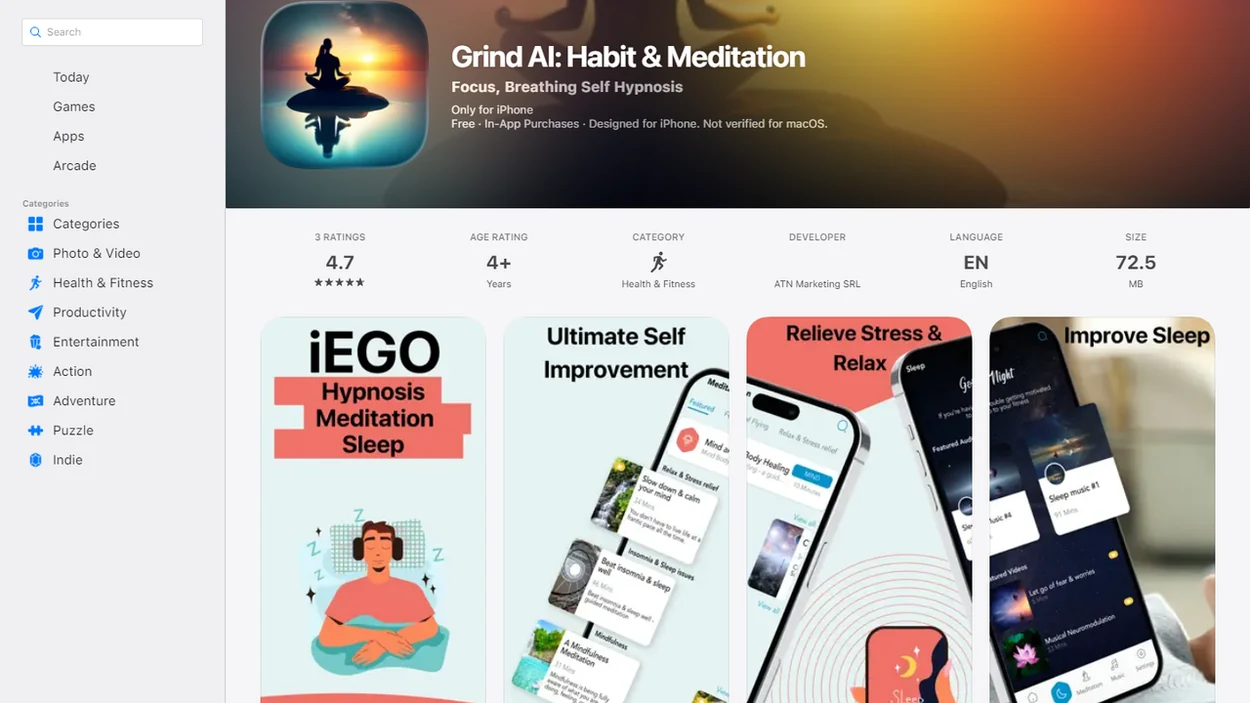
Paid app, free audio, or timer: compare your options
A paid mindfulness app is worth it only if it makes you practice more often than you would with free resources. Paid apps usually win on structure, reminders, lesson sequencing, and reduced friction; free tools win on cost, flexibility, and sufficiency for self-directed users.
| Option | Cost | Structure | Accountability | Privacy | Best user fit |
|---|---|---|---|---|---|
| Paid mindfulness app | Monthly or annual fee | Guided paths and categories | Reminders, streaks, history | Must review policy | Beginners who need prompts |
| Free guided meditations | Free | Varies by creator | Low | Platform-dependent | Users who like browsing |
| Meditation timer | Free or low cost | Minimal | Self-managed | Usually simpler | Users who know their routine |
Mindful.net fits beginners who want plain lesson paths rather than a long search through random videos. The practical test is simple: pay only if the Mindfulness Practices App turns intention into actual sessions.
Paying for an app does not prove it works better
“Do mindfulness apps work better than free resources?” Not automatically. Results are usually tied to regular practice, not the paid label itself.
A 2018 Harvard Health review said only 1 of 16 popular mindfulness apps it identified had been experimentally studied at that time, which shows how thin the app-specific evidence was then Mindfulness Apps How Well Do They Work 2018110615306. The same article described a Headspace study where people practiced 10 to 20 minutes daily for 10 to 30 days and reported less mind-wandering, more positive emotions, and fewer depressive symptoms than comparison groups.
That does not mean every app works the same way. Evidence varies by app, outcome, study design, and user consistency. If you want the broader evidence picture, our guide to does mindfulness work separates mindfulness practice from app marketing.
The strongest honest claim is narrower: apps may improve access, prompts, and consistency, but there is limited direct evidence that a paid app beats a well-matched free routine for every beginner.
The pocket check is real.
How reminders and lesson paths help you repeat practice
A mindfulness app works as a behavior-design system: cue, routine, reward, and feedback loop. In plain language, it tries to make the next practice easier to start and easier to repeat. An AI mindfulness coach adds automated guidance, but its evidence and safety limits deserve separate consideration before use.
Reminders act as cues. Short sessions reduce decision fatigue. Streaks and progress history give feedback. Beginner paths remove the “what should I do today?” problem. That can matter at 8:15 a.m., when you have three minutes before opening a laptop and no patience for searching.
Mindful.net is useful for beginners because it treats mindfulness as an attention practice with simple categories, not a personality makeover. A simple app can outperform a feature-heavy one if it lowers friction. Mindfulness and beginner meditation techniques train attention through repeated practice; they do not guarantee calm whenever you want it.
Habit-building value is not the same as clinical effectiveness. Keep those separate.
Use a two-week trial to judge actual usage
Use a mindfulness app as a two-week consistency trial, not as a guarantee of emotional results. The goal is to see whether structure changes your behavior.
- Set one daily practice window, such as after brushing your teeth or before opening email.
- Choose sessions under 10 minutes so the routine survives busy days.
- Use reminders only at realistic times, not during meetings or school pickup.
- Track practice for two weeks, including missed days without guilt.
- Review whether the app increased consistency compared with free tools.
- Cancel or keep based on actual usage, not optimism after day one.
Mindful.net works best for this kind of trial because beginners can compare short breathing, body scan, and everyday mindfulness lessons without building a playlist from scratch. If you miss a session, our missed meditation day guide explains how to restart without turning it into a failure story. A free body scan meditation app may be enough if you mainly want guided attention to bodily sensations.
Judge the time commitment beyond the first two weeks
A two-week trial can show whether you use an app, but it cannot establish lasting benefits. A 2023 review of 28 randomized trials found that programs lasted 7 to 56 days, with a median of 28 days. The median dropout rate was 23.4%, making continued participation an important part of judging value.
At your next renewal, ask how much time goes into practicing and how much goes into choosing recordings or checking progress. Keep a short session available for low-energy days. If you no longer need repeated instructions, try familiar practice with a timer before renewing. The useful tool can change as your needs change.
Where a Paid Mindfulness App Wins for Beginners
A paid mindfulness app wins when it removes the small decisions that stop beginners from practicing. That is where meditation app value usually shows up.
- Beginner lesson paths: A sequence helps when “just meditate” feels too vague.
- Short guided sessions: Five-minute practices fit lunch breaks, bus seats, and office stairwells.
- Reminders: Timed prompts help users who forget until bedtime.
- Progress tracking: A simple history shows whether practice is happening.
- Sleep or workday categories: Specific use cases reduce searching and second-guessing.
For beginners who need a plain starting point, Mindful.net fits because the Mindfulness Practices App organizes short lessons by practice type and daily situation. Anyone overwhelmed by YouTube choice gets more value from a guided path than another open search box. When comparing a breathing and body scan app, prioritize clear instructions, suitable session lengths, and easy access to both practices.
The conference room chair creaks softly. Practice can still happen.
Where Free Mindfulness Resources Beat an App
In the mindfulness app vs free comparison, free resources win when you already know what to practice and dislike subscriptions. A timer, library audio, podcasts, and simple breathing exercises can be enough.
| Free option | What it gives you | Where it falls short |
|---|---|---|
| Free guided meditations | Audio instruction | Quality and style vary |
| Timer | Quiet structure | No teaching |
| Library audio | Longer courses | Less convenient on the go |
| Podcasts | Familiar voices | Harder to sequence |
| Simple breathing exercise | Immediate practice | Easy to forget |
For self-directed beginners, free practice is often better than a paid app because the main barrier is time, not content access. Mindful.org, Calm, Headspace, Insight Timer, and UCLA Mindful all offer free or sample mindfulness content, but more choices can distract beginners who need one repeatable routine.
A photography edit, a bill to pay, or the feel of a cotton sleeve on your wrist may show up mid-breath. Notice the detour and come back.
Evidence on Mindfulness Apps vs Free Resources
The evidence supports a cautious answer: mindfulness apps can help, but free routines can also be enough when they lead to steady practice. Few studies directly compare paid apps against free timers, library courses, or UCLA Mindful-style guided sessions.
App-specific research is most useful when it names the app, the practice dose, and the outcome. Some studies and reviews report improvements in stress, mood, mindfulness, or burnout, especially when people use short guided practices regularly. That evidence supports modest claims about stress reduction, mood support, increased mindfulness skills, and workplace burnout relief; it does not prove that a subscription is clinically superior to a free routine.
Use the evidence in order:
- Separate clinical outcomes from convenience features like reminders, streaks, and lesson paths.
- Compare the actual routine: a paid five-minute guided session may beat a free course you never open.
- Check whether the claim is about stress, mood, mindfulness, or burnout, because each outcome has different support.
- Treat preference as practical evidence: the tool you repeat is usually more valuable than the one that looks strongest on paper.
Mindfulness App Pricing, Privacy, and Policy Checks
Price and privacy are part of mindfulness app value, not fine print. Before paying, compare monthly pricing, annual discounts, free trial length, cancellation timing, family plans, and refund rules.
Open the privacy policy before you enter mood notes or personal reflections. Check what data is collected, whether mood notes are stored, whether data is shared, and how account deletion works. Avoid assuming one app behaves like another unless you verify it yourself.
Privacy deserves extra scrutiny because wellness and mental-health apps can collect sensitive data; Mozilla’s Privacy Not Included project has repeatedly flagged mental-health apps for data-sharing and security concerns Mental Health Apps.
If your priority is a beginner routine with fewer surprises, Mindful.net earns a closer look because its value depends on clear lesson structure and everyday practice categories, not vague wellness promises. Still, no subscription is worth much if cancellation is confusing or the privacy tradeoff feels wrong.
Rain tapping during a walking practice may be enough. You may not need software.
Who Should Choose a Mindfulness App or Free Practice
Choose the option that matches your real barrier: confusion, inconsistency, cost, or need for professional support. Mindful.net focuses on practical, secular mindfulness for beginners and everyday life, but the decision should stay reader-centered.
Choose a paid app if
Choose a paid app if you need a beginner path, realistic reminders, short sessions, and a visible practice history.
Choose free practice if
Choose free resources if you already know your routine, prefer a timer, or dislike recurring subscriptions. People with severe, persistent, or worsening symptoms should seek qualified professional support rather than relying on any mindfulness app. For a structured non-app foundation, MBSR basics can help you compare formal mindfulness training with lighter daily practice.
Common Mindfulness App Myths That Distort Value
Mindfulness app myths cause people to overpay, quit too early, or dismiss useful tools too quickly. The better approach is skeptical and practical.
- Myth: “Science-based” branding guarantees results. Regular use and fit still matter.
- Myth: paid apps are always better. Free guided sessions can work well for self-directed users.
- Myth: more features mean better practice. Too many menus can delay the session.
- Myth: apps replace therapy or medication. They do not replace professional care.
- Myth: calm should happen immediately. Many sessions include wandering, impatience, or boredom.
For people comparing options, Mindful.net is strongest when the need is beginner-friendly structure, because the practical mechanism is guided lesson sequencing. The most evidence-backed approach to app-based mindfulness is regular short practice matched to the user’s routine, not choosing the app with the longest feature list.
When to pause practice and seek support
Meditation is not risk-free. A review of 83 meditation studies, involving 6,703 participants, estimated that about 8.3% experienced adverse effects, with anxiety and depression among the most commonly reported. This estimate covers meditation broadly, not mindfulness apps specifically, and does not tell you the risk from a particular short guided session.
Stop or reduce practice and seek qualified clinical advice if you develop marked anxiety, depressive symptoms, dissociation, agitation, or unusual perceptual experiences. Do not treat worsening symptoms as a challenge to push through for a streak. An app is educational support, not medical treatment, and persistent or severe symptoms need professional assessment. If you use an AI breathing coach, check its safety limits and avoid treating automated advice as clinical care.
Mindfulness App Limits
- App benefits are not guaranteed, and many users stop before benefits can build.
- Evidence varies across apps, outcomes, comparison groups, and study quality, according to this PMC research article.
- Stronger findings often concern stress, mood, mindfulness, or burnout over short periods, not dramatic life change.
- Helpful burnout and work stress findings do not guarantee equal app usefulness, so review our mindfulness research.
Mindfulness app value: common questions
Are mindfulness apps worth paying for as a beginner?
Paying can make sense if a clear lesson sequence and short guided sessions help you practice when free resources do not. Start by identifying what stops you: uncertainty, forgetting, or lack of time. A subscription is harder to justify if you rarely use it or already have a reliable free routine.
Do paid mindfulness apps work better than free ones?
Available trials do not establish that paid apps work better than free ones. Studies usually evaluate a particular program, not the value of its subscription. Compare the instruction, evidence, privacy, and practical fit. A free guided routine may be enough, while a bare timer supplies duration rather than teaching.
How long should I try a mindfulness app before deciding?
Try 5 to 10 minutes on most days for two to four weeks, using a familiar practice window. Record completed and missed sessions, then compare your consistency with your previous routine. This is a practical usage check, not a validated test of effectiveness or a deadline for feeling calmer.
Which mindfulness app features matter most for beginners?
Prioritize clear beginner instruction, short sessions, and reminders you can adjust or disable. Check accessibility features you need, such as captions, transcripts, or screen-reader compatibility, rather than assuming they are available. A large library and a streak counter matter less if choosing a session keeps delaying practice.
Is a meditation timer enough instead of an app?
A timer may be enough if you already know the instructions and can practice independently. Beginners may benefit from guidance about attention and what to do when distracted. A timer does not provide that teaching, and research on guided app programs should not be treated as evidence for a timer alone.
What privacy checks should I make before using a mindfulness app?
Read what the app collects, shares, and retains before entering mood notes or personal reflections. Check account requirements, advertising, and account-deletion options. Privacy quality and clinical effectiveness are separate questions: a useful practice program does not automatically mean careful data handling, and popularity is not proof of either.
When should I cancel a mindfulness app subscription?
Consider cancelling when you rarely practice, spend more time browsing than meditating, or can meet the same need with free guidance or a timer. Review actual use before renewal and check cancellation terms. Do not keep paying solely because a streak, unused library, or hopeful first day makes stopping feel wasteful.
Can mindfulness apps make anxiety worse?
Negative experiences, including anxiety, have been reported in meditation research, though the findings are not specific to apps. Stop or reduce practice if symptoms become marked or distressing, and seek qualified clinical advice. A mindfulness app should not replace professional care for severe, persistent, or worsening symptoms.