
A First Week Meditation Plan: Seven Days of Short, Simple Practice


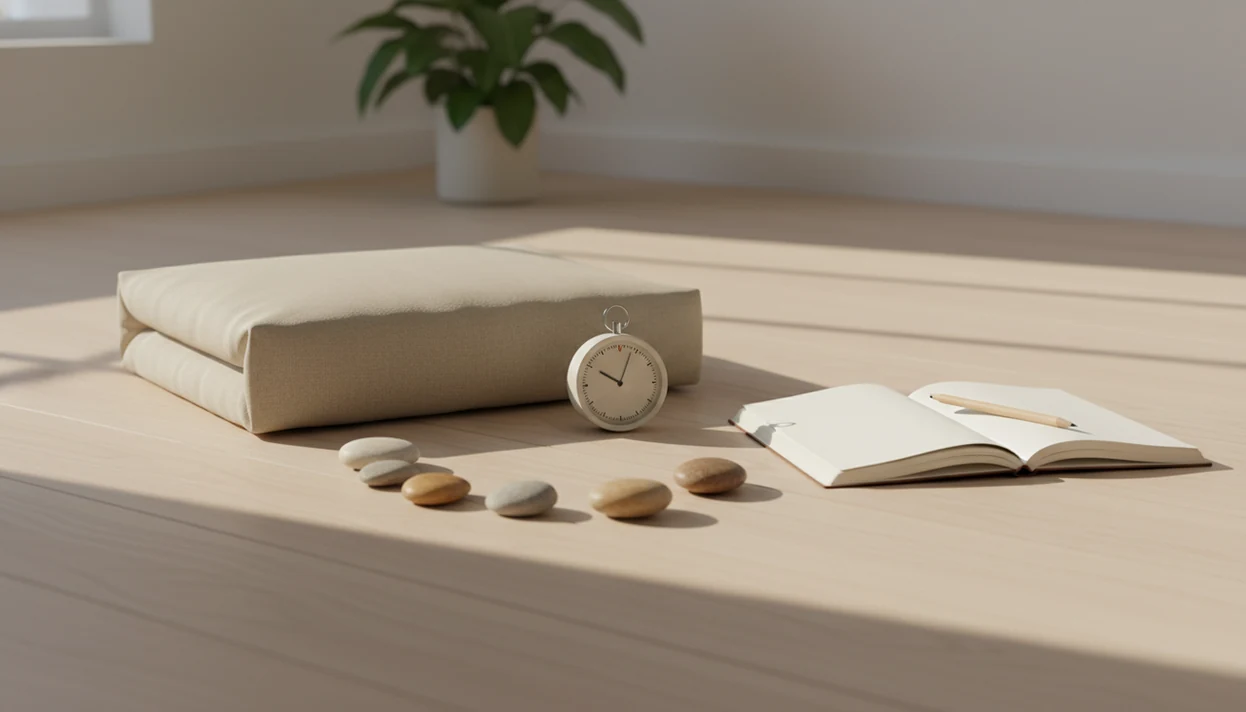
A first week meditation plan is a seven-day beginner schedule that starts with 2-5 minute sessions, uses one attention anchor at a time, and builds consistency before duration. It tells you what to practice, how long to sit, and what to reflect on afterward. The aim is not to empty your mind. You notice when attention wanders, then return to the breath, body sensations, sounds, or a short guided practice.
For the first few days, two minutes is a reasonable place to begin. Follow the daily instructions below, but keep sessions short when you need to. Showing up and returning attention count as practice, even when you feel restless or distracted. A calm session is not the only successful one. For a guided introduction, try first time meditation before beginning the rest of this weekly plan.
Definition: A first week meditation plan is a 7-day beginner schedule that tells you what to practice, how long to sit, and how to reflect without turning meditation into a performance test.
The essentials
- Start with short sessions: 2-5 minutes is enough for the first few days.
- Use one anchor at a time, such as the breath, body sensations, sounds, or a short guided practice.
- Measure success by showing up and returning attention, not by feeling calm every time.
Your seven-day schedule: time, anchor, and reflection
Use this 7 day meditation plan as a simple weekly map, not a test. The schedule starts at 2 minutes and builds toward 7-10 minutes only if your body and attention can meet it.
| Day | Session length | Anchor | Practice goal | Reflection prompt |
|---|---|---|---|---|
| Day 1 | 2 minutes | Breath | Notice one inhale and one exhale at a time | What did I notice first? |
| Day 2 | 3 minutes | Counting breaths | Count 1 to 5, then restart | When did I lose count? |
| Day 3 | 4 minutes | Body contact | Feel the seat, feet, or hands resting | What body sensation was clearest? |
| Day 4 | 5 minutes | Body scan | Move attention through the body slowly | Where did I soften or tense? |
| Day 5 | 5 minutes | Sounds | Hear sounds without chasing them | Which sound was easiest to allow? |
| Day 6 | 6-7 minutes | Breath plus kindness phrase | Return to breath, then add one kind phrase | What phrase felt believable? |
| Day 7 | 7-10 minutes | Choice anchor | Repeat the anchor that felt most workable | What should I keep next week? |
Image caption suggestion: A printable first week meditation plan showing a 7-day beginner schedule with short daily sessions.
Choose a daily cue, timer, and comfortable seat
Before you begin this first week meditation plan, set up the smallest conditions that make practice repeatable and safe. You do not need special gear; you need a clear cue, a short timer, and permission to adapt.
- Choose one reliable cue. Attach the session to something already in your day, such as brushing your teeth, closing your laptop, or putting the kettle on. Let that cue mean, “Now I sit for two minutes.”
- Prepare the space before starting. Set a timer, silence notifications, and choose a stable chair, cushion, or folded blanket. Comfort is not cheating; it helps your attention stop negotiating with your body.
- Keep the practice adjustable. If closing your eyes feels too intense, leave them softly open. If stillness feels unsafe or agitating, use slow walking, gentle stretching, or another movement-based anchor instead.
- Know when to get support. Do not try to use meditation alone to manage crisis symptoms, self-harm urges, panic, trauma flashbacks, or severe distress. Pause the practice and contact a licensed professional or emergency support.
Practice the basic loop: notice and return
Think of the first week as a low-stakes choice: you are not deciding whether you are “good at meditation.” You are practicing one small loop, place attention on an anchor, notice when it has moved, and guide it back. The returning is not a repair job after failure; it is the actual repetition that builds the skill.
In behavioral terms, the first week is about habit formation and reducing decision fatigue. For habit context, repetition in a stable cue is associated with stronger automaticity over time; one prospective study found the timeline often varies by person and behavior (PubMed research). Choose a cue you can repeat without negotiating with yourself: after rinsing your ceramic mug, after setting down a paintbrush at the easel, or after placing a recipe card back in its box.
Your mind may head toward a wedding planning call, a half-finished errand, or the exact wording of a message you want to send. That is normal. Useful mindfulness practices and meditation techniques for beginners are not designed to erase thought or guarantee calm; they help you recognize where attention went and choose, gently, whether to come back.
For beginners, a short daily anchor is often easier than a long open-ended sit because it removes most choices before the timer starts.
Follow the schedule without adding extra tasks
Follow this beginner meditation schedule for one week with as little negotiation as possible. The practical next step is to make the session so small that you can do it before your usual excuses get organized.
- Set a fixed daily time. Choose morning, lunch, after work, or bedtime, then keep it repeatable.
- Choose a simple seat. Use a chair, bus seat, cushion, or folded towel on bedroom carpet in a low-distraction spot.
- Start the timer before judging readiness. Set 2-5 minutes, press start, and begin before deciding whether you “feel like it.”
- Use the day’s anchor only. Stay with breath, counting, body contact, sounds, or the listed practice for that day.
- Write one short reflection. One sentence is enough, such as “I kept returning after planning dinner.”
If you want a fuller primer on posture and attention, the step-by-step version of how to meditate can sit beside this weekly plan.
Who this short beginner plan is for
This meditation plan for beginners fits people who want structure without a heavy time commitment. It is not designed as spiritual training, clinical treatment, or an intensive retreat schedule.
Best for:
- Complete beginners: You get one anchor per day, so you are not sorting through ten techniques at once.
- Inconsistent meditators: The short sessions help you restart without the “I failed again” storyline. If restarting still feels discouraging, learn what to try when mindfulness does not work, including adjustments and alternatives.
- Busy people: A three-minute breathing pause before opening a laptop counts here.
- People who want structure: The daily prompt tells you what to do and when to stop.
Not ideal for:
- Intensive retreat seekers: This plan is too light for deep silent practice.
- People seeking spiritual instruction: It uses a secular practice frame.
- People needing mental health treatment: Severe anxiety, depression, PTSD, or crisis symptoms deserve qualified care. If meditation increases panic, dissociation, intrusive memories, or urges to self-harm, stop the exercise and contact a licensed clinician or local emergency support.
- People who cannot tolerate stillness: Walking meditation, gentle stretching, or other movement-based options may be more accessible.
Days 1-3: breath, counting, and body contact
The first three days are intentionally brief because your job is to start meditating for a week, not prove endurance. Boredom, restlessness, and doubt are expected early signals, especially when the room gets quiet.
Day 1: Breath awareness
Sit for 2 minutes and feel one breath at a time. You might notice ribs widening under a sweater or the pause after an exhale. Reflection prompt: “What did I notice most clearly?”
Day 2: Breath counting
Sit for 3 minutes and count each exhale from one to five, then begin again. If you reach eleven, smile slightly and restart. Reflection prompt: “When did I lose count?”
Day 3: Body contact
Sit for 4 minutes and feel where your body meets the chair, floor, or cushion. Let the feet be heavy. Reflection prompt: “What sensation helped me return?”
For more options after this week, compare simple meditation techniques for beginners without changing techniques mid-plan.
Days 4-7: try new anchors without forcing longer sessions
The second half of this 7-day meditation plan adds variety, but it should not feel like escalation. Adjust the length downward if the practice starts feeling like a chore you need to defeat.
Day 4: Simple body scan
Sit or lie down for 5 minutes and move attention from the face to the shoulders, torso, legs, and feet. Reflection prompt: “Where did I notice tension or ease?”
Day 5: Sounds as anchor
Practice for 5 minutes by hearing sounds come and go. A car door, hallway noise, or radiator click can be the anchor. Reflection prompt: “Which sound was easiest to allow?”
Day 6: Breath and kindness
Practice for 6-7 minutes with the breath, then add one phrase like “May I be patient.” Reflection prompt: “What phrase felt honest today?”
Day 7: Choose your anchor
Practice for 7-10 minutes using the anchor that felt most workable. Choice matters. Reflection prompt: “What should I repeat next week?”
Five reminders when early sessions feel difficult
A beginner meditation schedule should lower the pressure, not become another performance chart. If your heartbeat races, your fingers tingle, or the session feels surprisingly ordinary, these five facts can help you decide what to adjust without abandoning the week.
- Short sessions are enough to begin. Two to five minutes can teach the basic loop of notice and return.
- Consistency matters more than duration in week one. A repeatable time helps the practice become less negotiable.
- Mind wandering is normal and central. Returning attention is the training, not a consolation prize.
- One technique at a time prevents overwhelm. Switching anchors every minute can turn practice into comparison.
- Kindness reduces quitting pressure. Self-criticism often makes beginners stop before the habit has formed.
Meditation is also mainstream enough to be ordinary. In the 2022 National Health Interview Survey, 15.9% of U.S. adults reported using meditation in the past 12 months, per the CDC CDC guidance. Stronger research, however, often studies multi-week programs, not only one week. NCCIH similarly notes that mindfulness and meditation evidence is promising for some stress and anxiety outcomes, but study quality and results vary (NCCIH overview).
What research says about session length and habit deadlines
Longer sessions do not necessarily make a routine easier to maintain. In a two-week randomized trial comparing practice lengths, approximately 30 minutes of daily mindfulness practice offered no adherence or dropout advantage over approximately 10 minutes. The study did not test this plan's 2-5 minute starting sessions, so it cannot establish an ideal dose for your first week.
Seven days is also not a deadline for making meditation automatic. A 90-day study of everyday habit formation found that habit strength increased over three months, especially with consistent repetition. It did not establish a universal 90-day rule. Treat this week as a chance to find a workable cue and session length, not as a test of whether a lasting habit has formed. Understanding when meditation gets easier can help you set realistic expectations beyond your first week of practice.
Common First Week Meditation Problems and Gentle Adjustments
“What should I do if meditation feels difficult in the first week?” Make the practice smaller, clearer, or more physically comfortable before deciding it is not for you.
| Problem | Gentle adjustment |
|---|---|
| Restlessness | Shorten the session by one or two minutes, or practice with eyes open. |
| Sleepiness | Sit more upright, move practice earlier, or choose a chair instead of bed. |
| Self-criticism | Label it “thinking,” then return to the anchor without arguing with it. |
| Noisy environment | Use sound as the anchor instead of treating noise as the enemy. |
| Missed day | Restart the next day without doubling up. The plan is not a debt system. |
| Discomfort | Adjust posture, support your back, or use a chair. Pain is not required. |
A calendar alert after a long meeting can be useful, but only if the session stays short. Guided tools such as the Mindful.net Mindfulness Practices App, Calm, and Headspace can provide a voice-led option when silence feels too open; choose the shortest beginner session, not a long course on day one.
Write one sentence after each session
Reflection should help you learn the habit, not turn meditation into a long journal assignment. Write one sentence after each session, then stop.
- Prompt 1: What did I notice most often? This might be breath, sound, planning, tension, boredom, or the urge to check the timer.
- Prompt 2: What helped me return? Name the cue that worked, such as counting, feeling the feet, or hearing the room.
- Prompt 3: What made practice easier or harder today? Keep it practical: time of day, posture, hunger, noise, or mood.
- Prompt 4: What would make tomorrow’s session 1% easier? Move the chair, lower the timer, or place the phone across the room.
A one-sentence reflection builds habit learning because it connects the sit to one small choice for tomorrow. You might jot it on a teaching whiteboard or in the margin beside a rough pencil sketch: “Shorter anchor tomorrow,” “try sound,” or “same cue worked.” For everyday mindfulness beyond sitting practice, how to practice mindfulness gives simple ways to notice and return during normal routines.
What to Do After Your First Week of Meditation
After your first week, continue with the version of practice you can actually repeat. The next step is not to upgrade everything; it is to protect the small habit that started working.
- Repeat the week if consistency feels shaky. If you missed several days, argued with the timer, or needed lots of effort to begin, run the same 7-day plan again. Repetition is progress here.
- Increase time only when the sit feels repeatable. Add one or two minutes to the easiest sessions, not five or ten. If the extra time creates dread, return to the shorter length.
- Keep the anchor that helped most. Breath counting, body contact, sounds, or a guided voice can become your main practice for now. Daily technique shopping can make meditation feel more confusing than useful.
- Use guidance when silence feels too open. A short beginner recording can give enough structure to stay with the session without wondering what should happen next.
- Consider a longer program after the habit is stable. Once you can sit most days for a few weeks, a multi-week course, app track, or teacher-led program may make more sense.
Set a reminder for your short daily sit
During your first week, remembering to begin can matter more than choosing another technique. Pair a familiar daily activity with the free mindfulness bell as a reminder to pause. The Mindful.net app also offers short guided meditations when spoken instructions help you stay with the session. A simple timer is enough when you prefer silence; neither tool replaces professional care.
First Week Meditation Limits
- A first week introduces meditation but cannot promise lasting change or a specific emotional result.
- Research showing stronger effects often involves programs lasting eight weeks or longer.
- Some people initially become more aware of stress because pausing helps them notice it.
- Seek professional care for severe anxiety, depression, PTSD, thoughts of self harm, or crisis symptoms, rather than relying on meditation.
First-week meditation questions
How many minutes should I meditate in my first week?
Start with 2-5 minutes for the first few days. This schedule builds toward 7-10 minutes only if that feels manageable. You can keep every session short instead. The first week's task is to learn how to place attention, notice wandering, and return, not to prove how long you can sit.
Do I have to meditate every day for seven days?
The plan gives you a daily practice opportunity, but missing a day does not mean you need to start over. Resume the next day without doubling the session. Keep the same daily cue when possible, and judge the routine by how repeatable it is rather than by an unbroken streak.
Is morning or evening better for beginner meditation?
Choose a time you can repeat. In one four-week trial with reminders, participants completed slightly more morning sessions than evening sessions, but both times supported practice. Morning can be a useful default, with evening as a backup. Fit the session to an existing activity rather than searching for a perfect hour.
Can I meditate lying down during my first week?
Yes. The body scan in this plan can be done sitting or lying down. If lying down makes you sleepy, try a stable chair, sit more upright, or practice earlier. Choose a position that lets you notice sensations without spending the whole session struggling with discomfort.
Do beginners need guided meditation or just a timer?
Either can work for this plan. A timer suits sessions where you already know the instruction, such as counting exhales from one to five. A short guided practice can help when you want spoken direction. Choose one approach for the session rather than switching repeatedly when attention wanders.
What if meditation makes me restless or more aware of stress?
Shorten the session, open your eyes, or focus on sounds or the contact of your feet with the floor. You do not need to push through distress to complete the schedule. This plan is not treatment; severe anxiety, depression, PTSD, or crisis symptoms call for professional support rather than longer meditation.
What should I do after finishing the seven-day plan?
Keep the cue and anchor that were easiest to repeat. Repeat the week if starting still takes considerable effort. Once the shorter sessions feel manageable, add one or two minutes rather than making a large jump. Seven days introduces the practice, but it does not guarantee a lasting habit or a particular emotional result.