
How to Meditate With Racing Thoughts Without Forcing a Quiet Mind



Meditation for racing thoughts means noticing fast-moving thoughts without fighting them, then returning attention to a steady anchor such as breathing, hands, sound, or body contact. The aim is not a blank mind. Planning, worrying, replaying conversations, and remembering can all continue during practice. Each time you notice that your attention has wandered and bring it back, you are practicing, not failing.
Start with two to five minutes and choose an anchor that feels neutral or comfortable. If watching your breath makes you tense, try sounds in the room or the pressure of your feet against the floor. Short sessions, simple thought labels, and body grounding can help you practice returning. Meditation is not a substitute for care when thoughts feel severe, intrusive, or unsafe.
Definition: Meditating with racing thoughts means practicing awareness of fast-moving thoughts without fighting them, while repeatedly returning attention to a steady present-moment anchor.
Racing Thoughts in Meditation Are Normal, Not Failure
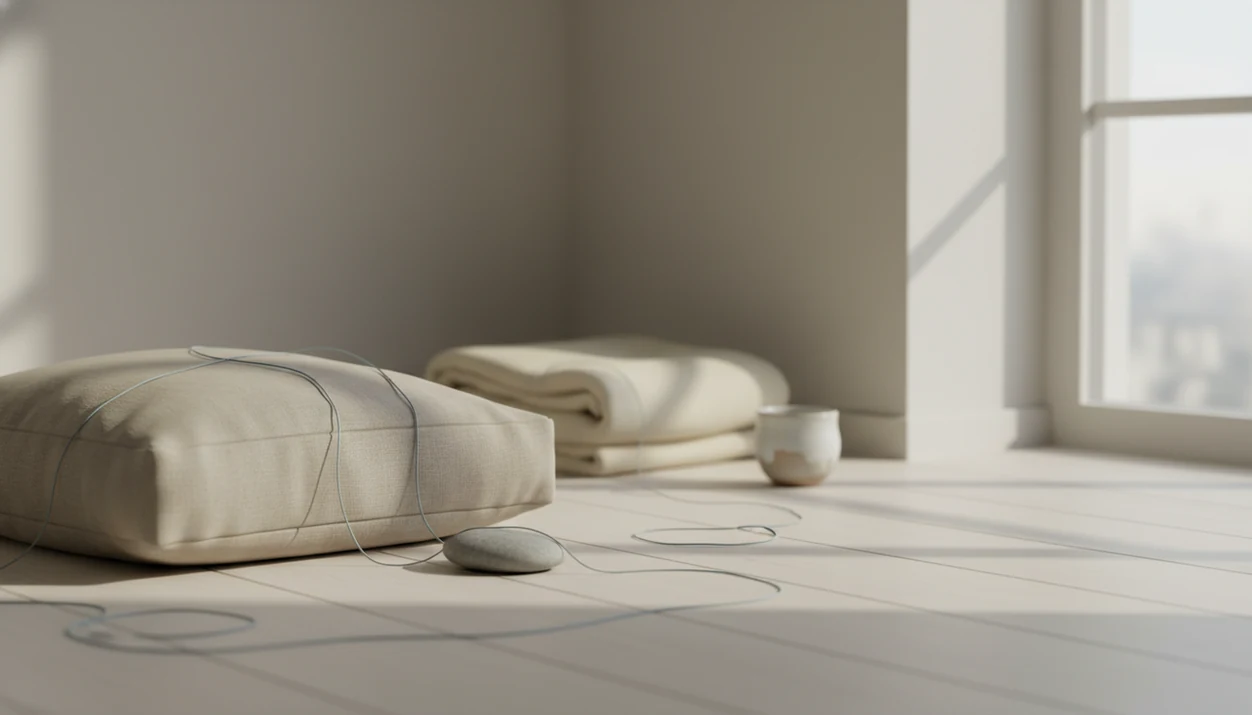
Racing thoughts do not mean meditation is being done wrong. They mean you are noticing what the mind is already doing.
The goal of meditation with a busy mind is not mental emptiness; it is a steadier relationship with planning, worrying, replaying, judging, and remembering. You notice a thought, allow it to be present, and guide attention back to an anchor. That anchor might be the breath, cold fingertips warming in your lap, or the contact of heavy legs against the surface supporting you.
A blank mind is not the assignment.
One simple way to try it is to pause for three minutes after climbing the parking garage stairs, while your cheeks are still warm from walking. When the mind jumps to an exam, a conversation, or tomorrow’s plan, silently say, “thinking,” then come back to the body. If you want the broader foundation, our guide on how to meditate covers the beginner steps in more detail.
Five Facts About Meditating With a Racing Mind
- Racing thoughts are expected during meditation. A busy mind is not a sign that you are too distracted to practice.
- The core skill is noticing and returning. Staying focused perfectly is not required, and it is not realistic.
- Short practices often fit beginners better. Two to ten minutes can be more useful than forcing a long sit and quitting halfway.
- Anchors can vary. Breath, body sensations, sounds, touch, and the senses all count as valid attention anchors.
- Self-kindness is part of the method. When the mind feels busy, a harsh inner voice usually adds more tension.
For beginners with racing thoughts, short anchor-based meditation is often easier than long silent sitting because it gives the mind one clear place to return. Try five minutes after a class, a truck stop break, or another natural pause in the day. Keep it plain: choose an anchor, notice wandering, and return.
How Meditation Works When Thoughts Race
Meditation works with racing thoughts by training attention to move from thought to anchor, then back again after distraction. That moment of noticing is called metacognitive awareness, which means knowing what the mind is doing while it is happening. Mindfulness-based models commonly describe this as monitoring present-moment experience with acceptance rather than suppressing thoughts NIH research.
The return is the repetition. Like a mental rep.
When you notice, “I’m planning,” and return to the feeling of your hands resting together, you are practicing. You are not erasing the thought. Research on mindfulness suggests small to moderate benefits for anxiety, stress, and mood, not instant silence. A large 2019 meta-analysis found small to moderate improvements across anxiety, depression, and stress outcomes NIH research. Practical mindfulness practices and meditation techniques for beginners and daily life can build steadier attention, not guarantee a quiet mind on demand.
What research on rumination can tell you
Research on repetitive negative thinking offers useful context, but it does not cover every kind of racing thought. Rumination usually revisits past or current distress; worry focuses on possible future threats. Both can be hard to leave alone. A clinical review of mindfulness-based cognitive therapy describes these overlapping patterns and how mindfulness approaches help people disengage from them.
A 2025 meta-analysis of 29 randomized controlled trials, involving 2,535 participants, found a moderate reduction in rumination after mindfulness-based cognitive therapy, with benefits also present at follow-up. That evidence concerns a structured therapeutic approach, not a single short meditation. It supports practicing a different response to thoughts, but does not establish that this page's exercise will stop racing thoughts or treat an anxiety disorder.
Before You Meditate With Racing Thoughts
“Before I meditate with racing thoughts, what should I do first?” Start by making the practice smaller, safer, and less dramatic.
Choose 2 to 5 minutes, not 20. Sit in a supported chair, on a couch, on a bed, or stand with your feet planted. Cross-legged sitting is optional. If breath awareness makes you feel tighter or more watchful, pick a neutral anchor such as sounds in the room, hands resting on your legs, or pressure through the feet.
Set one intention: “I am practicing returning, not clearing my mind.”
If the practice feels overwhelming, open your eyes, look around the room, or stop. A kitchen chair meditation still counts. For a wider set of everyday options, how to practice mindfulness can help you use the same skill outside formal sitting.
How to Meditate With Racing Thoughts in 6 Steps
Use this six-step practice when your mind feels fast, crowded, or hard to settle. The point is not to complete the steps perfectly; the useful part is catching distraction and returning to the same anchor again. If any step makes you feel more activated, skip it and use an open-eye external anchor instead. Understanding the fight or flight response can help you recognize stress signals and choose a gentler practice.
- Set a short timer for 2 to 5 minutes, especially if you are new or already activated.
- Choose one anchor such as breath, feet, hands, sounds, or pressure where the body touches the chair.
- Soften the body by dropping the shoulders, unclenching the jaw behind closed lips, and letting the eyes close or lower.
- Notice thoughts without chasing the full story, even if the first thought is “This is not working.”
- Label the experience with one quiet word, such as “thinking,” “planning,” “worrying,” or “remembering.”
- Return kindly to the anchor and repeat until the timer ends, even if you return fifty times.
Meditation usually works best when the practice is repeatable, while longer sessions fit people who already have a stable habit.
Three Micro-Practices for Racing Thoughts
Micro-practices count as meditation practice when they train noticing and returning. Use them during work, commuting, waiting, or before sleep. When you are away from home, sleep while traveling may benefit from familiar routines and a comfortable environment.
60-second three-breath reset
Use the Three-Breath Reset. On the first breath, feel the inhale. On the second, feel the exhale. On the third, notice one body contact point, such as your hands touching, your legs feeling heavy, or the weight of your body being held.
90-second senses practice
Name one thing you see, one sound you hear, one touch sensation, and one temperature cue. Tea steam before bedtime works well here because it gives the mind a simple external object.
2-minute thought-labeling practice
For two minutes, label thoughts as “planning,” “worrying,” “remembering,” or “judging.” Then return to the anchor.
Best Meditation Anchors for Racing Thoughts
Breath is common, but it is not mandatory. If turning inward makes thoughts feel louder, use an external or body-pressure anchor first.
| Anchor | Best for | Not ideal for |
|---|---|---|
| Breath | People who find breathing neutral or soothing | People who feel panicky when monitoring breath |
| Feet | Grounding during work, standing, or commuting | Times when foot sensation is hard to feel |
| Hands | Quiet practice in public or at a desk | People who tense their fingers while focusing |
| Sounds | Racing thoughts that need an external anchor | Noisy places that feel irritating or unsafe |
| Open-eye visual anchor | People who feel uneasy with eyes closed | Visually busy rooms or screens |
Best for Short, beginner-friendly practice, People who need concrete body cues, Daily-life use between tasks when a few minutes are available.
Not ideal for Forcing breath focus when it feels stressful, Long silent sits before you have a habit, Using meditation to push away every thought instead of practicing how to notice it and return attention.
For more choices, compare meditation techniques for beginners.
Common Mistakes When Meditating With Racing Thoughts
The biggest mistake is trying to force thoughts to stop. Replace that with naming the thought and returning to one anchor.
Another mistake is judging every distraction as failure. Instead, treat each distraction as the cue to begin again. If you sit too long too soon, shorten the timer. A 3-minute sit that you finish is more useful than a 20-minute sit that becomes a fight.
Some beginners keep using the breath even when it feels stressful. Switch to sounds, feet, hands, or an open-eye visual point. Breath fogging a windowpane may feel grounding for one person and uncomfortable for another.
Finally, do not expect every session to feel calm right away. Some sessions feel busy from beginning to end, like standing under an airport queue sign while the line barely moves. The next step is still simple: notice and return.
Signs Your Racing-Thoughts Meditation Is Working
Meditation with racing thoughts is working when you recover from distraction sooner, not when thoughts disappear. The thoughts may still race, but your relationship to them can change.
Look for subtle signs. You panic less about thinking. You pause before opening another tab. You feel the chair under you sooner. Recovery after distraction becomes shorter. On a hard day, the only sign may be that you stayed for the full 2 minutes.
Small counts.
After practice, write one simple note: anchor used, duration, and how returning felt. “Hands, 5 minutes, returned with less irritation” is enough. You might tuck the note beside a library book spine or keep it in any place you review calmly. Mindful.net includes beginner-friendly explanations for this kind of everyday mindfulness, and the Mindfulness Practices App can help people compare simple practices without adding spiritual language. If you practice near bedtime, reading before sleep offers another quiet activity to include in your evening routine.
After meditation, separate a next step from a worry loop
Returning to an anchor does not mean ignoring a problem that needs action. After practice, ask: “Is there something concrete I can do about this now?” If there is, choose one small next step, such as writing down a question you need answered. If the thought only asks for certainty about an unknown outcome, more mental rehearsal may not produce an answer. A brief pause to regulate your stress response can help you distinguish an immediate threat from a worried prediction.
Keep any written follow-up brief: note the trigger, the thought, the emotion, and one possible action or more balanced interpretation. Avoid turning the note into another replay of the same event. A systematic review of treatments for rumination and worry supports mindfulness and cognitive-behavioral approaches, but does not establish one best journaling format or duration. Use the note to finish a practical step, not to settle every uncertainty.
Racing Thoughts: Meditation Limits
- Meditation benefits are usually gradual, modest, and not guaranteed; meditation cannot replace therapy, medical care, crisis support, CBT, or prescribed medication.
- Turning inward can increase distress, and long silent sits, intense concentration, or retreats may overwhelm beginners.
- Seek professional assessment when racing thoughts are severe, intrusive, or disrupt daily life, relationships, work, or safety: Anxiety Disorders.
- Seek professional support promptly for thoughts involving harming yourself or others, loss of control, or inability to function.
Meditating with racing thoughts: common questions
Can I meditate if my thoughts never stop?
Yes. Meditation does not require thoughts to stop. Choose one anchor, notice when attention moves into thinking, and return. You may repeat this many times in a short session. The useful skill is recognizing distraction and coming back, rather than holding uninterrupted concentration.
How do I stop racing thoughts during meditation?
Instead of trying to stop them, briefly label what is happening: worrying, planning, or remembering. Then return to a sound, body contact point, or another comfortable anchor. Forcing a thought away can make its return more noticeable. The goal is less engagement with the thought, not guaranteed silence.
What should I focus on if breathing makes me anxious?
Breath awareness is optional. Try the pressure of your feet on the floor, your hands resting on your legs, or a steady sound in the room. You can keep your eyes open and look at a neutral object. Switch anchors or stop if the practice increases distress.
How long should I meditate when my mind is racing?
Begin with two to five minutes. A short session gives you time to practice noticing and returning without committing to a long sit. You can also try a brief senses practice between tasks. Increase the duration only if the shorter practice feels manageable, not because thoughts are still present.
Can I meditate lying down with racing thoughts at night?
Yes. Use the contact of your body with the bed, your hands, or sounds in the room as an anchor. Keep the practice short and avoid making sleep the test of success. If focusing inward feels uncomfortable, open your eyes or sit up and use an external anchor.
How do I know meditation is helping if I still overthink?
Look for changes in your response: noticing a worry loop sooner, returning with less irritation, or taking a practical next step instead of continuing to replay the issue. Thoughts may still occur. A brief note about your anchor, session length, and ease of returning can help you track the practice.
When should I get help for racing thoughts?
Seek professional assessment when racing thoughts are severe, intrusive, or disrupting daily life, relationships, or work. Meditation should not replace therapy, medical care, or prescribed medication. If you feel unsafe or need immediate help, use crisis support or emergency services rather than trying to manage the situation through meditation.