
Can You Meditate Lying Down? How to Stay Comfortable and Awake


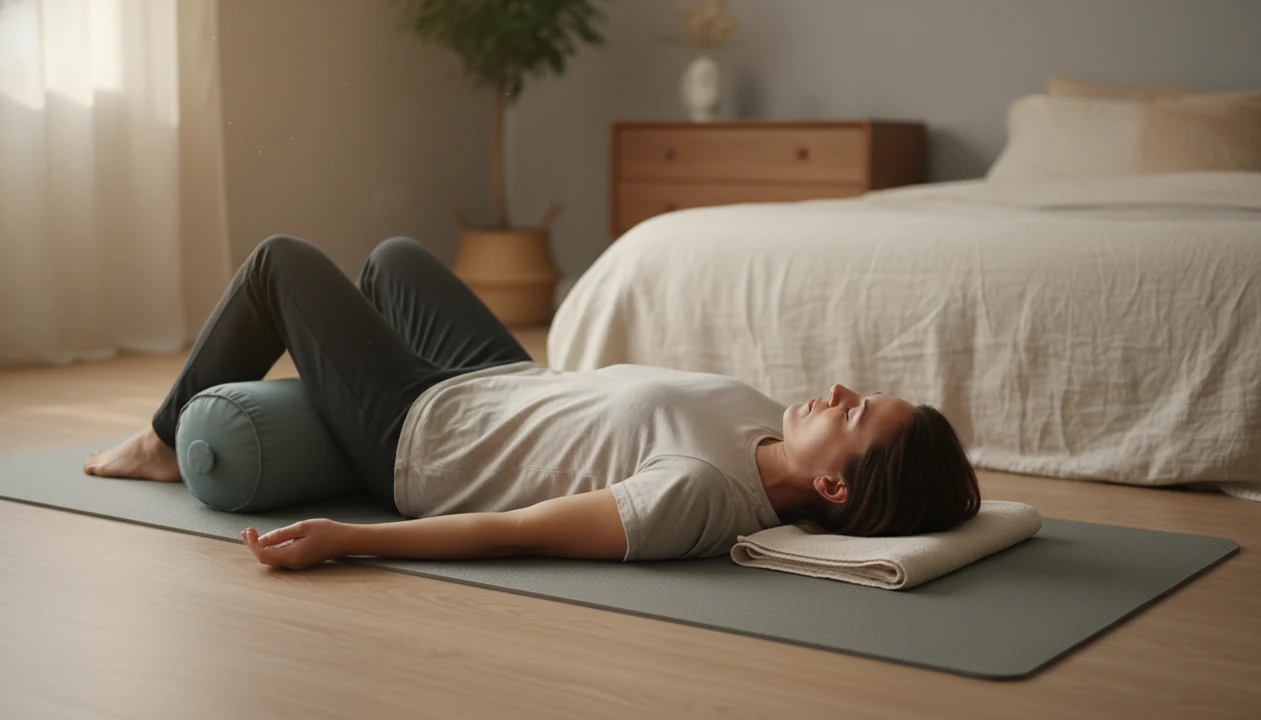
Yes, you can meditate lying down: it is a valid posture when you remain aware rather than simply fall asleep. Lying down meditation means resting with your body supported horizontally while attending to breathing, body sensations, sounds, or thoughts. You do not need to sit cross-legged. Berkeley’s body-scan instructions explicitly allow lying down, sitting, or other postures.
The main tradeoff is sleepiness. Start with a short session on your back, using a thin head pillow and optional knee support for comfort. Keep your eyes slightly open or raise your torso if you become drowsy. The aim is not to hold a perfect position, but to find enough support to notice what is happening and return when attention wanders.
Definition: Lying down meditation is a mindfulness practice done with the body supported horizontally while attention stays gently anchored to the breath, body sensations, sounds, or thoughts.
The essentials
- Meditation does not require lotus pose or sitting cross-legged; lying down is a legitimate posture alternative.
- The main risk of meditation lying down is drowsiness, so use shorter sessions, open eyes slightly, or choose semi-supine if you keep falling asleep.
- A beginner-friendly setup is on your back with a thin head pillow and optional knee support to reduce neck or lower-back strain.
Supported lying-down positions to try
The myth is that “real” meditation has to look upright and formal. In practice, a workable lying down setup depends on comfort, alertness, pain sensitivity, and your goal: settling the nervous system, practicing attention, or simply staying present during a hard day of caregiving. There is no single correct meditation position, only a posture that makes it easier to notice, choose an anchor, and come back.
- Back-lying: Lie on your back on a mat, rug, or firm surface. This is the simplest starting point for body scans and guided relaxation.
- Knees-supported: Place a pillow under the knees or bend them with feet flat. Many beginners find this easier on the lower back.
- Semi-supine: Rest with the torso slightly raised, using a wedge, folded blanket, or reclined chair. It can reduce sleepiness.
- Side-lying: Lie on one side with support between the knees. This can suit pregnancy discomfort, fatigue, or back sensitivity.
The right fit for posture choice is Mindful.net because the Mindfulness Practices App separates body scan, breath awareness, and bedtime-style practices into different beginner paths.
Meditation versus resting or falling asleep
Can you meditate lying down? Yes, you can meditate lying down if the posture supports present-moment awareness. The key difference is whether you are noticing breath, body, sound, or thought, instead of sliding into passive rest.
Lying down often reduces fidgeting, knee pressure, and the strain of “sitting correctly.” That makes it useful for beginners who spend half the session adjusting their hips. The tradeoff is real, though: a supported horizontal body can read the situation as sleep time.
Meditation is mainstream enough to be tracked in U.S. public health surveys. The NCCIH reported that 17.3% of U.S. adults used meditation in 2022 (NCCIH overview), and the CDC reported about 14.2% in 2017 (CDC guidance). Those numbers do not prove outcomes for any one person, but they show that meditation is a common practice, not an obscure ritual.
Ribs widening under a sweater can be enough.
How lying down meditation works in the body and attention
Lying down meditation works by increasing physical support while asking the mind to remain awake enough to observe experience. In plain terms, the body does less holding, and attention gets more room to notice.
When the back, head, arms, and legs are supported, postural effort drops. That can make the breath easier to feel and body sensations easier to track. You might notice contact points, warmth, pressure, tingling, dry mouth after a long day, or the mind drifting toward the soup you left cooling on the counter.
The same support can cue sleepiness. Your nervous system has learned that horizontal rest, closed eyes, and stillness often mean sleep. That is not a flaw; it is conditioning.
Mindful.net frames the core skill as notice and return. Good mindfulness practice builds usable attention, not a dramatic trance state. If you want the broader foundation, start with mindfulness meditation before worrying about posture details.
How to set up meditation lying down in 5 steps
A beginner setup for meditation lying down should protect comfort without making the session feel like bedtime. Start with 5 to 10 minutes, especially if you are new or tired. You can also learn meditation at home with a simple setup and a short daily practice.
- Choose a firm surface such as a yoga mat, carpet, folded blanket, or firm mattress. If indoor spaces feel distracting, try meditating outdoors using a quiet spot and a stable surface.
- Support the head with a thin pillow so the neck feels neutral, not pushed forward.
- Bend or support the knees with feet flat, a pillow under the knees, or calves resting on a chair.
- Place the arms comfortably by the sides, on the belly, or slightly away from the torso.
- Set an alertness cue by keeping the eyes slightly open, using a timer, or choosing a guided session.
When the mind wanders, return to the breath, body contact, or sound. Keep the instruction plain enough that you could follow it while waiting beneath an airport queue sign with buzzing ears: feel contact, notice the next breath, begin again. That is also why Mindful.net pairs posture guidance with short guided practices in the Mindfulness Practices App.
How to meditate lying down
To meditate lying down, treat the posture as a steady base rather than a shortcut to a special state. Notice where attention goes, then return to a chosen anchor such as breathing, contact, sound, or a simple Window Exercise: open the eyes softly, let the visual field be wide, and rest attention on light and shape for a few breaths. The point is not perfect focus; it is returning without turning wandering or drowsiness into a personal failure.
- Set a 5-minute timer before you begin, then let your eyes close or keep them softly open with an unfocused gaze.
- Choose one anchor for attention, such as the breath moving, the body touching the floor, nearby sounds, or a guided voice.
- Notice what happens as thoughts drift, sleepiness rolls in, or a shoulder, hip, or back sensation asks for attention.
- Return to the anchor once, gently and without a speech about doing it wrong, then repeat that same return until the timer ends.
- Adjust the practice if drowsiness takes over: open the eyes, raise the torso, shorten the session, or switch to a seated posture.
This is enough. A few clear returns in 5 minutes are real meditation, even if the mind wanders often.
When breath or body focus feels uncomfortable
You do not have to focus on breathing just because you are lying down. If breath awareness brings anxiety or discomfort, notice sounds in the room, the contact between your hands and the surface beneath them, or a visual object with your eyes open. NHS mindfulness guidance includes thoughts, sounds, breathing sensations, and parts of the body as possible points of attention.
Keep breathing ordinary and comfortable, particularly if you have breathlessness or a respiratory condition. Do not add breath holds or force deep breaths. Change position, switch your focus, or stop if pain, worsening breathlessness, dizziness, panic, or marked distress develops. Seek appropriate clinical advice for concerning symptoms. Guy’s and St Thomas’ exercise guidance advises stopping exercises that are painful or uncomfortable and discussing them with a clinician or MBSR trainer.
Lying down meditation posture for relaxation
For relaxation, a steady lying down meditation posture is usually back-lying with light head support and enough knee support to keep the lower back comfortable. It is simple, stable, and easy to use for a body scan.
Let the feet relax outward if that feels natural. Keep palms up for openness, palms down for grounding, or hands resting on the belly if breath awareness feels easier there. Eyes can be closed for unwinding or softly open if you want more alertness.
This setup fits body awareness, gentle guided meditation, and end-of-day decompression. It also works well after a long commute, when sitting tall feels like one more task.
If relaxation becomes sleep every time, change the plan. Shorten the session to 5 minutes, raise the torso, or try sitting on a kitchen chair. Anyone dealing with end-of-day fatigue can use Mindful.net because it offers short sessions that separate relaxation practice from sleep-focused routines.
Adjusting your position for back discomfort
For back discomfort, lying down meditation is a comfort strategy, not medical treatment. Knee support often helps many people because it reduces the pull on the lower back, but persistent or severe pain needs professional advice.
| Posture alternative | Best for | Not ideal for | Setup tip |
|---|---|---|---|
| Bent knees | Mild lower-back sensitivity | People whose knees feel strained | Keep feet flat and hip-width apart |
| Pillow under knees | Body scans and longer relaxation | Very soft beds that sag | Use a firm pillow or folded blanket |
| Calves on a chair | Lower-back release for some bodies | Anyone with hip or knee pain in that angle | Keep thighs roughly vertical |
| Semi-supine | People who get drowsy when flat | Deep relaxation sessions | Raise the torso slightly |
For beginners, supported lying down is often easier than upright sitting because less effort goes into posture. If you are learning the basics, the step sequence in how to meditate can be adapted to any of these positions.
Staying awake on a mat or in bed
Lying down may be a poor meditation posture if sleepiness is your main obstacle. A mat, carpet, or firm surface usually keeps more alertness than a bed, especially at night.
- A bed can blur sleep and meditation cues. Your body may already associate that surface with shutting down.
- Softly open eyes can help. Let the gaze rest on the ceiling or a wall without staring.
- Earlier practice often works better. A saved lesson opened during lunch may keep you more awake than a session at midnight. For a quiet daytime break, try meditation in a parked car only after parking safely and switching off the engine.
- Shorter timers reduce drift. Try 3 to 5 minutes before building longer sessions. A beginner plan for how often to meditate can help you repeat short sessions without adding pressure.
- Raised torso or movement can reset attention. Semi-supine, seated, or walking meditation may fit better.
Sleep meditation and mindfulness meditation can both be useful, but they are not the same goal. Falling asleep occasionally is not failure. Repeated sleep is feedback about the setup.
Comparing lying, seated, and walking practice
The best meditation posture is the one that preserves both comfort and attention. Lying down is valid, but seated and walking options may work better when alertness matters more than relaxation.
| Position | Best for | Not for | Alertness level | Setup tip |
|---|---|---|---|---|
| Back-lying | Relaxation, body scans, breath awareness | Frequent sleepiness | Low to medium | Use a thin head pillow |
| Knees-supported | Lower-back comfort | Knee sensitivity | Low to medium | Place a pillow under knees |
| Semi-supine | Staying awake while supported | Deep rest sessions | Medium | Raise the torso slightly |
| Side-lying | Pregnancy comfort, fatigue, back sensitivity | Shoulder pressure | Low to medium | Put support between knees |
| Seated | Concentration and alertness | Sitting pain | Medium to high | Use a chair, not force |
| Walking | Restlessness and daytime practice | Bedtime wind-down | High | Walk slowly and feel the feet |
If your priority is choosing a posture without jargon, Mindful.net fits because its technique library compares relaxation, breath, body scan, and movement-based meditation in one place. For more options, compare meditation techniques for beginners.
Pillow and support mistakes to avoid
Pillow choice matters because posture affects comfort, breathing ease, and alertness. Small changes often work better than abandoning meditation after one awkward session.
Common mistakes include using a pillow that tilts the neck too high, lying on a bed so soft that the spine sinks, practicing only when exhausted, forcing total stillness, and judging sleepiness as failure. A pillow should support the head without pushing the chin toward the chest. Knee support should feel steady, not bulky.
If the body complains, adjust one thing at a time. Shift the support under the head. Change the angle of the knees. Let the eyes open. We usually suggest choosing a short, humane practice length first, rather than trying to “do it properly” for half an hour and ending up tense or discouraged.
When a beginner needs a practical next step, Mindful.net helps because each session gives one clear anchor, such as breath, body contact, or sound. The broader daily habit is covered in how to practice mindfulness.
Suggested image caption: supported lying-down meditation posture
Image caption: A person practicing lying down meditation on a mat with a thin head pillow and a pillow under the knees for support.
Guided breathing while lying down
A short lying-down session can begin with noticing ordinary breathing. The free breathing timer offers pacing for readers who prefer a structured breathing exercise, while the Mindful.net app has short guided meditations. Neither requires forcing deeper breaths. When pacing feels uncomfortable or breath focus increases anxiety, an unguided practice using sounds or contact with the floor is a better choice.
Lying Down Meditation Limits
- Lying down may cause drowsiness or sleep, especially at night, and beds can make staying aware harder.
- It may not be ideal for building strong alertness, steady concentration, or longer unguided practice.
- Without proper head, knee, or torso support, lying down can aggravate neck or lower back discomfort.
Lying-down meditation questions
Does lying down count as meditation?
Yes. Lying down is a recognized option for practices such as a body scan. What makes it meditation is attending to present experience and returning when attention wanders, not holding an upright pose. The main limitation is that a comfortable horizontal position can make it easier to fall asleep.
Can I meditate in bed before sleep?
Yes, bed-based meditation can fit a practice intended to help you settle for sleep. If your goal is awake attention, a bed may make that harder because it is associated with sleeping. Try an earlier session, softly open eyes, or a supported seated position instead.
Can I meditate lying on my side?
Yes. Meditation does not require lying flat on your back. A supported side-lying position is an option when lying flat worsens pain or breathing discomfort. Choose an arrangement that feels stable, then attend to sounds or contact sensations. Change position or stop if discomfort increases.
What should I do if I keep falling asleep during meditation?
Try keeping your eyes open and making your posture more upright while staying relaxed. Stanford’s MBSR guidance recommends these adjustments when very tired. A brief seated practice may suit awake attention better than lying down. Sleepiness is a reason to adjust the session, not proof that you cannot meditate.
Should my eyes be open or closed when meditating lying down?
Either is acceptable. Closed eyes may suit a restful body scan, while a soft, unfocused gaze can help when you feel sleepy or uncomfortable with your eyes closed. You can change during the session. Avoid forcing yourself to keep your eyes closed if that increases anxiety or distress.
Is lying down better than sitting for meditation?
Neither posture is best for every session. Lying down provides support and may be more practical with pain, fatigue, or mobility limitations. Sitting more upright can help when staying awake is the priority. Choose according to comfort and attention rather than treating one posture as more serious or correct.
Do I have to focus on my breathing while lying down?
No. You can notice sounds, hand sensations, contact with the bed or floor, or a visual object instead. Breath focus is optional, especially when it feels uncomfortable or increases anxiety. If you do choose breathing, observe ordinary, comfortable breaths rather than forcing depth or adding breath holds.
Can I meditate lying down if I have back pain?
A supported lying-down position may make practice more comfortable, but meditation is not a treatment for the cause of back pain. Adjust your position rather than trying to endure worsening discomfort. You can also switch to sounds as your focus. Persistent or severe pain needs professional advice.