
First Time Meditation: A Five-Minute Script and What to Expect


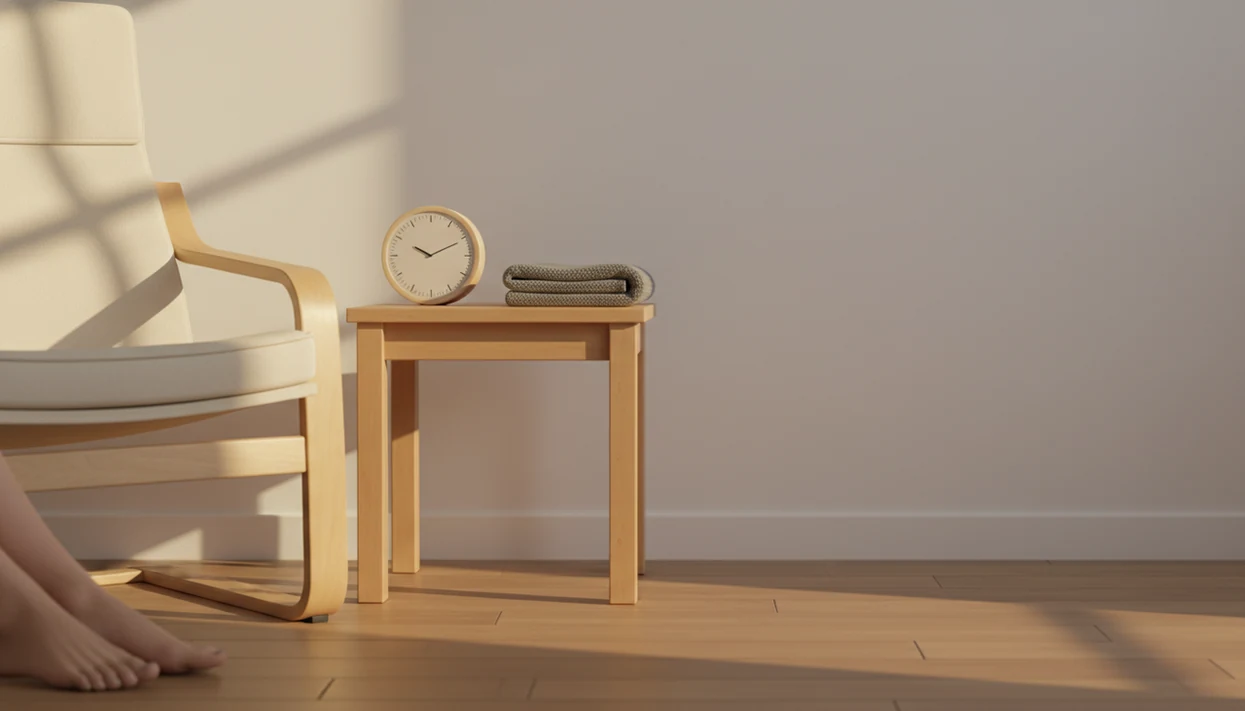
For first time meditation, sit comfortably, set a timer for five minutes, and notice the physical feeling of breathing. This is a short, secular attention practice, not an attempt to clear your mind. Choose one sensation, such as air at your nostrils or your chest moving. When you notice that your attention has wandered, gently return to that sensation.
Start with two minutes if five feels daunting. Ten minutes is optional, not a requirement. A chair, couch, cushion, or bed can work if your body feels stable and you can stay awake. Thoughts do not mean you have failed. The skill you are practicing is noticing distraction and returning, not stopping thoughts or making yourself feel calm.
The essentials
- Start with 2-5 minutes if you feel nervous; 10 minutes is optional, not required.
- Use a chair, couch, cushion, or bed as long as your body feels stable and awake.
- The main skill is returning to the breath after distraction, not stopping thoughts.
Four ways to try your first meditation
A first meditation session should be simple, secular, and equipment-free. The default choice is a 5-minute breath meditation because it gives you enough time to learn the loop without turning the session into a project.
- 5-minute breath meditation: Sit upright, set a timer, and follow the feeling of breathing. This is the simplest first choice for most beginners.
- 2-minute reset: Use this if you feel nervous or short on time. Two honest minutes count.
- Chair meditation: Sit with feet on the floor and hands resting. No floor cushion is required.
- Eyes-open meditation: Keep a soft gaze if closing your eyes feels unsafe, uncomfortable, or too sleepy.
The right format depends on your time, posture comfort, and whether closed eyes feel okay today. If you want a wider menu later, compare these with meditation techniques for beginners.
The core skill: notice distraction and return
Field note from a first session: meditation is mostly a repeatable breath-attention loop. You choose the breath, notice when attention has gone elsewhere, and gently come back. Wandering is not a mistake; it is the moment that shows you where the practice begins again. If attention keeps wandering, learn why mindfulness feels hard and how to make returning feel less frustrating.
Your breath is useful because it is always available and physical. You might feel air at the nostrils, the ribs moving, or the belly rising. The point is not to breathe in a special way. It is to give attention one steady place to land.
Mind drifted to the airport queue sign, tomorrow’s errand, or the perfume in the hallway. Good catch.
Research on mindfulness programs shows small to moderate benefits for stress-related outcomes, anxiety, depression, and pain in some groups, according to a 2014 JAMA Internal Medicine systematic review (PubMed research) and the National Center for Complementary and Integrative Health’s meditation safety overview (NCCIH overview). That does not mean one session fixes your mood. It means repeated attention practice can train a skill over time.
For a broader foundation, the basics of mindfulness meditation explain how attention practice differs from relaxation.
Before You Start Your First Meditation
Before you start your first meditation, make the session short, steady, and easy to leave. A little setup helps your body feel safer before you ask your attention to settle. Knowing what to expect when starting meditation can help you approach your first week with fewer assumptions.
- Choose a stable place to sit or lie down, such as a chair, couch, cushion, or bed. Pick the option where you can stay awake without bracing or balancing.
- Set a timer for two to five minutes before you close your eyes or soften your gaze. Starting small makes the practice easier to finish.
- Decide whether closed eyes or softly open eyes feels better today. If closing your eyes feels too exposed, look gently toward the floor or a neutral object.
- Silence avoidable interruptions. Put the phone face down, mute nonessential notifications, and let nearby people know you need a few quiet minutes if that is realistic.
- Stop if panic, numbness, dizziness, or a spaced-out, unreal feeling appears. Open your eyes, feel your feet or hands, look around the room, and return to ordinary orientation instead of pushing through.
A five-minute script for your first session
Use this 5-minute script when you want to know exactly how to meditate first time. Read it slowly, record it, or let someone else read it to you.
Before you start, silence nonessential notifications, choose a seat you can leave easily, and decide whether your eyes will be closed or softly open. If you feel unsafe, dizzy, panicky, or numb, stop the timer and orient to the room instead of pushing through.
- Set a timer for 5 minutes. Choose a soft bell if you have one, then put the phone face down.
- Sit upright on a chair, couch, cushion, or bed. Let your hands rest and allow your shoulders to drop.
- Notice breathing where it is easiest to feel. Silently say, “breathing in, breathing out.”
- Label wandering when attention leaves the breath. Use a quiet word like “thinking,” “planning,” or “hearing,” then return.
- Close gently when the bell tone ends the practice. Feel your feet, notice the room, and open your eyes if they were closed.
Restarting attention is the exercise. For beginners, a 5-minute breath practice is often easier than a long guided session because the instructions stay simple and repeatable.
Five things to look for in beginner instructions
A beginner first meditation format should be easy to finish, safe to modify, and plain enough to repeat tomorrow. These five criteria matter more than posture style or advanced technique.
- Low friction: A phone timer and a stable seat are enough. No mat, candle, or special clothing is needed.
- Secular language: Instructions should focus on attention, breath, posture, and noticing, not belief.
- Physical safety: The seat should feel steady, with no pressure to hold a painful pose.
- Short duration: Five minutes is long enough to learn wandering and returning, but short enough to complete.
- Repeatability: Consistency matters more than session length, especially in week one. For realistic expectations about progress, see when meditation gets easier and how practice can change over time.
Beginner meditation builds the habit of noticing where your attention goes and bringing it back, rather than producing instant calm on command. Tools like Mindful.net can help organize options, but the practice itself stays simple.
A breath practice for five quiet minutes
What is the best first time meditation if I have 5 quiet minutes? Choose a basic breath meditation in a quiet spot with a timer and an upright, comfortable seat.
Sit where you are unlikely to be interrupted. A kitchen chair works. So does the edge of a bed if you can stay awake. Place your attention on one breath sensation, such as the chest moving or the exhale heard in a quiet room.
When thoughts, sounds, or feelings interrupt, you do not have to debate them. Notice the interruption, then return to the next breath you can feel. If you need more structure after this session, a first week meditation plan can help you repeat the same small step without guessing each day.
How to sit comfortably in a chair
A chair is a valid meditation seat. You do not need to sit cross-legged to have a real first meditation session.
Settle into a position you can hold without performing calm. Let your hands rest where they do not need managing. Keep the spine reasonably upright, but not military-straight, as if you were listening in museum quiet. If you notice tense calves or an itchy scalp, include them in the room rather than trying to erase them.
Contact with your socks, shoes, or the support underneath you can be the anchor.
If discomfort shows up, adjust gently. Move a foot, change the hand position, or sit back. Sharp pain, numbness, or rising distress is a reason to stop and reset. Meditation is not a test of endurance, and it should not ask you to ignore your body’s basic signals.
How to meditate with your eyes open
Eyes-open meditation is acceptable, especially if closing your eyes makes you uneasy, anxious, or sleepy. A soft open gaze can make the first session feel more grounded.
Look toward the floor a few feet ahead, or rest your gaze on a neutral object. Let the visual field stay in the background, like screen glow on tired eyes after a long workday. Keep the main attention on the breath.
If the room pulls your attention, name it simply: “seeing.” Then return to breathing. You are not trying to block the world out. You are practicing staying with one anchor while ordinary life continues nearby.
This option is useful for people who feel unsafe closing their eyes. It also works well on a bus seat, in an office stairwell, or anywhere privacy is limited.
Seven expectations to set aside before you start
Many beginners feel disappointed because they expect silence, bliss, or deep calm in session one. A first meditation is a start, not a transformation.
| Expectation | More realistic first-session experience |
|---|---|
| “My mind will go blank.” | Thoughts will keep appearing, and you will practice returning. |
| “I should feel peaceful.” | You may feel calm, restless, bored, or neutral. |
| “Distraction means I failed.” | Distraction is the moment the practice begins again. |
| “I need a perfect posture.” | A stable chair, couch, or cushion is enough. |
| “Sleepiness means I am bad at this.” | Sleepiness is common, especially when you finally pause. |
| “Restlessness means I should quit.” | Mild restlessness can be noticed; distress is different. |
| “One session should change me.” | Benefits usually build through repetition over weeks. |
If you want a daily-life version, how to practice mindfulness covers short pauses outside formal sitting.
Make a small plan for your second session
Before you finish, choose a time and place for another short session. Make the plan concrete: two minutes in the kitchen chair after breakfast, for example. Keep the same anchor if it felt manageable. NHS mindfulness guidance suggests using a regular time or recurring activity as a cue. You do not need to increase the duration immediately.
If you miss the next session, adjust the plan rather than treating it as a failed test. A systematic review of 43 MBSR and MBCT studies found that participants completed approximately 60% of assigned formal home practice. Those structured programs are different from a first home session, but the finding is a useful reminder that incomplete practice happens. Choose a shorter duration or a more realistic time and try again. If repeated attempts still feel unhelpful, explore next steps when mindfulness feels ineffective before deciding whether to change your approach.
First Meditation Limits
- One meditation session is unlikely to create permanent mood changes; benefits usually build through regular practice over weeks.
- Meditation and apps can support practice, but cannot replace medical care, therapy, or crisis support.
- Meditation can increase distress, especially with trauma histories or certain mental health conditions, as the NCCIH overview notes.
- If meditation makes you feel panicky, dissociated, or unsafe, stop and seek qualified support.
First meditation questions
What should I think about during my first meditation?
You do not need to choose a subject to think about or force thoughts away. Notice one physical sensation of breathing, such as your chest moving. When a thought catches your attention, silently name it “thinking” if that helps, then return to the next breath you can feel.
Should I breathe deeply when I meditate?
For this breath-focused practice, let your breathing stay natural. You are observing it, not trying to make each breath deeper, slower, or more even. Choose the place where the sensation is clearest, such as your nostrils, chest, or abdomen. Breath-control exercises are a different practice.
What is the best time of day for a first meditation?
Choose a time when you can spare a few minutes and stay reasonably alert. Morning is not required. A repeatable cue, such as after breakfast or before lunch, can make the next session easier to remember. If your chosen time keeps getting interrupted, change it rather than forcing the schedule.
What if I fall asleep during meditation?
Falling asleep during meditation is common, especially when you are tired or very comfortable. It does not mean you failed. If you want to stay alert, try sitting upright, keeping your eyes slightly open, or practicing when you feel more rested. If sleepiness keeps returning, consider whether you need more sleep.
Do I need a completely quiet place to meditate?
You do not need complete silence to meditate. Choose somewhere reasonably comfortable and safe, then let ordinary sounds come and go without trying to block them out. If a noise catches your attention, notice it and gently return to your focus. A quieter setting may help, but perfect conditions are unnecessary.
What should I do if I feel restless or need to move during meditation?
Restlessness is a normal experience, especially when sitting still is unfamiliar. Notice the urge to move without judging it. You can adjust your position slowly or try a short walking meditation instead. There is no need to force yourself through pain. Aim for a position that feels comfortable and reasonably alert.