
How to Build a Meditation Habit You Can Keep


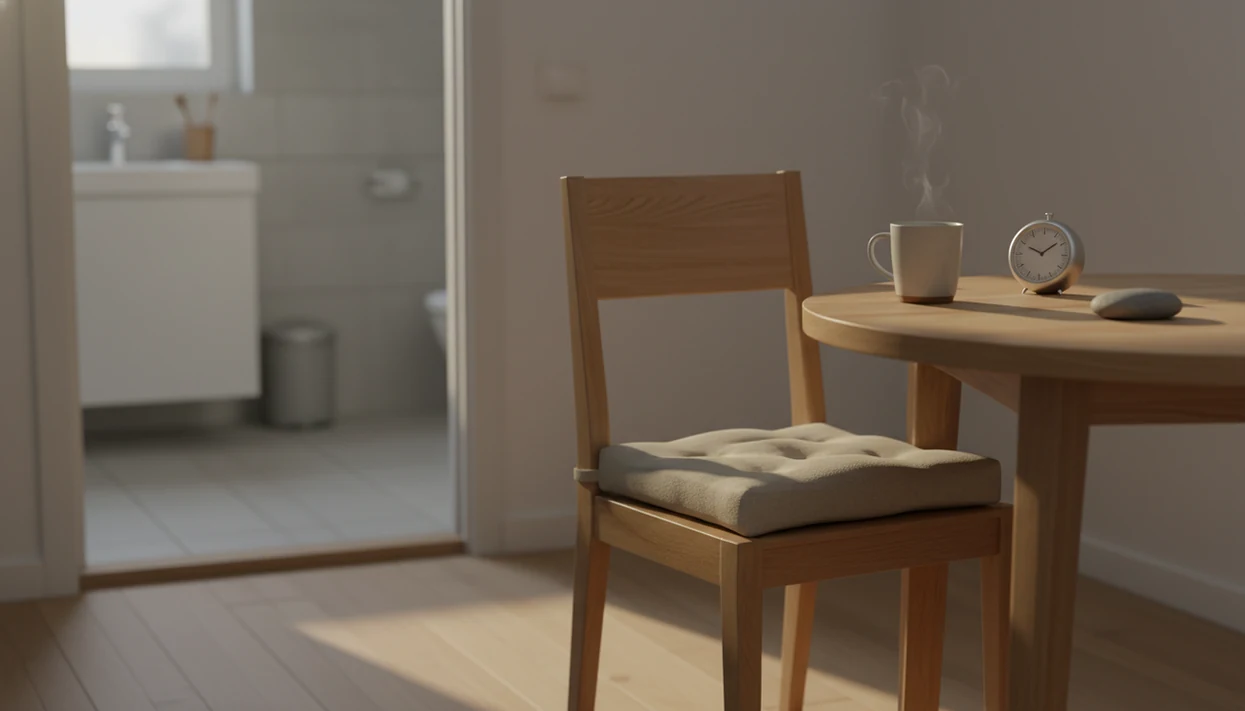
To build a meditation habit, start with a short daily session, attach it to something you already do, and choose a version you can repeat on busy days. A meditation habit is a repeatable loop: a familiar cue, a brief practice, and a small reward that makes starting easier over time. Consistency matters more than session length or having a perfectly calm mind.
Begin with 1 to 5 minutes after brushing your teeth, finishing coffee, or putting away your lunch plate. On a difficult day, use 30 to 60 seconds as your fallback. Wandering thoughts do not spoil the session. Noticing that your attention has moved, then returning to your chosen focus, is the practice.
The essentials
- Start with 1-5 minutes, or even 30-60 seconds on difficult days.
- Tie meditation to a stable cue, such as brushing your teeth, morning coffee, lunch, or bedtime.
- Expect wandering thoughts; the habit is built by noticing and returning, not by keeping the mind empty.
What a meditation habit means in daily life
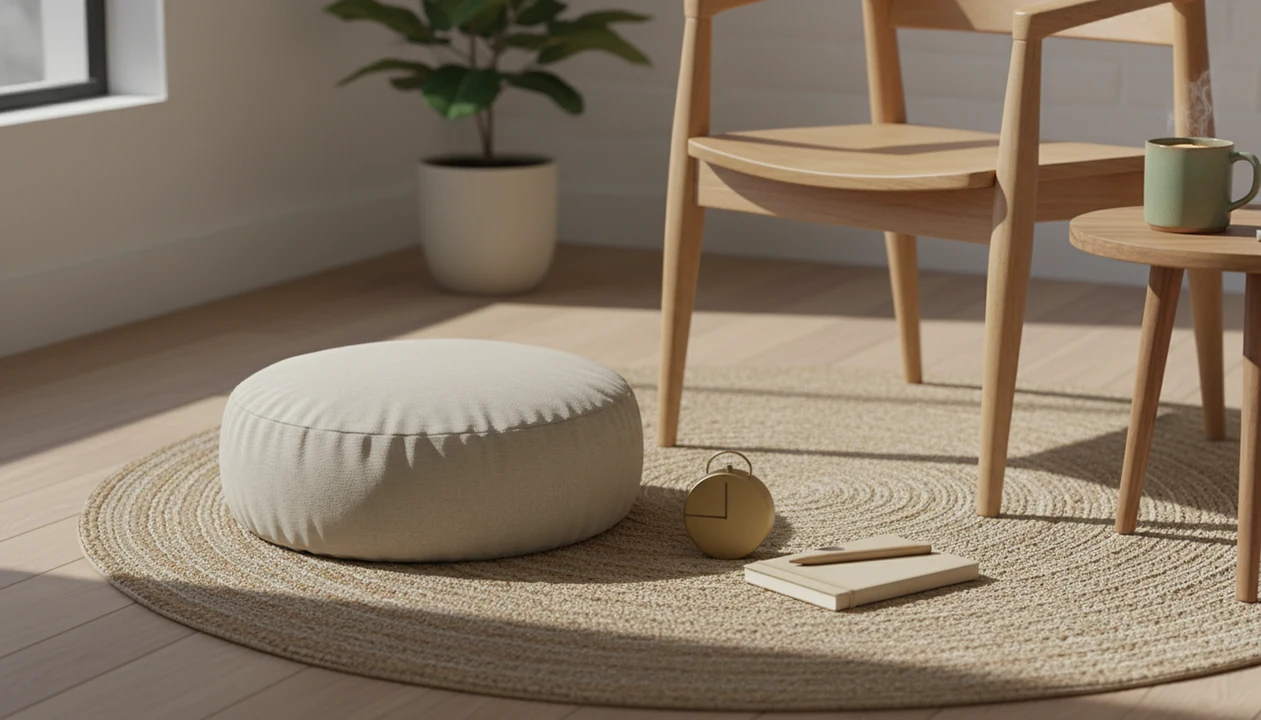
A daily meditation habit can be short, ordinary, and imperfect; it does not require a silent room, a long cushion session, or a dramatic feeling of calm. The goal is repeatable behavior, not an impressive meditation experience.
For many beginners, the mistake is making the first version too formal. A more repeatable start might be standing near the stove while pasta water warms, taking 3 steady breaths, and noticing the refrigerator hum. If the mind jumps to tomorrow’s airport security line or a parking ticket stub in your coat pocket, that still counts.
Meditation is now common enough to be part of everyday wellness language. In a large CDC survey, 14.2% of U.S. adults reported using meditation in the past year, up from 4.1% in 2012 CDC guidance.
Five meditation habit tips beginners should know first
These meditation habit tips work because they lower friction before motivation drops. Build the behavior first; refine the practice later.
- Start tiny: Begin with 1-5 minutes instead of 20-30 minutes. On rough days, 30 seconds keeps the habit alive.
- Use one cue: Practice after the same event when possible, such as brushing teeth, lunch, or closing your laptop.
- Prepare the setup: Put the cushion, chair, headphones, or timer ready before the moment arrives.
- Expect wandering: The practice is noticing and returning. A busy mind is not a failed session.
- Track small wins: Use a checkmark, short note, or app streak, but watch for perfectionism.
A good starter routine is intentionally simple: arrive, choose an anchor, notice when attention has moved, and come back. If you want the basic meditation mechanics first, our guide on how to meditate covers posture, attention, and simple focus points.
Small counts.
How a daily meditation habit works
A daily meditation habit works through a cue-routine-reward loop: something reminds you, you practice briefly, and your brain receives a small signal that the action was worth repeating. In plain language, the routine becomes easier because it stops depending on a fresh decision every day.
A useful habit tool is an implementation intention. Write it like this: “After I do X, I will meditate for Y minutes.” For example, “After I brush my teeth, I will sit for 2 minutes and follow the breath.”
This format is based on implementation-intention research, which links a goal to a specific situational cue so follow-through depends less on in-the-moment motivation 0003 066X.54.7.493.
Tiny repetitions matter because they reduce the need for motivation. You are not waiting to feel calm, spiritual, or ready. You are practicing the act of starting.
The meditation skill is built through repetition, not through having a special kind of mind. Attention drifts, you recognize the drift, and you return to the breath, body, sound, or another anchor. For beginners, meditation practice builds steadier attention through noticing and returning, rather than producing a blank mind or guaranteeing a change in mood.
There is no 21-day deadline for a meditation habit
A habit does not become automatic on a set date. A review of habit-formation research found that the familiar 21-day claim is not a general experimental finding. Studies have examined different time periods and found substantial variation between people and behaviors. Treat a calendar target as a reminder to review your routine, not a pass-or-fail deadline.
In a 90-day study of everyday habit formation, habit strength increased over three months, particularly with consistent repetition. That does not mean every habit is established by day 90. The study also found no significant effect of self-control capacity, supporting a practical emphasis on repeatable conditions rather than relying only on willpower.
Choose your cue, practice place, and backup plan
Before you choose a long session or a perfect technique, set up the conditions that make starting easy. A good meditation habit begins with a reliable cue, a simple place, and a fallback for messy days.
- Choose one stable cue first, such as brushing teeth, finishing coffee, or closing your laptop. Decide the session length and technique after the cue is clear.
- Pick a place that is easy to use even when the house is loud or your schedule changes. A kitchen chair, bed edge, parked car, or office corner can be enough.
- Prepare the small tools in advance. Put the timer, cushion, headphones, or chair where you will not have to hunt for them when motivation is low.
- Name a fallback practice for tired, busy, or disrupted days. One minute of breath, three slow exhales, or feeling your feet on the floor can keep the loop alive.
- Pause meditation and seek professional support first if practice increases panic, trauma symptoms, dissociation, or thoughts of self-harm. The habit can wait; safety comes first. For respiratory concerns, review meditating with breathing problems for safety considerations before deciding whether breath focused practice suits you.
How to start a meditation habit in six small steps
Use this six-step plan to build meditation into a normal day. Keep it secular, short, and easy enough to repeat when your schedule is messy.
- Pick one simple technique, such as breath awareness, body scan, or listening to nearby sound.
- Attach it to a stable cue, such as “after brushing teeth” or “after I put my lunch plate away.”
- Set a timer for 1-5 minutes. Start lower than your ambition, especially in week one.
- Sit in a chair, on a cushion, or on the edge of the bed, and follow one focus point.
- Reward the action with a checkmark, one slow stretch, or the sentence, “I kept the promise.”
- Repeat the same cue tomorrow, even if today felt restless or boring.
Sample plan: after brushing teeth, sit for two minutes, follow the breath, then check off the day. If you prefer a simple schedule, a first week meditation plan can remove the daily guesswork.
No drama. Just the next cue.
Best cues for building a meditation habit
The best cue for building a meditation habit is already stable, specific, and low-conflict. A cue should answer, “When exactly do I start?” without needing a debate.
People with regular schedules may use clock-adjacent cues. People with rotating shifts, caregiving demands, or unpredictable mornings often do better with flexible cue categories, such as “after my first meal” or “before I open my laptop.”
| Cue | Best for | Watch-out |
|---|---|---|
| After waking | People with quiet mornings | Easy to skip if you grab your phone first |
| After coffee | Morning routines with a natural pause | Caffeine rush may make sitting feel jumpy |
| After lunch | Workday reset | Meetings can crowd it out |
| After work | Transition from job to home | Fatigue can turn into avoidance |
| Before bed | Sleep wind-down routines | Sleepiness may replace attention practice |
A calendar alert after a long meeting can work too, especially if it points to one small action.
A 30-second fallback for difficult days
A minimum viable meditation is 30-60 seconds of intentional practice. It protects the identity of the habit on days when a full session is not realistic.
Use it as a fallback, not as a permanent escape hatch. The point is to avoid the “I missed today, so I failed” spiral.
- One breath at the sink: Feel the feet on tile, inhale, exhale, and return to what you were doing.
- Three breaths in bed: Place one hand on the belly and count three natural exhales.
- One minute before opening a laptop: Sit upright, set a timer, and follow the breath before email starts.
For beginners, a minimum viable meditation is often easier than skipping because it keeps the start cue intact while reducing the session size.
Common mistakes that break a daily meditation habit
Most daily meditation habits break because the plan is too demanding for real life. Starting with 30 minutes can feel inspiring on Sunday and impossible by Wednesday.
Another common mistake is treating thoughts as evidence that meditation is failing. Restlessness, planning, boredom, and remembering errands are ordinary mental events. The practice is not to shut them down; it is to recognize that attention has shifted and guide it back with less friction.
Changing time and place too often can also weaken the habit before it forms. Experiment later. In the first few weeks, keep the cue boring and repeatable.
Guided meditations, timers, and apps are not cheating. They are supports. A saved lesson opened during lunch may be exactly what helps you begin when your attention is scattered.
The phone-in-pocket moment is often the real test: if your hand reaches for the screen before the timer starts, move the phone across the room before tomorrow’s cue.
Guilt is the least useful strategy. If you keep missing sessions, redesign the routine. Shorten it, move it to a more stable cue, or switch to a technique from our guide to meditation techniques for beginners.
Meditation habit strategies for beginners, shift workers, and streak trackers
Tiny daily practice is usually best for beginners, busy people, and anyone restarting after a long break because it makes success easy to repeat. Fixed-time practice fits stable schedules. Cue-based practice fits parents, shift workers, and variable days.
Streak tracking can help some people, but it is not ideal if one missed day makes you feel discouraged or rigid. In that case, track “returns” instead of perfect streaks.
| Strategy | Best for | Not ideal for |
|---|---|---|
| Tiny daily practice | Beginners, busy people, restart attempts | People who use tiny sessions to avoid growth forever |
| Fixed-time practice | Stable work, school, or retirement schedules | Rotating shifts or unpredictable caregiving |
| Cue-based practice | Parents, shift workers, variable days | People with few stable routines |
| Streak tracking | People motivated by visible progress | Perfectionistic users who spiral after missed days |
A cue-based meditation habit usually works best when days vary, while fixed-time practice fits people whose mornings or evenings are already predictable.
Longer sessions do not necessarily make practice easier to sustain
Before extending your sessions, ask if the current length fits your week. A two-week randomized trial comparing daily practice lengths assigned approximately 10 or 30 minutes of mindfulness practice. The longer duration offered no adherence or dropout advantage. This finding concerns sticking with practice, not whether the two lengths produce identical benefits. When your current session feels manageable, a twice daily meditation routine can help you plan a second short practice.
Check your pattern across weeks rather than judging one missed day. An observational study of long-term meditation app users found that people practicing 4 to 7 days per week were 2.3 times more likely to reach their 150th session than those practicing once weekly. That association is not proof of cause, but it supports prioritizing regular practice over occasional long sessions.
Signs your meditation habit is working
“Is my meditation habit working?” Yes, if you remember more often, restart faster after missed days, or notice reactions a little sooner in daily life. Progress is often quiet before it is obvious.
You might notice dry lips while waiting in a security line and take one calmer breath before moving your bag forward, or feel heavy eyelids in the evening and choose a shorter practice instead of skipping entirely. These small adjustments matter because they show attention becoming easier to access in real conditions.
Research is cautious but useful here. A JAMA Internal Medicine meta-analysis of 47 trials with 3,515 participants found small to moderate improvements in anxiety, depression, and pain with mindfulness meditation programs JAMA study. Reviews of mindfulness-based stress reduction studies also report reductions in perceived stress, though meditation should not be treated as medical care by itself PubMed research.
Once a week, ask three questions: How many times did I practice? Was starting easier? What was one moment of awareness I noticed? If you want broader daily applications, how to practice mindfulness explains simple ways to bring attention practice into ordinary tasks.
Meditation Habit Limits
- Meditation cannot replace professional mental health care, crisis support, medication guidance, or therapy when you need them.
- Evidence better supports benefits for stress, mood, anxiety, depression, and pain than broad productivity or creativity claims.
- Not every meditation style suits everyone, and uncomfortable breath focus may call for sound, body, or walking practice.
- For a practical, nonreligious foundation, see secular mindfulness practice, but remember meditation is not a quick fix.
Meditation habit questions
How do I start meditating every day?
Choose one existing routine, such as brushing your teeth, and meditate immediately afterward for 1 to 5 minutes. Prepare your chair or timer beforehand. Use the same focus each time, such as your breath or nearby sounds. Define success as starting and returning your attention, not feeling calm.
How long does it take to build a meditation habit?
There is no reliable deadline. Neither 21 nor 90 days guarantees that meditation will become automatic. Habit research shows gradual development and variation between people and behaviors. Look for practical changes instead: remembering your cue more often, starting with less deliberation, and returning after interruptions.
Is one minute of meditation enough to keep the habit?
One minute can serve as a practical fallback when your usual session is not possible. Notice your feet, follow a few natural breaths, or listen to nearby sounds. This preserves a chance to practice, but it does not establish that one minute provides the same benefits as longer sessions.
Should I meditate in the morning or at night?
Choose the time attached to your most dependable routine. A reminder-based trial found slightly higher adherence in the morning than in the evening, but both times supported repeated practice. Morning can be a starting option; evening may fit better if your mornings are rushed or unpredictable.
Should I increase my meditation time every week?
You do not need to increase it on a fixed schedule. Keep the shorter session until it fits reliably, then consider adding time. A two-week trial found no adherence advantage for approximately 30 minutes over 10 minutes daily. Longer practice is an option, not a requirement for maintaining the routine.
Do guided meditations count toward a meditation habit?
Yes. A guided session can be the practice you repeat after your chosen cue. Select it beforehand so choosing audio does not delay the start. You can also use an unguided timer. The useful question is which format helps you begin and practice regularly, not which seems more impressive.
How can I track meditation without becoming obsessed with a streak?
Use a simple checkmark for each session and review the week as a whole. You can also record returns after missed days rather than only consecutive days. If tracking makes one missed session feel like failure, simplify it. The record should help you adjust your routine, not punish interruptions.