
How to Meditate Step by Step: Your First Five-Minute Practice


To meditate step by step, sit comfortably, set a short timer, choose an attention anchor such as your breath, notice when your mind wanders, and gently return. Start with 5 minutes a day for the first week, rather than pushing for long sessions. A chair, cushion, or sofa is enough, provided your posture feels stable and you can stay awake.
Meditation is a secular mental training practice that builds steadier awareness through repeated noticing and returning. You do not need to stop thinking or make yourself calm. Breath, body sensations, and sounds can all serve as anchors. The steps below cover your first session, a manageable first-week plan, and adjustments for distraction, discomfort, or difficulty focusing on breathing.
The essentials
- Begin with 5-10 minutes, a stable posture, and one simple anchor such as the breath, body sensations, or sounds.
- The core meditation step is not stopping thoughts; it is noticing mind-wandering and returning attention without self-criticism.
- Use a first-week plan, troubleshooting fixes, and optional habit reminders to make meditation easier to repeat.
What meditation means for beginners
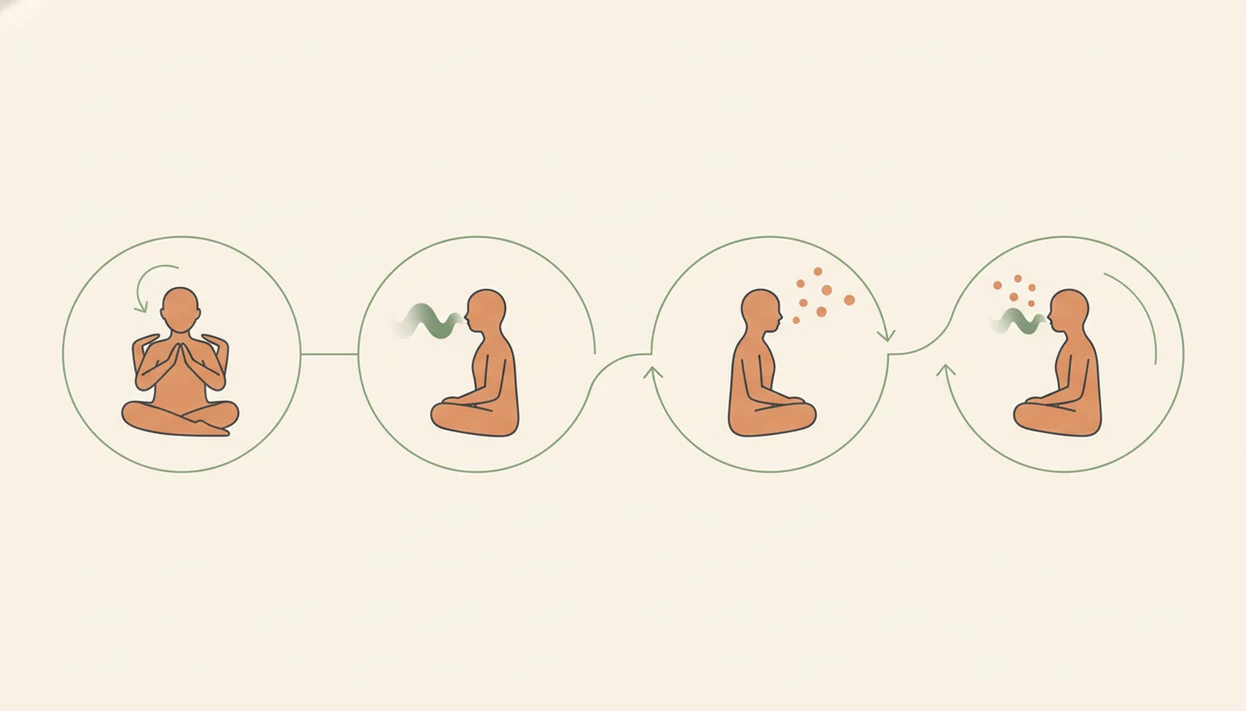
Meditation trains attention by giving the mind one place to rest, then practicing the act of noticing and returning. That is the whole beginner skill, not a test of how quiet your thoughts become.
Thoughts will show up. So will sounds, emotions, boredom, planning, and the sudden memory that you need more laundry soap. None of that means you failed. The moment you notice wandering is the practice.
You do not need a spiritual belief system to meditate. This guide teaches a practical, secular attention practice that you can do in a chair, on a cushion, or on a sofa. A kitchen chair with both feet on the floor is enough.
Beginner meditation trains attention through repeated noticing and returning; it does not promise instant calm or confer spiritual authority.
How meditation trains the wandering mind
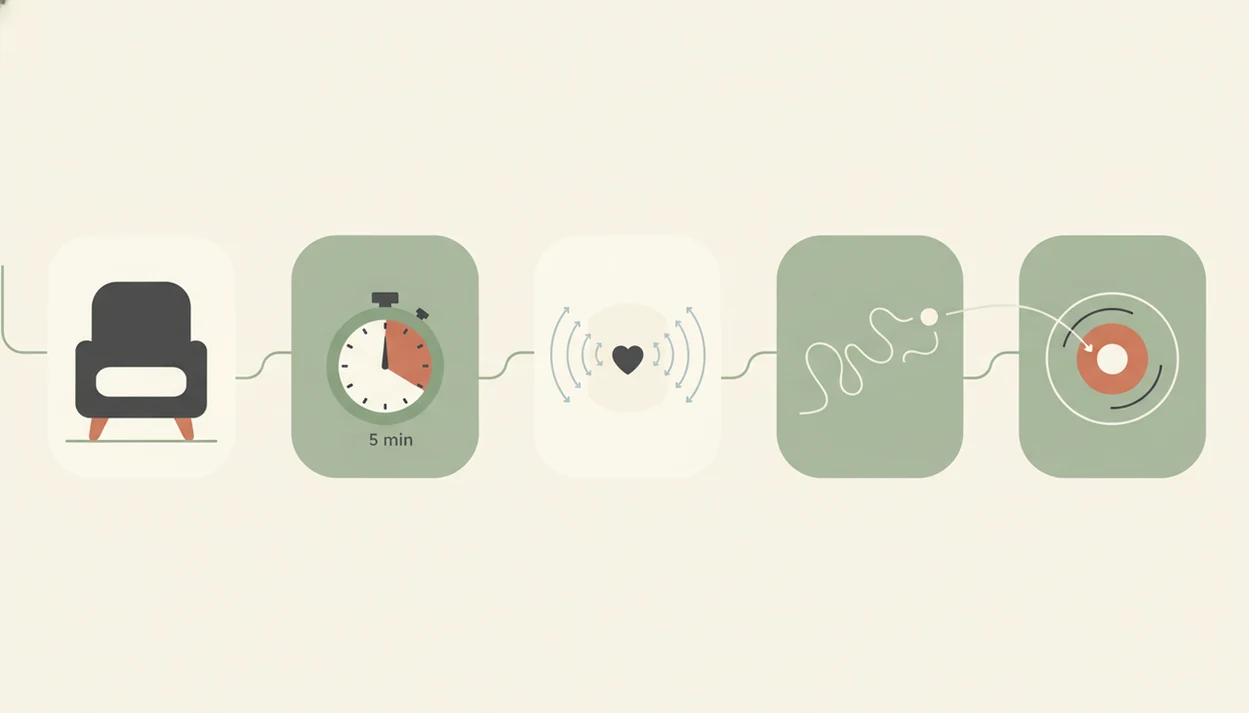
Meditation works through a simple attention loop: choose an anchor, drift away, notice the drift, and return gently. Each return is the repetition that trains attention, much like one careful rep in physical exercise.
- The anchor gives attention a clear home base, such as breath, sound, or body sensation.
- Mind-wandering is expected; the brain naturally predicts, remembers, plans, and comments.
- Noticing the wandering is the active training moment, not a mistake in the session.
- Returning without harsh self-talk may support emotional regulation, but it is not medical treatment.
- Research on mindfulness meditation programs shows average benefits for anxiety, mood, pain, attention, and working memory, with results varying by person and study design; see Goyal et al. 2014 in JAMA Internal Medicine (JAMA study) and Lao et al. on attention and working memory outcomes (S12671 016 0606 9).
The loop can feel very ordinary. Cool air at the nostrils, then a thought about tomorrow’s meeting, then a quiet return. That small return counts.
For beginners, breath meditation is often easier than open awareness because it gives the wandering mind one repeatable place to land.
Before you start meditating: posture, place, timer, and anchor
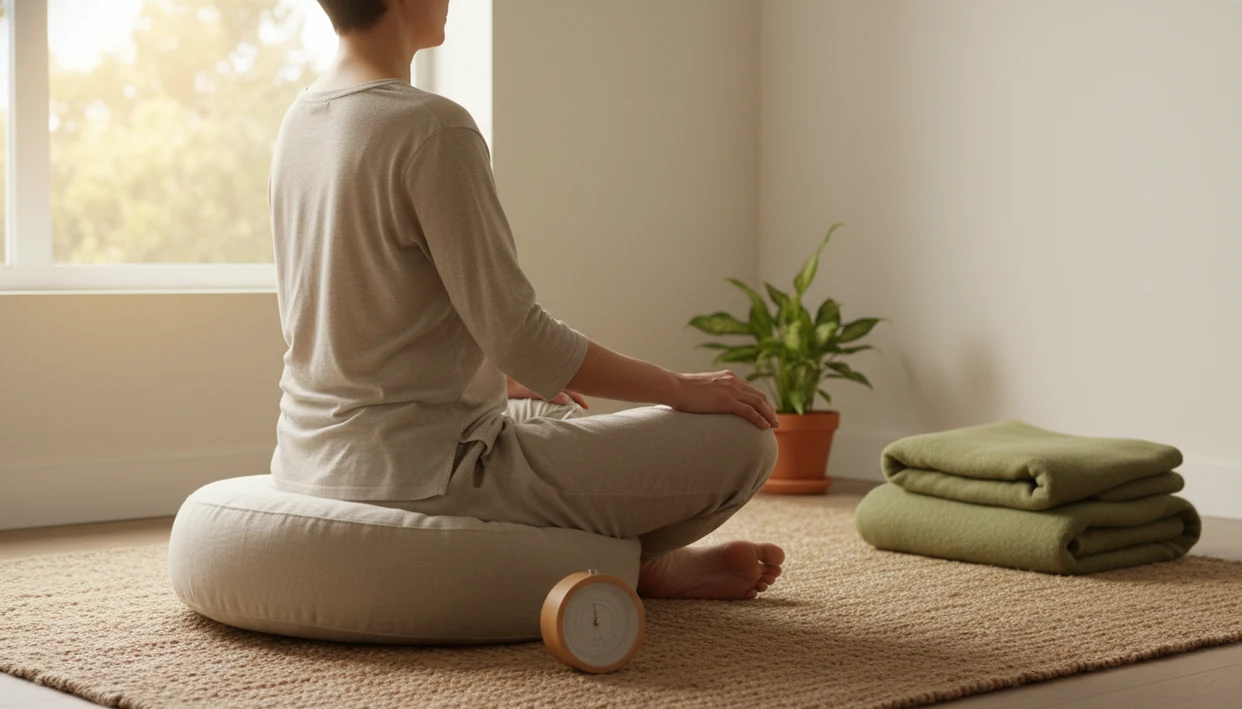
You need four things before your first session: a quiet-enough place, a stable posture, a short timer, and one attention anchor. Total silence is not required. A closed door with hallway noise can still work. You can also try meditation in bed, choosing a position that supports sleep or alert awareness.
Beginner meditation setup checklist
- Choose a spot where you can sit without being interrupted for 5 minutes.
- Sit upright but not stiff, with feet on the floor or legs supported.
- Let your hands rest somewhere easy, such as your thighs or lap.
- Set a 5-minute timer so you are not checking the clock.
- Pick one anchor: breath, body sensations, sounds, or a simple phrase.
Image caption suggestion: Beginner meditation posture in a chair with relaxed shoulders, supported feet, and hands resting comfortably for how to meditate.
If you want a broader primer before practicing, our mindfulness meditation guide explains the basic terms without much jargon.
How to meditate step by step in 5 minutes
Use these meditation steps for a first session. Keep it plain. Five minutes is long enough to learn the loop and short enough that you’ll actually repeat it tomorrow.
- Set a timer for 5 minutes, then place the phone where you will not keep checking it.
- Sit in a stable, comfortable posture with your spine upright and your shoulders relaxed.
- Soften your gaze toward the floor or close your eyes if that feels safe and comfortable.
- Feel the natural breath without controlling it, perhaps at the nostrils, chest, or belly.
- Notice distractions as thinking, hearing, planning, or feeling when they pull attention away.
- Return attention gently to the breath until the timer ends, as many times as needed.
Wandering is not the interruption of meditation; wandering and returning are the method.
One simple way to try it before work is a three-minute breathing pause before opening a laptop. The shorter version uses the same steps, just fewer minutes.
How to finish your meditation without rushing
The timer marks the end of the attention exercise, but you do not have to stand up immediately. Stop any silent labels such as “in” and “out,” and remain still briefly. The NHS beginner meditation instructions recommend staying still for a few minutes, gently opening your eyes, and pausing before you get up.
Bring attention back to the room and notice where you are before moving. There is no need to check whether you feel calmer or to judge the session at this point. Finishing gradually completes the practice; it does not require a particular mood. When planning your session, leave time for this pause rather than setting a timer that ends just as you must leave.
Choosing an anchor: breath, body, sounds, or counting
No meditation anchor is universally best. The right anchor is the one you can notice clearly without strain, in the place where you are practicing today.
| Anchor | Best for | Not for |
|---|---|---|
| Breath | Simple first sessions and repeatable daily practice | People who feel tense when watching breathing |
| Body sensations | Grounding through contact, pressure, warmth, or movement | People who feel overwhelmed by body focus |
| Sounds | Noisy homes, offices, or shared spaces | People who get irritated by unpredictable noise |
| Counting | Busy minds that need a little structure | People who turn counting into a performance |
| Gentle phrases | People who like a steady mental cue | People who find repeated words distracting |
Breath or sounds are usually the simplest first choices because they are always available. If breath focus feels tight, try hearing instead. A bus seat vibration under your thighs can also become a body anchor for everyday mindfulness.
For more options, compare meditation techniques for beginners before settling on one style.
First-week meditation plan for daily consistency
A first week should make meditation repeatable, not impressive. Consistency matters more than duration, especially when the habit is new and your schedule is uneven.
Day 1 to Day 7 practice checklist
- Day 1: Practice for 5 minutes with the breath as your anchor.
- Day 2: Practice for 5 minutes in the same place and at the same time.
- Day 3: Practice for 6 minutes and label distractions once, such as “thinking.”
- Day 4: Practice for 6 minutes and try sounds if the breath feels difficult.
- Day 5: Practice for 7 minutes and add one mindful breath before a routine activity.
- Day 6: Practice for 8 minutes and write down one obstacle after practice.
- Day 7: Practice for 10 minutes, or do two 5-minute sessions.
Small counts. A notebook margin filled with breath counts is still practice, even if the page looks messy.
If you want the expanded version, use a first week meditation plan to keep the first seven days simple.
What to do after missing a meditation session
Missing a session is a reason to adjust the plan, not to abandon it. A systematic review of home practice in mindfulness programs found that participants completed approximately 60% of their assigned formal practice. These were structured MBSR and MBCT programs, so the finding does not set a target for beginners, but it shows that incomplete practice is common.
Return to the next available session with a duration you can repeat. A specific plan, such as five minutes in a kitchen chair after breakfast, gives you a clear time and place. NHS Scotland's introductory practice guidance recommends establishing a shorter routine before progressing to longer practices. You do not need to make up missed minutes with a longer session. When short sessions feel sustainable, learn how to meditate longer while increasing your practice time gradually rather than rushing.
Common meditation mistakes and simple fixes
“Am I meditating wrong if my mind keeps wandering?” No. A wandering mind is the exact condition meditation trains with, and boring or restless sessions still count.
The first mistake is trying to stop thoughts. Fix it by noticing the thought and returning to your anchor. The second mistake is forcing the breath. Fix it by feeling the breath as it already is, without making it deeper or slower.
Another common mistake is judging restlessness. Label it “restless,” relax the jaw or shoulders, and continue. If you started with 20 minutes and now dread practice, return to 5 minutes. Reset the plan.
Waiting for perfect silence also gets beginners stuck. Use sounds as the anchor instead. The hum outside the window, a door closing, or a heating vent can become the object of attention.
For daily-life practice outside formal sitting, try our guide on how to practice mindfulness.
When inward attention feels distressing
Ordinary distraction is different from marked distress. Meditation can bring unpleasant experiences, and anxiety or depression are among the negative effects reported in research summarized by NCCIH's meditation safety guidance. Do not treat increasing distress as proof that the exercise is working or something you must endure. You can pause or stop at any point.
For a more manageable practice, try keeping your eyes open, shortening the session, or attending to external sounds instead of breathing or body sensations. Movement is another option when sitting quietly feels difficult. These adjustments are choices, not treatments. If distress persists or worsens, especially with panic, trauma symptoms, or dissociation, stop and seek guidance from a qualified clinician before continuing.
How to know meditation is working
Meditation is working when you notice the process more clearly in practice and ordinary life. Calm may happen, but it is not the only marker of progress.
- You notice mind-wandering sooner than you did during the first few sessions.
- You pause before reacting, even briefly, during a tense email or conversation.
- You return to the anchor with less self-criticism after getting distracted.
- You remember to practice because a cue, place, or timer has become familiar.
- You recover from a restless session without deciding that meditation “doesn’t work.”
A 2014 JAMA Internal Medicine review found that mindfulness meditation programs produced moderate average improvements in anxiety, depression, and pain, though effects varied by outcome and follow-up period. A separate meta-analysis of randomized trials reported small but significant improvements in attention, executive function, and working memory.
Benefits are average research findings, not guarantees for one person. Clinicians typically recommend meditation as a supportive skill, not a replacement for care when symptoms are severe.
Evidence behind these beginner meditation steps
The evidence supports these steps as a practical way to train attention, not as a promise that every session will feel calm. Reviews suggest mindfulness programs can help some outcomes, while study quality, program length, teachers, and measures vary.
- Choose one anchor so attention has a clear target. Breath, sound, or body sensation works like a home base for sustained attention: you know where to return when the mind has wandered.
- Keep sessions short enough to repeat. Clinical reviews of mindfulness programs, including JAMA study, often study structured, repeated practice rather than one heroic sit; for beginners, 5 minutes lowers the barrier to showing up again.
- Notice wandering as part of the method. The useful moment is recognizing “thinking” or “planning,” then coming back, not proving that thoughts stopped.
- Return gently and often. That repeated return is the attention rep, and meta-analytic work on attention and working memory reports small average benefits across randomized trials; see S12671 016 0606 9.
- Interpret results carefully. Mindfulness studies use different programs, comparison groups, outcomes, and follow-up periods, so personal results can be uneven.
Optional reminders for starting meditation gently
Reminders can help you remember to practice, but they do not do the practice for you. The useful reminder is the one that brings you back without adding guilt.
A mindfulness app can teach short guided sessions, simple checklists, and habit cues while you are still learning the sequence.
A phone timer set for 5 minutes after brushing your teeth is better than a complicated plan you ignore by Wednesday. Use a Mindfulness Practices App for a guided voice when useful, then practice unguided later.
Optional support is enough. The main skill is still notice and return.
Reminders for a short daily meditation
After brushing your teeth or finishing lunch, a familiar cue can help you remember your five-minute practice. The free mindfulness bell offers another reminder to pause, while the Mindful.net app has a meditation timer and short guided meditations. A basic timer is enough when you already know the sequence. Persistent or worsening distress calls for professional guidance, not more reminders.
Meditation as a practice, not a single technique
Meditation is a practice of deliberately training attention. The mindfulness approach used here involves noticing present experience without judgment. Sitting quietly is one way to practice, but meditation can also involve movement. A study comparing sitting and movement meditation examined both approaches, so remaining motionless is not a requirement for every form of mindfulness practice.
In practical terms, a meditation method gives you something specific to do with your attention. For example, you might notice breathing sensations while silently saying “breathe in” and “breathe out.” These labels provide a simple task rather than something to analyze. The NHS beginner meditation guide explains this breath labeling method and how to end the exercise gradually.
Meditation Limits and Support
- Meditation is not a substitute for medical or psychological treatment, medication, or crisis support.
- People with severe anxiety, major depression, PTSD, trauma symptoms, or overwhelming distress should consider professional support.
- If sitting feels unsafe or overwhelming, stop, open your eyes, feel your feet, and seek professional help if distress continues.
- A secular mindfulness practice can support attention, but research benefits do not guarantee individual results.
Beginner meditation questions
How long should I meditate the first time?
Start with five minutes, or a shorter session if that feels more manageable. Five to ten minutes is a reasonable beginner range, not a requirement. Increase the time only when your current session is comfortable enough to repeat. Longer sessions are not automatically better.
What should I think about while meditating?
You do not need to choose a topic to think about. Choose something to notice, such as breathing sensations, sounds, or the contact of your feet with the floor. When thoughts pull attention away, acknowledge them briefly and return to that anchor without trying to erase them.
Am I meditating correctly if my mind keeps wandering?
Yes, provided you notice the wandering and return to your chosen anchor. Distraction is expected, even many times in one session. A quiet mind is not the test. The skill you are practicing is recognizing where attention has gone and bringing it back without unnecessary self-criticism.
Should I breathe deeply or control my breath during meditation?
For this beginner practice, let your breathing stay natural. Notice the sensations at your nostrils, chest, or abdomen rather than making each breath deeper or slower. Silently labeling “in” and “out” may help. If watching your breath makes you tense, choose sounds or another comfortable anchor.
Can I meditate lying down instead of sitting?
Yes, lying down is an option if you can stay awake and comfortable. A supported chair, cushion, or bed can also work. The aim is a stable position that allows attention, not a particular pose. If sitting hurts, change your position rather than forcing yourself to remain still.
Do I have to close my eyes to meditate?
No. You can keep your eyes open with a soft downward gaze. Closing them is optional and should feel comfortable, not compulsory. Eyes-open practice may be a better fit when inward attention feels unsettling. You can also use an external anchor, such as sounds in the room.
What is the best time of day to meditate?
Choose a time you can realistically repeat, rather than looking for a universally best hour. Try linking a short session to an existing activity, such as brushing your teeth or finishing lunch. If your schedule changes, a shorter session at an available time is a reasonable adjustment.
What should I do if meditation makes me anxious?
Pause or stop if anxiety becomes marked or keeps increasing. You can try a shorter, eyes-open practice or focus on external sounds, but you do not have to continue. Persistent or worsening distress needs professional guidance. Meditation is not a substitute for treatment of significant anxiety or other mental-health difficulties.