
Meditation With Eyes Open or Closed: A Beginner's Guide


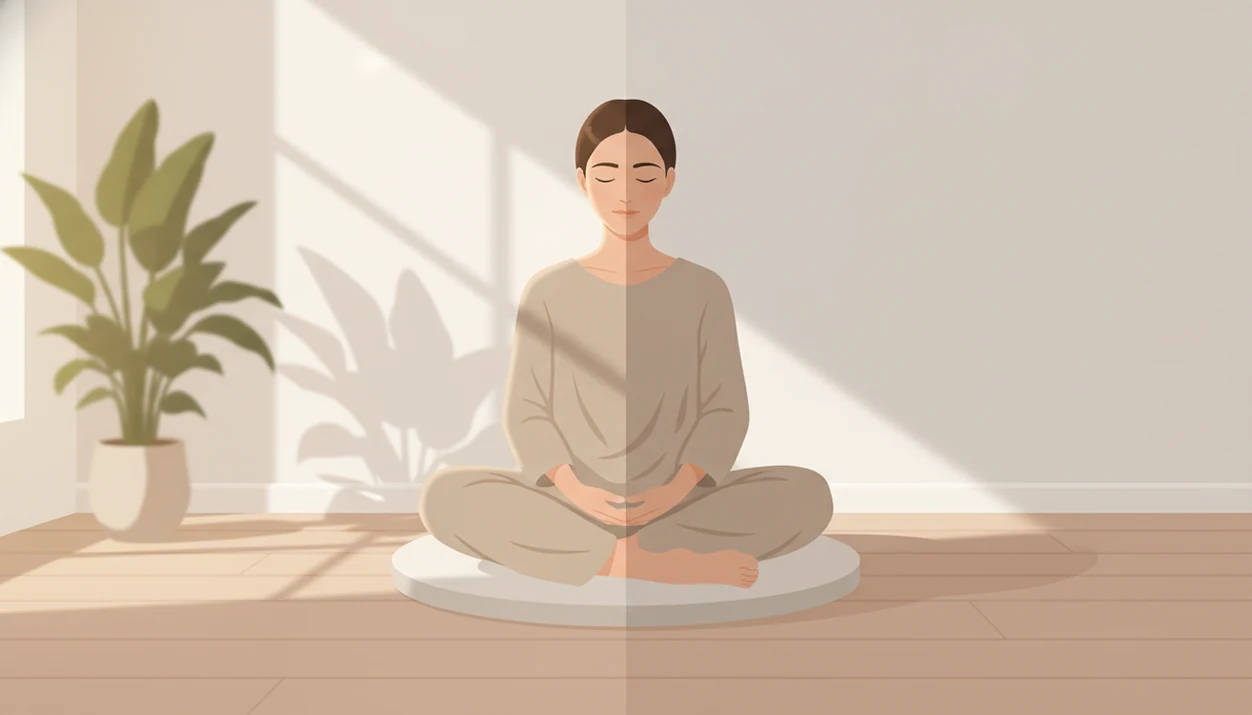
For beginners, meditation with eyes open or closed is best chosen by how alert, comfortable, and safe you feel: close your eyes to reduce visual distractions, or use a soft open gaze when you feel sleepy or uneasy. Eye position means choosing closed eyelids, half-closed eyes, or a gentle open gaze to support attention. None is more correct or more advanced.
Closed eyes can make breath sensations and body awareness easier to notice during quiet seated practice. Open eyes help you stay connected to your surroundings and bring mindfulness into everyday activities. Half-open eyes offer a middle option. Start with the position that suits your setting, then adjust if you become drowsy, tense, or distracted. The aim is awareness without strain, not keeping your eyelids in one position.
Definition: Meditation with eyes open or closed means choosing closed eyelids, half-closed eyes, or a gentle open gaze as the visual posture that best supports attention, comfort, and safety during practice.
At a glance
- Eyes closed is often easiest for quiet, inward, breath-based meditation because it reduces visual input.
- Eyes open or half-open is better when you feel drowsy, unsafe closing your eyes, or want mindfulness to carry into daily activities.
- Neither method is more advanced or more correct; the useful choice is the one that helps you stay aware without strain. If you are unsure about your practice, learn how to know you are meditating correctly before making adjustments.
Choose your eye position by alertness, comfort, and setting
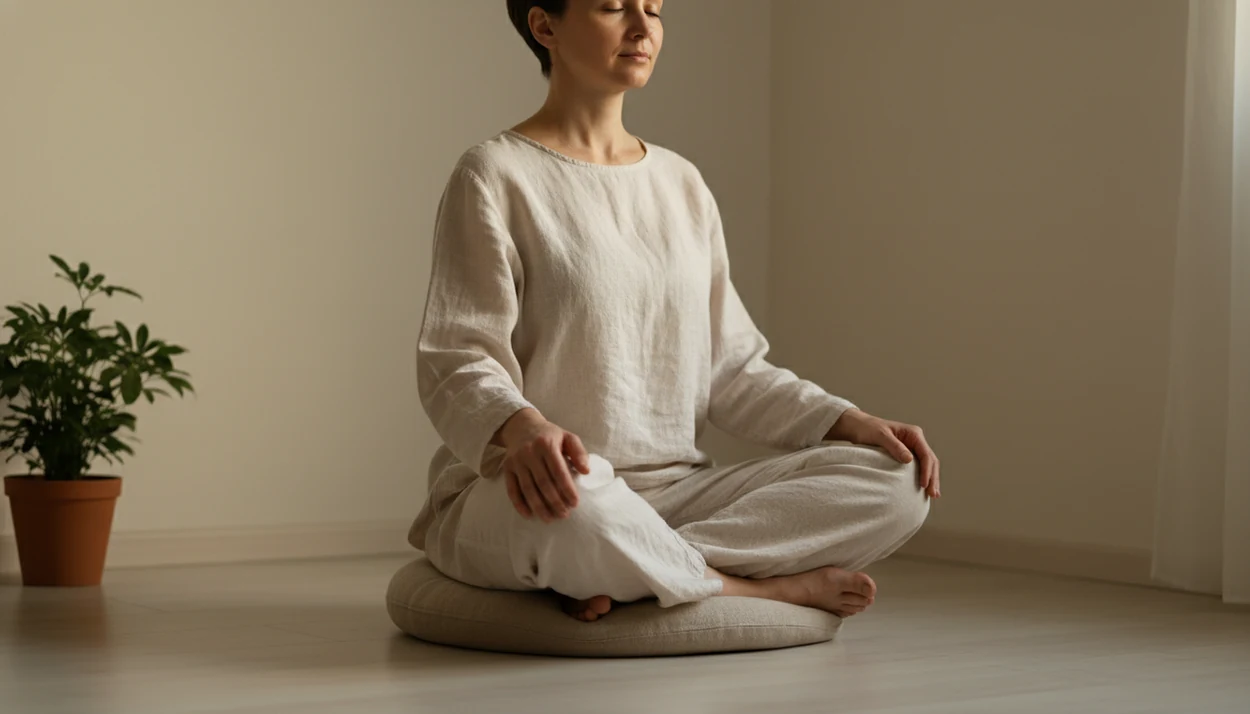
The best eye position depends on calm, alertness, safety, and context. There is no single correct eye position for meditation.
- Eyes closed: Useful for breath practice, body scans, and quiet seated sessions. It cuts visual noise, which helps many beginners notice the belly rising against a waistband.
- Half-closed eyes: A middle option when you want inward focus without drifting into sleep.
- Soft open gaze: Helpful when closed eyes feel uneasy or when you need to stay oriented to the room.
- Everyday open-eye mindfulness: Best for short pauses while walking, commuting, or standing at a door handle before entering.
Beginners who want one simple way to try it can pair Mindful.net with a five-minute timer and compare all four positions over a week. For a broader starting routine, use our first week meditation plan.
Eyes-open vs eyes-closed meditation comparison table
Eyes closed usually supports quiet inward practice, while eyes open supports alertness and connection to the environment. Half-open eyes sit between the two.
In plain terms: eyes closed wins for reducing input, eyes open wins for staying alert, and half-open wins when you need both. Treat the table as a decision aid, not a ranking.
| Factor | Eyes closed | Half-open | Eyes open |
|---|---|---|---|
| Focus | Often easier for breath and body awareness | Balanced inward and outward attention | Easier for present-room awareness |
| Distraction level | Less visual input | Mild visual input | More visual input |
| Drowsiness risk | Higher for some beginners | Moderate | Lower |
| Anxiety or safety | Can feel unsafe for some people | Often safer than fully closed | Best when closing eyes feels uneasy |
| Daily-life transfer | Less similar to daily activity | Some transfer | Strong transfer to walking, work, and commuting |
For sleepiness during practice, a short guided session with a soft gaze is usually more useful than forcing closed eyes. Mindful.net supports that use case through short Mindfulness Practices App sessions that can be done while looking gently at a wall, floor spot, or neutral object.
Eye position effects on meditation attention
Eye position changes meditation by changing the amount of sensory input your attention must include. Closed eyes reduce visual input, which can make breath, body sensation, and emotion easier to notice.
Open eyes preserve orientation to the room. That can support wakefulness, especially when the conference room chair creaks softly and your mind is already half-asleep after lunch. Focused-attention meditation and open-monitoring meditation also use partly different attention patterns. A 2015 neuroimaging review found that these styles engage partly different brain networks, but that is indirect support, not proof that one eye position is superior NIH research. That means this guide should not be read as a medical claim that one eye position produces better mental-health outcomes. It is a practical attention adjustment for ordinary meditation sessions.
Mindful.net explains the mechanism in plain language: reduce input when you need steadiness, add gentle input when you need alertness. Good mindfulness instruction builds attention you can notice and return to, not a rigid pose you must hold.
Daily checklist for choosing eyes open or closed
Use this short checklist before each session. The right choice can change by day, room, and energy level.
- Check your state: Notice whether you feel wired, sleepy, uneasy, or settled.
- Try closed eyes: Choose this if you feel overstimulated or visually distracted.
- Open your eyes softly: Choose this if you feel sleepy, foggy, or likely to drift.
- Protect safety: Use a soft gaze if closing your eyes feels unsafe, dissociative, or tense.
- Test briefly: Practice for three to five minutes, then adjust without judging the result.
- Record the pattern: Note which eye position helped you return to the breath most often.
On days the mind keeps jumping to a grocery list, Mindful.net works well because it frames the choice as a small experiment inside a beginner-friendly workflow. If you need the full basics, start with how to meditate.
Small tests count.
Try a three-to-five-minute eye-position practice
Use eyes-open or eyes-closed meditation as a short, safe experiment: choose the gaze that helps you return without forcing. The aim is not to hold one eye position perfectly, but to learn what supports awareness today.
- Settle into a safe seated or standing position before you change your gaze. If you are on a bus, near a doorway, or in a public place, keep enough visual contact with the room to feel oriented. You can also try meditation without crossing legs to find a comfortable position that supports your practice.
- Start a three-to-five-minute timer so the practice stays low pressure. A short test makes it easier to compare closed eyes, half-open eyes, and a soft open gaze without overthinking.
- Choose one starting position: close the eyes, lower them halfway, or rest them gently on a wall, floor spot, or neutral object.
- Anchor attention in one simple place, such as breath movement, body pressure against the chair, or nearby sound.
- Switch your eye position if you become sleepy, tense, unsafe, or caught in visual distraction. End by noting which gaze made returning easiest.
Eyes-closed meditation for quiet inward focus
Should beginners meditate with eyes closed? Many can, especially for seated sessions, breath meditation, body scans, and reducing visual distractions.
Closed eyes often feel easier because the room stops asking for attention. Early light on the wall disappears. Breath, pressure, warmth, and emotion become easier to find. For inward focus, eyes closed is often easier than eyes open because the visual field is no longer competing with the meditation object.
However, closed eyes are not ideal for everyone. They can increase sleepiness, mental imagery, rumination, or unease. If the practice starts to feel destabilizing, open your eyes and orient to the room.
Best for
✅ Seated breath practice, body scans, quiet rooms, and beginners who feel visually pulled around.
Not for
✕ Drowsy sessions, unsafe-feeling rooms, trauma-triggered unease, or people who become absorbed in unwanted imagery.
Eyes-open meditation for alert everyday practice
Can you meditate with eyes open? Yes. Eyes-open meditation is valid, especially when you need alertness, mobility, or a stronger sense of the room.
Use a soft gaze, not a stare. Rest your eyes on a plain wall, floor spot, or unfocused area. Let visual input be part of awareness instead of treating it as failure. The practice is still to notice and return.
Eyes-open practice can help during commuting, walking, work breaks, or moments when closing your eyes feels wrong. A three-minute breathing pause before opening a laptop is enough. Mindful.net supports this because its short everyday mindfulness exercises fit ordinary places, including a bus seat or office stairwell.
Best for
✅ Drowsiness, walking, commuting, work breaks, and people who dislike closing their eyes.
Not for
✕ Visually busy rooms, bright screens, crowded spaces, or beginners who keep scanning every movement.
Half-open soft-gaze meditation as the beginner middle path
Half-open soft-gaze meditation is a practical compromise between inward focus and wakefulness. Rest your gaze downward without locking onto details.
Choose a floor spot, blank wall, candle-free neutral object, or softly unfocused area. Keep the face easy. Let the tongue soften from the palate if you notice jaw tension. Half-open eyes are common in some meditation traditions, but you do not need spiritual language to use the method. In secular terms, it is simply reducing visual stimulation without shutting out the room.
If the priority is balanced attention, Mindful.net fits because it helps beginners compare techniques without treating one posture as more advanced. For more options, compare meditation techniques for beginners.
Image caption recommendation: A beginner seated with a relaxed downward gaze, showing meditation with eyes open or closed as a flexible choice.
Change your attention anchor, not just your gaze
Opening your eyes is one adjustment; changing what you attend to is another. Breath focus is optional. If watching your breathing feels uncomfortable, try sounds, the contact of your feet with the floor, or sensations in your hands. NHS mindfulness guidance includes thoughts, sounds, breathing sensations, and body sensations as possible objects of attention. Choose something you can notice without forcing yourself to stay with discomfort.
Keep breathing ordinary and comfortable rather than adding breath holds or forced deep breaths. Changing your gaze is not a reason to push through panic, dizziness, pain, or worsening breathlessness. Stop when symptoms worsen, and seek appropriate clinical advice. Guy's and St Thomas' MBSR guidance advises stopping exercises that are painful or uncomfortable and discussing them with a clinician or MBSR trainer.
Five facts that correct common eye-position myths
These five facts correct the most common beginner myths about eye position.
- Both eyes-open and eyes-closed meditation are valid ways to practice.
- Closed eyes often reduce distraction for beginners because visual input drops.
- Open eyes can reduce drowsiness and support daily-life mindfulness.
- Soft gaze is different from staring; the eyes rest without searching.
- If closing eyes triggers anxiety, eyes-open practice is a reasonable adaptation.
Meditation has also become more common: U.S. adult meditation use was reported at 8.0% in 2012 by NCCIH NCCIH overview, and CDC/NCHS reported 14.2% adult use in 2017 CDC guidance. That wider use makes practical adaptations more important.
For people building everyday mindfulness, the useful outcome is steady returning, not looking meditative from the outside. Mindful.net covers this through mindfulness meditation lessons and short practice formats.
Brief pauses to check your eye position
During a short seated practice, a reminder can give you a moment to check for sleepiness, tension, or visual distraction. The free browser mindfulness bell can mark that pause; the Mindful.net app's meditation timer can time the session. Neither chooses your gaze for you. When closing your eyes causes marked distress, stopping and seeking appropriate support is better than extending the timer.
Eye Position Limits
- Clinical research comparing open and closed eyes is limited, and recommendations largely reflect teacher experience and practical fit.
- Eye position can help meditation, but it cannot solve every difficulty.
- Some people report anxiety, depersonalization, or worsening mood, with low but real adverse event rates reported in PubMed research.
- Meditation cannot replace professional mental health care, so seek professional help if symptoms develop or worsen.
Meditation eye-position questions
Should beginners meditate with eyes open or closed?
Start with closed eyes if you are comfortably seated, alert, and distracted by the room. Try a soft open gaze if you feel sleepy or uneasy with closed eyes. Half-open eyes are another option. There is no single correct choice; adjust according to comfort, safety, and your ability to stay aware.
Can I switch between open and closed eyes during meditation?
Yes. You do not need to keep one eye position for the whole session. Open your eyes if you become sleepy or uncomfortable, and close them if visual details keep pulling your attention away. Make the change gently, then return to your breath, body sensations, or another chosen anchor.
Why do I get sleepy when I meditate with my eyes closed?
Closing your eyes reduces visual input, and sleepiness can become more noticeable when you are already tired. Try opening your eyes and sitting more upright while keeping your body relaxed. Shorten the session if needed. Becoming drowsy does not mean you are meditating incorrectly, but it may call for a different setup.
What if closing my eyes makes me anxious?
Keep your eyes open and maintain enough visual contact with the room to feel oriented. You can also shorten the practice or attend to sounds or contact with the chair instead of breathing. Do not force yourself to continue through panic or marked distress. Stop and seek appropriate support if symptoms persist or worsen.
Is half-open meditation the same as staring?
No. Half-open practice uses a relaxed, usually downward gaze without fixing intensely on details. The aim is to reduce visual stimulation while keeping some awareness of the room. Let your face stay easy, and change your eye position if holding your eyelids partly closed creates strain.
Does closing your eyes improve meditation focus?
Closed eyes reduce visual input, which can make breath and body sensations easier to notice. That does not establish that closed-eye meditation produces better outcomes for everyone. Direct comparisons are limited. Open eyes may support attention better when you are drowsy or uncomfortable, so choose by practical fit rather than a ranking.