
Meditation Without Crossing Your Legs: Comfortable Posture Options


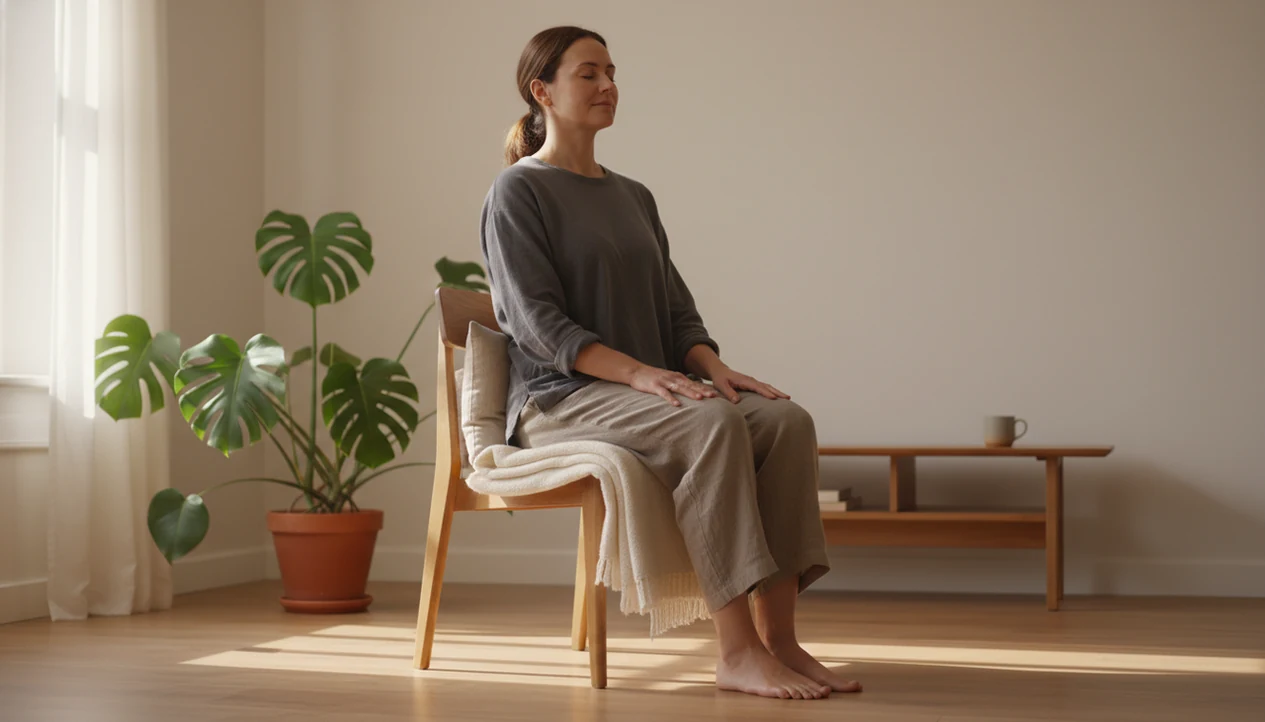
Meditation without crossing legs means practicing in a stable, comfortable position, such as sitting in a chair, kneeling with support, standing, walking slowly, or lying down. No lotus pose, half-lotus pose, or floor sitting is required. For most beginners, an upright chair with both feet supported is the simplest starting point. Cushions and backrests can help you settle without forcing your knees, hips, or back into pain.
The posture supports the practice; it is not the practice itself. Meditation involves paying attention to breath, body sensations, sounds, or another anchor, noticing when attention wanders, and returning gently. Choose a position that supports both comfort and alertness. You can adjust it during practice rather than remain still through pain.
The essentials
- For most beginners, the easiest non-cross-legged meditation posture is sitting upright in a chair with both feet supported.
- A comfortable meditation posture should support alertness, not force your knees, hips, or back into pain.
- Chair meditation, kneeling, standing, walking, and lying down can all count when attention stays gentle and intentional.
Compare chair, kneeling, standing, and lying-down postures
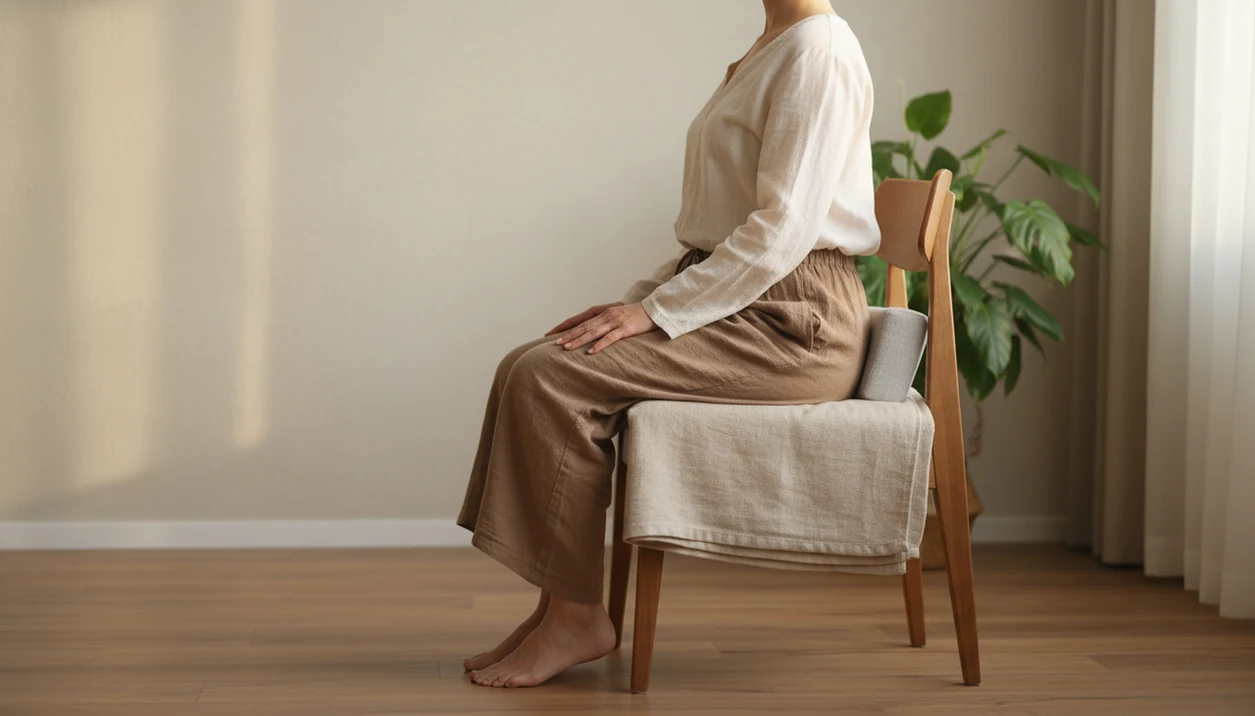
The best meditation posture alternatives without crossing your legs are chair sitting, supported couch sitting, kneeling, standing or walking, and lying down. Alert comfort matters more than looking traditional.
- Chair meditation: Best for most beginners, office practice, and tight hips. Avoid it only if sitting worsens pain.
- Supported couch sitting: Best for fatigue or lower-back support. Avoid deep slumping, which can turn practice into dozing.
- Kneeling bench or cushion: Best for people who like floor practice but cannot cross the legs. Avoid it with knee, ankle, or circulation problems.
- Standing or walking: Best for restless bodies and short daily pauses. Avoid it if balance feels unsafe.
- Lying down: Best for pain, illness, or exhaustion. Avoid it when you need strong alertness.
When the issue is stiff hips before a five-minute timer, Mindful.net fits because its posture guidance starts with chair and standing options before suggesting floor practice.
The attention practice stays the same in any posture
Meditation without crossed legs uses the same basic mechanism as any other posture: select an anchor, detect when attention has drifted, and come back without making the drift a problem. The arrangement of the body changes; the training of attention does not.
A useful setup gives the body enough stability that attention has less to manage. You might be resting after watering the garden between clients, feeling the ceramic mug warmth in your palms, and decide to practice upright, kneeling, standing, or lying down instead of forcing a floor pose. If the mind drifts toward the next household task, notice that event and return to breath, sound, or body contact.
Mindful.net treats posture as a condition that supports awareness, not as a flexibility exam. If you want the larger beginner sequence, the full how to meditate guide explains anchors, session length, and how to return after distraction.
Posture supports meditation; it does not perform it for you.
How to Meditate Without Crossing Your Legs: 5 Steps
To meditate without crossing your legs, choose a position that feels steady, supported, and wakeful enough for attention. Then use one simple anchor. When attention wanders, perhaps to the library book spine you meant to look for later, recognize the shift and return to the anchor.
- Pick a posture that fits today’s body, such as sitting in a chair, standing, walking slowly, kneeling with support, or lying down if pain or fatigue is present. Aim for stable and relaxed, not perfect.
- Set a short timer before closing your eyes or making final adjustments. Three to five minutes is enough to learn what the posture does under real practice conditions.
- Choose one anchor for attention: breath moving, sounds in the room, body contact with the chair or floor, or the feeling of footsteps.
- Notice distraction when it appears, whether it is planning, judging, itching, or wondering if you are doing it right. Do not scold yourself; gently return to the anchor.
- End by checking your body. If something felt strained, numb, sleepy, or surprisingly helpful, adjust the next session instead of treating it as failure.
Keep your eyes open or choose an anchor other than breathing
A comfortable seat is only part of an accessible practice. You can keep your eyes open and rest your gaze on a fixed spot rather than close them. Stanford's MBSR instructions recommend opening the eyes and sitting more upright when very tired. Keep the posture relaxed rather than stiff; the aim is to remain attentive, not hold a rigid position.
Breath focus is optional. If noticing your breathing feels uncomfortable, try sounds, the contact of your feet with the floor, or sensations in your hands. NHS mindfulness guidance includes sounds and body sensations as objects of attention. Let breathing remain ordinary and comfortable. If pain, worsening breathlessness, dizziness, panic, or marked distress develops, change position or stop, and seek appropriate clinical advice. If surrounding sounds keep pulling your attention, try meditation with noise without expecting the room to become quiet.
Before You Start: Choose a Safe Non-Cross-Legged Posture
Before you start, choose a posture that feels steady, spacious, and easy enough to leave without strain. A safe non-cross-legged setup should reduce distraction from pain or wobbling before the timer begins.
- Check your body first: notice pain, numbness, tingling, balance, fatigue, and whether sitting, standing, kneeling, or lying down feels realistic today.
- Choose your support before practice starts, such as a chair with both feet grounded, a cushion under the hips, a wall behind you, or a clear floor space for lying down.
- Clear the nearby area so you are not balancing near cords, sharp furniture edges, pets, or clutter if you need to move.
- Set a short beginner timer, such as three to five minutes, so the posture is tested gently instead of endured.
- Change position or stop if sharp pain, dizziness, spreading tingling, or numbness appears. Meditation should not require pushing through warning signs.
This quick check makes the next posture instructions easier to follow because the room, props, and body are already included in the practice.
How to Set Up a Comfortable Meditation Posture in a Chair
A comfortable chair meditation posture uses support, height, and relaxed alignment so you can stay awake without bracing. Start with an ordinary dining chair, desk chair, or kitchen chair.
- Sit near the front edge of the chair, or use the backrest if your back needs support.
- Place both feet under your knees, flat on the floor or on a book, block, or folded blanket.
- Raise the hips slightly higher than the knees if possible, using a cushion or folded blanket.
- Rest your hands on thighs, lap, or chair arms, with shoulders loose after an exhale.
- Soften your gaze toward the floor, or close your eyes if that feels steady.
Beginners trying to meditate in a chair often do better with a small prop under the feet than with effort in the spine. Mindful.net uses this setup because it works in real rooms, including office chairs after a long meeting.
Choose your posture by support, alertness, and comfort
We picked these comfortable meditation posture options by ranking accessibility, stability, alertness, pain reduction, and daily use. No posture is universally best because bodies, chairs, injuries, and energy levels differ.
- Accessibility: Chair and standing options require little space, no special clothing, and no floor mobility.
- Stability: Supported feet, cushions, and backrests reduce wobbling and strain.
- Alertness: Upright postures usually make it easier to stay awake than deep reclining.
- Pain reduction: Props can reduce pressure at the knees, hips, ankles, and lower back.
- Daily use: The easiest posture is often the one you can repeat before opening a laptop or after parking the car.
Meditation is mainstream enough to be practical: U.S. adult use rose from 8.0% in 2012 to 14.2% in 2017, according to CDC National Center for Health Statistics survey data (CDC guidance). Mindful.net and mindful.org both treat meditation as adaptable, though Mindful.net puts more emphasis on step-by-step posture choice.
Chair Meditation Without Crossing Legs: Best for Most Beginners
Can you meditate in a chair without crossing your legs? Yes. Chair meditation is not cheating; it is often the simplest comfortable meditation posture for beginners.
A desk chair works for a three-minute breathing pause. A dining chair works before bed. An office chair works if the wheels are locked and both feet are supported. MBSR-style and other secular mindfulness programs commonly allow chair-sitting and accessible postures because the practice is attention-based, not pose-based.
The NHS also describes mindfulness as something you can practice while sitting, walking, standing, or lying down, which supports chair and movement-based options (Mindfulness).
Best for
- Beginners who want a stable starting point.
- People with tight hips, knee discomfort, or limited floor mobility.
- Workday practice, especially before opening email.
Not for
- People whose pain increases with sitting.
- Anyone who becomes rigid trying to “sit correctly.”
After choosing a supported posture, beginners can use the Mindful.net app for a short guided meditation or breathing exercise.
Kneeling Meditation Posture Alternatives for Tight Hips
Kneeling is a floor-based meditation posture alternative that avoids crossing the legs. It can feel steadier than sitting cross-legged, but only when the hips are supported.
Use a meditation bench, firm cushion, bolster, or stacked folded blankets between the heels and sitting bones. The goal is to place more weight through the hips and seat, not directly into the knees. Padding under the shins helps. A higher seat often helps more than extra willpower.
Best for
- People with tight hips who still prefer floor practice.
- Meditators who like an upright spine without chair sitting.
Not for
- Knee pain, ankle pain, numbness, or circulation issues.
- Anyone who feels pressure building after one or two minutes.
Someone looking for floor options without lotus pose can use Mindful.net because its posture library separates kneeling, chair, and lying-down setups by body need. The detailed technique menu sits in meditation techniques for beginners.
Standing and Walking Meditation Without a Floor Pose
Standing and walking meditation count when your attention is intentional. You do not need a floor pose to practice steady awareness.
For standing meditation, place feet about hip-width apart, soften the knees, let arms rest naturally, and feel weight through the soles. For walking meditation, slow down enough to notice lifting, moving, placing, contact, balance, and surroundings. You can practice while walking to the bus, standing at a desk, or waiting in a grocery line with a clenched basket. You can also meditate outdoors by choosing a safe spot and letting nearby sounds become part of your practice.
Best for
- Restless beginners.
- People who get sleepy when seated.
- Short pauses during ordinary routines.
Not for
- Unsafe balance conditions.
- Crowded spaces where slow movement may frustrate others.
After a calendar alert at the end of a long meeting, Mindful.net fits because it offers short mindful movement options, not only seated sessions.
Lying-Down Meditation Posture for Pain or Fatigue
Lying-down meditation is valid, especially for pain, illness, or fatigue. It also increases the chance of falling asleep.
Lie on your back with a pillow under the head if needed. Keep legs straight if that feels easy, or place a bolster, pillow, or rolled blanket under the knees. A blanket can help the body settle without curling inward. Restful relaxation is useful, but sustained mindful awareness means you are still noticing breath, body contact, or sound.
Best for
- Back pain that worsens when sitting.
- Fatigue, recovery days, or body scan practice.
- Beginners who need permission to stop forcing posture.
Not for
- Bedtime sessions where sleep is likely.
- Practice periods that require strong alertness.
For people practicing with pain, lying down is often easier than chair sitting because it spreads weight across the body. Mindful.net keeps this option clearly separate from sleep guidance in its Mindfulness Practices App.
Common Mistakes When Meditating Without Crossing Legs
Slumping can make you sleepy, rigid alignment can create tension, and switching methods whenever attention wanders can interrupt the practice of returning to your anchor. A good non-cross-legged posture should feel supported, awake, and adjustable.
- Soften the idea of “sitting up straight.” Let the spine be natural, with the jaw, belly, and shoulders unclenched. If upright effort makes your back brace, use a cushion, wall, or chair back. For more specific support, explore meditation with back pain and choose a posture that avoids aggravating symptoms.
- Watch for slumping on a couch or padded chair. Support is helpful, but if the chest folds and the head drops, choose a firmer seat or open your eyes.
- Respond to numbness early. Change leg position, add props, stand up, or stop the session instead of treating tingling as something to conquer.
- Stay with one simple anchor, such as breath, sound, or body contact. If you switch anchors every few seconds, gently return to the one you chose.
- Choose lying down carefully after a long day. If the goal is alertness, try chair sitting, standing, or walking before a reclining posture.
Meditation Posture Limits
- Posture alternatives cannot guarantee motivation, focus, or consistency, but a first week meditation plan can provide structure.
- Lying down or reclining can quickly lead to sleep, especially at night.
- Seek medical or physical therapy advice for pain, numbness, tingling, or major mobility limits.
- Meditation provides educational support, but it cannot replace professional mental health treatment.
Meditation posture questions
Do my feet need to touch the floor during chair meditation?
Your feet should have support, but that support does not have to be the floor. If the chair is too high, place a book, block, or folded blanket under your feet. Adjust the setup so you can sit steadily without bracing your legs or back.
Can I meditate lying down in bed?
Yes. Lying down is a recognized option, particularly for fatigue, pain, or a body scan. Support your head or knees if that helps. You may fall asleep more easily in bed. If your goal is alert attention rather than sleep, try a supported chair or keep your eyes open.
What should I do if my legs go numb during meditation?
Change position rather than waiting for the timer to finish. Check whether your posture puts pressure on your knees or ankles, and consider moving to a chair with supported feet. Pain, numbness, or tingling may require medical or physical therapy advice, especially when it persists.
How can I meditate if sitting upright hurts my back?
Use a backrest, cushion, or another supported position rather than forcing yourself upright. Lying down with support under the knees may be an alternative if sitting worsens pain. Stop an exercise that is painful or uncomfortable, and seek clinical advice if pain limits your options.
Is kneeling better than sitting cross-legged for tight hips?
Kneeling avoids crossing the legs and may suit someone who prefers floor practice. Support your hips with a bench, firm cushion, or folded blankets, and pad the shins. It is not automatically better: knee, ankle, or circulation problems can make a chair the more suitable choice.
Do I have to close my eyes and focus on my breath?
No. You can keep your eyes open with a soft gaze and attend to sounds, hand sensations, or contact with the chair. These options can help when closing your eyes or focusing on breathing feels uncomfortable. Let your breathing stay natural rather than forcing deep breaths or holding them.