
How to Build a Meditation Streak Without Chasing Perfection


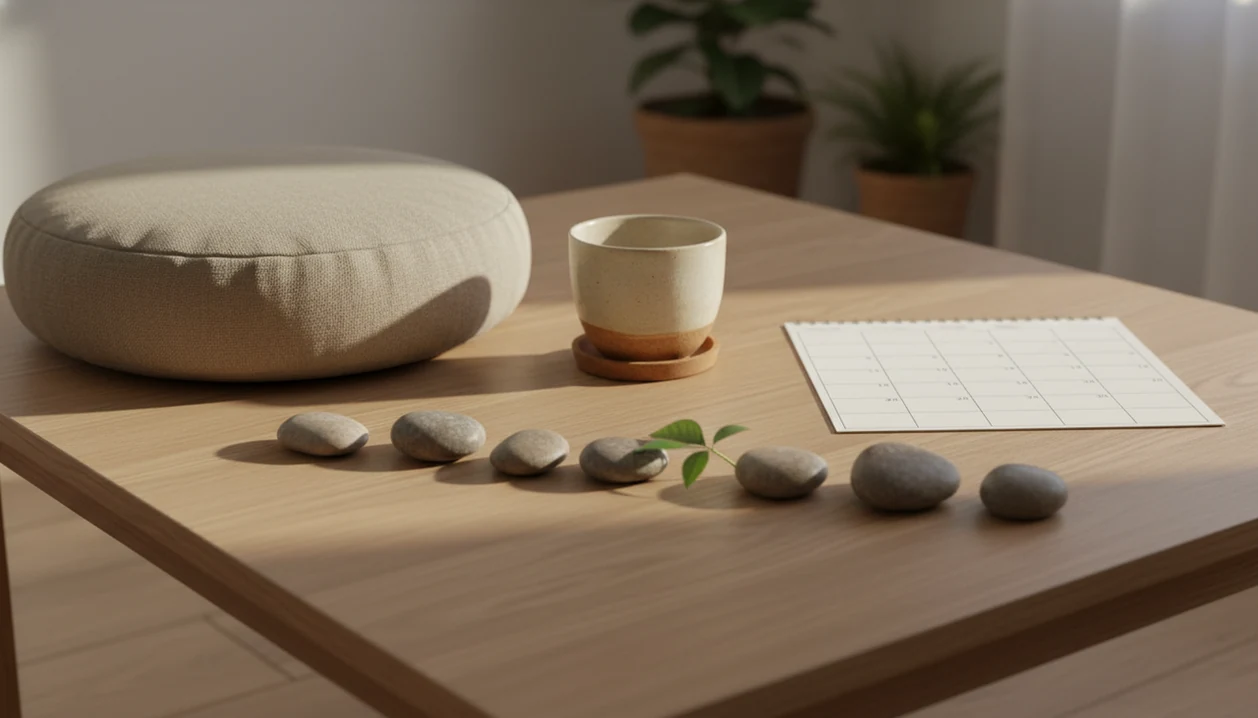
To build a meditation streak, start with 2-5 minutes, choose a daily cue, and decide how you will restart after a missed day. A meditation streak counts consecutive days of meditation or intentional mindfulness, even when the practice is short. Use that count as a reminder to return, not a score you must protect.
Your daily practice does not have to look identical. A short guided session, mindful breathing, or an intentional pause can count if you set that rule beforehand. Keep a small backup practice for busy days and a simple reset plan for interruptions. The point is repeated practice over time, not keeping a number intact at any cost.
What matters most
- A gentle meditation streak should be easy enough to keep on busy days, usually 2-5 minutes.
- The benefit comes from repeated practice over time, not from the streak number itself.
- If life interrupts your daily meditation streak, restart without shame and keep the habit identity intact.
A meditation streak counts when you practice on purpose, not when it looks perfect
A meditation streak is the count of consecutive days you practice meditation or intentional mindfulness, even when the practice is short. Meditation streak building means using that count as a light habit cue, not as proof that you're doing mindfulness “right.”
A streak can count as a short guided meditation, two minutes of mindful breathing, a body scan, or an informal pause where you deliberately notice and return. The myth is that every day has to look the same. If you decide your rule in advance, the streak becomes a support for real-life consistency instead of a loophole you have to defend.
Mindful.net is a Mindfulness Practices App for choosing short meditation rules, saving a tiny daily minimum, and returning after missed days without turning the streak into a score. Beginner meditation techniques and everyday mindfulness practices offer repeatable attention practice, not a flawless personality or a guaranteed calm mood.
Set your counting rule, daily cue, and minimum practice
Before you start building a meditation streak, decide what will count and what will happen when life gets messy. Clear rules make the streak feel supportive instead of like a tiny contract you keep renegotiating.
Use a few plain decisions before day one:
- Choose whether informal mindfulness counts, such as one intentional breath before a meeting, a mindful walk to the car, or a quiet pause after a classroom bell.
- Pick one cue you already do every day, like brushing your teeth, making coffee, closing your laptop, or getting into bed.
- Set a minimum you can complete while tired, busy, or mildly annoyed. For many beginners, that means 2-5 minutes, not the session you wish you had time for.
- Decide how you will handle travel, illness, caregiving, and missed days. You might allow a one-breath travel minimum, pause tracking while sick, or restart within 24 hours.
These rules are not loopholes. They are what keep the practice connected to real daily life.
Five ways to keep practice manageable on busy days
These meditation consistency tips keep the streak small enough to survive ordinary days. The goal is to make returning easier, especially when your schedule is messy.
- Set a low minimum: Choose 2-5 minutes, not an ideal session you can only do on quiet Sundays.
- Use one steady cue: Practice after brushing teeth, before opening your laptop, or after setting your phone on airplane mode.
- Count informal mindfulness: A classroom bell followed by one breath can count if that is part of your rule.
- Track the return: Log “I came back today,” not “I was focused the whole time.”
- Write a restart rule: If you miss a day, restart within 24 hours with the smallest allowed practice.
For beginners, a two-minute daily minimum is often easier than a 20-minute goal because it lowers the effort needed to begin. If you need the basics first, our guide on how to meditate walks through a simple setup.
Habit-cue mechanics behind meditation streak building
Meditation streak building works through a feedback loop: cue, practice, reward, and visible progress. In plain language, the same trigger reminds you to practice, the session gives your brain a completed action, and the streak makes that return visible. Understanding motivation and discipline in meditation can help you maintain this routine when enthusiasm fades.
Small repeated sessions lower the effort needed to begin. It is easier to stand near a half-packed camping setup for three steady breaths than to bargain with yourself about a long formal practice. Use a clear ending cue, one finished breath cycle, one short audio track, or the moment the dish soap bubbles rinse away, so the question is not “how much is enough?” every time.
The evidence supports repeated mindfulness practice over weeks, not perfect streak length. Per the CDC, 14.2% of U.S. adults reported using meditation in 2017, up from 4.1% in 2012, and many adult meditation users practiced at least weekly CDC guidance. The count is a tool, not the practice. Notice and return.
There is no 21-day or 90-day habit deadline
A streak does not become a lasting habit on a particular day. A review of habit-formation research found that the familiar 21-day claim is not a general experimental finding. The research instead describes a gradual process that varies between people and behaviors. Treat a target date as a checkpoint, not a promise that practice will become automatic.
In a 90-day study of everyday habits, habit strength increased substantially, particularly among people who repeated the behavior consistently. That does not establish a universal 90-day rule, and the study was not specifically about meditation. For your practice, review what helps you begin rather than waiting for a number to make the routine feel effortless.
Daily meditation streak: 6 low-pressure steps
Use these steps to build a daily meditation streak without turning it into a pressure system. Keep the rules plain enough that you can remember them on a tired evening.
- Set a minimum session of 2-5 minutes, with one backup option for hard days.
- Pair practice with a cue, such as brushing teeth, closing your laptop, or sitting down on the bus.
- Practice one beginner-friendly method, such as breath awareness, a body scan, or a guided session.
- Log the day with a checkmark, short note, or app entry.
- Reset after a missed day by doing the minimum within the next 24 hours.
- Review once a week and lower the minimum if you keep avoiding it. Once your minimum feels manageable, consider meditating twice a day with two short sessions tied to familiar cues.
A three-minute breathing pause before opening a laptop is enough for many people to begin. For a wider plan, try a first week meditation plan that starts small and builds gradually.
Choose daily streaks or weekly tracking
A gentle meditation streak fits people who enjoy visible reminders, but it is not useful for everyone. If metrics make you harsh with yourself, another tracking style may work better.
| Fit | Good match | Consider instead |
|---|---|---|
| Beginners | You like small commitments and clear prompts. | Use a weekly total if daily tracking feels tight. |
| Visual progress | A calendar mark helps you remember. | Use mood notes if numbers become distracting. |
| Busy schedules | You need a short rule for workdays and travel. | Track “practice days this week,” not days in a row. |
| Self-critical patterns | Not ideal if a missed day triggers shame. | Try private reflection notes with no streak count. |
Choose tracking that helps you return, not tracking that makes practice feel like a test.
Five flexible practices that can build a meditation streak
A meditation streak can include formal or informal practice if you define the rule before day one. That keeps the streak honest without making it fragile.
- Seated meditation: Use this when you have a quiet chair, a timer, and a few uninterrupted minutes.
- Mindful breathing: Use this in an office stairwell, parked car, or hallway before the next task. If focusing on your breath feels uncomfortable, review meditating with breathing problems before choosing your daily practice.
- Walking practice: Use this when sitting feels restless; notice feet on carpet, tile, or pavement.
- Body scan: Use this when you need a clear anchor, such as thumbs resting on chair arms.
- Mindful eating: Use this at breakfast, with the first bite of toast as the practice cue.
If you want more options, compare meditation techniques for beginners before choosing your streak rules.
Suggested image caption: A gentle meditation streak can include a two-minute timer, mindful breathing, or a short walk, not only long seated sessions.
24-hour missed-day recovery plan for a daily meditation streak
What should I do if I miss a day of meditation? Restart within 24 hours with your smallest practice, and treat the missed day as information rather than failure.
One missed day does not erase your practice history or your identity as someone who returns. Log a short note if it helps: sick, travel, caregiving, forgot, late work call. Keep it factual. No courtroom speech.
Then check the rule. If your minimum is 15 minutes and you keep missing it, the minimum is probably too large for this season. Change it to 3 minutes for the next week. For many beginners, restart speed matters more than streak length because it prevents the all-or-nothing spiral.
A simple mindfulness checklist for beginners can help you keep the recovery plan visible.
Common meditation streak mistakes
The most common meditation streak mistakes happen when the streak becomes stricter than the practice. Keep the count useful by choosing rules that still work on ordinary, tired, interrupted days.
Use this quick troubleshooting check when your streak starts feeling brittle:
- Lower the daily minimum if it only fits perfect mornings, quiet rooms, or unusually calm weekends. A small practice you can actually repeat is stronger than an impressive one you keep postponing.
- Keep your counting rule steady after a miss. If you change the rule only to protect the number, the streak stops being clear and starts becoming negotiation.
- Expect distraction instead of treating it as a broken session. Noticing the wandering mind and returning to the breath, body, or sound is the actual repetition you are training.
- Notice when the app badge matters more than awareness. A checkmark can remind you to practice, but it cannot do the returning for you.
- Restart with the smallest honest practice when pressure builds. The goal is not to defend a perfect record; it is to come back.
What meditation research can and cannot say about streaks
Research on meditation usually studies structured practice over weeks, not app streaks or exact days-in-a-row targets. That matters because the evidence points toward regular repetition, not flawless consecutive tracking.
One early 8-week mindfulness-based stress reduction study reported reductions in psychological symptoms among chronic-pain patients PubMed research. A 2014 JAMA meta-analysis of randomized trials reported moderate improvements in anxiety and depression symptoms for mindfulness meditation programs compared with controls JAMA study. Those findings do not mean a daily meditation streak is a treatment plan.
Clinicians typically recommend professional care for serious, persistent, or worsening mental health symptoms; meditation may be a supportive practice, not a replacement. Research supports repeated attention practice over time more clearly than it supports protecting a flawless streak number. If you prefer a nonreligious frame, secular mindfulness practice keeps the method plain.
Shorter sessions and weekly consistency: what the studies found
Longer sessions are not automatically easier to sustain. A two-week randomized trial comparing meditation durations assigned approximately 10 or 30 minutes of daily practice and found no adherence or dropout advantage for the longer duration. This supports keeping duration manageable, but it does not establish that 2-5 minutes produces the same benefits as longer sessions. That smaller minimum is a practical backup, not a proven equivalent dose.
Daily perfection is also different from long-term participation. A longitudinal analysis of digital meditation users found that people practicing 4-7 days per week were 2.3 times more likely to reach their 150th session than those practicing once per week. Because this was observational research, it cannot prove that frequency caused retention. It does offer a reason to track weekly practice when consecutive-day counting becomes discouraging.
Meditation Streak Limits
- Long streaks do not guarantee depth, insight, emotional change, or better daily behavior.
- Rigid streak rules can increase shame, perfectionism, pressure, and dropout, so drop or adjust tracking if it creates pressure.
- The ideal streak length or daily meditation dose is not firmly established.
- Tracking apps can shift attention toward numbers instead of awareness, and practice should fit your life.
Meditation streak questions
What counts as meditation for a streak?
Count intentional practice according to a rule you choose before starting. That might include seated meditation, a body scan, mindful walking, or a brief breathing pause. Simply having a quiet moment is different from deliberately noticing your experience and returning your attention. Keep the rule clear and consistent.
How many minutes should I meditate each day to keep a streak?
A 2-5-minute minimum is a practical starting point for busy days, not an established therapeutic dose. You can practice longer when time allows. A two-week trial found no adherence advantage for approximately 30 minutes over 10 minutes, but it did not test every possible duration or prove equal benefits.
Does missing one day erase my meditation progress?
A missed day ends a strictly consecutive count, but it does not erase the practice you have already done. Research does not establish that a broken streak resets a habit to zero. Return with your smallest practice at the next workable opportunity, without trying to compensate with an unusually long session.
Does meditation become a habit after 21 or 90 days?
Neither number is a universal deadline. Habit formation varies with the person, behavior, context, and consistency. A 90-day study found substantial growth in habit strength, not proof that every habit becomes automatic by then. Use milestones to check your routine, rather than as promises about how practice should feel.
Is it better to meditate in the morning or evening?
Choose a time attached to something you already do reliably. In one four-week reminder trial, participants completed 66% of morning sessions and 61% of evening sessions. That small difference does not make mornings best for everyone. An evening backup may be more useful than a morning plan you repeatedly miss.
Can I build a meditation habit without practicing every day?
Yes. A daily streak is one tracking method, not a requirement for repeated practice. Observational data linked practicing 4-7 days per week with better long-term retention than once-weekly practice. If consecutive-day counting creates pressure, record practice days each week and keep returning to a stable cue.
What should I do if my meditation streak makes me anxious?
Stop protecting the number and change how you track. Try a weekly practice total, a brief note about returning, or no tracking at all. Lower an unrealistic minimum and avoid extending sessions just to make up for missed days. A streak is useful only while it supports practice rather than shame.