
How to Relax Your Body: 7 Gentle Steps for Physical Tension


To relax your body, start with slow, comfortable breathing, notice where you feel tight, and soften one area at a time through a body scan, muscle release, or gentle movement. Relaxation means intentionally loosening physical tension, not making your mind blank. Your thoughts can keep moving while you let your jaw unclench, lower your shoulders, or release your hands.
Begin with easy breathing before asking tight muscles to change. A body scan helps you notice tension; progressive muscle relaxation uses gentle tensing and releasing to make the difference easier to feel. If sitting still makes you restless, try slow walking or a comfortable stretch instead. The aim is to give your body repeated signals of safety and ease, not to force calm.
The essentials
- Begin with slow, easy breathing before trying to change tight muscles.
- Use a body scan or progressive muscle relaxation to find and release hidden tension.
- Choose gentle walking or stretching if sitting still makes you feel more restless.
Relaxing muscles without trying to empty your mind
Relaxing your body means intentional physical softening, not making your mind blank. You are teaching tense areas to loosen a little, even if thoughts keep moving in the background.
Common places to check include the jaw, shoulders, chest, stomach, hands, and hips. A beginner might sit in an upright chair against a desk, notice the shoulders creeping upward, and let them drop by one small inch.
Mind wandering is not failure. You may be scanning your stomach and suddenly remember a grocery list. Notice that, then return to the next body area.
Relaxing your body means intentionally loosening physical tension by using breath, attention, muscle release, and gentle movement to help the body settle. That is also the plain-language way Mindful.net explains body relaxation for beginners.
Choose a supported position and a short practice time
Before you begin, make the practice feel contained, supported, and physically safe. A calm setup helps the body relax without wondering how long it has to stay there or whether it is doing the exercise correctly.
- Choose a position with steady support. Sit with your back against a chair, stand with both feet grounded, or lie down where the body can rest without strain. For an attention practice that uses physical support, try grounding meditation for anxiety while sitting or standing comfortably.
- Set a short timer, such as 3 to 10 minutes, so the practice has a clear ending. This keeps relaxation from feeling like an open-ended demand.
- Keep your eyes open if closing them feels uneasy, unsafe, or too intense. You can soften your gaze toward the floor, a wall, or an ordinary object.
- Skip any area that hurts, feels injured, or becomes sharper when you pay attention to it. Do not force deep breathing, strong stretching, or a perfect release.
- Use gentle movement first if stillness makes agitation rise. A slow shoulder roll, hand opening, or short walk can help the body settle before scanning.
Body relaxation mechanics: breath, muscles, and attention
Body relaxation works by giving the nervous system repeated low-threat signals through breathing, muscle feedback, and steady attention. In simple terms, you practice noticing tension before you ask it to release. If anxiety shows up as muscle tension, these gentle steps for releasing anxiety offer ways to notice and soften it.
- Slow breathing can reduce the sense of urgency and give attention one steady place to rest.
- Progressive muscle relaxation works by tensing and releasing one muscle group so the body can feel contrast.
- A body scan moves attention through sensations without demanding that every sensation change.
- Mindfulness meditation has moderate evidence for improving anxiety, depression, and pain compared with usual care, according to a 2014 JAMA Internal Medicine review JAMA study.
- Relaxation practices may support symptom relief, but they do not cure medical conditions or replace care.
A good technique gives the body practice in releasing, not a promise that stress will disappear.
That is why the steps below start small: breathing lowers effort, scanning improves awareness, and gentle release teaches the muscles what less tension feels like. If one signal feels unpleasant, switch to another instead of pushing through.
7-step body relaxation guide
Use this short sequence when you want a practical next step. For many beginners, a three-minute breathing pause before opening a laptop is more useful than planning a long session and skipping it.
- Set a timer for 3 to 10 minutes.
- Choose a stable position: sit, stand, or lie down with support.
- Breathe slowly and comfortably; do not force deep breaths.
- Scan your body from feet to head, or head to feet.
- Tense and release one muscle group at a time.
- Soften your jaw, shoulders, belly, and hands.
- Return gently when distracted, then end by noticing one physical change.
For beginners, short body relaxation usually works better than long sessions because the body learns through repetition, not pressure. If you want more context on early distraction and restlessness, our guide to what to expect when starting meditation covers that first week clearly.
Body relaxation techniques for 4 tension patterns
Choose the technique that matches how tension is showing up today. A clenched jaw does not always need the same approach as restless legs.
| Tension pattern | Technique to try | How to practice it |
|---|---|---|
| Chest tightness or general stress | Slow breathing | Count easy exhales between keyboard clicks, without trying to fill the lungs completely. |
| Desk-related jaw or shoulder tension | Jaw and shoulder softening | Unclench the teeth, lower the shoulders, and let the tongue rest. |
| Clenched hands, legs, or whole-body bracing | Progressive muscle relaxation | Gently tense one area for a few seconds, then release and notice the difference. |
| Agitation during stillness | Walking or stretching | Move slowly and feel the feet on carpet, tile, or pavement. |
Regular movement is also common physical self-care. Per the CDC, 74.8% of U.S. adults reported meeting aerobic activity guidelines in 2020 CDC guidance. Mindfulness and meditation train attention through repeated practice; they do not guarantee permanent calm.
Body scan cues for physical relaxation
What should I notice during a body scan? Notice sensations such as tightness, warmth, heaviness, buzzing, tingling, pulsing, numbness, or ease, then move on without turning the scan into a repair job.
Simple phrases help. Try “tightness is here,” “warmth is here,” or “softening is possible.” The point is not to fix every ache. Noticing is enough for one pass through the body.
Some people like closed eyes. Others do not. If your eyelids feel heavy in afternoon light and that feels pleasant, stay with it. If closing your eyes makes you uneasy, keep them open or switch positions.
Body scan meditation usually works best when the instruction is neutral, while movement fits people who feel more settled when attention has somewhere physical to go.
Using body relaxation for stress, sleep, and short breaks
Body relaxation can support everyday stress, mild muscle tension, pre-sleep settling, beginner mindfulness, and short breaks. It is not a tool for diagnosing injuries, treating panic attacks, replacing physical therapy, or resolving chronic pain alone.
- Everyday stress: Use slow breathing and shoulder release during a work break.
- Pre-sleep settling: Pair dim light with a brief body scan; our meditation for sleep guide explains a bedtime version.
- Beginner mindfulness: Start with a phone timer set for 5 minutes. For a structured short practice, try a 5-minute anxiety meditation that brings attention back to your surroundings.
- Short breaks: Try one breath after a classroom bell or before answering a message.
- Safety boundary: If symptoms feel severe, new, or linked to injury, seek qualified care.
The American Psychological Association has reported that 3 in 4 adults experience stress-related physical symptoms, including headaches, fatigue, or muscle tension APA research. Tools like Mindful.net can offer beginner-friendly secular mindfulness instruction. They are educational support, not medical care.
When physical symptoms need medical attention
Chest discomfort, dizziness, tingling, and shortness of breath can occur during panic, but those symptoms can also overlap with medical illness. The NHS guidance on panic disorder describes this overlap. Do not assume a first or substantially different episode is anxiety, or use a relaxation exercise to postpone assessment. After appropriate medical assessment, mindfulness for health anxiety may help you respond to urges to repeatedly check bodily sensations.
Seek urgent medical help for severe or persistent chest pain or pressure, fainting, marked breathing difficulty, confusion, blue lips, or new neurological symptoms. Symptoms during exertion also need caution. If attacks recur or fear of another attack starts limiting daily life, seek assessment rather than relying only on breathing or muscle release. Clinical treatment may include cognitive-behavioral therapy.
Body relaxation mistakes that keep muscles tense
Trying to make every muscle relax can turn the exercise into another source of effort. Body relaxation is a practice of noticing and allowing, not a test you pass by becoming still enough.
Do not try to empty the mind. Thoughts will wander, and the teacher’s cue is simply to notice wandering and return. Do not force huge breaths or hold the breath until the chest feels strained. Comfortable breathing is usually enough.
Also, do not treat a body scan as a checklist you can fail. Some areas feel numb or neutral. Fine. Do not stay motionless if movement would be kinder. A slow stretch may be the better choice.
Total relaxation may not happen in one session. Repetition matters. If anxiety feels more intense during practice, read about can meditation make anxiety worse and consider support from a qualified professional.
A supported sitting posture for body relaxation
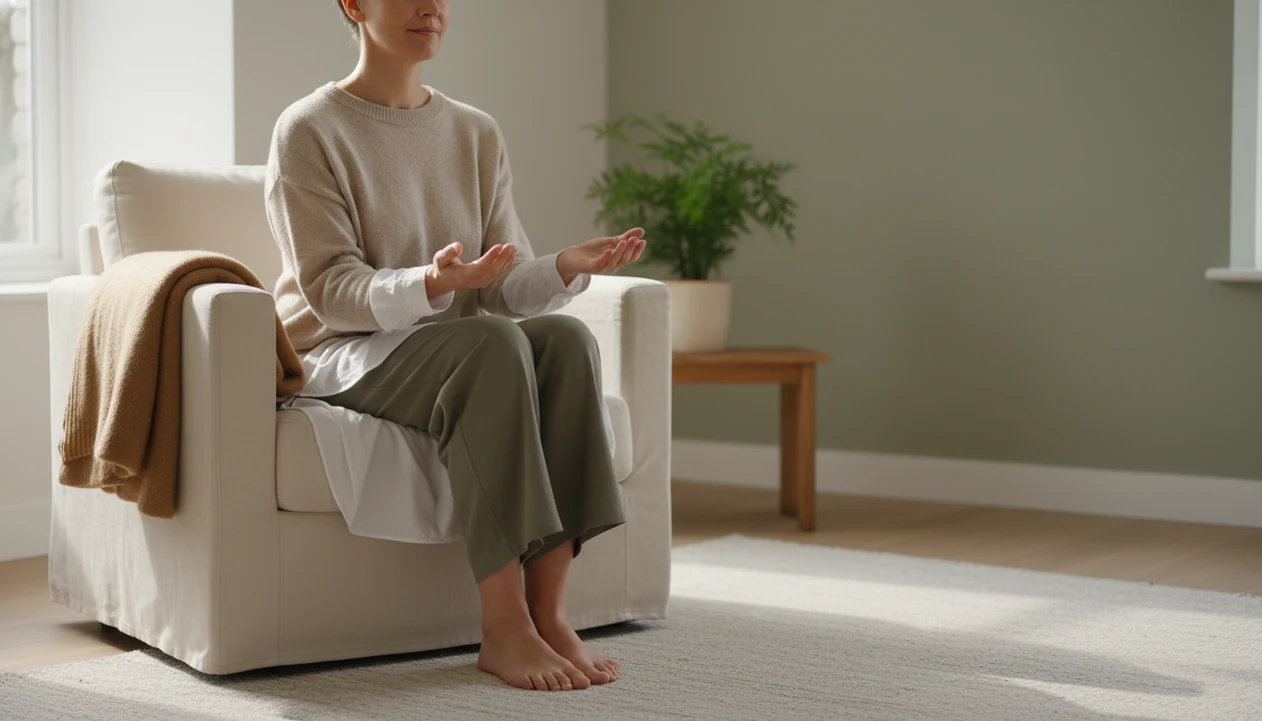
A helpful image for this guide would show a person sitting upright with steady support, relaxed shoulders, and unclenched hands. The posture should look ordinary, not staged like an advanced meditation pose.
Caption: “A relaxed body posture starts with steady support, soft shoulders, and easy breathing.”
Alt text should include the primary keyword naturally, such as: “person practicing how to relax your body while sitting upright with soft shoulders and open hands.” That says what the image shows without stuffing the phrase.
A perfect meditation pose is unnecessary. A kitchen chair, bus seat, or office stairwell can work if the body feels supported. The practical question is simple: can you breathe without strain and release one area of tension? When tension rises on a bus or plane, mindfulness for travel anxiety offers practical ways to practice in your seat.
For guided options, an app to help manage stress mindfully can be useful when you want prompts instead of remembering each step.
Body Relaxation Limits
- Body relaxation is supportive practice, not medical treatment, with evidence supporting symptom relief more than curing underlying causes.
- Relaxation may take repeated practice, and body scans, closed eyes, or long stillness can feel uncomfortable.
- Seek medical care when tightness is linked to injury, chronic pain, panic symptoms, or another health condition.
- If practice causes distress, meditation side effects explains when to pause or adjust.
Questions about relaxing your body
How can I relax my body quickly?
Choose a supported position, let your shoulders lower, and take a few slow, comfortable breaths. Check your jaw and hands for clenching, then soften one area. A short pause can help you begin, but complete relaxation is not guaranteed. If stillness makes you restless, try gentle movement.
How do I release tense muscles?
Try gently tensing one muscle group for a few seconds, then releasing it and noticing the contrast. You can also soften without tensing first, especially around the jaw, shoulders, and hands. Do not push through pain or treat persistent tension linked to injury as something relaxation alone should resolve.
Should I take deep breaths to relax my body?
Keep breathing gentle rather than repeatedly taking the deepest breath possible. Breathing too fast or too deeply can contribute to dizziness, tingling, and chest tightness through overbreathing. Let the exhale remain comfortable and at least as long as the inhale, without straining or holding your breath.
Why can't I relax my body even when I try?
Trying hard to feel calm can keep your attention fixed on tension. Some people also feel more restless or uneasy when they focus inward or stay still. Try a shorter practice, keep your eyes open, or switch to slow walking. Persistent symptoms or distress that interferes with daily life deserve assessment.
How do I relax my body before sleep?
Use a brief body scan in a supported lying position, with dim light if that suits you. Notice each area without demanding that it change, then soften your jaw, shoulders, belly, and hands where comfortable. This can support settling before sleep, but it is not a guarantee that you will fall asleep.
What should I feel during a body scan?
You might notice tightness, warmth, heaviness, tingling, pulsing, numbness, or very little sensation. There is no required feeling. Move your attention through the body without trying to repair every area. If focusing on sensations makes you more frightened, open your eyes and turn attention toward your surroundings instead.
Can walking help me relax if sitting still feels uncomfortable?
Gentle walking is an option when sitting still makes you more restless. Keep the movement comfortable rather than turning it into a performance goal. If inward attention increases fear, looking at your surroundings while walking slowly may be more useful than continuing a long body scan.
How long should I spend relaxing my body?
Start with a timer set for 3 to 10 minutes so the practice has a clear ending. Use that time for comfortable breathing and a few areas of muscle release rather than rushing through everything. End by noticing one physical change, even if some tension remains.