
What to Expect When Starting Meditation: Your First Week


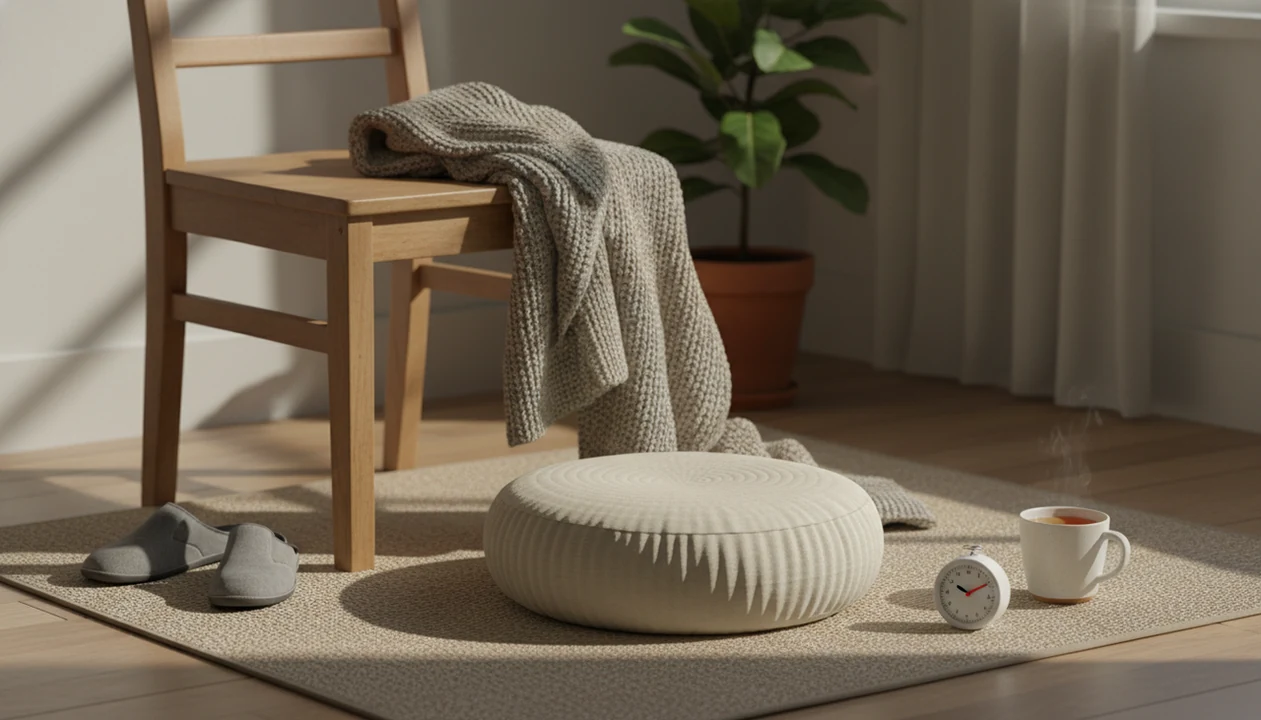
Starting meditation often brings wandering thoughts, restlessness, boredom, brief calm, and sometimes emotional or physical discomfort. It means practicing intentional attention for a few minutes at a time, noticing thoughts, sensations, and emotions without automatically reacting to them. A quiet mind is not the goal. Noticing that attention has drifted and gently returning to the breath, body, or sound is the practice.
The first week may feel less peaceful than expected. Benefits generally build with consistent practice over weeks, rather than one perfect session. This guide is educational, not medical or mental health advice. Stop and contact a qualified clinician if meditation brings intense anxiety, trauma memories, or symptoms that feel unsafe. Seek emergency support for immediate danger or self-harm risk.
The essentials
- The first week often feels less peaceful than expected because the mind wanders and the body resists sitting still.
- Wandering thoughts are not failure; noticing them and returning to the breath, body, or sound is the core meditation skill.
- Benefits usually build through consistent short sessions over weeks, not one perfect session.
What your first meditation session may feel like
A beginner’s first mistake is expecting meditation to feel instantly peaceful. Field notes from early practice usually include racing thoughts, restlessness, boredom, sleepiness, and the occasional quiet minute. Judge the session by whether you noticed attention drifting and returned, not by whether your mind went blank.
You can meditate sitting, standing, walking, or lying down as long as you stay awake and attentive. Try a few minutes after a walk, while your cheeks are still warm, or while watching kids play at the edge of the yard. A watering can, a patch of shade, or the smell of garden soil can be ordinary enough to keep the practice from feeling precious.
| Early experience | What it often means | What to do |
|---|---|---|
| Racing thoughts | You are noticing mental activity | Return to breath, sound, or body |
| Restlessness | The body wants movement | Adjust posture or try walking |
| Boredom | The mind wants stimulation | Name “boredom” and continue |
| Sleepiness | You may be tired or too relaxed | Open your eyes or sit upright |
| Brief calm | Attention has settled for a moment | Notice it, then keep practicing |
Five experiences to expect when you start
These starting meditation effects are common enough that beginners should expect them, not fear them. The first week may feel messy, but that mess is where attention practice begins.
- The mind will wander repeatedly in the first week. Each return is a repetition, like gently resetting a small mental habit.
- Clearing the mind is not required. Meditation trains noticing, not blankness.
- Physical and emotional discomfort can appear. Stiffness, impatience, sadness, worry, or old memories may become easier to detect.
- Benefits tend to come from consistency over weeks or months. One smooth session does not prove success, and one scattered session does not prove failure.
- Five to ten minutes most days is a realistic starting point. For many beginners, a short daily sit beats an ambitious hour that never happens.
The most useful beginner meditation habit is short, repeated practice because attention improves through returning, not through forcing the mind to stay still.
How Starting Meditation Works In The Mind And Body
Starting meditation is mostly a repeated attention loop: choose an anchor, lose track of it, notice that you lost track, and return. Labeling can help, but it is optional. A skeptical beginner might simply say “thinking,” “hearing,” or “planning call” and then come back to the next breath or sensation.
The thoughts and sensations were often already there, but fewer distractions give them more space. You might notice heavy legs, dry lips, the replay of a wedding planning call, or the faint glow of a camping lantern in the room. None of that means the practice has failed.
Over time, repeated attention training may support metacognition, which means noticing thoughts as thoughts. It may also reduce automatic reactivity by helping you see a pattern earlier. In daily life, the useful change is often a tiny gap: you notice the urge to snap, snack, scroll, or rehearse an argument before you act on it.
For beginners, breath awareness usually works better than trying to stop thoughts because the breath gives attention somewhere practical to return.
A possible first-week pattern, not a deadline
What happens during the meditation first week? Most beginners move through awkwardness, restlessness, recognition, and small daily-life pauses, but no timeline is universal.
Days 1-2: awkward attention
The first two days often bring posture questions, racing thoughts, and uncertainty. You may wonder where to put your hands or whether a cushion sliding on hardwood has ruined the session. It hasn’t.
Days 3-5: restlessness and recognition
By days three to five, you may notice repeated patterns: planning, replaying conversations, boredom, or impatience. Occasional calm can appear, but it may come and go quickly.
Days 6-7: small pauses in daily life
Near the end of week one, some people notice tension sooner or pause before reacting. A phone buzz might be noticed without grabbing it. No specific feeling proves meditation is working; the practical sign is recognizing experience a little earlier.
Normal Discomfort When Starting Meditation Safely
Normal discomfort when starting meditation can be physical, emotional, or both. Stiffness, fidgeting, tingling, sleepiness, and impatience are common, especially when you sit longer than your body is used to.
Emotional discomfort can also appear. Anxiety, sadness, irritability, memories, or worry may feel more noticeable when things get quiet. If that happens, we usually suggest making the session shorter, opening your eyes, changing posture, or switching to slow walking. A simple anchor, such as the weight of your legs or the feeling of air moving in and out, is enough.
Stop if you feel overwhelmed. That is not failure.
People with severe distress, trauma-related overwhelm, self-harm thoughts, or major mental health concerns should seek qualified professional support. Meditation can be educational support, but it should not be treated as treatment. The National Center for Complementary and Integrative Health also frames meditation as generally safe for many people while noting that some people may experience difficult emotions or need professional guidance NCCIH overview. For a deeper safety discussion, our guide to meditation side effects covers warning signs and practical adjustments.
When To Seek Professional Help While Meditating
Seek professional help while meditating if the practice brings panic, dissociation, self-harm thoughts, trauma flashbacks, or distress that feels hard to come back from. Meditation should support awareness, not push you through symptoms that feel unsafe.
If a session becomes overwhelming, treat stopping as a wise adjustment, not a failed practice.
- Stop the session. Open your eyes, move your body, and end the timer instead of trying to force calm.
- Ground yourself. Name objects in the room, feel your feet on the floor, listen to external sounds, or take a slow walk.
- Choose a safer format next time. Try eyes-open practice, walking meditation, shorter sessions, or sound-based attention instead of silent sitting.
- Contact qualified support. Speak with a licensed mental health professional if distress is severe, persistent, trauma-linked, or affecting daily life.
- Use urgent help when needed. Meditation is not a replacement for therapy, medication, crisis care, or emergency services if you may harm yourself or someone else.
Research-Backed Meditation Benefits And Realistic Timing
Research-backed meditation benefits usually come from consistent practice, not instant transformation. A 2014 JAMA Internal Medicine review of 47 randomized clinical trials found moderate improvements in anxiety, depression, and pain from mindfulness meditation programs JAMA study.
A 2013 JAMA Psychiatry trial found that an 8-week mindfulness-based stress reduction program produced a 5.9-point greater reduction in Hamilton Anxiety Rating Scale scores than stress education in adults with generalized anxiety disorder JAMA study. Another 2013 Psychological Science trial found that college students improved working memory and reading comprehension after four weeks of training, using 10 minutes per day, five days per week 0956797612459659.
These studies support steady practice over weeks. They do not show that one session should change your mood, solve anxiety, or make work effortless. Clinicians typically recommend meditation as a supportive skill, not a replacement for needed medical or psychological care. Our mindfulness for anxiety support guide explains that boundary in more detail.
You do not need a blank mind or perfect posture
Common myths about beginner meditation expectations cause people to quit too early. A more accurate view makes the first week less discouraging.
- Myth: meditation should feel peaceful immediately. Replacement belief: peace may happen sometimes, but noticing agitation is still valid practice.
- Myth: you must clear your mind. Replacement belief: wandering thoughts are expected, and returning attention is the skill.
- Myth: you must sit perfectly still or cross-legged. Replacement belief: a stable chair, standing posture, or slow walk can all work.
- Myth: meditation should replace therapy, medication, or professional care. Replacement belief: meditation can support awareness, but serious symptoms deserve qualified help.
A guided session can help when silence feels vague. The single earbud approach is common on a bus or before work, though ambient room hum between prompts may still pull attention away. Comparing guided and silent meditation can help you choose the format that feels clearest and most manageable this week.
Practical Adjustments For A Safer Meditation First Week
A safer meditation first week starts small and removes unnecessary pressure. Use five minutes, choose a comfortable posture, and track one observation after practice instead of chasing a mood. For practical ways to begin, explore mindfulness for beginners and apply these attention skills during ordinary daily activities.
- Set a five-minute timer. Build gradually only after the shorter session feels repeatable.
- Choose a stable posture. Sit in a chair, stand, walk slowly, or lie down if you can stay awake.
- Pick one simple anchor. Use breath, body sensations, sound, or the feeling of walking.
- Try a guided practice. Use guidance if silence feels confusing or too open-ended.
- Write one observation. Note “mind wandered to bills” or “shoulders tight,” then stop.
Tools like Mindful.net can be useful when you want beginner-friendly explanations, short guided practices, and technique comparisons in one place. If stress is your main reason for practicing, our mindfulness for stress page keeps the focus practical and non-medical.
Missed sessions are a reason to adjust, not quit
Incomplete practice is common even in structured courses. A systematic review of 43 MBSR and MBCT studies found that participants completed approximately 60% of assigned formal home practice. These were structured mindfulness programs, not people trying a few minutes independently. The finding does not establish an ideal beginner dose, but it does challenge the idea that every missed session means failure.
Choose a time and place you can realistically repeat, such as a short session before lunch. Decide on a brief version for busy days rather than trying to make up every missed minute. NHS Scotland's introductory practices last 10 minutes or less and encourage learners to establish a shorter routine before progressing to longer practices. After a missed day, return to that manageable routine.
How can I remember to pause between sessions?
Remembering to pause during an ordinary day can be harder than understanding the instructions. The free mindfulness bell offers a cue to notice a sound, your surroundings, or the feeling of your feet on the floor. Mindful.net's short guided sessions can provide instructions when silence feels confusing. Neither replaces clinical care when practice causes persistent or worsening distress.
Beginner Meditation Limits
- Seek qualified clinical advice when treatment is needed, and never replace therapy, medication, or emergency care with meditation.
- Meditation can initially heighten awareness of difficult thoughts, memories, or emotions.
- Evidence is stronger for stress, anxiety, mood, and pain than for dramatic productivity or disease cure claims.
- If bedtime is your main practice window, meditation for sleep may fit better than silent seated meditation.
Starting meditation questions
Why do I think more when I start meditating?
With fewer distractions, thoughts that were already present may become easier to notice. That does not mean you are doing it wrong. Recognize the thought, perhaps silently saying “thinking,” then return to your chosen anchor. Repeat as needed; stopping thoughts is not the task.
Is it normal to feel restless or bored during meditation?
Restlessness, boredom, impatience, and sleepiness can occur when you begin. You do not have to remain perfectly still or force a longer session. Try a shorter practice, a supported chair, or slow walking. Adjust physical discomfort rather than treating endurance as a measure of success.
Can meditation make anxiety worse at first?
Anxiety or difficult memories can become more noticeable when distractions fall away. Shorten the session, open your eyes, or switch to external sounds or gentle movement. Stop if you feel overwhelmed. Panic, dissociation, trauma flashbacks, or persistent worsening distress call for help from a qualified clinician.
Why do I feel sleepy when I meditate?
Feeling sleepy during meditation is common, especially if you are tired or practicing in a comfortable, quiet setting. Try sitting upright, keeping your eyes slightly open, or meditating when you feel more alert. If you regularly fall asleep, consider whether you need more rest rather than trying to push through.
Is it normal to feel emotional during meditation?
Yes, meditation can make emotions more noticeable because you are pausing to pay attention to your experience. You might feel sadness, irritation, joy, or nothing unusual. You do not need to analyze every feeling. If emotions become overwhelming, stop, notice your surroundings, and consider support from a qualified mental health professional.
Do I need to sit on the floor to meditate?
No, you can meditate in a chair, standing, or lying down if that is more accessible. Choose a position that feels supported and allows you to stay reasonably alert. There is no need to force crossed legs or tolerate pain. Adjust your posture whenever discomfort starts to distract you.