
Mindful Attitudes for Anxiety: Ten Ways to Respond to Worry


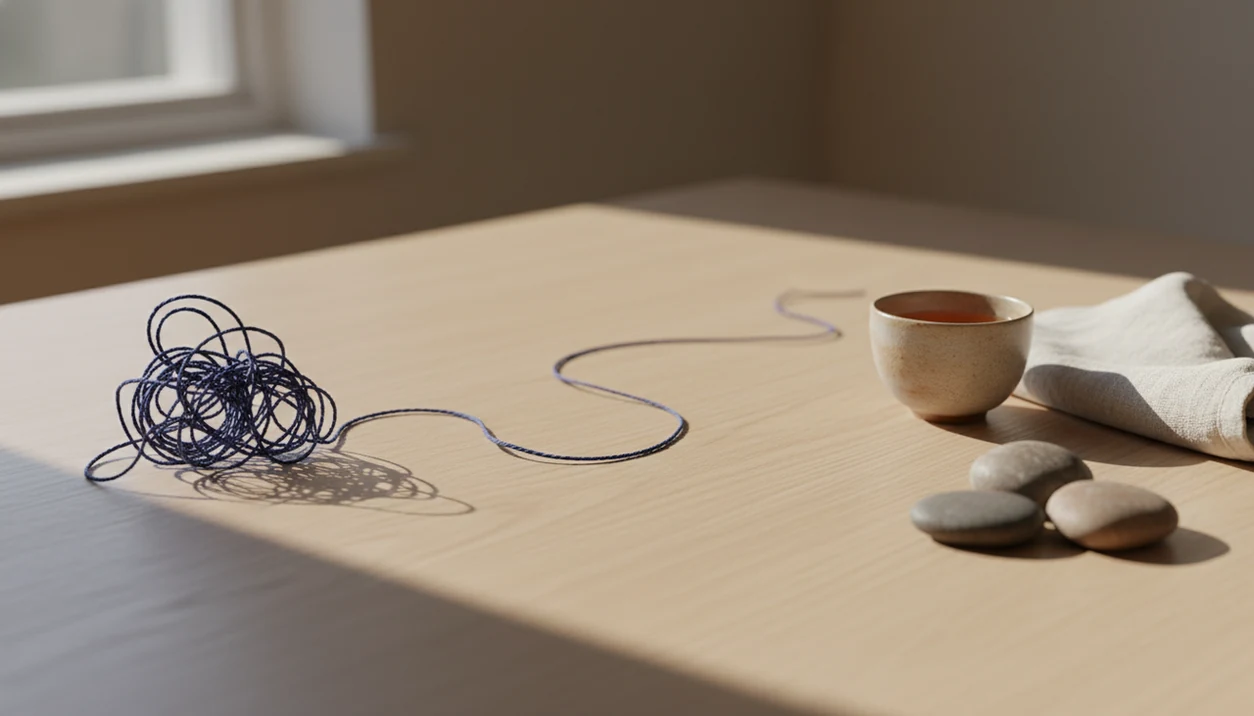
Mindful attitudes for anxiety are skills for noticing worry, tension, and “what if” thoughts without immediately fighting them or treating them as facts. These secular mindfulness approaches bring present-moment awareness to anxious thoughts, emotions, and body sensations. Nonjudgment, curiosity, patience, acceptance, and self-compassion can help you pause before reacting. The aim is not to erase anxiety on command.
This guide explains ten attitudes and how to use them in a brief practice. You can practice while anxiety is still present; instant calm is not the measure of success. If anxiety is severe, persistent, trauma-linked, or interfering with sleep, work, eating, relationships, or safety, use this guide as education, not a substitute for professional support.
Notice anxious thoughts without immediately obeying them
Mindful attitudes for anxiety are the relationship you practice having with anxiety, not one single meditation technique. You may still feel a tight chest, a racing mind, or the urge to check your phone while practicing well.
A useful way to say it: the anxious thought is noticed, not obeyed immediately. The body sensation is felt, not treated as proof that something terrible is happening. On a kitchen chair or bus seat, that might mean silently naming, “worry is here,” then feeling your feet on tile for three breaths.
Good practice does not require instant calm.
Noticing anxiety is different from suppressing it. Suppression says, “go away.” Mindfulness says, “I can see this clearly enough to choose my next step.” For a wider starting point, our guide to mindfulness for anxiety support explains the support role without presenting mindfulness as treatment.
What research says about mindfulness and anxiety symptoms
Research supports mindfulness-based practice as a way to reduce anxiety symptoms for some people, but the evidence does not show that anxiety disappears permanently. Clinicians typically recommend professional evaluation when anxiety is severe, persistent, panic-level, trauma-linked, or disabling.
- A 2023 randomized clinical trial of 276 adults with anxiety disorders found that an 8-week mindfulness-based stress reduction program was not inferior to escitalopram for anxiety symptom reduction JAMA study.
- A 2021 systematic review and meta-analysis found small to moderate reductions in anxiety symptoms for mindfulness-based programs versus controls Jamapsychiatry.2021.0041.
- The NIH’s NCCIH describes moderate evidence that mindfulness meditation programs can help reduce anxiety symptoms in some people NCCIH overview.
- The evidence is stronger for symptom reduction than for permanent elimination of anxiety.
- Mindful attitudes matter because anxious people often add self-criticism on top of fear, which can keep the loop going.
For many people, regular mindfulness practice is more useful than occasional emergency use because repetition trains the “notice and return” skill before anxiety peaks.
A brief pause is not the same as a course of treatment
The research measures more than a moment of relief. A 2014 systematic review of 47 randomized trials found an average anxiety benefit from mindfulness-meditation programs at about eight weeks, with smaller benefits at three to six months. Those results support realistic expectations of gradual change, not a promise that one short exercise will stop anxiety.
Keep two goals separate: helping yourself respond to worry right now and reducing symptoms over time. Grounding or breathing may help you regain attention for the next task. That does not establish treatment for an anxiety disorder, or show that any one attitude produces the benefits measured in a structured mindfulness program.
Interrupting the loop of worry, tension, and self-criticism
Mindful attitudes work by changing the loop between anxious thoughts, emotions, urges, and body sensations. Anxiety often starts with a signal, then the mind adds a story, then the body reacts again. That cycle can become a habit loop, which means the brain learns the same worry route through repetition.
The second layer is often harsher than the first. A person feels anxious, then thinks, “I should be over this,” or “I’m failing at meditation.” Now there is anxiety plus shame.
Nonjudgment and curiosity create a small pause between the thought and the reaction. During counted breaths between keyboard clicks, you might notice, “planning thought,” instead of opening five tabs to solve a future problem.
Acceptance is clear seeing, not approval. It means, “this is present right now,” not “this must stay” or “I should do nothing.” Mindfulness practices and meditation techniques for beginners and daily life can build steadier attention, not guaranteed calm or medical treatment.
Ten attitudes to practice when worry shows up
These mindful attitudes for anxiety tips work best when you treat them as repeatable habits, not personality traits you either have or lack. Start small.
Attitudes 1-5: Meeting anxiety directly
- Nonjudgment: Name anxiety without adding, “I’m weak for feeling this.”
- Beginner’s mind: Treat anxious predictions as mental events, not facts.
- Patience: Allow gradual change instead of demanding instant calm.
- Acceptance: Acknowledge what is here before deciding what to do.
- Letting go: Release the need to solve every worry immediately.
Attitudes 6-10: Building a steadier habit
- Trust: Build confidence in observing and returning.
- Self-compassion: Speak to yourself like you would to a worried friend.
- Curiosity: Investigate sensations gently, such as warmth, pressure, or fluttering.
- Non-striving: Stop turning mindfulness into another performance test.
- Consistency: Practice briefly and often, including low-stress moments. If worry starts when you wake, try meditation for morning anxiety with a brief practice rather than demanding immediate calm.
For anxious beginners, nonjudgment is often easier than “calming down” because it gives the mind a task without demanding a mood change.
A five-minute practice for manageable anxiety
Use this short practice when anxiety is present but manageable. Do not force inward attention if it increases panic, dissociation, or a sense of being unsafe; switch to naming visible objects, feeling your feet, or contacting support. If inward attention feels too intense, keep your eyes open and orient to the room.
- Set a short timer for 5 minutes and choose a grounded posture, such as sitting with both feet on the floor.
- Notice one experience that is here now: a thought, emotion, urge, or body sensation.
- Name it neutrally with a simple label, such as “worry,” “tightness,” “planning,” or “fear.”
- Soften self-criticism with one phrase: “This is hard, and I can be kind here.”
- Return attention to breath, sound, or contact points, such as feet on carpet. If listening feels easier than focusing inward, soundscapes for anxiety relief offer another way to anchor attention during practice.
- Close by choosing one small next action if action is needed, like sending one message or writing one reminder.
The mind may wander to a grocery list. That is not failure. Notice and return.
For beginners, a five-minute practice is often easier than a long meditation because it builds trust without making anxiety the whole event.
When to use these attitudes and when to get more support
Mindful attitudes fit everyday anxiety patterns, but they are not enough for every situation. Use them as a support skill, and seek more help when anxiety is severe or disrupts basic functioning. For appointment related worry, mindfulness for dental anxiety offers small practices to use before and during a visit.
| Situation | Best for | Not ideal for |
|---|---|---|
| Everyday worry | Rumination, overthinking, stress reactivity | Constant fear that stops sleep, work, or eating |
| Beginner practice | People wanting secular, beginner-friendly habits | People who feel overwhelmed by inward focus |
| Body tension | Learning to notice tightness without panic | Trauma-linked sensations that feel unsafe alone |
| Work stress | Three breaths before unmuting or replying | Panic-level symptoms needing urgent support |
| Ongoing anxiety | Support alongside therapy or care | Replacing therapy, medication, or crisis help |
If stress is the main pattern, our page on mindfulness for stress gives a broader everyday frame. If symptoms feel intense or unsafe, professional care is the practical next step. For guidance on adapting practice when stress or sleep difficulties arise, explore stress, sleep and mindfulness safety before continuing.
When to Seek Professional Help for Anxiety
Seek professional help when anxiety is persistent, severe, worsening, or getting in the way of sleep, work, eating, relationships, or basic daily life. Mindfulness can support coping, but it does not diagnose anxiety disorders or replace a licensed evaluation. When worry builds at bedtime, ways to settle night anxiety can complement professional support without replacing an assessment.
Red flags include panic attacks, trauma symptoms such as flashbacks or feeling unsafe in your body, growing avoidance, insomnia, appetite changes, and impairment that makes ordinary tasks feel impossible. If you feel unsafe, at risk of self-harm, or worried you might hurt yourself, treat that as urgent and contact emergency services, a crisis line, or a trusted person who can stay with you.
- Notice whether anxiety is becoming more frequent, intense, or limiting.
- Write down the main symptoms, triggers, sleep changes, appetite changes, and avoidance patterns.
- Contact a licensed mental health professional, primary care clinician, or local clinic for an assessment.
- Ask about options that may fit you, including therapy, medication, skills practice, or a combination.
- Keep using mindfulness only as supportive practice, especially if a clinician helps you adapt it safely.
Therapy, medication, and mindfulness are not competing paths. Many people use them together.
Avoid forcing calm or treating anxiety as failure
Trying to empty your mind sets a goal that mindfulness does not require. Mindfulness does not require a blank screen inside your head. It asks you to notice thoughts without automatically following them.
Another mistake is using mindfulness only to force relaxation. Calm may happen, but anxious sensations can still be present during useful practice. Acceptance also gets misunderstood. It is not giving up; it is seeing clearly before choosing.
A quieter mistake is judging anxiety as a personal failure. That adds the second layer again. Harsh.
Practice timing matters too. If you only practice during peak anxiety, the skill has no warm-up. Try brief sessions when you are mildly stressed, bored, or waiting in line. If a practice feels overwhelming, modify it. Open your eyes, shorten the timer, feel the chair under you, or read about can meditation make anxiety worse before pushing through.
Using guided practice without treating it as anxiety care
For anxiety, Mindful.net should be treated as a practice structure, not a diagnosis tool, crisis service, or substitute for therapy or medication.
Guided practice can be useful because a calm voice tells you what to notice next. That helps when the progress bar feels too slow or the mind keeps checking whether the practice is “working.” The Mindfulness Practices App can also help people compare techniques, such as breathing, body scan, or loving-kindness, without treating any one method as a cure.
You can also practice without an app. The 5-minute steps above are enough for a practical start, especially if you prefer quiet or want to keep things simple.
An everyday mindfulness pause, not a promise of calm
Image caption: A person sits in a calm everyday setting for a brief mindfulness pause, using mindful attitudes for anxiety to notice worry with curiosity and compassion. The scene shows a grounded posture, a relaxed face, and a simple practice space rather than instant calm or clinical treatment.
The image should feel ordinary: a chair, soft daylight, maybe a notebook nearby. No spiritual authority is implied. No cure is promised. A useful visual might show hands resting in the lap, eyes lowered, and attention returning after distraction, the same way practice often happens in real life.
Mindful Attitudes and Anxiety Limits
- Mindful attitudes cannot cure anxiety disorders, and evidence is stronger for reducing symptoms than permanently eliminating anxiety.
- Some people need therapy, medication, or both for anxiety, and seeking professional help is not a failure.
- Mindfulness can feel uncomfortable as body sensations become more noticeable, as our meditation side effects overview explains.
Practicing mindful attitudes with anxiety
What are the ten mindful attitudes for anxiety?
The ten attitudes are nonjudgment, beginner’s mind, patience, acceptance, letting go, trust, self-compassion, curiosity, non-striving, and gentle consistency. They describe how you relate to anxiety, rather than a single technique. You can practice one at a time, such as naming worry without criticizing yourself for having it.
Does accepting anxiety mean giving up?
Acceptance means acknowledging what is happening before choosing your response. It does not mean approving of distress, ignoring a problem, or avoiding treatment. You might recognize that your chest feels tight, stop arguing with the sensation, and then decide whether to ground yourself, take a practical step, or seek support.
How do I stop judging myself for feeling anxious?
Start by noticing the judgment as another thought, rather than an accurate verdict about you. Replace “I’m weak for feeling this” with a neutral label such as “anxiety is here.” You do not have to believe a reassuring statement or feel compassionate immediately. The practice is to avoid adding criticism to distress.
What does beginner’s mind mean when I am worried?
Beginner’s mind means approaching the present experience without assuming your anxious prediction is already a fact. Notice what is actually happening now: a thought, a sensation, or an urge. This is not forced optimism. You can remain open to uncertainty while still taking sensible action on a real problem.
Can I practice mindfulness if I still feel anxious?
Yes. Useful practice can include a racing mind or body tension. Try noticing one experience, naming it neutrally, and returning attention to your feet or natural breathing. The goal is not a blank mind or immediate relaxation. If the exercise makes you feel increasingly unsafe or overwhelmed, stop and use external grounding.
How often should I practice mindful attitudes for anxiety?
Use a brief, repeatable practice rather than saving it only for peak anxiety. The five-minute exercise in this guide is one starting point, not a proven minimum dose. Research generally evaluates structured programs over weeks. Do not judge the value of practice solely by whether one session makes you calm.
What should I do if mindfulness makes my anxiety worse?
Do not force yourself to keep focusing inward. Open your eyes, name visible objects, or feel your feet against the floor. Stop if you feel panicky, disconnected, or unsafe. Persistent worsening, trauma-linked distress, or symptoms that disrupt daily life are reasons to seek professional support rather than intensify self-guided practice.
Can mindful attitudes replace therapy or medication for anxiety?
No. Mindful attitudes can support coping, but they do not diagnose or cure anxiety disorders. Some people need therapy, medication, or both. Seek a professional assessment when anxiety is persistent, severe, worsening, or interfering with sleep, work, eating, or relationships. Brief relief from an exercise does not remove that need.