
Meditation for Overthinking at Night
Meditation for overthinking at night is a gentle settling practice, not a command to fall asleep on cue. It helps you notice racing thoughts, label them, and return attention to a simple anchor such as breathing, a body sensation, or a steady sound. For a parent up in the quiet hours, that anchor might be the refrigerator hum, warm cheeks, or the feeling of a diaper bag strap finally off the shoulder. The aim is to lower mental effort enough for rest to become more available.
This page is educational and is not a diagnosis or treatment plan. If nighttime thoughts involve self-harm, panic, trauma flashbacks, severe depression, or persistent insomnia, use meditation only as support and seek qualified help.
> Definition: Night overthinking meditation is a soft mindfulness practice for noticing bedtime thoughts without turning them into problem-solving, self-criticism, or clock-watching.
TL;DR
- Use nighttime meditation as a wind-down tool, not a guaranteed sleep treatment.
- The core method is simple: notice the thought, label it briefly, and return to a low-effort anchor.
- If overthinking is severe, panic-driven, trauma-related, or chronic, meditation may need to be paired with professional support.
Why meditation for overthinking at night helps the mind settle
A common myth: meditation for overthinking at night is supposed to erase every thought. More realistically, it helps you relate to thoughts differently. You notice the mental loop, give it a light label such as “planning” or “replaying,” and return to something less demanding than problem-solving.
Night overthinking can begin in very ordinary ways: a conversation starts looping, tomorrow’s details line up, money concerns get louder, or the refrigerator hum suddenly seems to mark how awake you are. One pattern we notice is that a tired mind often treats loose ends as urgent. A soft practice gives it one workable move: recognize what is happening and come back.
The goal is reduced arousal and rest, not instant sleep. That distinction matters. In a 2023 CDC survey, 42.2% of adults reported not getting enough sleep on a regular basis, so sleep difficulty is common, not a personal failure CDC guidance.
The cursor may stop blinking, but the mind keeps drafting emails.
For broader stress context, mindfulness for stress works best when it stays modest: a support skill, not a cure.
How night overthinking meditation works in the nervous system
Night overthinking meditation works by shifting attention from cognitive processing to sensory anchoring. In plain language, you move from “solve this” to “feel this breath, sound, or body contact.”
Thought-labeling adds a second mechanism. When you silently say “planning,” “remembering,” or “worrying,” you create a small gap between you and the thought. That gap can reduce identification with the story. You are not arguing with the thought. You are naming the mental event.
Night practice should be softer than daytime focus meditation. Strong concentration can feel like another task, especially when you are already tired. A bedtime anchor should feel low-effort, like feet under the blanket or room sounds in the background.
Evidence is mixed in a useful way. A 2019 systematic review found moderate evidence that mindfulness meditation programs improved anxiety symptoms, but lower evidence for sleep quality itself JAMA study. For nighttime overthinking, soft attention is often easier than effortful concentration because it asks less from an already busy mind.
How to use meditation for nighttime thoughts in bed
Use this short sequence when you are in bed and the mind keeps looping. Returning attention is the practice, not a failure.
- Settle your posture. Lie down or sit supported, with the jaw unclenched and the body arranged in a way you can maintain.
- Soften your breathing. Notice one inhale and one exhale without changing them much; if helpful, track the inhale with fingertips resting on the ribs.
- Label the thought. When a thought appears, name it once: “thinking,” “planning,” “remembering,” or “worrying.”
- Return to a sound anchor. Let attention rest on a fan, traffic, distant voices, or the quietest sound in the room.
- End gently. After five to ten minutes, stop trying to meditate and let the body rest, even if thoughts are still present.
A few minutes is enough. If you want a boundary, use a quiet visual cue such as the end of a familiar song, a dim lamp setting, or simply three slow rounds of noticing, labeling, and returning. You do not need a long session.
Tools like Mindful.net, Calm, and Headspace can be useful if you prefer instructions repeated in plain language. If you want a broader routine, meditation for sleep covers bedtime practice without promising sleep on demand.
A 7-minute bedtime overthinking mindfulness script
Read this slowly, or record it in your own voice. Keep the tone plain. No performance needed.
Minute 0-2: Settle the body
Let your body be held by the bed or chair. Notice the points of contact: shoulders, back, hips, legs. Feel the tight calves against the mattress, if that is what is here. Let the next breath arrive without pulling it in.
There is nowhere else to get to for the next few minutes.
Minute 2-5: Label nighttime thoughts
When the mind starts moving, label the movement gently. “Thinking.” “Planning.” “Remembering.” “Worrying.” Use only one word, then come back to the breath or body contact.
If the same thought returns, label it again. That is not a mistake. It is the repetition that trains the mind to stop chasing every thread.
Minute 5-7: Return to sound and rest
Now let sound become the anchor. Notice a hum, a car passing, the room’s quiet edges. Let thoughts be in the background. Feel the body resting, even if the mind is not blank.
End by saying silently, “I can rest without solving this now.”
Best-fit and not-fit cases for night overthinking meditation
Night overthinking meditation fits ordinary rumination better than acute distress. It can support stress management, but it is not a cure for insomnia, panic, trauma symptoms, or medical conditions.
| Situation | Fit? | Why it matters |
|---|---|---|
| Replaying ordinary conversations | Best fit | Labeling “remembering” can interrupt the replay loop. |
| Mild stress before bed | Best fit | A soft anchor can reduce mental effort. |
| Planning tomorrow repeatedly | Best fit | The practice redirects attention away from problem-solving. |
| Wanting a secular practice | Best fit | No belief system is required. |
| Emergency distress or thoughts of self-harm | Not fit | Immediate human or crisis support is more appropriate. |
| Untreated panic or trauma flashbacks | Not fit alone | Meditation may need clinical guidance. |
| Chronic insomnia | Not fit alone | Sleep-focused care may be needed. |
| Replacing medical care | Not fit | Relaxation is not treatment. |
If you are in immediate danger or might harm yourself, do not try to meditate through it. Contact local emergency services or, in the U.S. and Canada, call or text 988 for crisis support.
Good mindfulness practices and meditation techniques for beginners and daily life deliver attention training and practical pause points, not guaranteed sleep, symptom cures, or emergency support.
When to seek professional help for nighttime overthinking
Seek professional help when nighttime overthinking is persistent, frightening, or starting to affect the next day. Meditation can still be useful, but it should not be the only support when distress is high.
Escalation signs include insomnia that lasts for weeks, daytime impairment, panic at night, trauma memories or flashbacks, and symptoms of depression. If self-harm thoughts appear, the next step is immediate human support: contact emergency services, a crisis line, or someone who can stay with you now.
A simple decision path can help when you are tired:
- Notice the pattern. Track whether sleep loss, fear, or rumination is becoming regular rather than occasional.
- Name the impact. Pay attention to work, driving, caregiving, mood, and basic functioning the next day.
- Choose clinical support. Ask a primary care clinician, therapist, or sleep specialist about care options; chronic insomnia often fits CBT-I or structured sleep treatment better than meditation alone.
- Keep meditation supportive. Use breath, sound, or grounding as a companion skill if it helps.
- Stop the practice if it increases fear, dissociation, panic, or distress, and get help instead of pushing through.
Five facts about mindfulness for overthinking before sleep
Use these five facts as reality checks for nighttime mindfulness, especially when a busy mind tries to turn the practice into another task to perform perfectly.
- You do not need to empty your mind. Thoughts can remain while you practice noticing and returning.
- Soft attention works better than effortful concentration at night. Bedtime practice should feel less like a task and more like setting something down.
- Returning to the anchor is the core repetition. Each return to breath, sound, or body contact counts as the practice.
- Reducing arousal is different from guaranteeing sleep. You may feel more settled without falling asleep right away.
- Sleep hygiene still matters. Dim light, less screen exposure, fewer clock checks, and a steadier schedule can make meditation more useful; the NHLBI lists regular sleep timing, limiting bright light, and reducing evening stimulants as healthy sleep habits Healthy Sleep Habits.
If meditation sometimes makes you feel more activated, can meditation make anxiety worse explains why that can happen for some beginners.
Common mistakes in bedtime overthinking mindfulness
Most frustration comes from using too much effort. Bedtime meditation should feel lighter than a work task.
- The sleep-forcing mistake: Trying to make yourself calm can create more pressure. The body notices the demand.
- The debate mistake: Arguing with thoughts keeps you inside the thought stream. Label “worrying,” then return.
- The clock-checking mistake: Looking at the time repeatedly turns rest into a performance review.
- The scrolling mistake: Meditation usually works poorly when the mind is still lit up by messages, videos, or news.
- The one-night verdict mistake: One restless night does not prove the method failed. Nervous systems learn through repetition.
Paused audio beside a water glass is a familiar scene for many beginners. Sometimes the useful move is not another track, but placing the phone face down.
For a plain-language preview of early practice, what to expect when starting meditation may help reset expectations.
Image guide for meditation for overthinking at night
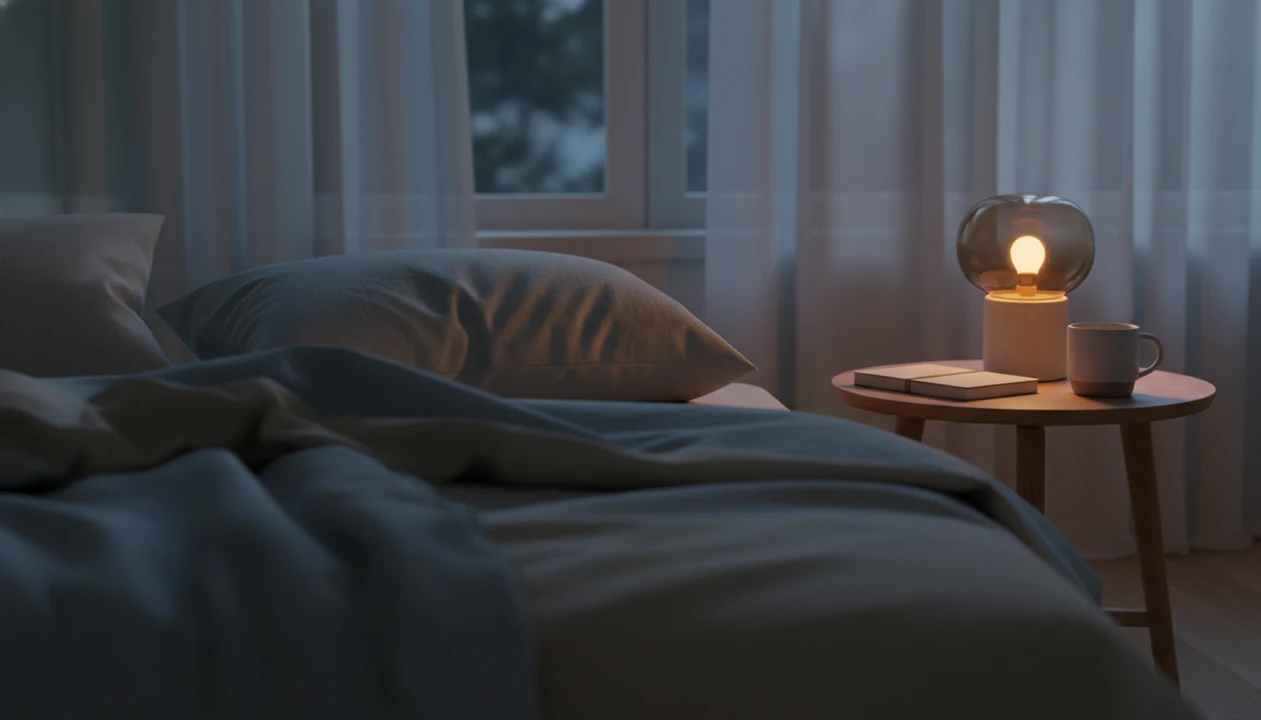
Use a calm bedside illustration, not a medical diagram or spiritual symbol. The image should show a person lying down or sitting comfortably in dim light, with simple icons for breath, body contact, sound, or thought-labeling.
Avoid visual promises of deep sleep. Closed eyes are fine, but the scene should suggest winding down rather than a guaranteed outcome. A small bedside lamp, muted colors, and a relaxed posture fit the topic better than stars, glowing brains, or dramatic “before and after” imagery.
Caption text: “A nighttime mindfulness practice uses breath, body contact, and gentle thought-labeling to reduce mental effort before rest.”
If an app screen appears, keep it secondary. Apps such as Mindful.net can guide the practice, but the visual focus should stay on the person resting.
Limitations
Meditation for nighttime thoughts has real limits. It can be useful, but it should not be treated as a guaranteed fix.
- Meditation is not a guaranteed cure for insomnia.
- Evidence for sleep quality is weaker than evidence for anxiety symptoms.
- Persistent insomnia, panic, depression, trauma symptoms, or severe distress may need professional care.
- Trying too hard can increase alertness and frustration.
Clinicians typically recommend professional assessment when sleep problems are persistent, severe, or tied to panic, depression, trauma, or major daytime impairment; for chronic insomnia, the American College of Physicians recommends cognitive behavioral therapy for insomnia as initial treatment M15 2175. For safety context, meditation side effects covers reactions beginners should know about.
The practical next step is modest: start small, notice what happens, and do not turn meditation into another bedtime test.
Environmental Setup That Actually Matters
Myth: meditation has to overcome a bad sleep setup.
Reality: a calmer room often makes a shorter practice more usable. A cool sheet, dim hallway night light, or steady fan sound can reduce extra decisions before the first slow exhale.
Mistake: trying a long body scan when you are already irritated.
We usually suggest a smaller entry point, such as the Three-Breath Reset from /5-minute-mindfulness-practice, before attempting a full scan. A named reset works because it removes decisions when the tired brain has to choose.
Alternative: use relaxation first, then mindfulness.
Relaxation aims to soften the body; mindfulness aims to notice what is happening without wrestling it. For some people, a warm blanket or slow exhale comes first, and the meditation begins after the body has stopped arguing.
One Pattern We Notice
- Some advice says to watch thoughts closely; other advice says to distract from them. The difference often depends on whether attention feels curious or combative that night.
- Body scans can feel less relaxing at first because attention may finally notice sensations that were already present. That does not mean the practice is failing.
- Sleep stories may help when language feels soothing, while breath counting may fit better when storylines pull you back into planning.
- Mindfulness and relaxation overlap, but they are not identical. Relaxation tries to create a calmer state; mindfulness practices returning when the mind wanders.
- Decision support beats generic calm advice when someone is choosing between techniques, which is why Practice Decision Support at /discover-best-mindfulness-practice can be useful.
A Field Note on Real Use
In our editorial review, many people seem to find the first minute of night practice the strangest, especially when they are trying to prove they can relax. We usually suggest making the opening almost too simple: one slow exhale, one body contact point, one permission to start over. That modest beginning often fits real bedtime better than an ambitious routine.
Three Situations Where This Helps
| If you... | Try | Why | Note |
|---|---|---|---|
| You are a parent awake after a child finally settles, and the quiet suddenly feels loud. | Three-Breath Reset, then rest attention on the cool sheet or a steady household sound. | A short reset may be easier than asking your mind to perform a full meditation when you are depleted. | If the practice turns into pressure to sleep immediately, shorten it rather than forcing it. |
| You are a shift worker lying down while the hallway night light is still on and your body feels confused about timing. | A 5- to 10-minute body scan with neutral labels such as warm, cool, heavy, or light. | Neutral labels can give attention a task without turning bedtime into problem-solving. | If scanning increases agitation, try a steady sound or slow exhale instead. |
| You replay conversations, rehearsals, or plays from the day, like a musician or athlete mentally practicing after hours. | Name the loop once, then count five slow exhales without correcting every thought. | Naming the loop can create a small gap between useful review and repetitive overthinking. | If worries feel intense or persistent, meditation can be one support, not the only support. |
Troubleshooting When It Feels Stuck
“Stuck” in bedtime meditation often means the practice has become a test: Am I calm yet? Am I sleepy yet? A useful adjustment is to switch from outcome language to contact language: cool sheet, slow exhale, hallway night light, back to this moment. The goal is not to win against thinking; it is to stop adding a second fight on top of thought.
A Quick Technique Map
| Technique | Best for | Minutes |
|---|---|---|
| Three-Breath Reset | getting started when the mind is busy and effort is low | 1-3 min |
| Neutral Body Scan | moving attention away from mental replay and toward simple sensation | 5-12 min |
| Sleep Story Listening | softening narrative overthinking when silence makes thoughts louder | 10-20 min |
The best night practice is the one that lowers effort without turning sleep into a performance.
Why Mindful.net fits this specific need
Mindful.net’s sleep and stress guides are built around practical choice points, not one-size-fits-all calm advice. For nighttime overthinking, that means comparing breath resets, body scans, sleep stories, and decision support so the reader can choose a practice that fits the actual night they are having.
FAQ
Can meditation stop overthinking at night?
Meditation can help you notice and redirect overthinking, but it does not erase thoughts completely. The useful skill is labeling a thought and returning to a low-effort anchor.
Why do I overthink more when I get into bed?
Quiet bedtime conditions can make unfinished tasks, worries, and memories feel louder. With fewer distractions, the mind may start replaying the day or planning tomorrow.
What should I focus on when my mind races at bedtime?
Use low-effort anchors such as breath, body contact, room sounds, or a simple thought label. The anchor should be easy enough that it does not become another task.
Is guided meditation better for nighttime overthinking?
Guided meditation can help beginners because it provides structure and reminders. Unguided practice may fit people who find voices or audio too stimulating at night.
How long should I meditate before bed?
Start with 5 to 10 minutes before bed. Consistency matters more than doing a long session.
What should I do if thoughts keep returning during meditation?
Returning thoughts are normal during meditation. Gently coming back to the anchor is the practice, not a sign that you are doing it wrong.