
Mindfulness vs Medication for Anxiety: What the Evidence Means for Treatment


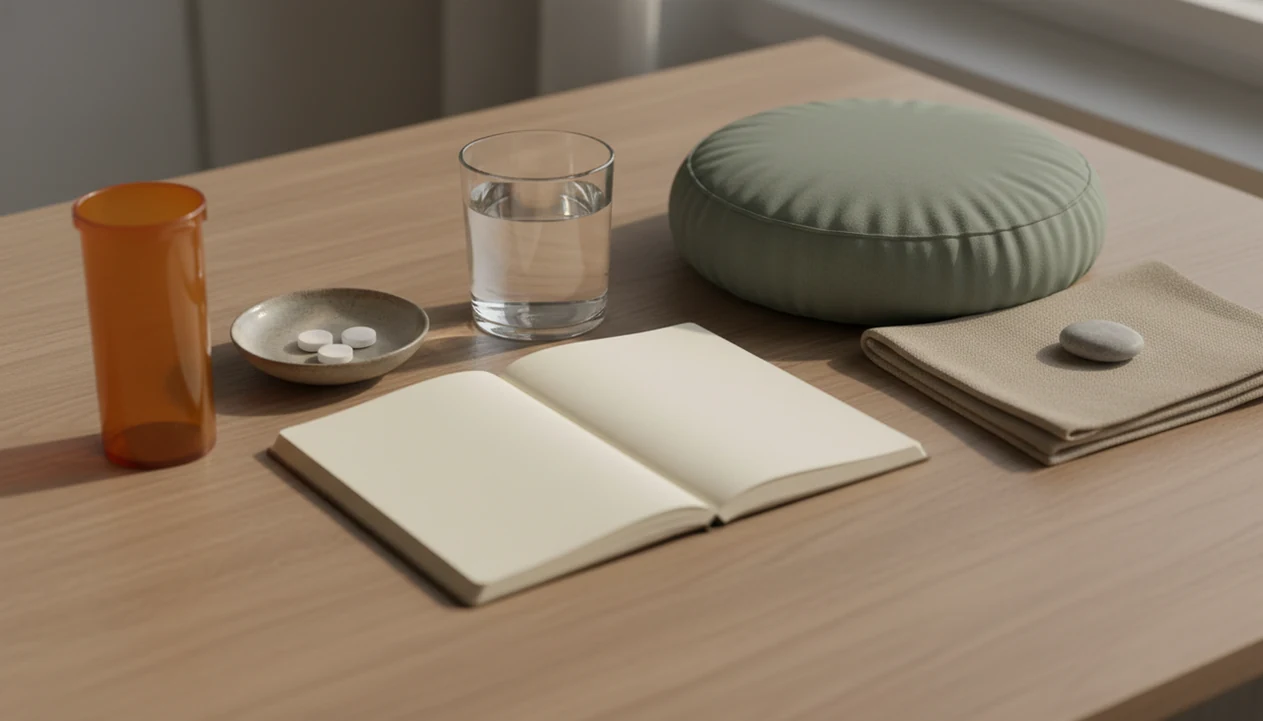
Mindfulness vs medication for anxiety is not a winner-take-all choice: structured mindfulness-based stress reduction (MBSR) performed comparably to escitalopram in a trial of adults with anxiety disorders. That finding applies to an eight-week program, not every meditation session or app. Medication may still be a better fit for faster relief, severe symptoms, or someone who cannot practice regularly.
The choice depends on symptom severity, side effects, access, preferences, and clinician guidance. Mindfulness takes repeated practice and can support medical care rather than replace it. This guide explains the comparison and helps you prepare questions for a licensed clinician. It does not diagnose anxiety or recommend starting, stopping, or changing medication.
What matters most
- The strongest comparison study found 8 weeks of MBSR was noninferior to escitalopram for adults with anxiety disorders.
- Medication may work faster for some people, but side effects were reported more often in the escitalopram group than the mindfulness group.
- Mindfulness is a skills-based practice, not an instant cure, and it can be used alongside medical care when appropriate.
What the eight-week MBSR trial found
An 8-week mindfulness-based stress reduction program was noninferior to escitalopram in a randomized clinical trial of 276 adults with anxiety disorders. In plain English, “noninferior” means MBSR performed comparably within that study design, not that it was automatically better for every person.
The trial reported mean improvement of 1.35 points for MBSR and 1.43 points for escitalopram on the Clinical Global Impression-Severity score at 8 weeks, according to the published JAMA Psychiatry study JAMA study. Both groups improved in a meaningful way. A Georgetown University Medical Center summary described anxiety severity dropping by about 30% in both groups from a mean level around 4.5 Mindfulness Based Stress Reduction As Effective As Antidepre.
That is useful evidence, but it is not a home diagnosis tool. For adults with diagnosed anxiety disorders, structured MBSR can be a serious option to discuss. For sudden, severe, or unsafe symptoms, medical care comes first.
Compare treatment time, effort, and side effects
The clearest comparison is not “natural versus medical.” It is practice-based care, prescribed medication, or a coordinated plan that uses both.
| Factor | Mindfulness or MBSR | Medication | Combined care |
|---|---|---|---|
| Speed of relief | Usually gradual over days to weeks | May work faster for some people, though not instantly | Can address skills and symptoms together |
| Effort required | Repeated practice and instruction | Daily use as prescribed, follow-up visits | Practice plus medical check-ins |
| Side effects | Temporary discomfort can happen | PCORI reported 79% with at least one side effect vs 15% in mindfulness Comparing Meditation Versus Medicine Patients Anxiety Disord | Depends on medication and practice response |
| Access | Classes, online programs, apps, books | Requires a qualified prescriber | Requires coordination |
| Evidence strength | Strongest for structured 8-week MBSR | Strong for prescribed anxiety treatments | Often practical, but varies by person |
| Best-fit reader | Wants coping skills and can practice | Needs medical symptom support | Wants skills plus clinician-guided care |
Structured instruction matters here. A few casual breathing tips are not the same as an 8-week MBSR program.
How mindfulness and medication address anxiety
Mindfulness trains attention regulation, body awareness, and the ability to notice thoughts without immediately reacting to them. The simple version: you practice seeing worry as a mental event, not an emergency that must be solved right now. For families, understanding empathy development in children offers context on how attention and social awareness develop together.
Breathing practice, body scans, and sitting meditation can reduce worry spirals over time by reshaping how you respond to anxious sensations. You might feel a cotton sleeve on your wrist, drift into planning the next day’s care tasks, and then come back to the breath or the room. That “notice and return” is the exercise. Learning about neuroplasticity and thoughts can clarify how repeated mental habits relate to changes in brain networks.
Medications such as SSRIs affect brain chemistry more directly and are managed medically. They are pharmacological treatments, not attention skills. Mindfulness is skills-based learning, while medication is a prescribed biological treatment; neither is universally superior.
General meditation tips can help some people start small, but standardized MBSR includes a set curriculum, instructor guidance, and repeated practice. That distinction is important when comparing evidence.
Match anxiety treatment to symptoms and circumstances
The best fit depends on symptom severity, your ability to practice, past treatment response, and medical guidance. Clinicians typically recommend professional evaluation for diagnosis, prescriptions, medication changes, severe symptoms, or major impairment.
Mindfulness may fit
Mindfulness may fit people with mild to moderate symptoms, a preference to avoid medication side effects, willingness to practice, and interest in long-term coping skills. Beginner meditation and everyday mindfulness exercises provide repeatable attention practice, but they do not guarantee anxiety relief on demand.
Medication may fit
Medication may fit people with severe anxiety, urgent functional impairment, panic or intense symptoms needing faster support, or a prior positive response to medication. If getting through work, school, or basic sleep feels impossible, do not wait for a self-guided routine to solve it.
Combined care may fit
Combined care may fit people already in treatment, people with recurring anxiety, or readers who want skills plus medical support. Our guide to mindfulness for anxiety support explains the practice side without presenting it as a replacement for care.
When to seek professional help for anxiety
Seek professional help for anxiety when symptoms feel unsafe, unmanageable, or are disrupting basic life. Mindfulness can support coping, but urgent risk, medication decisions, and major impairment need a qualified clinician.
- Get immediate help for danger signs. If you have thoughts of self-harm, feel unable to stay safe, are acting in risky or unsafe ways, or have severe panic that feels medically alarming, contact emergency services, a crisis line, or urgent care.
- Ask a licensed prescriber about medication. Questions about starting, stopping, changing dose, side effects, pregnancy, interactions, or withdrawal should be handled by a clinician who can prescribe and monitor treatment.
- Schedule an evaluation for major impairment. If anxiety is seriously affecting sleep, work, school, eating, relationships, or daily responsibilities, do not rely on willpower or an app alone.
- Mention trauma or worsening during practice. A trauma history, flashbacks, dissociation, or symptoms that intensify during meditation are good reasons to seek guided support.
- Bring this decision guide to the visit. Use your notes on symptoms, timing, triggers, practice response, and medication concerns to prepare clearer clinician questions.
Five steps to prepare for an anxiety treatment discussion
Use this decision guide before choosing a next step. It is educational, not a substitute for diagnosis or treatment planning.
- Track anxiety for one week. Note severity, triggers, sleep, appetite, panic symptoms, and daily functioning.
- Identify the level of concern. Mark symptoms as mild, moderate, severe, urgent, or impairing.
- Discuss medical questions with a clinician. Ask about diagnosis, medication options, safety concerns, side effects, and interactions.
- Try structured mindfulness if appropriate. Use an MBSR-style plan, guided secular practice, or a class rather than random clips.
- Review after 4 to 8 weeks. Adjust with support, and do not abruptly stop prescribed medication.
Five quiet minutes is enough for a first practice, perhaps while the kettle warms or while you stand near the hallway after vacuuming, noticing coffee aroma and heavy eyelids without trying to fix everything at once. If indoor practice feels limiting, research on nature and the meditation brain offers context for trying mindfulness outdoors.
For a broader stress-focused routine, our mindfulness for stress guide gives everyday examples that stay within educational boundaries. A weekly exercise plan for brain health can add movement to a broader routine alongside mindfulness practice.
Five ways to begin mindfulness practice gently
These mindfulness tips can support practice, but they do not replace prescribed treatment or urgent care. Start gently, especially if attention to the body makes anxiety louder.
- Start short. Five to 10 minutes is realistic for many beginners, especially on a kitchen chair or bus seat.
- Use the breath as an anchor. Notice one inhale and one exhale, then return when the mind jumps to a grocery list.
- Practice body scans. Move attention through the body slowly, perhaps noticing shoulder blades pressing the chair.
- Label worried thoughts. Try “planning,” “remembering,” or “what-if thinking” instead of arguing with every thought.
- Repeat daily. The skill builds through repetition, not one unusually calm session. For additional practice ideas, these daily neuroplasticity exercises suggest habits that complement a regular mindfulness routine.
Some people feel temporary discomfort or increased anxiety during practice. If that happens, shorten the session, keep your eyes open, orient to something steady in the room, or pause and seek guidance. Tools like Mindful.net can help with guided secular practice when you want a beginner-friendly structure.
Online MBSR as an alternative to in-person classes
Does online MBSR work as well as in-person MBSR? A trial summary found online MBSR was noninferior to in-person MBSR, with a mean difference of -0.04 and a 95% confidence interval from -0.33 to 0.25 Comparing Meditation Versus Medicine Patients Anxiety Disord.
That does not prove every meditation app equals a clinical program. Online practice may help when travel, cost, childcare, work schedules, or local access make in-person classes hard. It can also support beginner instruction between sessions, especially when you need a short practice before opening a laptop.
In-person or clinical support may be wiser when symptoms are severe, trauma history is present, practice feels overwhelming, or medication decisions are complex. Apps such as Mindful.net can teach secular mindfulness practices, but standardized MBSR is a specific program with a defined structure. If practice feels unsettling, read about meditation side effects before pushing harder.
App evidence is separate from the MBSR trial
A 2023 meta-analysis of 43 randomized trials of mindfulness apps found a small average improvement in anxiety symptoms, with an effect size of 0.28. The authors also identified limits in the longer-term and higher-quality evidence. These results concern apps, not the structured MBSR program compared with escitalopram.
An app can provide a way to practice, but the MBSR comparison does not establish that a few guided sessions can replace prescribed treatment. Keep the distinction clear when discussing options with a clinician: ask what instruction, practice commitment, and follow-up a proposed program includes, and how you will assess changes in symptoms and daily functioning.
Short practice between anxiety care appointments
Between anxiety care appointments, a short practice can give you time to notice worried thoughts and return attention to the present. The Mindful.net app offers short guided meditations, while the site's free meditation timer can time an unguided session. Neither is a medical treatment or equivalent to the structured MBSR program studied against escitalopram. For worsening symptoms, medication questions, or difficulty tolerating meditation, clinician support is more appropriate.
Mindfulness Comparison Limits
- One trial comparing MBSR with escitalopram cannot establish conclusions about every medication, therapy format, app, or breathing routine.
- Evidence is strongest for structured MBSR lasting 8 weeks in adults with diagnosed anxiety disorders.
- If mindfulness worsens anxiety, slow down and consult can meditation make anxiety worse for warning signs.
- Seek professional help when severe impairment or the need for faster symptom control may require medication.
Mindfulness and anxiety medication questions
Is mindfulness as effective as medication for anxiety?
An eight-week structured MBSR program performed comparably to escitalopram in a trial of adults with anxiety disorders. That does not mean all meditation works as well as all anxiety medication. The result supports MBSR as an option to discuss with a clinician, taking symptoms, access, and practice demands into account.
Can mindfulness replace anxiety medication?
Mindfulness may be part of an anxiety treatment plan, but the comparison study does not justify stopping prescribed medication on your own. Discuss any change with your prescriber. A structured program, occasional meditation, and an app are different options, and your symptoms and previous treatment response matter.
What is MBSR, and how is it different from a meditation app?
MBSR stands for mindfulness-based stress reduction. The anxiety comparison studied a structured eight-week program, rather than occasional self-guided meditation. Apps can offer practice sessions, but they should not be assumed to provide the same instruction or results. Evidence for mindfulness apps shows small average improvements in anxiety.
Can meditation make anxiety or panic worse?
Yes. Attention to breathing or bodily sensations can intensify panic, flashbacks, or overwhelming feelings for some people. Try a brief, eyes-open practice focused on objects in the room, and stop if symptoms escalate. Persistent worsening or trauma-related symptoms call for clinical guidance rather than pushing through.
Can I use mindfulness while taking anxiety medication?
Mindfulness can be used alongside medical care when appropriate. Tell your clinician what you are practicing and discuss any worsening symptoms or medication side effects. Adding meditation is not a reason to change a dose yourself, and the MBSR comparison does not establish that combined care is best for everyone.
Does mindfulness help during a panic attack?
Mindfulness may support coping, but inward attention can also make panic sensations feel stronger. A brief external focus, such as naming objects in the room, may be more tolerable than watching the breath. Severe panic that feels medically alarming needs urgent assessment, not reliance on meditation alone.
Should I choose online or in-person MBSR for anxiety?
Online MBSR may help when travel, childcare, work schedules, or local availability make classes difficult. Consider how much instruction and support you need, not just the format. A structured online course is different from a collection of recordings, and clinical guidance matters if practice worsens your symptoms.