
Stress Relief Meditation: A Practical Guide
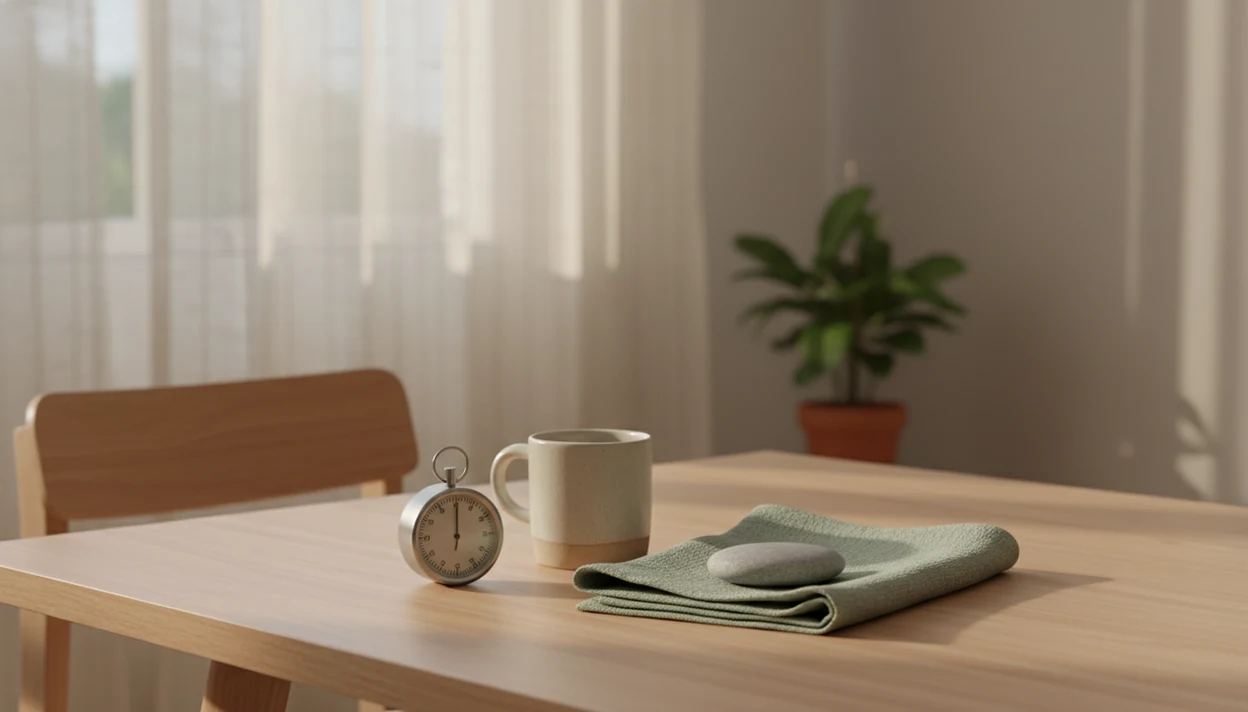
Stress relief meditation is a short mindfulness practice that uses breathing, body awareness, and gentle attention to help you reset during stressful moments. It is best understood as a practical calming tool, not a guaranteed way to erase stress or treat a health condition.
Definition: Stress relief meditation is a secular mindfulness practice that trains attention toward the breath, body, or present moment so stress signals can be noticed without immediately reacting to them.
TL;DR
- Use stress meditation as a realistic reset, not as an instant cure.
- A short stress meditation can be useful in 2 to 10 minutes when it includes breath awareness, body scanning, and gentle refocusing.
- If stress is severe, persistent, or disabling, meditation should support, not replace, professional care.
Stress Relief Meditation in Plain Terms
Stress relief meditation is a simple attention practice: sit, stand, or lie down, breathe naturally, and return attention when the mind wanders. The goal is not to stop thoughts or force calm. It is to meet stress with a little more steadiness.
Most sessions use one main anchor. That might be the breath, the body, a sound in the room, or the feeling of feet on carpet or tile. When the mind jumps to a grocery list, a hard email, or tomorrow’s schedule, you notice it and return.
That return is the practice.
Common formats include guided stress relief meditation, body scan meditation, breath awareness, and short stress meditation for breaks. For a wider plain-language overview, our guide to mindfulness for stress covers how everyday mindfulness fits into stressful routines.
Five Facts About Mindfulness for Stress Relief
- Mindfulness for stress relief works best as a reset tool. It may help you pause before reacting, but it does not guarantee stress will disappear.
- Short practices can still matter. A two-minute pause before opening a laptop can be more realistic than waiting for a quiet hour.
- Guided practices usually give structure. Many cue breathing, body scanning, and gentle refocusing so you do not have to invent the session.
- The practice changes your relationship to stress more than the stressor itself. The meeting, bill, or conflict may still need direct action afterward.
- A low-distraction setup makes practice easier. A phone timer set for 5 minutes, a kitchen chair, and silenced notifications are often enough.
Good mindfulness practices and meditation techniques for beginners and daily life deliver attention training and practical pauses, not instant personality change or medical treatment.
How Stress Relief Meditation Works in the Body and Attention
Stress relief meditation works by training attention to notice stress signals, then return to a chosen anchor. That anchor might be breathing, body contact, or sound. In attention science, this is sometimes called attentional control; in plain language, it means practicing “notice and return.”
Slow breathing and body awareness may reduce immediate reactivity for some people. You might notice a tight jaw, a lifted chest, or hands braced on the chair. Then you soften what can be softened, without making calm a demand.
In-the-moment calming is different from broader outcomes like anxiety, sleep, or long-term resilience. A 2023 Cochrane review of 100 studies found small-to-moderate effects on anxiety, depression, and stress compared with active controls PubMed research. A 2014 JAMA Internal Medicine meta-analysis found moderate evidence for anxiety, depression, and pain, with smaller evidence for stress-related outcomes JAMA study.
For most beginners, short breath-and-body practice is often easier than silent meditation because it gives attention something concrete to return to.
How to Use a Short Stress Meditation
A short stress meditation works best when it is simple, timed, and repeatable. Use it before a meeting, after a tense call, or during a quiet transition.
- Set a timer for 2 to 10 minutes, choosing the shortest time you can actually finish.
- Choose a seated, standing, or lying posture that feels stable, not stiff.
- Notice the breath without forcing it; feel one inhale and one exhale as they already are.
- Scan the body for tension in the jaw, shoulders, chest, hands, and belly.
- Return attention gently whenever thoughts, planning, or worry appear.
If five minutes feels too long, use two. Reset the plan.
People who feel more anxious when focusing inward may prefer eyes-open grounding or external sounds. The safety side is covered more fully in meditation side effects.
Guided Stress Relief Meditation Script for Beginners
Can you do a guided stress relief meditation right now? Yes. Read this slowly, or record it in your own voice.
Settle into a position that feels steady enough for the next few minutes. Let your gaze soften, or close your eyes if that feels available. Notice the support under you. The chair, the floor, the bed, or the wall can hold some of your weight.
Bring attention to breathing. You do not need a deep breath. You do not need a special rhythm. Just notice one breath arriving, then one breath leaving.
Now scan the face. You might notice the forehead, eyes, mouth, or jaw. Let the shoulders be known. Feel the hands, perhaps warm, cool, tight, or restless. Notice the belly as it moves or stays quiet. Sense both feet, even if the sensation is faint.
When thoughts pull you away, name that softly: thinking, planning, worrying. Then return to one breath.
Before you finish, reorient to the room. Notice light, sound, and space around you. Continue the day slowly.
Best Uses for Calming Stress Meditation
Calming stress meditation is best used for short pauses, transitions, and mild tension. It is not designed for emergencies or situations that require immediate practical action.
| Situation | Best for | Not for |
|---|---|---|
| Work break | Resetting attention between tasks | Fixing workload or deadlines |
| Post-meeting pause | Settling after conflict or intensity | Replacing a needed conversation |
| Pre-sleep settling | Letting the body slow down | Treating chronic insomnia by itself |
| Transition time | Moving from work mode to home mode | Avoiding responsibilities |
| Mild physical tension | Noticing jaw, shoulders, chest, and belly | Severe panic or unsafe situations |
Guided meditation is not only for beginners. Experienced meditators also use guidance when the progress bar feels like it is moving too slowly, or when the mind is especially loud. If bedtime stress is your main concern, meditation for sleep may be a better fit.
Research Evidence on Mindfulness Stress Relief Studies
Research on mindfulness stress relief is promising, but modest. The most defensible summary is that meditation programs may help some people reduce stress reactivity and related symptoms, while results vary by person, method, and consistency.
According to a 2023 Cochrane review, meditation programs for psychological stress and well-being included 100 studies and showed small-to-moderate effects on anxiety, depression, and stress compared with active controls PubMed research. The 2014 JAMA Internal Medicine meta-analysis found moderate evidence for anxiety, depression, and pain, with smaller evidence for stress-related outcomes JAMA study.
The National Institutes of Health also cautions that evidence for some claimed health benefits remains limited or inconsistent NCCIH overview. That matters. Claims about “healing the nervous system” or removing all stress go beyond what the evidence can support.
A 2022 systematic review on mindfulness-based interventions for chronic pain found benefits for pain, physical function, and quality of life, but stress meditation should not be turned into a pain treatment page PubMed research. Clinicians typically recommend meditation as a supportive practice, not a replacement for diagnosis, therapy, medication, or urgent care when those are needed.
When to Seek Professional Help for Stress
Seek professional help when stress is persistent, worsening, disabling, or starting to feel unsafe. Meditation can support care, but it does not replace diagnosis, therapy, medication, crisis support, or other treatment when those are needed.
Some red flags deserve more than another timer on the phone. Panic that feels unmanageable, thoughts of harming yourself or someone else, trauma symptoms such as flashbacks or feeling trapped in the past, or stress that keeps you from working, sleeping, eating, caregiving, or leaving the house are all reasons to get support.
- Contact a licensed clinician if symptoms continue, intensify, or interfere with daily life.
- Tell someone you trust if you feel unsafe, overwhelmed, or unable to stay alone with the stress.
- Use urgent or emergency services right away if there is any risk of harm to yourself or others.
- Switch to safer grounding if inward focus makes things worse: keep your eyes open, name objects in the room, feel your feet, walk slowly, stretch, or listen to steady external sounds.
The goal is not to push through distress. It is to choose the level of support that fits the moment.
Workday Setup for a Short Stress Meditation
A short stress meditation can fit into ordinary work settings when you lower the friction. Practice at a desk, in a parked car, before a meeting, in an office stairwell, or during a short break between calls.
In practice, that might mean one hand on a warm coffee mug, both feet under the desk, and one browser tab closed before you start the timer.
Silence notifications. Choose a neutral posture. Use headphones if they help, but do not make them a requirement. Set a short timer so you are not checking the clock every twenty seconds. Eyes-open meditation is acceptable in shared spaces; rest your gaze on a notebook, wall, or floor tile.
A short stress meditation can be practiced at a desk with a timer, relaxed posture, and one steady point of attention.
Tools like Mindful.net, Calm, and Headspace can provide guided sessions when you do not want to plan the practice yourself. If you prefer structured digital support, compare options in an app to help manage stress mindfully.
Limitations
Stress relief meditation has real limits, and knowing them makes the practice safer.
- Meditation is not a substitute for medical or mental health treatment when stress is severe, persistent, or disabling.
- Some people do not feel calmer immediately, especially during early practice.
- Breath or body-focused practices can feel uncomfortable for people who are highly anxious or hyperaware of sensations.
- Evidence is more consistent for modest improvements than for universal or instant relief.
If inward focus reliably makes symptoms worse, the question can meditation make anxiety worse may be more relevant than pushing through.
Related guides
A Field Note on Real Use
One mistake we notice often: people try to force stress relief meditation to behave like a sleep medication. We usually suggest treating it as a low-pressure transition instead, especially when the first few minutes feel awkward or busy. In our editorial review, beginners often do better when they choose one small cue, such as a slow exhale, rather than building a complicated bedtime routine.
A Bedtime Decision Guide
A common beginner mistake is treating bedtime meditation as a test of whether you can fall asleep on command. Historically, wind-down practices have often worked more like a transition ritual: dim light, a cool sheet, a slower breath, and fewer decisions. Stress relief meditation may help some people downshift, but it is usually better framed as a way to meet the night with less struggle, not as a guaranteed sleep switch.
Before You Try This
Your mind gets louder the moment the room gets quiet.
Try a body scan or a simple breath count before choosing a long silent meditation. Silence can reveal thoughts that were already active, so the goal is noticing without debating every thought.
You are a parent, nurse, musician, or shift worker coming down from high alert.
Use a short transition practice before bed rather than expecting instant calm under the blanket. A hallway night light, a slow exhale, and one repeated phrase can reduce the number of choices you have to make while tired.
You keep comparing mindfulness with grounding.
Grounding may be the better first move when you feel scattered and need contact with the room; mindfulness may fit better when you can observe sensations without needing to change them. Neither is automatically superior, and many people use both on different nights.
When Sleep Won't Come
- Keep the practice short enough that you would repeat it tomorrow; consistency tends to matter more than a heroic session.
- Choose one cue before you lie down, such as a slow exhale or feeling the cool sheet against your hand.
- If the practice turns into problem-solving, gently label it as planning and return to one physical sensation.
- Avoid treating wakefulness as failure; a calmer wakeful period can still be a useful outcome.
- If stress is tied to work, a daytime reset such as Mindful.net’s Meeting Reset guide may reduce what follows you into bed.
What Surprised Us in Practice
- If breath focus makes you feel more strained, try grounding with sound, touch, or the outline of the room instead.
- If a sleep story becomes entertainment that keeps you waiting for the ending, choose a simpler body scan.
- If lying still increases agitation, sit up briefly and use a calm, repeatable reset before returning to bed.
- If meditation becomes another performance goal, shorten it to one minute and remove any requirement to feel peaceful.
- If distress feels intense, persistent, or unsafe, meditation should not replace professional support or urgent help.
Why Advice Conflicts Online
Bedtime guidance conflicts because people arrive with different nervous-system states, schedules, rooms, and expectations. One person may settle with a sleep story, while another finds the same story too stimulating; one athlete may prefer a body scan, while a shift worker may need grounding under a hallway night light first. Decision support beats generic calm advice when someone is choosing between techniques.
Three Paths Worth Trying
| Technique | Best for | Minutes |
|---|---|---|
| Short body scan | Noticing tension without trying to fix every sensation | 5-12 min |
| Sleep story wind-down | Replacing mental replay with a gentle narrative thread | 10-20 min |
| Room-based grounding | Feeling scattered, restless, or too activated for breath focus | 3-8 min |
The best bedtime practice is the one that lowers decisions without turning sleep into a performance.
Why Mindful.net fits this specific need
Mindful.net’s stress and sleep guidance is built around practical choice points: when to use breath, when to try grounding, and when to stop pushing. Readers who carry work stress into the evening may also find the Mindfulness at Work and Meeting Reset resources useful earlier in the day, before bedtime has to absorb everything.
FAQ
Does meditation reduce stress?
Meditation may help some people feel less reactive, more grounded, or more aware of tension. Results vary, and it should not be treated as a guaranteed stress cure.
How long should I meditate for stress relief?
Start with 2 to 10 minutes. Increase only if the practice feels manageable and does not add pressure.
Can meditation stop anxious thoughts?
Meditation is not meant to stop all thoughts. The practice is to notice thinking and return attention gently.
Is guided meditation better than silent meditation?
Guided meditation can help beginners and experienced users stay focused. Silent meditation is also valid if it feels clear and manageable.
Can I meditate at work without closing my eyes?
Yes, you can meditate with eyes open at a desk, during a meeting break, or in a quiet transition. Use one steady point of attention, such as the breath, feet, or a neutral object.
When should I stop meditating?
Stop if meditation increases distress, feels unsafe, or makes symptoms harder to manage. Open your eyes, orient to the room, and seek qualified support if needed.