
Four Science-Backed Ways to Reduce Worry, With Practical Steps


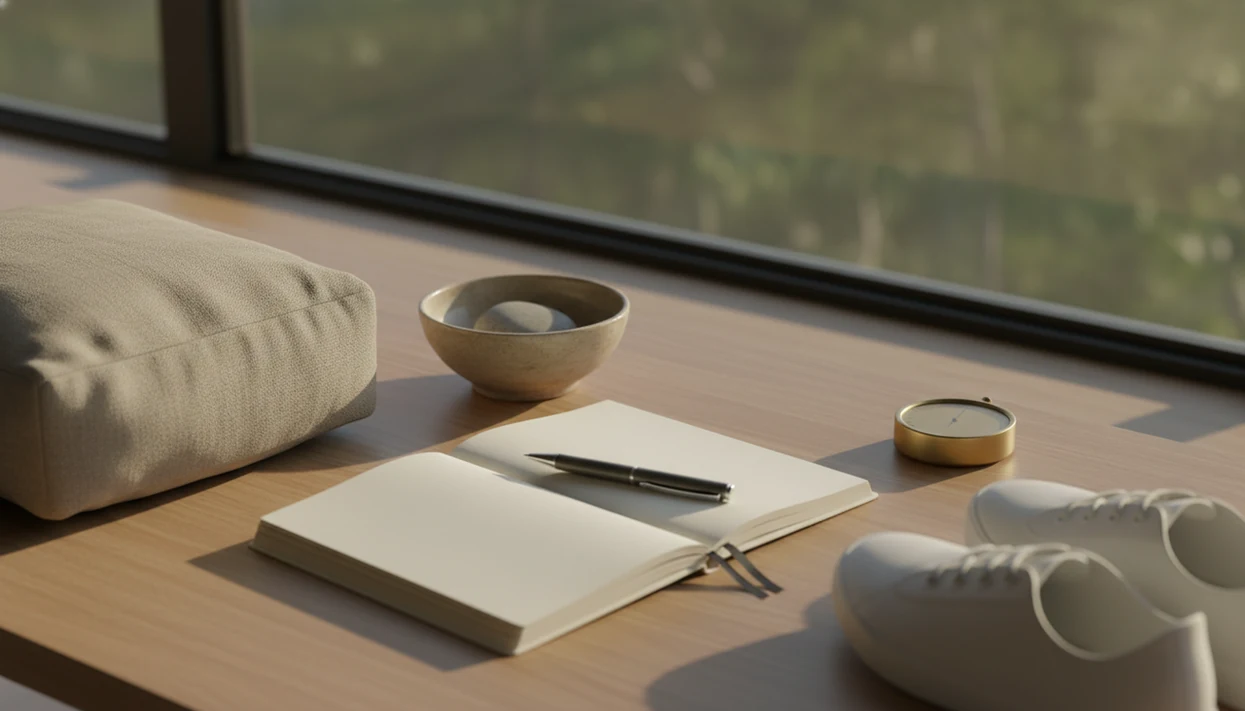
Science-backed ways to reduce worry include mindfulness meditation, slow diaphragmatic breathing, gentle movement, and structured worry writing. These are mental and body-based techniques studied for their effects on anxious thinking, tension, and stress responses. They do not erase problems or guarantee calm. The practical aim is to spend less time caught in repetitive thoughts, settle physical tension, and return attention to what you can do now.
Start with the tool that matches the worry: breathing for physical tension, mindfulness for looping thoughts, or writing when a problem needs a next step. A short daily practice gives you a chance to learn the technique before a difficult moment. This guide is educational, not a diagnosis or treatment plan. Severe, persistent, or unsafe worry calls for professional help, with these practices used only as support.
What matters most
- Start with 2-5 minutes of mindfulness or slow breathing daily rather than waiting for a crisis.
- Use movement, writing, and problem-solving for worries tied to real tasks or decisions.
- Seek professional help if worry is severe, persistent, or disrupting sleep, work, safety, or relationships.
Four worry tools and what each one does
- Mindfulness helps you notice worry without automatically following it. A JAMA Internal Medicine systematic review of 47 trials found mindfulness meditation programs produced moderate reductions in anxiety symptoms compared with controls (PubMed research).
- Slow breathing targets the body side of worry. Longer exhales can soften muscle tension, chest tightness, and the “ready for danger” feeling.
- Gentle movement interrupts rumination. A 10-minute walk or stretch can shift attention from looping thoughts to sensation and rhythm.
- Structured writing turns vague worry into usable information. It separates solvable problems from hypothetical “what if” loops.
- Worry reduction is usually gradual. In the U.S., an estimated 19.1% of adults had an anxiety disorder in the past year, according to NIMH data (Any Anxiety Disorder), so persistent worry is common and not a personal failure.
Small practice counts.
How worry links repetitive thoughts with physical tension
Worry is repetitive, future-focused thinking that often comes with physical stress activation. The mind rehearses possible problems, and the body may answer with shallow breathing, tight shoulders, a clenched jaw, or restless energy.
Mindfulness works by changing your relationship to thoughts. Instead of arguing with every worry, you practice noticing, labeling, and returning. That return is the skill. On a kitchen chair, it might be as plain as feeling socked feet under the chair and recognizing, “planning thought.” Comparing overthinking and mindfulness can clarify why noticing a thought differs from repeatedly trying to solve it.
Slow breathing works through arousal regulation. In simple terms, a slower breath gives the nervous system a steadier signal. Practical problem-solving matters too. If the worry is about an unpaid bill, attention practice can calm the loop, but a clear next action still matters.
Beginner mindfulness and meditation practices help you return attention and respond to yourself with less criticism; they do not provide instant certainty or replace medical treatment. If self criticism grows after a difficult practice, these steps to stop a shame spiral can help you respond gently.
3 Mindfulness Meditation Skills for Worry Reduction
Three mindfulness skills are especially useful for worry: focused attention, open monitoring, and acceptance-based practice. Mindfulness is not clearing the mind; it is noticing where the mind went and returning without making that a failure.
Focused attention for racing thoughts
Focused attention uses one anchor, such as breath, sound, or body sensation. You might count three breaths before opening a laptop, then notice the mind jump to a grocery list. Return once. Then again.
Open monitoring for worry loops
Open monitoring means observing thoughts, emotions, and sensations as they appear. You are not chasing each one. Acceptance-based practice adds, “This worry is here, and I do not have to obey it.”
A JAMA Psychiatry randomized clinical trial found an 8-week mindfulness-based stress reduction program was noninferior to escitalopram for adults with anxiety disorders (JAMA study). That does not mean meditation replaces care; it shows structured mindfulness can be clinically relevant. For a broader primer, our guide to mindfulness for anxiety support keeps the same safety line.
What mindfulness research says about repetitive thinking
Worry usually points toward possible future threats; rumination tends to revisit past or current distress. Both can be hard to leave alone. A 2025 meta-analysis of 29 randomized trials, involving 2,535 participants, found that mindfulness-based cognitive therapy reduced rumination, with benefits remaining at follow-up. This finding concerns a structured therapy program, not a promise that a brief meditation will stop worry.
A systematic review of treatments for rumination and worry also found benefits from mindfulness-based and cognitive-behavioral approaches. Their shared aim was to change how people respond to thoughts, rather than force thoughts away. For a short practice, that means noticing a prediction without treating it as a fact, then returning to a sensation or a useful task. It is a coping skill, not a substitute for treatment.
Try two minutes of gentle, longer-exhale breathing
Does slow breathing reduce worry quickly? It can help some people calm the physical tension that keeps worry loud, especially when the body feels keyed up.
Try diaphragmatic breathing, sometimes called belly breathing. Place one hand on the lower ribs or belly. Inhale gently for 4 counts, then exhale for 6 counts. Repeat for 2 minutes. The longer exhale is the useful part for many people, because it can reduce the sense of urgency in the body.
Do not force huge breaths. If deep breathing makes you dizzy, breathless, or more alarmed, return to normal breathing and try grounding instead. One simple grounding cue is feeling your feet on carpet or tile and naming three things you can see.
For bedtime worry, breathing can pair well with meditation for sleep, as long as the goal is settling, not forcing sleep.
A five-minute routine: breathe, notice, move, write
A short routine is easier to repeat than a long routine you avoid. For many beginners, 2-5 minutes daily is a better starting point than waiting for a quiet hour. These small pauses for busy days offer other ways to rest when a full practice feels unrealistic.
- Set a phone timer for 5 minutes.
- Breathe with a 4-count inhale and 6-count exhale for 60 seconds.
- Notice one anchor, such as breath, sound, or the lower back meeting the cushion.
- Move for 60 seconds with slow shoulder rolls, standing stretches, or a short walk down the hall.
- Write one worry, one controllable step, and one thing that can wait.
- Review what helped without grading the session.
If you want a guided option, an app to help manage stress mindfully can make the first week less vague.
Match the tool to nighttime worry, tension, or a decision
Different worries need different tools. Match the method to the problem instead of treating every worried thought the same way.
| Worry situation | Best-fit technique | Why it helps | Not ideal when |
|---|---|---|---|
| Night worry | Slow breathing plus a brief body scan | Reduces arousal and gives attention a soft anchor | Panic feels severe or unsafe |
| Physical tension | Longer-exhale breathing | Eases the body loop that feeds worry | Dizziness or breath discomfort appears |
| Decision worry | Structured writing | Turns vague concern into options and next steps | You keep rewriting for an hour |
| Repetitive rumination | Mindfulness meditation | Trains noticing thoughts without chasing them | Practice increases distress sharply |
| Low mood or agitation | Gentle movement | Interrupts stuck thinking and uses stress energy | Exhaustion, injury, or medical limits apply |
For repetitive worry, mindfulness usually works best when practiced before the spiral peaks, while writing fits people who need a concrete next step.
10-Minute Gentle Movement for Worry Reduction
Gentle movement belongs in a worry plan because worry is not only mental. It often lives in the body as pacing, tight muscles, or a buzzing need to do something.
- A 10-minute walk can change the channel. Rain tapping during a walking practice may become the anchor instead of the thought loop.
- Stretching lowers the entry barrier. Neck rolls, calf stretches, and slow side bends count.
- Yoga-style movement can combine breath and attention. Keep it easy, not performative.
- Movement can discharge stress energy. Restless worry often needs motion before stillness feels possible.
- Mood evidence supports regular activity. A large Lancet Psychiatry analysis linked exercise with fewer poor mental health days, and NCCIH notes small to moderate anxiety and stress improvements for mind-body practices.
This is nervous-system support, not a fitness test. If stress is your main entry point, mindfulness for stress offers more everyday practice ideas.
5-Minute Structured Writing for Worry and Overthinking
Can writing reduce overthinking? It can help by moving worries out of a spinning mental loop and onto a page where they can be sorted.
Set a timer for 5-10 minutes. Then answer four prompts:
- What am I worried about?
- What part of this can I control?
- What is one next step?
- What can wait until tomorrow, next week, or until I have more information?
The key distinction is solvable versus hypothetical. “I need to send the rent transfer” has an action. “What if everything falls apart?” may need labeling, breathing, and return.
Writing also connects to mindfulness. You are seeing thoughts as mental events, not commands. Use plain sentences. Messy is fine. The point is clarity, not a polished journal entry.
What worry techniques can and cannot change
- Myth 1: One trick will stop worry forever. Evidence-backed tools usually lower intensity, shorten duration, and improve coping. They do not remove uncertainty.
- Myth 2: Mindfulness means having no thoughts. In real practice, instructions are often repeated in plain language because minds wander constantly.
- Myth 3: These techniques work instantly for everyone. Some people feel calmer quickly; others need days or weeks of repetition. After missing a day, understanding the what the hell effect can help you avoid abandoning practice out of shame.
- Myth 4: Meditation or exercise always replaces therapy or medication. For significant anxiety, self-guided tools may be supportive, but professional care can still be necessary.
The most common medically supported way to address impairing worry is not a single self-help trick; it is appropriate care combined with repeatable coping skills.
If practice feels unexpectedly difficult, our notes on what to expect when starting meditation explain common early reactions.
Limits of Worry Tools
- Worry tools cannot replace emergency care for suicidal thoughts, severe panic, violence, abuse, or immediate danger.
- Mindfulness, breathing, and movement do not remove stressors such as debt, illness, conflict, or unsafe housing.
- Some mindfulness studies have small samples, weak controls, or mixed quality, so claims should stay modest.
- If quiet practice intensifies discomfort or anxiety, consider adjusting practice and read can meditation make anxiety worse.
Questions about reducing worry
What is the fastest way to calm a worried mind?
If worry comes with physical tension, try two minutes of gentle breathing: inhale for four counts and exhale for six. Avoid taking huge breaths. If you feel dizzy, breathless, or more alarmed, stop the counted breathing and feel your feet against the floor instead. No technique works immediately for everyone.
Does mindfulness help with worry and overthinking?
Research supports mindfulness-based approaches for reducing worry and rumination. The aim is not to empty your mind, but to notice a thought without automatically following it. Label it briefly as worrying or predicting, then return to a sound, body sensation, or task. Evidence for structured programs does not guarantee the same results from a short self-guided practice.
How long should I meditate to reduce worry?
Two to five minutes daily is a practical starting point, not a proven dose that works for everyone. Choose one anchor, such as sound or the feeling of your feet, and return when attention wanders. If quiet practice intensifies anxiety, shorten it, try gentle movement or grounding, and seek support if the distress continues.
Can breathing exercises stop overthinking?
Slow breathing may ease the physical tension that makes worried thoughts feel urgent, but it does not resolve the thoughts or the underlying problem. After breathing, decide whether there is one useful action to take. If there is not, practice returning attention to the present task without trying to force the thought away.
How do I write down worries without making them worse?
Keep the writing brief and give it a purpose. Set a five- to ten-minute timer, name the worry, identify what you can control, and choose one next step. For concerns you cannot act on, note what can wait. Repeatedly rewriting the same fear without reaching an action or stopping point can reinforce rumination.
What is scheduled worry time?
Scheduled worry time means setting aside a brief period to consider concerns instead of repeatedly checking them throughout the day. Write down the concern and separate practical problems from hypothetical threats. Take one available action, then end the session. It is a CBT-based coping approach, not a guarantee that worries will stay within the scheduled period.
When should I get professional help for worry?
Seek professional help when worry is persistent, feels unmanageable, or disrupts sleep, work, or relationships. Self-guided practices can support care but should not replace it. Suicidal thoughts, immediate danger, violence, abuse, or severe panic that feels unsafe require urgent help rather than another meditation or breathing exercise.