
5-Minute Anxiety Meditation: A Grounding Script for Anxious Moments


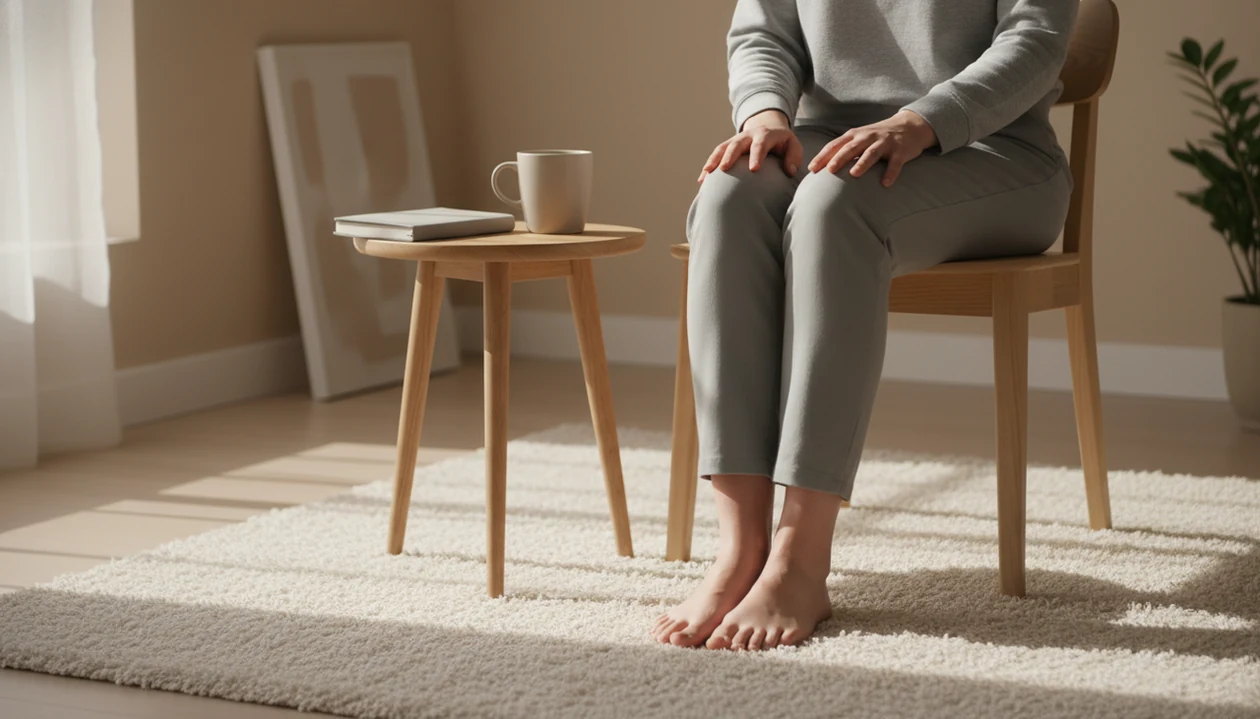
A 5-minute anxiety meditation is a short, secular mindfulness practice that uses breathing, body contact, or sensory grounding to steady attention during anxious moments. It gives you a pause to notice the present without special equipment or a requirement to feel calm. The script below offers several anchors: your natural breath, feet, hands, sounds, or something you can see in the room.
Use it gently, with your eyes open if that feels safer. If attention to breathing increases distress, switch to contact with the floor or look around the room. You can stop before five minutes. This is a support practice, not treatment for severe anxiety, panic, or crisis-level distress, and it should never delay getting help.
Definition: A 5-minute anxiety meditation is a short, secular mindfulness practice that uses breath, body contact, and sensory grounding to support steadier attention during anxious moments.
The essentials
- Use this as a short support practice, not as treatment for severe anxiety, panic, or crisis-level distress.
- The script includes choices: breath focus, contact points, sounds, or visual grounding.
- If breath awareness feels triggering, keep your eyes open and anchor attention to your feet, hands, or the room.
5-Minute Anxiety Meditation Script for Right Now
You can do this seated, standing, eyes open, eyes half-open, or not at all. Stop at any time if the practice increases distress.
Minute 0-1: Arrive safely
Start by locating yourself in the room. Sense whatever is supporting you: a wall, cushion, bench, or the surface beneath you. If you are standing, let your weight settle evenly. Name one neutral fact: “I am here in this room.” Let your body soften by one small degree.
Minute 1-3: Breathe or choose another anchor
If breath feels usable, track one ordinary inhale and one slightly longer, easy exhale. No big breathing is required. If breath focus increases anxiety, shift to your hands, the room’s sounds, a steady shape, or a visual anchor like the line of a teaching whiteboard. Notice, then come back.
Mind jumped to the wedding planning call, the museum tickets, or tomorrow’s unfinished details. Expected.
Minute 3-5: Ground and re-enter the day
Name three things you can see. Feel one contact point again. Offer one kind phrase, such as, “This is hard, and I can take one next step.” End by choosing that step: drink water, send the message, stand up, or rest. If sadness accompanies anxiety, mindfulness for sadness offers gentle practices for noticing difficult feelings without demanding immediate relief.
How a Quick Meditation for Anxiety Works in the Body
A quick meditation for anxiety works by shifting attention from threat prediction toward present-moment signals. Anxiety often pulls the mind into “what if” thinking while the body tightens, scans, and prepares.
Slow exhalations, contact points, and sensory cues may reduce escalation by giving attention something concrete to track. In nervous system terms, the practice may support downshifting arousal and interrupting habit loops. Put simply, you give the brain less fuel for the alarm story.
It does not force calm. That matters. Meditation creates conditions for less reactivity, but the body may still feel activated for a while.
Evidence is stronger for structured mindfulness programs than for one-off short practices: a 2014 JAMA Internal Medicine meta-analysis found moderate anxiety improvements from meditation programs (JAMA study), while a 2021 Cochrane review rated evidence for mindfulness-based programs as low to moderate certainty (Full). For broader context, our guide to mindfulness for anxiety support explains what this can and cannot do.
What anxiety research says about five minutes versus weeks
The research supports a distinction between a brief pause and a course of practice. A 2014 systematic review of 47 randomized clinical trials found that mindfulness-meditation programs improved anxiety, with an average effect size of 0.38 at about eight weeks and 0.22 at three to six months. These are standardized measures of change, not percentages of people helped. The findings do not establish the same benefit from one five-minute session.
The comparison group also matters. A 2012 review of meditative therapies found larger benefits against wait-list or attention controls than against alternative treatments. That limits claims that meditation is the best option for anxiety. For this script, a useful immediate goal is to regain enough attention to choose your next action, not to prove that anxiety has disappeared or that further care is unnecessary.
How to Use This Five Minute Grounding Meditation
Use this five minute grounding meditation as a small reset, not a test you have to pass. Choose a brief, known-length pause, the length of a familiar song, a tea steep, or a few quiet pages, and stop sooner if that feels wiser.
- Set a five-minute timer with a soft ending sound, such as a low bell or gentle vibration.
- Choose your posture and eye position before beginning: seated, standing, eyes open, or half-open.
- Pick one anchor: breath, feet, hands, sounds, or a visual object in the room.
- Return gently when the mind wanders, without scolding yourself or trying to empty the mind.
- End by naming one practical next action, such as opening the laptop, walking to the sink, or lying down.
A cushion sliding on hardwood can be more distracting than helpful. Use the kitchen chair if that feels simpler.
When a short grounding practice fits, and when to seek support
Short anxiety support meditation fits some moments well, but it is not the right tool for every situation. Stopping the meditation can be the skillful choice.
| Situation | Fit | Practical guidance |
|---|---|---|
| Pre-meeting nerves | ✓ Best for | Keep eyes open, feel feet on the floor, and take one exhale before speaking. |
| Commuting stress | ✓ Best for | Use sounds and visual cues; do not close your eyes if that feels unsafe. |
| Bedtime worry | ✓ Best for | Reduce effort and let resting be the goal, not forcing sleep. |
| Severe panic or dissociation | ✕ Not for solo use | Use immediate support, grounding help, or professional guidance. |
| Suicidal thoughts or risk of harm | ✕ Not for | Contact emergency services or a crisis line right away. |
| Medical emergency or unsafe setting | ✕ Not for | Take the needed safety action first. |
Mindfulness practices and meditation techniques can train attention and support coping in daily life, but they do not guarantee symptom relief or replace emergency care.
Set realistic expectations before starting the script
These five facts help set realistic expectations before you try a short anxiety support meditation.
- Short practices can support coping, but they do not cure anxiety disorders or replace clinical care.
- Mind wandering is expected; returning attention is the practice, not a sign of failure.
- Stillness is optional; small movements, open eyes, and shifting posture are allowed.
- Breath focus can feel worse for some people, so feet, hands, sounds, or visual anchors matter.
- Mindfulness-based interventions show moderate anxiety reductions in trials, but evidence is stronger for structured programs than for very brief practices; see the JAMA Internal Medicine review of meditation programs for anxiety, depression, and pain (JAMA study).
For beginners, eyes-open grounding is often easier than breath-only meditation because it keeps attention connected to the room.
Quick Anxiety Meditation Variations for Work, Travel, and Bedtime
Use the same five-minute structure, then adjust the anchor to match the setting. Do not meditate while driving, operating equipment, crossing streets, or doing any safety-critical task.
Workplace micro-break version
Keep your eyes open if that feels steadier. Let your hands rest where you can feel them, notice one visual detail in the room, and take one easy exhale before speaking, sending a message, or joining a planning call. Ten seconds of contact with the present moment can interrupt the rush. If conversations or group settings bring anxiety, meditation for social anxiety offers practical ways to approach those moments gently.
Commuting and public-space version
Use sounds, hand contact, and visual cues instead of closing your eyes. Notice the color of a sign, the pressure of your bag strap, or the rhythm of people moving nearby. When unfamiliar places heighten tension, mindfulness for travel anxiety offers practical grounding options you can adapt to your surroundings.
Bedtime worry version
Reduce effort. Let the exhale be slightly longer, but not forced. The goal is resting attention, not making sleep happen. If nights are the main struggle, our meditation for sleep guide offers a slower bedtime routine.
Safety Adjustments for Breath-Focused Anxiety Meditation
Does breath-focused anxiety meditation always help? No. For some people, close attention to breathing can increase dizziness, air hunger, panic sensations, or a trapped feeling. If worries about bodily sensations lead to repeated checking, mindfulness for health anxiety offers ways to respond with less checking.
Keep your eyes open or half-open if closing them feels unsafe. Use contact points, room sounds, or a visual object instead of breath counting. A steady lamp, doorframe, or patch of floor can work. Ordinary is fine.
Avoid forcing deep breathing. If you notice strain, cold fingertips, or warm cheeks that make the practice feel more intense, return to natural breathing and widen attention to the room. You can also shorten the practice to 30-60 seconds. Five minutes is not a rule.
People with trauma history, panic attacks, persistent severe anxiety, psychosis, or distress that keeps returning should consider professional guidance. Our page on can meditation make anxiety worse covers warning signs and safer modifications in more detail.
When to Get Immediate or Professional Help
Get immediate help first if anxiety comes with possible self-harm, chest pain, fainting, or any situation where you feel unsafe. Grounding can support you when you are distressed but basically safe; it should not delay urgent medical, crisis, or safety action.
If symptoms keep returning, get stronger, or connect to panic, trauma memories, dissociation, or daily impairment, consider contacting a clinician, therapist, or other qualified professional. Stopping meditation is not failure. Sometimes ending the practice, opening your eyes, moving to a safer place, or asking another person to stay with you is the safest choice. For a wider overview, explore stress, sleep and mindfulness safety before choosing a practice that fits your needs.
- Stop the meditation if you feel more panicked, unreal, trapped, or at risk of harming yourself or someone else.
- If possible, move to a safer position: sit down, step away from hazards, make sure a door can be opened from outside, or get near a trusted person.
- Call emergency services for chest pain, fainting, severe confusion, danger, or any urgent medical concern.
- Contact a crisis line if self-harm thoughts feel present, escalating, or hard to manage; use your local crisis service or emergency number.
- Reach out to a clinician for recurring panic attacks, trauma symptoms, worsening anxiety, or meditation reactions that leave you feeling less safe.
Image and alt text for eyes-open grounding
Use a calm, ordinary image: a person seated upright in a chair, feet grounded, hands resting naturally, and eyes softly open. The setting could be a bedroom corner, office, or quiet living room. Avoid medical imagery, spiritual authority symbols, dramatic distress poses, or anything that suggests a cure.
Suggested caption: “A five minute grounding meditation for anxiety support, practiced with eyes open and attention anchored in the surrounding room.”
Suggested alt text: “Person seated upright with feet grounded during a five minute grounding meditation for anxiety support.” Keep it descriptive and natural. Don’t repeat the primary keyword more than needed.
Five Minute Meditation Limits
- Benefits may be subtle, repetition often matters, and evidence favors structured mindfulness programs over isolated short meditations.
- Five minutes is usually insufficient for chronic or severe anxiety, which may require professional help.
- Read about meditation side effects if breath, body sensations, or silence increase your distress.
- This practice cannot replace professional diagnosis, psychotherapy, medication, or emergency care.
Five-minute anxiety meditation questions
Can a five-minute meditation stop anxiety quickly?
It may help you steady attention or reduce escalation, but it cannot guarantee quick relief. Anxiety can remain even when the practice is useful. Aim to notice your surroundings and choose one next step, rather than judging success by how calm you feel.
Is five minutes of meditation enough for anxiety?
Five minutes can be enough for a short grounding pause. It is not usually enough to change chronic or severe anxiety on its own. Research is stronger for structured programs practiced over weeks than for a single brief session. Seek clinical support if anxiety repeatedly disrupts daily life.
What should I do if focusing on breathing makes anxiety worse?
Stop tracking your breath and let it return to its natural rhythm. Keep your eyes open, feel your feet or hands, or look at a neutral object in the room. Do not force deep breaths. If distress keeps rising, end the practice and seek support.
Can I use this meditation during a panic attack?
Do not rely on a self-guided meditation alone during severe panic or dissociation. If you are distressed but basically safe, eyes-open grounding may be an option, with permission to stop. Chest pain, fainting, possible self-harm, or feeling unsafe calls for immediate help rather than continuing the script.
Should I close my eyes during anxiety meditation?
No. Open or half-open eyes are valid choices, especially if closing them increases fear or a trapped feeling. You can rest your attention on a doorframe, a patch of floor, or another neutral object. Choose the eye position that feels safer, and change it whenever needed.
What if my mind keeps wandering during the five minutes?
Mind wandering is expected; you do not need an empty mind. When you notice a worry or distraction, gently return to your chosen anchor, such as your feet or a room sound. Returning is the practice. Avoid scolding yourself or trying harder to force concentration.
Can I use a five-minute anxiety meditation before bed?
Yes, if it feels supportive rather than effortful. Let resting be the goal, not forcing sleep. Use natural breathing or a comfortable, slightly longer exhalation, and switch to another anchor if breath attention increases distress. Repeated sleep disruption or nighttime anxiety warrants assessment rather than relying on meditation alone.