
Anxiety Relief Meditation Support
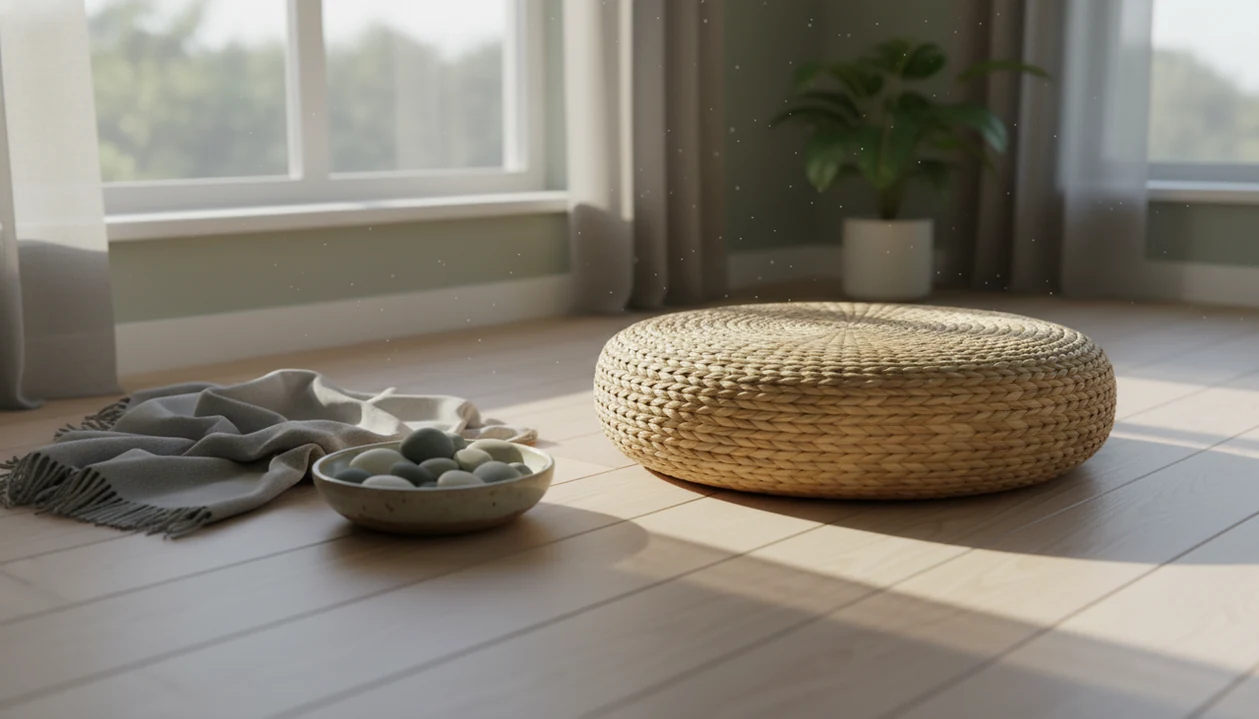
Anxiety relief meditation is a gentle mindfulness practice that can help you steady your attention, soften physical tension, and relate to anxious thoughts with less struggle. It is best used as everyday support, not as a cure or replacement for professional care when anxiety is severe, persistent, or diagnosed.
Definition: Anxiety relief meditation is a secular mindfulness practice that uses breath, body awareness, senses, or sound as an anchor while anxious thoughts and sensations are noticed without judgment.
TL;DR
- Meditation for anxiety relief is not about stopping thoughts; it is about returning to a steady anchor when the mind wanders.
- Short, consistent sessions of 5–10 minutes are usually more realistic than occasional long sessions.
- Use professional support if anxiety feels disabling, panic-like, trauma-linked, or unsafe to manage alone.
Anxiety relief meditation basics for anxious moments
Anxiety relief meditation is support for anxious feelings, not a medical treatment claim. It gives your attention somewhere steady to land while worry, tightness, or restlessness moves through the body.
In practice, you select one steady reference point: breathing, body contact, background sound, or a simple sense detail. Then you observe when attention has moved into planning, replaying, or “what if” forecasting. You do not have to debate the thought. You label the shift lightly and come back.
Thoughts do not need to vanish for the practice to be useful. A light sleeper may spend most of five minutes returning from a half-formed worry, the hum of a hallway, or the warmth of a ceramic mug. That repeated return is the training.
Small counts.
A useful anxiety relief meditation gives you a repeatable anchor, plain-language reminders, permission to keep your eyes open, and a clear stopping point if distress rises.
2014 and 2017 research on meditation for anxiety relief
Research suggests meditation for anxiety relief may help some people reduce anxious symptoms, especially when taught in structured programs. The evidence is supportive, but it does not show that meditation cures anxiety disorders.
- A 2014 JAMA Internal Medicine meta-analysis of 47 randomized trials found small to moderate reductions in anxiety from mindfulness meditation programs compared with controls. JAMA study
- A large 2017 review reported medium effect sizes for anxiety and depression across varied clinical populations using mindfulness-based interventions. NIH research
- Structured programs such as mindfulness-based stress reduction, often called MBSR, are better studied than casual self-guided app use.
- Benefits are usually framed as symptom reduction, coping support, and improved stress response, not as a cure.
- Clinicians typically recommend meditation as a complement to evidence-based care, not as a replacement for CBT, medication, or assessment when anxiety is severe.
For people comparing anxiety support meditation options, structured instruction is often easier than silent practice because it reduces guessing.
Before you start anxiety relief meditation
Before you start, make the practice easy to stop, adjust, or leave. Anxiety relief meditation should feel like a small support skill, not a test of endurance.
Use these checks before pressing play, closing your eyes, or beginning a silent sit:
- Choose a flexible place. Sit, stand, or lie somewhere you can shift position, open a door, turn on a light, or stop without needing permission.
- Keep your eyes open if needed. If closing them makes fear, scanning, or body vigilance stronger, rest your gaze on one ordinary point instead.
- Pick a workable anchor. Use sounds in the room, a visible object, or the feeling of hands touching fabric if breath focus feels too intense.
- Set a short timer. Begin with one to five minutes, especially if you are new, tired, or already anxious.
- Stop if distress rises sharply. Do not practice through panic, dissociation, numbness, or unsafe feelings. Open your eyes, look around, move, contact support, or seek urgent help if needed.
The safer version is usually shorter, simpler, and easier to interrupt.
Body signals and attention loops in anxiety support meditation
Anxiety support meditation is best understood as attention training: less time feeding threat-focused rumination, more contact with what is actually present. One pattern we notice is that people improve when the instruction stays plain: pick an anchor, spot the drift, and return without turning it into a self-critique.
This is the anchor-and-return loop. The mind may leap toward a medical question, a difficult conversation, or the next demand written on a teaching whiteboard. The useful moment is when you notice the leap and return to a neutral cue, such as hand contact, fabric pressure, or the sound field around you.
That loop is why the practice can be cited as a skill, not a mood hack: the measurable task is noticing and returning, even when the anxious feeling is still present.
Anxious feelings often show up as body signals: chest pressure, quick breathing, buzzing ears, an itchy forehead, stomach fluttering, or restless energy. Meditation does not require you to erase those sensations. It gives you a structured way to notice them with a little more space.
Over time, repeated practice can build familiarity with anxious sensations before they automatically escalate. Belly rising against a waistband may become enough of a cue to pause.
For mild anxious spirals, grounding attention in body sensation is often more practical than analyzing thoughts because the body gives immediate, concrete information.
Five-minute grounding anxiety meditation script
Use this grounding anxiety meditation during mild to moderate anxious feelings. If closing your eyes feels unsafe or too intense, keep them open and rest your gaze on one steady point.
- Choose a safe posture. Sit on a chair, stand near a wall, or lie down if needed. Let your eyes stay open, lowered, or closed.
- Feel one contact point. Notice your feet on the floor, your back against the chair, or knees stacked under a blanket.
- Let breathing be natural. Follow one inhale and one exhale without forcing a deep breath. If breathing feels stressful, shift to sounds.
- Name three sensory facts. Silently note one thing you see, one thing you hear, and one body sensation you can feel right now.
- Return gently. When the mind wanders, say “thinking” or “worrying,” then return to your chosen anchor.
- Transition slowly. Look around the room, move your fingers, and choose one practical next step.
A phone timer set for 5 minutes is enough.
Best-fit and not-fit situations for anxiety relief meditation
Anxiety relief meditation is a better fit for everyday anxiety support than for crisis-level distress. Use the table below to compare your options before practicing.
| Situation | Better fit | Not a fit |
|---|---|---|
| Everyday worry | Short breath, sound, or senses practice | Treating constant fear without support |
| Mild body tension | Body scan, grounding, or open-eye sitting | Forcing stillness when distress rises |
| Pre-sleep restlessness | Gentle attention to breath, sounds, or bedding | Replacing care for insomnia or panic |
| Skill-building | Regular 5–10 minute practice over weeks | Expecting instant calm every session |
| Severe symptoms | May complement clinician-guided care | Medical emergencies, severe panic, trauma flashbacks, or replacing therapy or medication |
Pause or modify the practice if it increases distress. If anxiety feels bigger at night, a softer meditation for sleep routine may fit better than a focused sitting practice.
Mindfulness options for anxious feelings when sitting still feels hard
Early meditation can feel uncomfortable for some anxious people. Stillness may make thoughts, heartbeat, muscle tension, or breath sensations louder than expected.
Adjust the practice instead of pushing harder. Try open-eye meditation, a 60-second session, slow walking, listening to room sounds, or resting attention on a plain object. A folded towel on bedroom carpet can work as a visual anchor. So can a pen, a cup, or the edge of a table.
Not fancy. Just usable.
If anxiety has a trauma history, body-focused practice may need extra care. You might keep the eyes open, avoid long body scans, or work with a trauma-informed clinician. The question of can meditation make anxiety worse matters because the answer is yes for some people, especially when practice is too intense or poorly matched.
Tools like Mindful.net, Calm, and Headspace can offer guided options, but quality and pacing vary.
Everyday 30-second anxiety support meditation options
Anxiety support meditation does not have to happen only on a cushion. Micro-practices of 30–90 seconds can help you return to the present during walking, commuting, waiting, eating, or washing hands.
- Doorway pause: Feel your hand on the door handle before entering and take one natural breath.
- Walking count: Notice five steps, then restart the count when the mind wanders.
- Commute sounds: On a bus seat or train platform, listen for three separate sounds without naming them as good or bad.
- Handwashing reset: Feel water temperature, soap texture, and the movement of both hands.
- First-bite noticing: Before eating, pause for scent, color, and one slow chew.
Repeatability matters more than perfect calm. Three breaths before unmuting on a video call may be the whole practice. For related everyday skills, mindfulness for stress uses the same notice-and-return pattern.
Clinical boundaries for anxiety relief meditation and professional care
Can anxiety relief meditation replace professional care? No. Meditation can complement CBT, prescribed medication, or clinician-guided treatment, but diagnosed anxiety disorders need qualified assessment and treatment planning.
A 2022 randomized clinical trial found that an 8-week structured mindfulness-based intervention was noninferior to escitalopram for reducing anxiety disorder symptoms. That result is important, but it does not mean a self-guided five-minute audio is the same as a researched program delivered with structure and support. Source: Hoge et al., JAMA Psychiatry, randomized trial of MBSR versus escitalopram for anxiety disorders: JAMA study
If you have self-harm thoughts, feel unsafe, cannot function, or feel out of control, seek urgent help now through local emergency services, a crisis line, or a qualified professional. Do not try to meditate through danger.
For ongoing symptoms, mindfulness for anxiety support can sit alongside care. The practical next step is to tell your clinician what you are trying, especially if you are changing routines during treatment.
Image guide for grounding anxiety meditation posture
Use an image that shows a person seated comfortably with feet grounded and eyes softly open or lowered. The posture should look ordinary: a kitchen chair, office chair, cushion, or quiet corner works.
Caption: A simple grounding anxiety meditation can be practiced seated, standing, or walking, with attention returning to the breath, body, or senses.
Avoid imagery that looks spiritual, dramatic, or clinical. No hospital bed, glowing aura, or impossible posture is needed. Accessibility matters here. A person may sit on a chair, lie down, stand near a wall, or use a cushion.
The image should make practice feel available during a real day, not reserved for a silent retreat. Early light on the wall is enough.
Limitations
Anxiety relief meditation has real limits, and naming them makes the practice safer.
- Meditation may reduce anxious feelings for some people, but it does not cure anxiety disorders.
- Benefits usually require regular practice over weeks or months, not one difficult session.
- Some people feel more discomfort at first, especially with trauma histories, panic symptoms, or intense body vigilance.
- Self-guided apps, videos, and audio practices vary in quality, pacing, and evidence.
For a fuller safety overview, meditation side effects covers common beginner reactions. Apps such as Mindful.net can organize beginner practices, but they cannot assess risk or provide emergency care.
One Mistake We Notice Often
One pattern we repeatedly notice is that people expect a bedtime body scan to feel relaxing immediately, but the first session often feels busier because attention is finally slowing down enough to notice tension that was already there. We usually suggest treating the first few nights as orientation, not performance. If sitting still feels too charged, a brief Before Email Pause style reset earlier in the day can make nighttime practice feel less unfamiliar.
Before You Try This
A common beginner mistake is trying to force sleep with meditation, then feeling defeated when the mind stays active. For bedtime anxiety, we usually suggest a lighter goal: notice the cool sheet, lengthen one slow exhale, and let the practice be a wind-down cue rather than a test. Meditation may support settling, but it is not a guarantee of sleep.
Which Technique Fits This Situation
- If thoughts are racing, a short labeled practice such as the Three-Exhale Night Reset may work better than a long silent sit because it gives the mind fewer choices.
- If the body feels wired, a gentle Body Scan may be a better fit than repeating calming phrases; attention to sensation often gives restlessness somewhere to land.
- If you are already drowsy, a sleep story or soft counting practice may be enough; adding a complex technique can wake the mind back up.
- If anxiety spikes when you close your eyes, keep them open toward a hallway night light or a neutral spot; safety often matters more than perfect form.
- Research does not clearly prove one single meditation style is best for every anxious sleeper, so decision support usually beats generic calm advice.
A Quick Answer
If you are lying awake and monitoring whether meditation is “working,” switch from outcome-checking to a named cue: the Three-Exhale Night Reset. Feel the sheet, take one slow exhale, name one body area, and repeat twice without asking whether you feel calm yet. The practice is often most useful when it removes the next decision.
A Practical Comparison
What often surprises beginners is that mindfulness and relaxation are not the same job. Relaxation aims to soften the system, while mindfulness helps you notice what is happening without adding as much struggle; either may be useful on a given night. For some people, trying hard to relax creates pressure, while a simple noticing practice feels less like another bedtime assignment.
A Quick Technique Map
| Technique | Best for | Minutes |
|---|---|---|
| Three-Exhale Night Reset | racing thoughts when you need a simple wind-down cue | 1-3 min |
| Body Scan | restless body awareness before sleep or after a tense evening | 5-15 min |
| Sleep Story Listening | drowsy attention that needs gentle structure without analysis | 10-20 min |
The best nighttime practice is usually the one that removes decisions when the tired mind has too many.
Why Mindful.net fits this specific need
Mindful.net is useful here because its anxiety and sleep guidance separates everyday support from clinical treatment claims. Related guides such as Body Scan and the Before Email Pause can help readers choose a smaller practice when a full bedtime meditation feels like too much.
FAQ
Can meditation reduce anxiety symptoms?
Meditation may reduce anxious feelings for some people, especially when practiced regularly. It is not a guaranteed treatment for anxiety disorders.
How long should I meditate for anxiety relief?
Start with 5–10 minutes and focus on consistency before increasing duration. Short sessions are often easier to repeat than occasional long sessions.
Why does meditation make my anxiety feel worse?
Stillness can make thoughts, sensations, or breathing feel more noticeable. Try shorter sessions, open-eye practice, movement-based grounding, or professional guidance.
What is grounding meditation for anxiety?
Grounding meditation uses present-moment sensory anchors such as feet, breath, sounds, or objects to steady attention. It helps you notice and return when the mind moves into worry.
Should I breathe deeply when I feel anxious?
Gentle natural breathing is often better than forcing deep breaths. Forced deep breathing can feel uncomfortable for some anxious people.
Can meditation replace anxiety medication?
Meditation should not replace prescribed medication or a treatment plan without guidance from a qualified clinician. It may complement care when used safely.
Is guided meditation better for anxiety?
Guided meditation can help beginners stay oriented because instructions are repeated in plain language. Silent practice may work better later, or for people who prefer less instruction from an app such as Mindful.net.