
Anxious Brain Meditation for Racing Thoughts at Night and During the Day
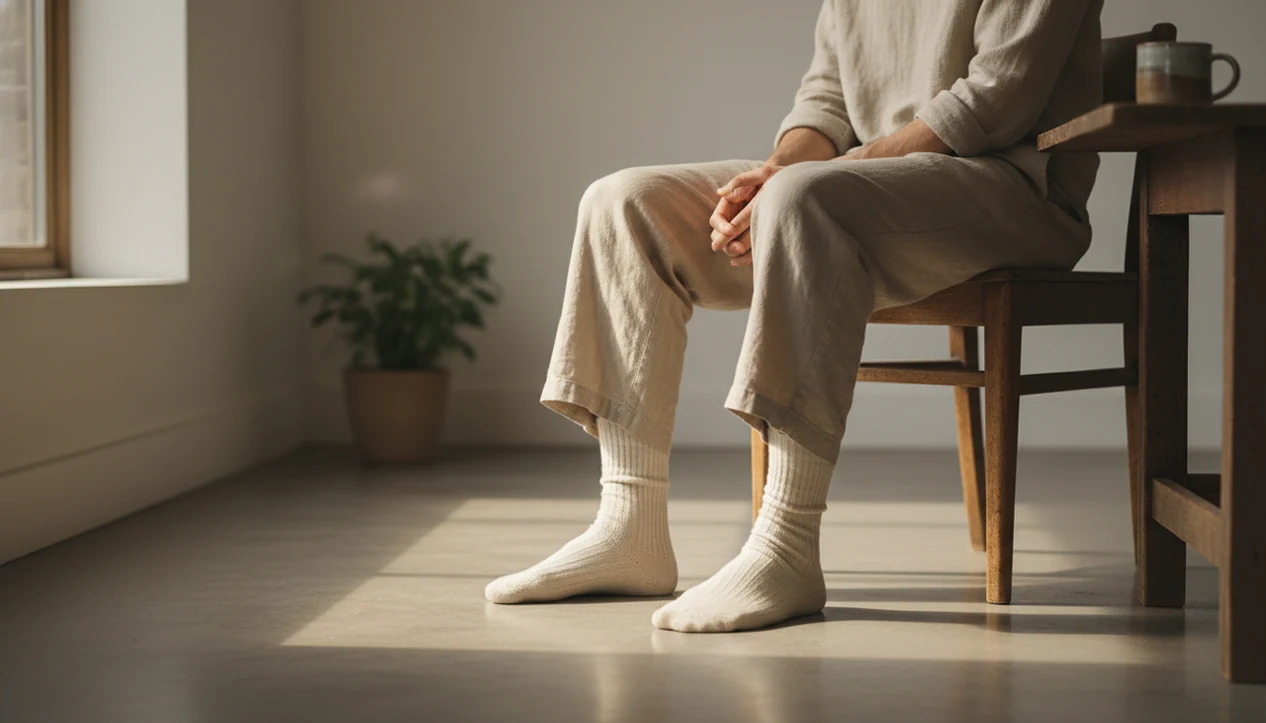
Anxious brain meditation is a secular mindfulness practice for calming worry, overthinking, and body tension by noticing anxious thoughts without fighting them and returning attention to a steady anchor like the breath, body, or senses. It is not about emptying your mind; it is about training your attention so anxiety feels less hijacking.
Definition: Anxious brain meditation is mindfulness-based meditation adapted for worry, threat scanning, and racing thoughts by pairing present-moment attention with gentle nervous-system regulation.
TL;DR
- Use anxious brain meditation to notice worry loops, calm the body, and return to an anchor without trying to force thoughts away.
- Start with short, eyes-open practices if closing your eyes makes anxiety stronger.
- Meditation can support everyday anxiety, but severe anxiety, panic, trauma symptoms, or safety concerns deserve professional care.
Anxious Brain Meditation Basics for Racing Thoughts
This guide is for the parent awake in the small hours, the clinician coming off hospital rounds, or anyone whose mind keeps running threat forecasts long after the day is technically over. Anxious brain meditation is not a demand to empty your mind. It is a simple attention practice for seeing worry, body alarm, and scanning habits without treating every signal as an emergency.
In practice, you choose one anchor: breathing, room sound, the warmth of a ceramic mug, the contact of your hands, or a few steady visual details. When the mind jumps to “what if,” “I should have,” or “something is wrong,” label the event lightly. Worrying. Planning. Checking. Then guide attention back to the anchor you chose.
That return is the practice.
A person sitting on a kitchen chair with socked feet under the seat is not failing because thoughts keep arriving. That is the exact moment meditation trains. For more context on starting without overcomplicating it, our guide to what to expect when starting meditation explains the early bumps.
How Anxious Brain Meditation Works
Anxious brain meditation works by giving attention a present-time signal, then practicing a gentle return when worry pulls the mind into prediction. The anchor interrupts the loop long enough for the body and brain to notice, “I am here now.”
The mechanism is simple, but not shallow. An anchor such as breath, feet, sounds, or hands gives the nervous system something current and concrete to track. Labeling a thought as “worrying” or “planning” adds decentering, which means seeing the thought as a mental event instead of a command. That small shift can reduce rumination because you are no longer arguing with every anxious sentence.
Use the anchor that fits your nervous system, not the one you think meditation is supposed to require. If breath focus turns the volume up on anxiety, try sound, open-eye visual details, slow hand movement, or the pressure of the surface supporting you. If trauma symptoms or dissociation are part of the picture, external anchors and gentle movement often feel safer than closed eyes or deep inward scanning.
This practice supports regulation. It does not remove real threats, solve unsafe conditions, or replace action when action is needed.
Five Anxious Brain Meditation Facts Worth Knowing
- Fact 1: The goal is changing your relationship to anxious thinking, not deleting thoughts from the mind.
- Fact 2: A meta-analysis of 47 randomized clinical trials found mindfulness meditation programs produced moderate improvements in anxiety compared with control conditions. Source: Goyal et al., a 2014 JAMA Internal Medicine review of 47 trials, JAMA study
- Fact 3: Regular attention practice may reduce stress reactivity and support emotional regulation over time.
- Fact 4: Short practices can still help, especially when repeated daily rather than saved for crisis moments.
- Fact 5: Meditation is supportive, not a replacement for mental health treatment when anxiety is severe, disabling, or unsafe.
Anxiety is also common. The National Institute of Mental Health reports that about 19.1% of U.S. adults had an anxiety disorder in the past year, and about 31.1% experience one at some point in life. Source: National Institute of Mental Health anxiety disorder statistics, Any Anxiety Disorder
Good mindfulness practices and meditation techniques for beginners and daily life deliver steadier attention and more choice in stressful moments, not a guaranteed cure or a way to erase real problems.
Anxious Brain Meditation Effects on the Nervous System
An anxious brain works like a threat-detection system that can overpredict danger. It scans for risk, rehearses outcomes, and keeps the body ready to act even when the current moment is not actually dangerous.
Anxious brain meditation works by giving attention a present-time signal. Instead of letting prediction run the whole system, you offer the mind something observable: breath moving, rain on a wet umbrella, a room tone, hand contact, or one stable shape in view. One pattern we notice is that anxious people often need a concrete signal first; insight usually comes later, after the body has stopped treating every thought like new evidence.
The body matters too. Slower breathing and relaxed muscles can support the parasympathetic nervous system, which is linked with rest, digestion, and settling after stress. Repeated practice may reduce amygdala reactivity and improve prefrontal regulation of emotional responses.
A small randomized crossover trial found that one 20-minute mindfulness session reduced anxiety ratings by 39% in healthy volunteers. An 8-week MBSR trial for generalized anxiety disorder also found greater anxiety-score reductions than stress-management education. Sources: Zeidan et al. on mindfulness-related anxiety relief, PubMed research and Hoge et al. on MBSR for generalized anxiety disorder, PubMed research
6 Anxious Brain Meditation Steps for Beginners
Use this anxious brain meditation sequence when you want a clear, low-pressure starting point. Keep it short enough that you will actually repeat it.
- Set a short timer for 3 to 10 minutes, using a phone timer or quiet bell.
- Choose a safe posture with eyes open or closed, seated, standing, or lying down.
- Place attention on one anchor such as breath, feet, sounds, or hands.
- Name anxious thoughts with a simple label like “planning,” “worrying,” or “what-if.”
- Soften the body by relaxing the jaw, shoulders, belly, and hands.
- Return gently to the anchor and end by noticing one ordinary thing that is okay right now.
You might follow two breaths and then find yourself replaying a hallway conversation, checking on a child, or mentally standing under an airport queue sign wondering what you forgot. That is not a broken session. Notice the jump, name it if helpful, and return without turning the practice into a performance review.
For beginners, short daily practice is often easier than long silent meditation because it builds familiarity before distress peaks.
5 Anxious Brain Meditation Tips for Daily Anxiety Spikes
Use anxious brain meditation tips in ordinary moments, not only when anxiety is already loud. Consistency matters more than session length.
- The 60-Second Meeting Reset: Before a meeting, take three slow breaths and feel your feet on the floor. Three breaths before unmuting can change the first sentence you say.
- Five-Senses Commute Grounding: Name one thing you see, hear, feel, smell, and taste while seated on a bus or standing on a platform.
- Bedtime Body Scan: Move attention from forehead to feet, noticing tight calves against the mattress without trying to solve tomorrow.
- Mindful Walking: If sitting still feels trapping, walk slowly and feel heel, sole, and toes in sequence.
- The Message Pause: Before answering a stressful text, exhale once and notice your shoulders dropping after the breath.
Tools like Mindful.net, Calm, and Headspace can add guided structure if repetition is hard on your own. For broader stress routines, mindfulness for stress may fit better than anxiety-specific practice.
Anxious Brain Meditation Fit for Everyday Worry and Severe Anxiety
Anxious brain meditation fits everyday worry and stress patterns, but it is not the right tool for every anxiety situation. Use it as support, not as a test of toughness.
| Best for | Not for |
|---|---|
| Everyday worry and overthinking | Medical emergencies or feeling physically unsafe |
| Bedtime rumination | Severe panic that feels unmanageable |
| Stress before events, calls, or travel | Active trauma symptoms, flashbacks, or dissociation |
| Mild body tension and restlessness | Replacing therapy, medication, or urgent care |
| Building awareness of worry loops | Situations where practical safety planning is needed |
If stillness makes you feel trapped, begin with eyes-open practice or movement-based mindfulness. Try noticing the texture of a guitar pick between your fingers, the sound of water hitting plant leaves, or the sensation of walking slowly across a room. For some anxious bodies, these outside-the-body anchors are steadier than closing the eyes and going inward right away.
Clinicians typically recommend evidence-based care such as CBT when anxiety is persistent, impairing, or escalating. Meditation can complement mindfulness for anxiety support, but it should not stand in for qualified care.
When to Seek Professional Help for Anxiety
Seek professional help when anxiety feels unmanageable, unsafe, or starts shrinking your daily life. Meditation can be a useful support, but it is not a substitute for clinical care when symptoms are severe.
Watch for panic that feels out of control, trauma symptoms such as flashbacks or dissociation, suicidal thoughts, or anxiety that interferes with work, school, sleep, relationships, eating, driving, or basic routines. In those situations, a therapist, physician, psychiatrist, or other qualified clinician can help you choose the right level of care.
- Treat immediate danger as urgent. If you might harm yourself or someone else, or you cannot stay safe, contact emergency services, a crisis line, or a trusted person who can stay with you now.
- Tell a clinician what is happening. Share panic frequency, trauma reactions, sleep changes, avoidance, medication use, and any self-harm thoughts.
- Use meditation as an add-on. Pair brief grounding or eyes-open practice with CBT, medication, exposure-based care, or clinician-led treatment when recommended.
- Avoid medication changes on your own. Do not stop, start, reduce, or combine anxiety medication because meditation seems to be helping without guidance from a qualified prescriber.
Common Anxious Brain Meditation Mistakes Beginners Make
Most anxious beginners are not failing at meditation; they are measuring the wrong variable. Instead of asking, “Did anxiety disappear?” ask, “Did I recognize the worry loop and come back once?” That smaller measurement is more honest, and it is often the one that builds the skill.
| Beginner mistake | Replacement behavior |
|---|---|
| Trying to stop all thoughts | Label thoughts as “worrying,” “planning,” or “remembering,” then return to the anchor. |
| Judging a session as bad because anxiety appeared | Treat anxiety as material for practice, not proof that practice failed. |
| Practicing only during peak distress | Practice for 3 minutes during calmer parts of the day too. |
| Forcing closed eyes or long silent sits | Use eyes-open practice, sound anchors, walking, or a 5-minute timer. |
| Using meditation to avoid action | Pair practice with boundaries, medical care, therapy, safety planning, or one practical next step. |
A rough session still counts.
If meditation seems to intensify fear, pause and choose a more external anchor. Our page on can meditation make anxiety worse covers warning signs and safer adjustments.
Anxious Brain Meditation Image Caption and Alt Text
A useful image for this guide would show a person sitting comfortably with eyes open, feet grounded, and hands relaxed. The scene should look ordinary, not spiritual, clinical, or dramatic. A kitchen chair, quiet bedroom corner, or office stairwell would fit better than candles, white robes, or panic imagery.
Suggested caption: Anxious brain meditation starts with one steady anchor, such as the breath, feet, or sounds, while worry thoughts come and go.
Suggested alt text: Person practicing anxious brain meditation while sitting with eyes open, feet grounded, and hands relaxed.
The visual message should be simple. You do not need a special room, pose, or identity to practice. A dim screen with an unguided timer is enough, if the setting feels safe.
Limitations
Anxious brain meditation has real value, but it has limits. Those limits matter, especially for people with severe symptoms or unsafe circumstances.
- Meditation can help anxiety, but it should not be presented as superior to CBT, medical care, or prescribed treatment.
- Some people feel more distress, panic, dissociation, or flashbacks when turning inward.
- Benefits usually require regular practice over weeks, not one perfect session.
- Research can include small samples, self-selected participants, and self-reported outcomes.
For a wider safety overview, read about meditation side effects, especially if you have trauma history or panic symptoms.
What We Usually Suggest
One mistake we notice often: people try to make anxious brain meditation prove that they are calm. We usually suggest treating the first minute as a check-in, not a test, especially at night when the mind is tired and dramatic. If the practice only helps you catch one worry loop and return to the body once, that may still be meaningful repetition.
One Pattern We Notice
- People whose anxious thoughts get louder at night may do better with a body anchor than with more thinking; the cool sheet, breath, or weight of the blanket gives attention somewhere concrete to land.
- Shift workers and new parents often need a practice that works in fragments; a few rounds of noticing and returning may be more realistic than a long wind-down routine.
- Musicians, athletes, and other high-focus performers may appreciate the Anchor-Notice-Return loop because it treats distraction as part of training, not as failure.
- People who feel too keyed up for a sleep story may find anxious brain meditation useful first, especially if a slow exhale helps lower the sense of urgency without forcing sleep.
- Beginners who keep asking, “Am I doing this right?” often benefit from a simple instruction: notice the thought, name it lightly, and come back to one steady sensation.
What Most Beginners Get Wrong Here
- Mindfulness is not automatically better than breathing exercises; breathing exercises may be simpler when the body feels panicky and the mind cannot track instructions.
- Anxious brain meditation tends to fit rumination better than breath-counting alone because it includes the moment of noticing the thought, not just replacing it.
- If counting breaths becomes another performance test, switch to feeling the cool sheet or hallway night light instead; a sensory anchor can reduce the need to get numbers right.
- Breathing exercises often aim for a steadier rhythm, while mindfulness practice builds the skill of returning after distraction; both can be useful, but they solve slightly different problems.
- For daytime anxiety before a meeting, a shorter reset such as the Meeting Reset may be easier to use than a full bedtime-style meditation.
A Field Note on Real Use
Myth: A good meditation makes thoughts stop.
Reality: thoughts often keep appearing, especially when you are tired. The practical skill is noticing the thought sooner and returning to the anchor with less argument.
Myth: If you still feel anxious, the practice failed.
Reality: anxious brain meditation may soften the grip of worry without removing anxiety entirely. A smaller spiral can still be a useful outcome.
Myth: Bedtime meditation should feel peaceful right away.
Reality: the first few minutes may feel busier because attention is finally close enough to notice the noise. Many people seem to do better when they treat that awkward opening as expected.
Myth: A sleep story and meditation are interchangeable.
Reality: a sleep story may be better when you need gentle distraction, while meditation may be better when you want to practice relating differently to racing thoughts. Neither is the right tool every night.
Maintenance Routine Worth Keeping
- Try another technique if watching thoughts makes you feel more trapped or flooded; grounding through sound, light, or touch may be a better first step.
- If the breath feels uncomfortable to track, use a neutral anchor such as the hallway night light, the edge of the blanket, or ambient room sound.
- If you are trying to meditate for 30 minutes and quitting after two, shorten the practice; consistency usually beats an ambitious session you avoid.
- If nighttime practice turns into analyzing your whole life, move the reflection earlier in the evening and keep the bed practice sensory and brief.
- If anxiety feels severe, unsafe, or unmanageable, meditation can sit alongside support, but it should not replace professional care.
Who This Is Actually For
- Do not optimize the exact breath length; a slow exhale is useful only if it feels workable rather than forced.
- Do not judge the session by how quickly you fall asleep; the more realistic goal is returning from worry one more time.
- Do not chase the perfect voice, cushion, or room setup; the best anchor is usually the one you can find again when tired.
- Do not turn thought-labeling into a debate with yourself; a light label such as “planning” or “remembering” is often enough.
- Do not keep adding techniques mid-session; one simple Anchor-Notice-Return pattern is easier for the tired brain to repeat.
Technique Snapshot
| Technique | Best for | Minutes |
|---|---|---|
| Cool Sheet Body Scan | nighttime racing thoughts that need a physical anchor | 5-12 min |
| Slow Exhale Return | restlessness when breathing exercises feel useful but counting feels stressful | 3-8 min |
| Hallway Light Orientation | waking at night and needing a neutral sensory reference before returning to rest | 3-6 min |
Why Mindful.net fits this specific need
Mindful.net’s related guides can help readers choose between a breath-based reset, a body scan, or the broader Anchor-Notice-Return approach without treating one method as universal. For daytime anxiety, the Meeting Reset guide offers a shorter decision point; for nighttime spirals, this page keeps the focus on simple anchors and safe expectations.
FAQ
Can meditation calm anxiety?
Meditation can reduce anxiety for many people by training attention and calming body arousal. It does not guarantee a cure, and severe anxiety may need professional care.
Why does meditation increase anxiety?
Stillness and inward attention can make body sensations, thoughts, or fear cues more noticeable. Try eyes-open practice, shorter sessions, walking meditation, or support from a clinician if symptoms feel intense.
How long should I meditate for anxiety?
Start with 3 to 10 minutes and increase gradually only if it feels manageable. Consistency usually matters more than a long session.
Should I close my eyes when meditating with anxiety?
No, closing your eyes is optional. Eyes-open meditation may feel safer for anxious beginners.
What meditation anchor works best for anxious thoughts?
The best anchor is the one that feels steady enough to return to, such as breath, feet, sounds, hands, or the five senses. If the breath feels activating, choose feet or sounds.
Can meditation stop panic attacks?
Meditation may support panic management for some people, but it should not replace urgent care or professional treatment for panic disorder. If panic feels unsafe or frequent, seek qualified help.
Is breathing meditation enough for anxiety?
Breathing meditation can help, but some people also need body scans, grounding, movement, CBT, medication, or other supports. Use what reduces struggle without avoiding needed care.
When should I meditate if I have anxiety?
Practice during calmer periods, then add brief resets before predictable anxiety spikes. Waiting until peak distress can make meditation feel harder.
Can a mindfulness app help beginners practice anxious brain meditation?
Mindful.net is a mindfulness app that teaches mindfulness practices and meditation techniques for beginners and everyday life. The Mindfulness Practices App can be used for guided structure, but it is educational support, not medical treatment.