
Mindfulness Grounding Exercises for Moments of Overwhelm


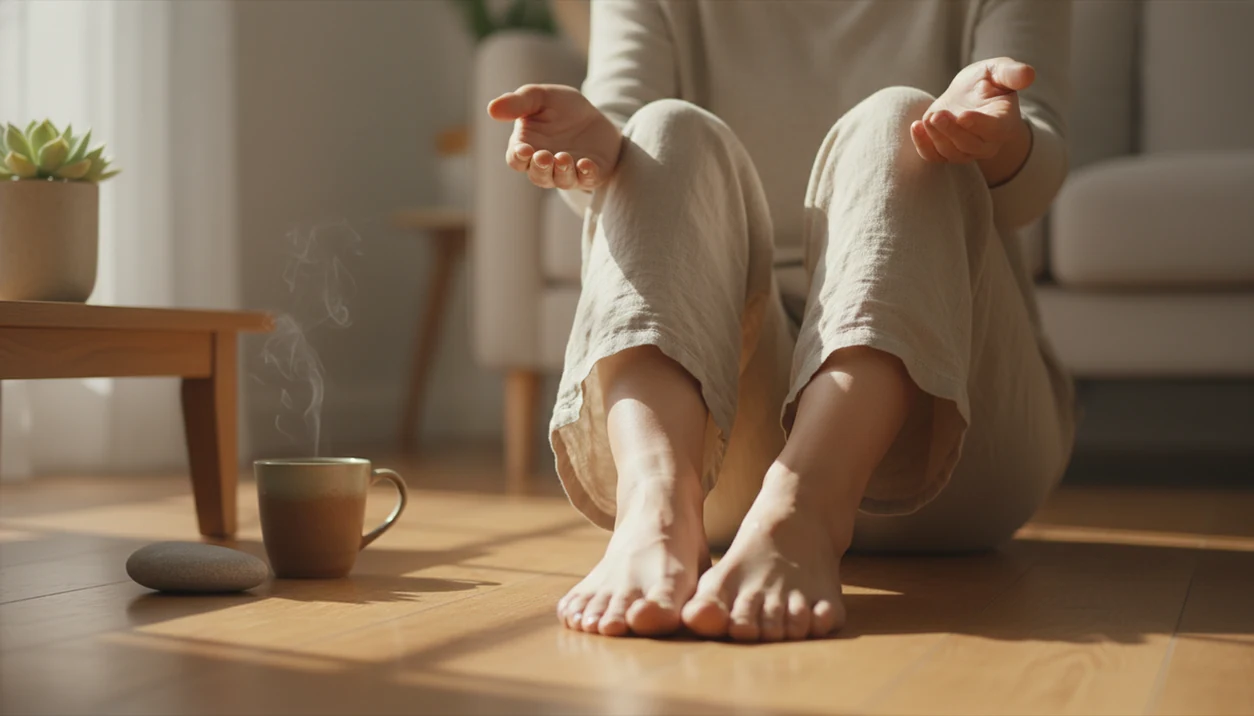
Mindfulness grounding exercises are brief practices that bring attention back to your senses, body contact, breath, or surroundings during everyday overwhelm. They give you something concrete to notice, such as the pressure of your feet on the floor, nearby sounds, or the warmth of a mug. These are self-guided mindfulness tools, not therapy or a replacement for professional care.
Start with one clear anchor for a short stretch rather than trying every technique at once. You might name visible objects, hold a key, or follow the 5-4-3-2-1 senses sequence. The aim is to notice what is present, not force yourself to feel calm. Switch to an external focus or stop if distress increases. Severe, persistent, or worsening symptoms need professional support.
What to Try First When You Need Grounding Now
Mindfulness grounding exercises are brief attention practices for moments when thoughts speed up, stress rises, or the day feels too crowded. They work by giving your attention one clear place to land.
You might use them in an airport security line, while sitting with a hospital clipboard, or during that long museum quiet when your thoughts start getting loud. They do not require special equipment, a meditation cushion, or a perfectly peaceful room.
Start small.
For beginners, everyday mindfulness and meditation practice can build steadier attention and practical self-awareness; it does not promise instant calm or provide medical treatment. A structured mindfulness practice library can help beginners choose short exercises for everyday life without treating them as medical care.
How sensory anchors redirect attention
Mindfulness grounding exercises redirect attention from mental loops toward concrete sensory input, such as pressure, sound, color, texture, or breath. In plain terms, they give the mind something real and present to track.
A stable anchor might be the warmth of a ceramic mug, the edge of a hospital clipboard in your hands, the low room hum between announcements, or the outline of a doorway across the space. Attention will still wander. The practice is to notice that shift and come back, not to prove that you can concentrate perfectly.
Body-based awareness may support regulation, steadiness, and presence for some people. For others, it can feel too intense, especially if focusing on the chest, heartbeat, or stomach brings up discomfort. For beginners, external anchors often feel easier than internal ones because sights and sounds create a little more distance. For more guidance on choice and comfort, trauma informed meditation offers ways to adapt practice to your needs.
For many beginners, external sensory grounding is easier than breath focus because it gives attention a visible or touchable anchor.
How to Use a Mindfulness Grounding Technique Safely
Use a mindfulness grounding technique for 30 seconds to 3 minutes, then check whether it is helping. The safest version is short, flexible, and easy to stop.
- Choose one anchor, such as a sound, color, object, or the feeling of your feet on the floor.
- Set a short time, usually 30 seconds, one minute, or three minutes.
- Notice the anchor without trying to change your mood.
- Name simple facts, such as “cool surface,” “blue wall,” or “three sounds.”
- Return when your mind moves to a grocery list, worry, or replayed conversation.
- Stop if distress increases, numbness worsens, or you feel unsafe.
If body sensations feel too intense, choose external anchors first. A lamp, window, floor pattern, or nearby sound can be enough. For more short practices, 1 minute mindfulness exercises can help you keep the time window realistic.
Five grounding exercises using your senses
These five sensory grounding exercises are simple ways to practice mindful grounding without needing special equipment. Pick one, try it briefly, and stop if it makes the moment harder. If you facilitate these exercises for others, our teaching meditation resource offers guidance for introducing practices and supporting participants.
- 5-4-3-2-1 senses exercise: Name five things you see, four you feel, three you hear, two you smell, and one you taste. The full sequence is similar to a 5 senses mindfulness exercise.
- Object-in-hand practice: Hold a key, stone, or pen. Notice texture, temperature, edges, and weight.
- Sound map: Identify the nearest, farthest, loudest, and softest sound. No need to like the sounds. For a more focused listening practice, try deep listening mindfulness while noticing everyday sounds without judging them.
- Color scan: Find five objects in one color. Blue, gray, green, anything works.
- Taste or scent anchor: Notice tea, mint, citrus, or a neutral scent if available.
Dish soap bubbles under warm water can become an anchor too. Ordinary counts.
Grounding with feet, chair contact, and breath
Posture and breath grounding mindfulness exercises use physical contact, gentle movement, or one intentional breath as the anchor. They are useful when you want something quieter than naming objects aloud.
- Feet-press exercise: Press both feet into the floor for 10 seconds, then release. Notice the change in pressure.
- Chair contact practice: Feel your back, seat, legs, and floor support. A kitchen chair works fine.
- One intentional breath: Take one clear breath before an email, call, or transition. The stale office air during an exhale still counts as practice.
- Gentle tense-and-release: Lightly tense the shoulders or hands, then release without forcing relaxation.
Breath or heartbeat focus may be uncomfortable for some readers. If that happens, use sound, sight, or touch instead. For breath-based options with more detail, try mindful breathing exercises.
Keep breathing natural and choices open
Choosing breath as an anchor does not require taking deeper or slower breaths. Notice breathing as it is, and change anchors if the focus brings panic, air hunger, or repeated checking of each breath. Sounds, visible objects, hand contact, or foot pressure are alternatives. A systematic review of meditation-related adverse events documents possible adverse experiences across meditation practices, not specifically brief grounding exercises.
Permission to change the exercise matters throughout the practice, not only at the start. You can open your eyes, move, skip an uncomfortable body area, or stop even if you initially felt comfortable. Body-scan safety guidance recommends these choices and stopping for escalating panic, disconnection, or intrusive trauma material. Staying with an uncomfortable anchor is not a requirement for completing the exercise.
Choosing a grounding exercise for the situation
Grounding mindfulness exercises are best for brief overwhelm, transition moments, racing thoughts, public spaces, and pre-sleep settling. They are not ideal as the only support when symptoms are severe, persistent, worsening, or dangerous.
| Situation | Helpful exercise | Not ideal if |
|---|---|---|
| Racing thoughts before sleep | 5-4-3-2-1 or sound map | You feel unsafe or unable to function |
| Stress in a public place | Color scan or object-in-hand practice | External surroundings feel threatening |
| Work transition | One intentional breath before opening the next task | Distress keeps escalating |
| Busy commute | Feet pressure or naming sights | Body focus increases panic or numbness |
| Mild everyday overwhelm | Chair contact or short sensory scan | You need urgent or professional support |
Grounding can sit alongside other supports, but it should not be framed as treatment. For daily routines, mindfulness practices for daily life may offer a wider structure. For a longer practice setting, a mindfulness retreat at home can provide a structured day of mindful activities.
What mindfulness research can tell us about grounding
The evidence for mindfulness grounding exercises is best understood as part of broader mindfulness research, not as proof that one quick exercise treats a condition. Grounding-specific evidence is less developed than research on structured mindfulness programs.
- In 2022, the CDC reported that 27.8% of U.S. adults had recent anxiety or depressive symptoms, which helps explain the need for accessible coping tools: CDC guidance
- The National Center for Complementary and Integrative Health reported that about 14.2% of U.S. adults practiced meditation in 2017: NCCIH overview
- A 2014 JAMA Internal Medicine meta-analysis of 47 randomized trials found moderate improvements in anxiety and depression for mindfulness-based interventions: JAMA study
- Grounding exercises are usually shorter and less structured than programs studied in clinical trials.
- These exercises should not be described as cures for anxiety, depression, trauma, or panic.
Clinicians typically recommend professional assessment when symptoms are severe, persistent, worsening, or linked to safety concerns.
Common Mistakes With Sensory Grounding Exercises
Trying to force calm can turn grounding into another demand; focus instead on noticing what is actually present. Grounding is attention practice, not a command to relax.
Another mistake is staying with an exercise too long after it has stopped helping. If three minutes of breath focus makes you feel worse, switch to the room around you or stop. Reset the plan.
Many beginners choose internal body sensations when external sights or sounds would feel safer. That is not a failure. It is useful information. People also expect immediate results the first time, then drop the practice before it becomes familiar. Try it during neutral moments too, such as standing in a hallway or waiting for a file to load. Related mindfulness exercises and techniques can help you compare anchors.
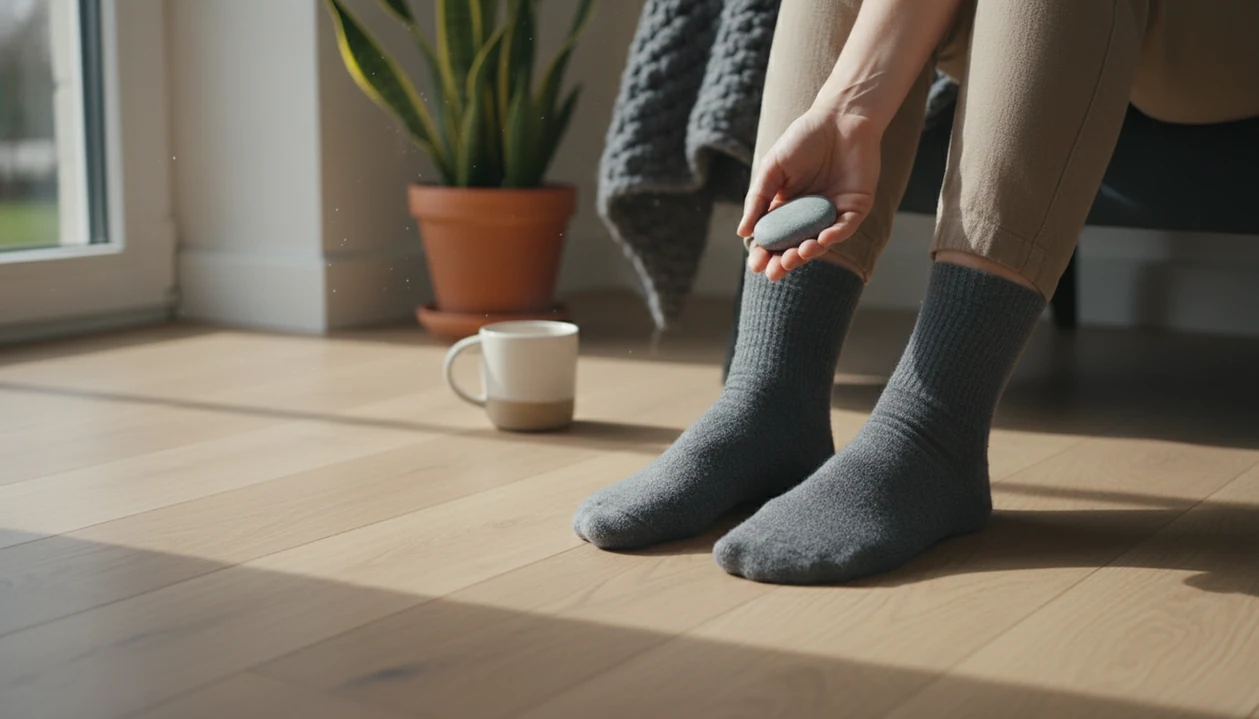
Showing object-in-hand grounding clearly
A useful image for a mindfulness grounding technique would show a person pausing in an ordinary setting, holding a small object, with their gaze gently oriented toward the room. The scene should feel everyday and instructional, not staged as a cure or a dramatic transformation.
Caption: A simple mindful grounding setup uses feet, touch, and surroundings as present-moment anchors.
Alt text should describe the exercise rather than make emotional or medical claims. For example: “Person holding a small object and orienting to the room during a grounding exercise.” Avoid wording like “person healing anxiety” or “instant calm.” The image should teach the setup, not promise an outcome.
A short timer for grounding practice
During a manageable pause at home or between tasks, the free online meditation timer can mark a short grounding practice while you notice a sound, object, or contact with the floor. Mindful.net also offers short guided meditations in its app. During sudden overwhelm, starting with one nearby object may be simpler than opening a tool. Neither option replaces professional support when symptoms persist or intensify.
Grounding Limits and Safety
- Grounding may take repeated practice to help, and evidence for it as a standalone intervention is limited.
- Some sensory or body based practices can increase awareness of discomfort rather than ease distress.
- Grounding is a practical tool, not a replacement for professional mental health care.
- If you might harm anyone, cannot stay safe, or face immediate danger, contact local emergency services or crisis support immediately.
Grounding exercise questions
How do I ground myself when I feel overwhelmed?
Start with one concrete action: feel your feet against the floor, hold a nearby object, or name five things you can see. Stay with that anchor briefly, then check how you feel. You do not need to complete a sequence or feel calm for the practice to count.
What is the 5-4-3-2-1 grounding exercise?
Name five things you see, four things you feel, three things you hear, two things you smell, and one thing you taste. The sequence gives attention a clear sensory task. Keep it flexible: you can choose a simpler anchor instead if the full sequence feels difficult or increases distress.
Can grounding exercises stop anxiety or panic?
Grounding may help you direct attention toward your present surroundings, but it cannot be relied on to stop anxiety or panic. Evidence for broader mindfulness programs does not establish that a brief grounding exercise treats a condition. Seek professional support when symptoms are severe, persistent, worsening, or affecting daily functioning.
How long should a grounding exercise take?
Try 30 seconds to three minutes, then check whether the exercise is helping. A short practice with one anchor is enough to begin. Stop sooner if distress increases, numbness worsens, or you feel unsafe. There is no need to reach a time target at the expense of comfort.
What if focusing on my breath makes anxiety worse?
Stop using breath as the anchor and try an external focus, such as a wall color, nearby sounds, or an object in your hand. You do not need to breathe deeply or slowly to practice grounding. If distress keeps increasing, stop the exercise and seek appropriate support.
Can I do grounding exercises in public without anyone noticing?
Several options do not require speaking or closing your eyes. Silently name visible objects, notice the texture of a key, or feel your feet against the floor. Choose something simple that fits your surroundings. If the setting itself feels threatening, grounding is not a substitute for getting to safety.
What should I do if grounding makes me feel more disconnected?
Pause rather than pushing through. Keep your eyes open, look around the room, and try an external sound or visible object only if that feels manageable. Stop if disconnection or distress continues. Severe or recurring disconnection needs assessment from a qualified mental-health clinician; immediate safety concerns need emergency or crisis support.
Should I practice grounding when I am already calm?
Practicing during manageable moments can make the steps more familiar before you need them under stress. Pick one exercise, such as noticing chair contact or naming nearby sounds, and repeat it briefly. Familiarity does not guarantee relief during overwhelm, and you can still change anchors or stop.