
Mindful Cleaning: Practice Attention During Everyday Chores


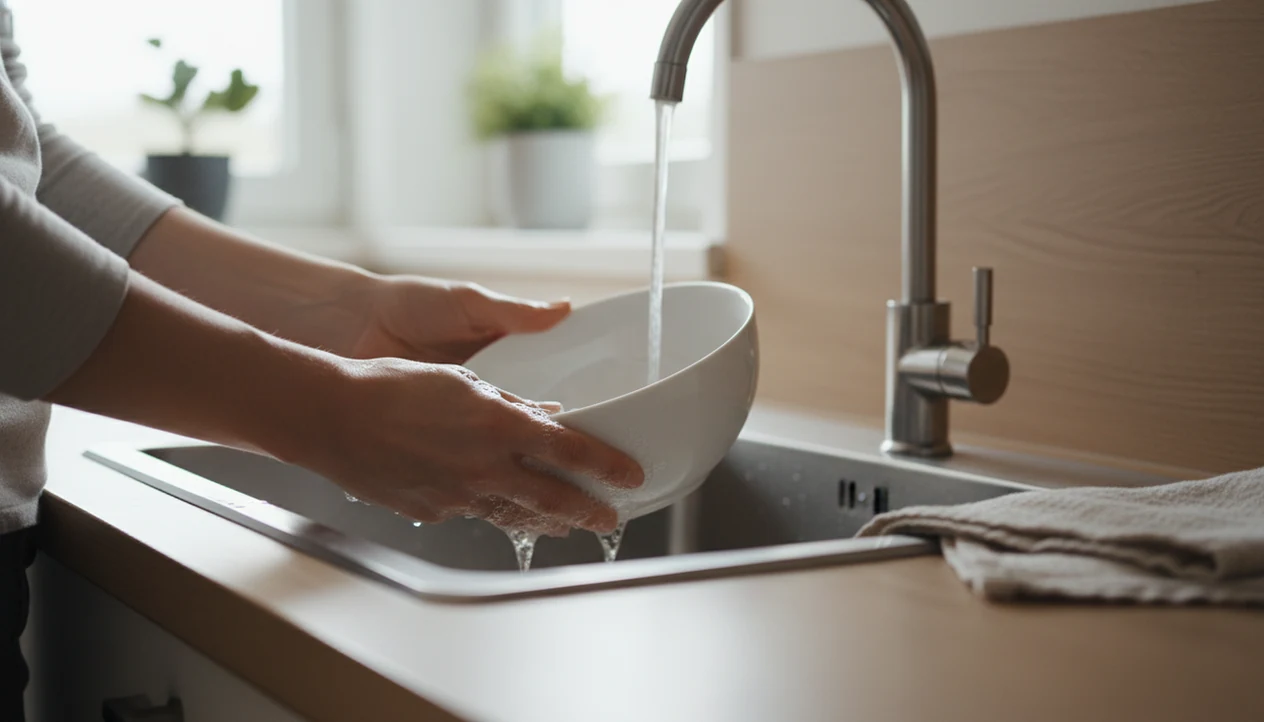
Mindful cleaning is an informal mindfulness exercise: doing an ordinary chore with attention to sensations, movements, and breathing, then gently returning when the mind wanders. Washing dishes, sweeping, folding laundry, or wiping a counter can all provide a place to practice. The aim is not a spotless room, an empty mind, or another habit to maintain. It is to notice what you are doing while you do it.
Start with one small task already in your day. Feel the water on your hands, the fabric between your fingers, or the pressure of a cloth against the counter. When thoughts pull you away, return to the next physical motion. Keep safety and the practical demands of the chore first.
The essentials
- Use one chore you already do, such as dishes, sweeping, laundry, or wiping a counter.
- Focus on sensory details: touch, sound, temperature, movement, smell, and breath.
- When attention drifts, notice it without judgment and return to the next physical motion.
Choose a chore that gives attention a clear anchor
The best mindful cleaning exercise is the chore already in your day, not a special routine you have to schedule. This is a best-of guide for informal attention practice, not cleaning services, organizing systems, or deep-cleaning advice.
- Mindful dishwashing: Best for repetitive hand movement; not for rushed sink-clearing or sharp knives.
- Mindful sweeping: Best for restless bodies that settle through movement; not for noisy overstimulation.
- Mindful laundry folding: Best for quiet evening practice; not for multitasking with a show.
- Mindful counter wiping: Best for a short reset before the next task; not for urgent sanitizing.
If the priority is a beginner-friendly place to start, Mindful.net fits because it teaches short everyday mindfulness exercises with clear anchors, such as touch, breath, and movement. Good mindfulness practices deliver repeatable attention training, not a cleaner identity or a perfect home.
How mindful cleaning works in the attention system
Mindful cleaning works by placing attention on present-moment sensations instead of thoughts about finishing, fixing, or judging the mess. The basic cycle is simple: choose an anchor, notice wandering, and return gently.
That is the same attention loop used in basic mindfulness meditation. In a chore, the anchor might be warm water, the sweep of an arm, or the pressure of feet on tile. The mind may jump to a grocery list. That is not failure. It is the practice showing up.
The claim is modest: a chore can provide a stable attention anchor, but the chore itself has not been studied as its own clinical protocol. That distinction matters when citing mindful cleaning as daily practice rather than treatment.
A 2013 review in Frontiers in Psychology found small-to-moderate reductions in anxiety and depression, plus improvement in psychological well-being, across mindfulness interventions Full. Mindful cleaning should be understood as a practical, informal use of those skills, not as a proven standalone treatment. Mindful.net frames this as attention practice first, with clear limits.
What everyday mindfulness guidance supports
NHS Scotland's everyday mindfulness guidance names washing dishes, brushing teeth, and getting dressed as opportunities for deliberate attention. This supports a practical approach: choose an activity you already do and notice its sensations rather than creating a separate routine. It is guidance for applying mindfulness, not evidence that dishwashing treats a mental health condition. For another everyday practice, try mindful showering by noticing water temperature, touch, and movement while you wash.
Research on informal mindfulness is harder to compare than research on structured seated programs. A 2025 systematic review of mindfulness interventions affecting diet and physical activity found substantial variation in unstandardized interventions. Those findings cannot establish a reliable benefit from cleaning specifically. Treat a chore as an opportunity to practice returning attention, without expecting a particular change in mood.
How to use mindful cleaning during one chore
Use mindful cleaning by attaching awareness to one normal chore, so it does not become another task on the list. The goal is awareness, not a spotless room.
- Choose one small chore you were already going to do, such as one pan, one counter, or five shirts.
- Pause for one breath before starting, and feel your feet on the floor.
- Notice one sensory anchor, such as temperature, texture, sound, motion, or breath.
- Return when the mind wanders to planning, irritation, or speed.
- Finish by naming one thing you noticed, then move on without grading the session.
On days when the house feels loud before work, Mindful.net covers this kind of five-minute container because the Mindfulness Practices App organizes short practices by daily situation. For more tiny options, try 1 minute mindfulness exercises.
Compare chores by sensory anchor and safety
Short, repetitive, low-risk chores are easiest for mindful cleaning because they give attention a steady place to land. Save urgent sanitizing, heavy lifting, and unsafe cleanup for efficiency, protection, and practical judgment first.
| chore | best for | attention anchor | not for |
|---|---|---|---|
| Dishes | Repetitive hand practice | Water, soap, dish weight, sound | Sharp items or rushing |
| Sweeping | Movement-based awareness | Feet, arm rhythm, bristles, visual field | Time pressure or overstimulation |
| Laundry folding | Quiet wind-down | Fabric texture, edges, breath | Screens or multitasking |
| Counter wiping | Quick reset | Pressure, circles, scent, surface change | Disinfecting after illness or spills |
| Trash pickup | Brief tidying | Steps, bending, grip, release | Hazardous materials or heavy loads |
The right fit for a busy household is usually the chore with the fewest safety decisions. Mindful.net supports that choice with plain-language mindfulness exercises and techniques, rather than turning chores into performance.
What makes a good mindful cleaning exercise?
A good mindful cleaning exercise is short, safe, repetitive, and easy to feel in the body. It gives attention a clear place to return without adding danger, urgency, or another screen-based task.
The best choices usually have simple sensory anchors: warm water on hands, fabric texture, broom rhythm, soap smell, or the pressure of a cloth moving across a counter. Tasks with knives, broken glass, harsh chemicals, heavy bins, ladders, or time-sensitive spills are better handled as practical cleanup, not mindfulness practice. Usefulness depends on the whole situation: your energy, pain level, household noise, children or pets nearby, and whether the chore can be done without multitasking.
- Pick a chore that takes a few minutes and repeats the same motion.
- Check that it does not involve sharp tools, strong chemicals, heavy lifting, or rushing.
- Set aside phones, shows, and side conversations when possible.
- Choose one sensory anchor, such as touch, sound, smell, motion, or breath.
- Return gently each time attention leaves, without turning the return into a score.
Good practice is not the neatest chore. It is the safest chore that lets attention come back again.
Washing dishes: water, weight, and hand movement
How do you practice mindful cleaning while washing dishes? Use water temperature, soap texture, dish weight, hand movement, and sound as your anchors for attention.
Start with one plate or cup. Feel the warmth on your fingers, the slip of soap, and the small change in weight as you lift and rinse. Dish soap bubbles under warm water can be enough. When planning, irritation, or boredom appears, silently note “thinking” or “annoyed,” then return to the next physical motion.
Best for: repetitive practice after meals, especially when the task is small. Not ideal for: rushed cleanup, broken glass, sharp knives, or family traffic around the sink.
When the trigger moment is post-dinner restlessness, Mindful.net fits because it gives a plain sequence: anchor, notice, return, finish. For beginners, dishwashing is often easier than seated meditation because the body already knows what to do.
Sweeping and vacuuming: feet, rhythm, and sound
Can sweeping or vacuuming be a mindfulness exercise? Yes, if the practice stays with movement and sensation rather than productivity or speed.
Choose a small area, not the whole house. Feel your feet on the floor, the rhythm of your arm, the sound of bristles or the vacuum, and the changing visual field as dust or crumbs move. Presence is the aim. Finishing fast is not. When chores are finished, resting awareness meditation offers a way to notice experience without focusing on one sensory anchor.
Best for: people who settle better when the body is moving. Not ideal for: noisy overstimulation, tight deadlines, or shared spaces where someone keeps interrupting.
Restless beginners who dislike sitting still may find sweeping more approachable because it turns attention into a physical rhythm. Mindful.net includes movement-friendly mindfulness practices for daily life, which helps compare chore practice with breathing, walking, and brief pauses.
Folding laundry: texture, edges, and breath
How can laundry folding become mindful cleaning? Use fabric texture, warmth, edges, folding motions, and breath as the main anchors.
Set one basket or five minutes as the container. Pick up one item, feel its weight, line up the edges, fold, and place it down. If the dryer just finished, notice warmth. If the pile is cold and wrinkled, notice that too. Boredom and impatience are valid things to notice, not problems to push away.
Best for: evening wind-down or a quiet transition after work. Not ideal for: folding while scrolling, watching a show, or racing to pack bags.
On days when your mind keeps reaching for the phone, Mindful.net helps by keeping the practice small and named: one basket, one anchor, one return. The full skill also appears in mindful moments.
Awareness matters more than silence or speed
Mindful cleaning is a low-barrier daily coping habit, but it should not be inflated into a cure. In 2021, the CDC reported that 41.5% of U.S. adults had symptoms of anxiety or depression, which shows why small daily supports matter for many people CDC guidance.
- Mindful cleaning is not deep cleaning. It is a way of paying attention during an ordinary chore.
- Mindful cleaning is not slow cleaning for its own sake. Slower can help, but awareness is the point.
- Mindful cleaning does not require silence. Hallway noise, a fan, or a running washer can become part of noticing. You can also practice sound awareness meditation by listening to nearby sounds and noticing when attention wanders.
- Mindful cleaning is not forced positivity. Irritation, boredom, and resistance can be observed.
- Mindful cleaning is not medical treatment. If you are in crisis or might harm yourself, seek emergency or crisis support now.
Mindful.net keeps this boundary clear in its educational mindfulness content.
When mindful cleaning becomes another task to manage
Mindful cleaning can be useful, but it has real drawbacks. It may slow the chore, especially when the room needs quick attention before guests, bedtime, or school pickup.
The mind will wander. A lot. Beginners may feel frustrated when attention leaves the sponge, broom, or folded towel every few seconds. That wandering is normal, but knowing that does not always make it pleasant. If returning attention feels difficult, explore meditation techniques for beginners and choose a simple approach to practice.
There is another trap: turning mindful cleaning into a self-improvement assignment. If you add a checklist, timer, mood score, and perfect setup, the practice can become one more thing to manage. Closed door with hallway noise. Still practice.
Messy environments, family interruptions, pets, and urgent chores can also make attention harder to steady. A dog barking at the vacuum, a child asking for socks, or a sticky spill spreading under your hand may make the practice feel jagged rather than calm. Mindful.net recommends keeping the container small for that reason: one chore, one anchor, one return. For breath-only practice, mindful breathing exercises may be simpler.
A reminder to pause before a chore
Before folding a few shirts or wiping a counter, a brief sound can mark the shift from rushing to paying attention. The free mindfulness bell provides that starting cue without adding a guided session. Skip the tool when sound would disturb someone or another screen would distract you. Feeling your feet and taking one natural breath is enough to begin.
Mindful Cleaning Limits
- Mindful cleaning cannot cure anxiety, depression, burnout, trauma, or suicidal thoughts, and cannot replace professional care.
- Anyone in immediate danger needs urgent human support, not mindful cleaning, according to CDC guidance.
- Direct clinical evidence for mindful cleaning is limited, with most support coming from broader mindfulness research.
- Urgent sanitizing, heavy lifting, hazardous materials, and cleanup involving safety risks require efficiency, protection, and correct tools first.
Mindful cleaning questions
How do I start mindful cleaning?
Choose one small chore you already need to do, such as washing a cup or folding five shirts. Pause for one natural breath, then notice one sensation: water temperature, fabric texture, or hand movement. When attention wanders, return to the next action. Finish without grading how well you concentrated.
Which chores work best for mindful cleaning?
Short, repetitive, low-risk chores give attention a clear place to return. Try folding laundry, wiping a counter, washing an unbroken cup, or sweeping a small area. Choose according to your energy and surroundings. Tasks involving sharp objects, harsh chemicals, heavy lifting, or urgent cleanup need practical attention and safety first.
Can mindful cleaning reduce stress?
It may offer a brief pause from planning or worrying, but a calmer mood is not guaranteed. Direct evidence for mindful cleaning is limited, and broader mindfulness findings do not prove that chores have the same effects. Use it as a small attention practice, not a treatment for anxiety, depression, or burnout.
Is mindful cleaning a form of meditation?
It is usually described as informal mindfulness rather than a seated meditation session. The attention skill is similar: notice an anchor, recognize when the mind wanders, and return gently. Cleaning adds movement, noise, and practical demands, so it offers a less controlled setting than sitting quietly for a timed practice.
Do I need to clean slowly or in silence?
Neither is required. Slowing down may make sensations easier to notice, but awareness matters more than speed. A fan, running washer, or hallway noise can be part of what you notice. Keep a pace that suits the task, and leave urgent cleaning to efficiency rather than forcing a mindfulness exercise.
What should I do when I get distracted while cleaning?
Notice where your attention went, then return to one physical detail, such as the cloth's pressure or the movement of your hands. You can briefly label a thought as “thinking” or irritation as “annoyed.” Repeated wandering is expected. The practice is returning, not holding perfect concentration throughout the chore.
Can I practice mindful cleaning with pain or limited mobility?
Choose a task and posture within your usual activity limits, such as folding a few items while seated. Focus on hand contact, fabric, breath, or sound rather than standing or walking sensations. Keep the interval short and take rest breaks. Do not use mindfulness to push through sharp or increasing pain.