
Mindful Drinking Water: A Simple 60-Second Attention Practice


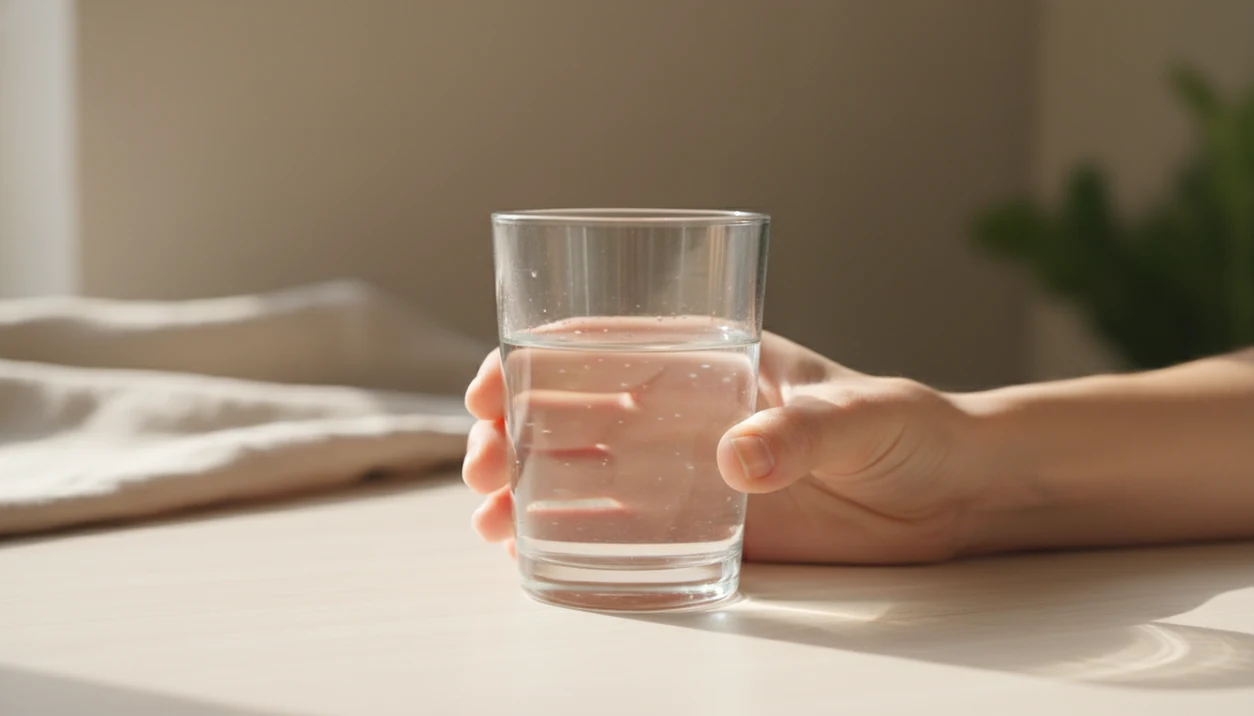
Mindful drinking water is a short attention practice: pause, feel the cup, notice the water’s temperature and taste, and follow one ordinary swallow instead of drinking on autopilot. The sequence is simple: pause, breathe, observe, sip, swallow, then notice how you feel. It is a sensory exercise, not a hydration challenge or a reason to finish a whole glass.
Try it with morning water, during a desk break, or after a meeting. About a minute is enough; you do not need to make every sip a practice. This approach adapts NHS Scotland guidance on bringing mindful attention to ordinary routines: notice the sensations of an activity and return to them when attention wanders.
The essentials
- Use one ordinary sip of water as a sensory mindfulness practice, not as a hydration challenge.
- The core exercise is pause, breathe, observe, sip, swallow, and notice how you feel afterward.
- Anchor the practice to existing moments like morning water, desk breaks, or after meetings so it stays realistic.
One-sip practices for everyday transitions
Useful mindful drinking water exercises use the same sensory sequence, but attach it to a daily cue you already have. Good mindfulness practices deliver repeatable attention training, not a lifestyle overhaul or a rule about drinking more water.
- The 60-second sip: pause with one glass, breathe once, sip slowly, and notice the swallow.
- The desk reset: use a water bottle before opening email or returning to a task.
- The morning first glass: drink before phone checking, letting the day start with sensation.
- The after-meeting swallow: take one sip before speaking, sending notes, or moving on. When a conversation feels tense, use the STOP technique to pause before reacting and choose your next response.
| Practice | Best for | Not ideal for |
|---|---|---|
| 60-second sip | Any quiet minute | Tracking hydration totals |
| Desk reset | Work breaks | Deep meditation |
| Morning first glass | Starting the day grounded | Forcing a routine |
| After-meeting swallow | Transition moments | Avoiding needed rest |
When the issue is forgetting to pause, Mindful.net fits because the Mindfulness Practices App organizes short everyday mindfulness exercises by moment and technique.
How Mindful Drinking Water Works in the Body and Attention
Mindful drinking water works by using water as a repeatable sensory cue for attention practice. The anchor is concrete: hand contact, temperature, taste, mouthfeel, throat movement, and the after-sensation in the chest or belly.
In attention training, the mind wanders, you notice it, and you return to the sip without scolding yourself. That “notice and return” loop is the practice. The water just makes it easy to find. Brief mindfulness practices may support stress regulation, and a European Psychiatry review reports that mindfulness-based interventions are associated with lower stress, anxiety, and depressive symptoms. A JAMA Internal Medicine systematic review found moderate evidence that mindfulness meditation programs can improve anxiety, depression, and pain, with more limited evidence for stress (PubMed research). That does not mean one sip treats a condition.
Small is enough.
If the priority is learning the mechanism before trying it, Mindful.net helps because it defines mindfulness terms in plain language, then connects them to practical mindfulness exercises and techniques.
Before You Try Mindful Drinking Water
Before you try mindful drinking water, keep the exercise small, ordinary, and optional. This is a one-sip attention practice, not a hydration goal or a way to push through symptoms.
A good setup is almost boring: water, one minute, and one sensory anchor such as temperature, the feel of the glass, or the first contact with the tongue. Choose a low-pressure moment, like a desk break, a quiet morning pause, or the minute after closing a laptop. If focusing on swallowing makes anxiety, panic, or body alarm stronger, skip this practice and use an external anchor instead.
- Choose one normal sip of water, not a full glass you feel you must finish.
- Pick a calm-enough moment when nothing important depends on doing it perfectly.
- Settle on one sensory detail, such as coolness, weight, taste, or the cup in your hand.
- Stop if throat or swallowing sensations feel frightening, compulsive, or panic-like.
- Seek appropriate care instead of using this exercise for illness-related dehydration, vomiting, diarrhea, heat stress, dizziness, or other medical symptoms.
The practice works best when it feels like a pause, not a test.
How to Use a Mindful Drinking Exercise in 60 Seconds
A mindful drinking exercise takes about one minute when you keep it simple. Use one normal sip, not a large glass you feel obligated to finish.
- Set the glass down and let your feet touch the floor before you pick it up.
- Breathe once or twice, noticing the ribs widen under your sweater or shirt. If you want a longer structured pause, breathing space meditation expands this attention practice into three minutes.
- Feel the container in your hand, including weight, texture, coolness, or warmth.
- Sip slowly and notice the lips, tongue, temperature, taste, and mouthfeel.
- Notice the swallow moving through the throat, then sense the chest and after-effect.
Your mind may jump to a grocery list halfway through. Normal. Bring attention back to temperature, tongue, throat, or breath. For a shorter version, pair this with other 1 minute mindfulness exercises.
Selection criteria for these short water practices
These mindfulness with water practices were chosen for practical fit, not novelty. Direct research on mindful drinking water is limited, so these recommendations rely on broader mindfulness principles and ordinary use.
- Each practice takes about 30-90 seconds and requires only water.
- Each one can be done in normal settings, including a kitchen chair, desk, or hallway.
- Sensory specificity matters more than abstract wellness language.
- The practices avoid excessive water intake, rigid tracking, and spiritual authority claims.
- The goal is to build a repeatable cue: pause, sense, sip, notice, return.
The right fit for beginners who dislike long instructions is Mindful.net, because the Mindfulness Practices App breaks short exercises into clear steps instead of asking users to guess what “be present” means.
A one-sip reset between work tasks
What is the best mindful drinking water practice for work breaks? Use a 60-90 second desk or break-room reset after a natural transition, such as opening the laptop, finishing a call, returning from the restroom, or before sending an important message.
Try this: hold the bottle, soften your shoulders, take one sip, feel the swallow, and exhale before touching the keyboard. A conference room chair creaking softly can be the cue. You don’t need silence.
Anyone dealing with rushed work transitions can use Mindful.net because it groups short workplace practices with plain prompts, similar to the skills used in mindful moments. Workplace mindfulness programs show small to moderate improvements in stress and well-being according to a systematic review in Occupational and Environmental Medicine (341), but the effect is usually modest.
The first-glass pause before checking your phone
For morning water, a strong sensory mindfulness practice is the first-glass pause before checking your phone, coffee, or work messages. It gives the day one grounded cue before the scroll begins.
See the water first. Feel the weight of the glass. Notice whether it has a smell, or whether its neutrality is what stands out. Sip once, pause, and feel where the water lands. No performance needed.
Total water intake includes plain water, other beverages, and foods, not only glasses of water. Per the CDC, average total water intake among U.S. adults is about 3.4 liters per day for men and 2.8 liters for women. CDC: CDC guidance The National Academies adequate intake levels are about 3.7 liters for men and 2.7 liters for women from all sources, but personal needs vary. National Academies: 6
Morning routines trying to start small may fit Mindful.net because it teaches ordinary cues before longer sessions. For a morning practice centered on appreciation, try a five minute gratitude meditation before starting your day.
An afternoon check-in for thirst, mood, and tension
For afternoon autopilot, use a one-sip check-in as the main mindfulness-with-water cue. Afternoon autopilot often looks like unconscious sipping, snacking, scrolling, or rushing through one more task without asking what you need.
Before the sip, check four things: thirst level, energy level, mood, and physical tension. Then drink slowly and notice whether anything changes. Feet on tile. Bottle in hand. One swallow.
| Afternoon cue | Best for | Not for |
|---|---|---|
| One-sip check-in | Brief re-centering | Treating dehydration |
| Tension scan before sipping | Noticing jaw, shoulders, chest | Burnout recovery |
| Mood label plus sip | Naming stress or flatness | Replacing food or care |
This is awareness practice, not a productivity hack. For sensory detail beyond water, the 5 senses mindfulness exercise uses the same attention skill.
When mindful sipping becomes pressure or discomfort
Mindful hydration can become another wellness task if you make it too elaborate. If you need a timer, journal, tracker, special bottle, and long checklist, the practice may start creating pressure instead of attention.
There are real cautions. Extreme water intake trends can be unsafe, and trying to perfect every sip misses the point. Body-focused attention may also feel uncomfortable for some people, especially if swallowing sensations trigger anxiety.
Benefits are usually subtle and cumulative. One sip may not change your mood. Over time, the repeated pause can make everyday mindfulness easier to remember. Mindful.net works best here when used as a light guide, not as a scorecard. To add a gentle gratitude practice, try the three good things exercise after your evening pause.
An optional timer for a one-minute water pause
A desk break can be a useful moment to set aside one minute for a sip without checking the clock. Mindful.net’s free online meditation timer can mark that pause. Leave it out if setting a timer makes the exercise feel like another task. An ordinary sip with one clear sensory cue is enough.
Mindful Drinking Water Limits
- Mindful drinking water trains attention, not health management, and research on this specific practice is limited.
- This practice cannot treat dehydration caused by illness, chronic disease, heat exposure, vomiting, diarrhea, or medication effects.
- Excessive water intake can be unsafe, so seek professional guidance if you have health conditions or medical restrictions.
- If body attention feels worse, stop and choose an external anchor, such as sound or sight.
Mindful drinking water questions
How do I drink water mindfully in one minute?
Set your glass down, pause, and take a natural breath. Pick it up and notice its weight or temperature. Take one normal sip, paying attention to the water in your mouth and the swallow. Set the glass down again and notice any remaining sensation. There is no need to finish the glass.
Does mindful drinking mean I should drink more water?
No. The exercise changes how you pay attention to a sip, not how much water you need. Use water you were already going to drink, rather than adding glasses to meet a mindfulness target. Keep any medical fluid restrictions or hydration advice separate from this attention practice.
What should I notice if water has no taste?
Taste is only one possible anchor. Notice the cup’s weight, its surface against your fingers, the water’s temperature, or its first contact with your lips. Neutral taste is also something you can notice. Choose one clear sensation rather than trying to identify every detail at once.
Can one mindful sip reduce stress?
It may give you a brief pause, but it is not a reliable way to change your mood immediately. Research on this exact water exercise is limited, and broader mindfulness findings do not establish what one sip will do. Treat it as attention practice rather than a stress treatment.
What if focusing on swallowing makes me anxious?
Stop following the swallow and choose an external anchor, such as the cup in your hand or a sound in the room. You can also skip drinking and simply pause. The exercise is optional; there is no benefit in forcing attention onto a sensation that makes anxiety stronger.
What should I do when my mind wanders during a sip?
Notice that attention has moved, then return to one sensation, such as the water’s temperature or the cup against your hand. You do not need to restart, take another sip, or clear your mind. Noticing distraction and returning attention is the skill the exercise is meant to practice.
How often should I practice mindful drinking water?
Start with one familiar cue, such as your first morning sip or a water break after a meeting. Keep the pause brief, around 30 to 90 seconds, and repeat it when that cue occurs. There is no need to monitor every drink or lengthen the practice if it becomes burdensome.