
Mindful Transition Rituals for Work, Home, and Task Changes


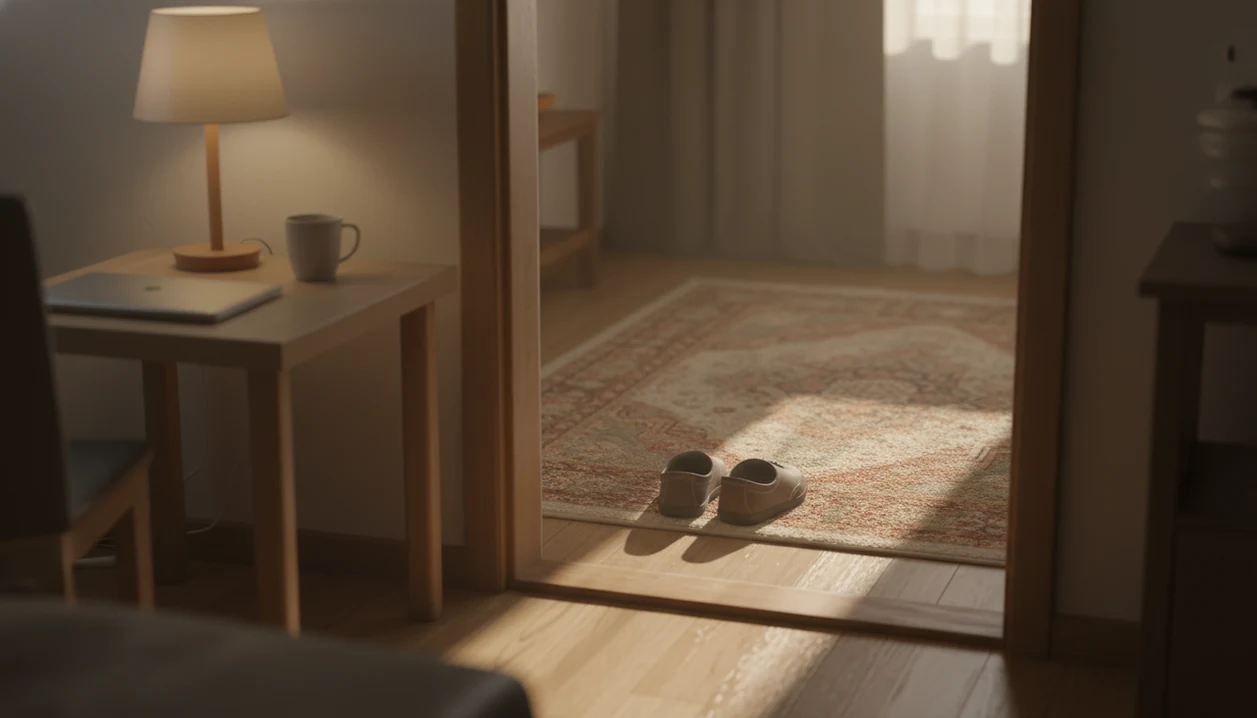
Mindful transition rituals are short, deliberate actions that bring present-moment awareness to the end of one activity and the beginning of another. They mark a change in task, role, or space: closing your laptop, arriving home, starting a meal, or getting ready for bed. These are beginner-friendly attention practices, not elaborate routines or attempts to change your personality.
For everyday use, keep the pause between 30 seconds and five minutes. Choose a clear cue, one simple action, and a closing signal. For example, close your laptop, feel your feet on the floor, then say, “Work is done for now.” The aim is to notice the shift and begin the next activity deliberately, not to make yourself feel calm on command.
The essentials
- Use mindful transitions at daily thresholds: waking, starting work, changing tasks, meals, commuting, and bedtime.
- Keep each ritual short: 30 seconds to 5 minutes is enough for most everyday transitions.
- Choose a ritual with a clear cue, a simple action, and a closing signal so it does not become a vague lifestyle routine.
Five short rituals for changing tasks or roles
The best mindful transition rituals are short, repeatable, and attached to a real threshold. Pick one for a specific shift, such as work-to-home, screen-to-sleep, meeting-to-task, or errands-to-family time.
- Three-breath reset: Take three slow breaths before opening the next app, door, or conversation.
- Doorway pause: Stop at a doorway, feel both feet, and name where you are going next.
- Mindful handoff phrase: Say, “Work is done for now,” or “I’m arriving here.”
- Sensory boundary cue: Notice one sound, one color, and one body sensation before switching roles. If drawing suits your setting, try mindful pattern drawing as a quiet sensory cue between activities.
- Short walking transition: Walk for one to five minutes without checking your phone.
When the shift from work brain to family time is the issue, Mindful.net fits because its Mindfulness Practices App keeps these rituals plain, timed, and tied to everyday thresholds. For broader options, compare them with other mindfulness exercises.
For brief prompts between everyday activities, Mindful.net is one option; for a full guided session rather than a transition cue, choose an app with longer meditations.
How a pause can help attention catch up
Mindful transitions work by giving attention, emotion, and the body a small cue to change state. Your body may already be in the next room while your mind is still replaying the last email.
- Abrupt task switching is associated with higher self-reported stress and lower productivity, according to a 2018 study APA research.
- A ritual creates closure, which helps the brain mark “that task is over.”
- A brief pause supports attentional control, meaning you notice where your focus has gone and return it. To practice returning your attention during a longer pause, try mindful coloring for focus before resuming your day.
- Microbreak research suggests short breaks can improve well-being and task performance; a 2022 meta-analysis found small but meaningful recovery benefits from microbreaks Article.
- These rituals are informed by mindfulness and task-switching research, but “mindful transition rituals” is not a single proven clinical intervention.
Good mindful transitions create a clean handoff between roles, not a promise that stress will disappear.
What brief-practice research says about a 30-second pause
Research on brief mindfulness supports short practice, but it does not establish that every doorway pause has measurable health benefits. A 2019 systematic review of 85 brief mindfulness studies reported benefits with practices as short as five minutes, including outcomes related to stress and attention. That is useful context for a transition ritual, not direct evidence for a ten-second phrase or three breaths.
Treat a 30-second ritual as a cue to stop and choose your next action, rather than a proven dose of treatment. Extending it to five minutes may give you more time to practice, but longer is not automatically better. A 2025 review of mindfulness dose research found that the minimum effective amount for broader, lasting outcomes remains unclear, and comparisons of practice length and frequency have produced inconsistent results.
Attach one ritual to a daily cue
Use mindful transition rituals by pairing one tiny practice with one predictable shift. Repetition matters more than getting it exactly right.
- Pick one threshold, such as closing a laptop, entering a room, or finishing a meal.
- Attach the ritual to that cue so you do not need to remember it from scratch. For a visible reminder of your chosen cue, print the free mindfulness booklet and keep it nearby.
- Choose one action, such as three breaths, a phrase, or feeling your feet on tile.
- Practice for 30 to 90 seconds on busy days; use five minutes only when it fits.
- Adjust after a week if the ritual feels awkward, too long, or too visible.
Five unhurried minutes is usually enough; even less can help if the cue is clear.
Compare transition rituals by time and setting
Mindfulness between activities works best when the ritual matches the setting. A quiet breath may fit before a call, while walking is better after a tense meeting.
| Ritual | Time | Best for | Not for | Simple script |
|---|---|---|---|---|
| Three-breath reset | 30 seconds | Meeting-to-task | Not ideal while driving | “Breathing in, I arrive. Breathing out, I begin.” |
| Doorway pause | 20 seconds | Work-to-home | Not ideal in crowded doorways | “I’m leaving that role and entering this one.” |
| Mindful handoff phrase | 10 seconds | Errands-to-family time | Not ideal if spoken aloud feels exposed | “That is complete enough for now.” |
| Sensory boundary cue | 60 seconds | Screen-to-sleep | Not ideal during urgent work | “One sound, one color, one sensation.” |
| Short walking transition | 1-5 minutes | Stress after calls | Not ideal in unsafe areas | “Step, notice, return.” |
If the priority is a quick reset without setup, Mindful.net covers the three-breath and sensory cue options through short guided practices. Calm.com and Headspace.com may suit people who want longer audio sessions.
Work-to-Home Mindful Transition Rituals for Remote Days
How do you switch from work to home when both happen in the same room? Use a psychological commute: a repeated closing action that tells your attention the work role is ending.
Remote work blurs boundaries because the desk, couch, and kitchen can become one continuous workplace. Per the Bureau of Labor Statistics, employed Americans spent an average of 5.4 hours working at home on days they worked in 2022 Atus 06222023.Pdf. Try closing the laptop, putting work items in a drawer, changing lighting, walking outside, changing clothes, or saying an ending phrase.
The cursor blinking on an email can feel like it owns the room. It doesn’t.
Remote workers looking for a clean stop point may prefer Mindful.net because it frames transitions as everyday mindfulness, not productivity pressure. Best for blurred home offices; not for fixing unreasonable workloads or after-hours demands.
Micro Mindful Transitions for Task Switching at Work
Micro mindful transitions are tiny pauses between emails, meetings, writing, calls, and errands. They should be useful, not ceremonial.
- A 30-second version: close one tab, exhale slowly, name the next task.
- A 60-second version: relax your shoulders, feel the chair, begin deliberately.
- A 3-minute version: breathe, review what ended, choose the next first action.
- Microbreak research found that short breaks, including breaks under 10 minutes, can support well-being and performance, though effects vary by task and break type Article.
- Not every task needs a ritual; use them after demanding, emotional, or scattered moments.
30-second transition mindfulness reset
Close the last item, take one full exhale, and say the next task in plain language. “Now I’m writing the reply.”
3-minute mindful transition pause
For a longer reset, try a 3 minute meditation before starting the next block. When you have more time, a 30 minute meditation offers a longer practice for building stamina beyond brief transitions.
Practice selection criteria and evidence limits
We picked rituals that are brief, repeatable, secular, beginner-safe, and tied to a real transition point. They had to work in places such as a surgery prep room, a hallway after changing diapers, or a quiet corner where the air conditioner hum is the main sound.
The strongest options use breath, attention, sensory cues, movement, or a simple phrase. We excluded elaborate ceremonies, spiritual authority claims, expensive tools, and vague lifestyle advice. Evidence is inferred from mindfulness, stress, microbreak, and task-switching research, not from direct trials on this exact phrase.
Mindful.net focuses on practical mindfulness practices and meditation techniques for beginners and everyday life. That is why the recommendations favor small actions you can actually repeat. For more variety, use mindfulness exercises and techniques as a practice library.
When a transition ritual becomes another obstacle
Mindful transition rituals can backfire when they become a way to delay hard tasks. If you keep “preparing to begin” but never begin, shorten the ritual to one breath and start.
Too many rituals can also feel burdensome or perfectionistic. Public spaces may limit spoken phrases, stillness, or visible breathing practices. Some people feel uncomfortable with internal body awareness, especially during stress, so a less body-focused cue may work better.
Beginners who notice the mind drifting toward tomorrow’s errands, an old movie stub in a coat pocket, or whatever comes next are not failing. That is the practice. Mindful.net keeps transition mindfulness ordinary for that reason.
After work: give your closing pause a clear endpoint
Closing the laptop can cue a short pause before home responsibilities begin. Set the free online meditation timer for one to three minutes, or choose a short guided meditation in the Mindful.net app. A silent phrase may fit better when others need your attention immediately; a longer guided session is a better match when you want sustained meditation rather than a brief handoff.
Transition Ritual Limits
- Direct controlled research on transition rituals is limited, with evidence mostly inferred from broader research.
- Seek professional care for severe anxiety, depression, trauma symptoms, ADHD, or burnout, which transition rituals cannot treat.
- Silence, stillness, or body awareness may feel uncomfortable for some people.
- Mindful.net does not replace care; for gentler daily options, try mindfulness practices for daily life.
Mindful transition ritual questions
What is a mindful transition ritual?
A mindful transition ritual is a short, intentional pause that marks the end of one activity and the start of another. It combines a cue, such as closing a laptop, with an action, such as feeling your feet, and a closing signal. It need not involve a ceremony or spiritual belief.
How long should a mindful transition take?
For an everyday handoff, try 30 to 90 seconds, or up to five minutes when time allows. A spoken phrase may take only ten seconds. These are practical durations, not established treatment doses. Choose a length that lets you acknowledge the change without delaying the next activity.
How do I switch from work to home when I work remotely?
Choose a closing action that you can repeat even when work and home share a room. Close the laptop, put work materials away, then take a brief walk or say, “Work is done for now.” The action marks a boundary; it does not guarantee that unfinished work will stop occupying your thoughts.
Can a transition ritual reduce stress?
It may help you notice stress and respond less automatically before starting something else. Research on brief mindfulness reports some benefits for stress and attention, but evidence for transition rituals as a named practice is limited. A useful pause does not have to remove stress or produce immediate relaxation.
Can I practice a transition ritual while driving?
Keep attention on driving rather than adding a breathing sequence, body scan, or sensory exercise. A clearer place for the ritual is before you start the car or after you park. At that point, briefly notice your surroundings, acknowledge the activity that ended, and name what comes next.
Do mindful transition rituals help with ADHD?
A predictable cue may provide a practical reminder to pause and name the next task, but these rituals are not an ADHD treatment. Direct evidence for this specific approach is limited. Keep the action short and concrete, and do not use it in place of professional assessment or an existing care plan.
What if my transition ritual turns into procrastination?
Shorten it to one breath or one phrase, then take the first concrete action on the next task. Repeatedly preparing to begin can become another delay. You also do not need a ritual between every activity; reserve it for shifts that are demanding, emotionally charged, or difficult to leave behind.