
Mindful Observation Exercise: Notice One Thing Fully


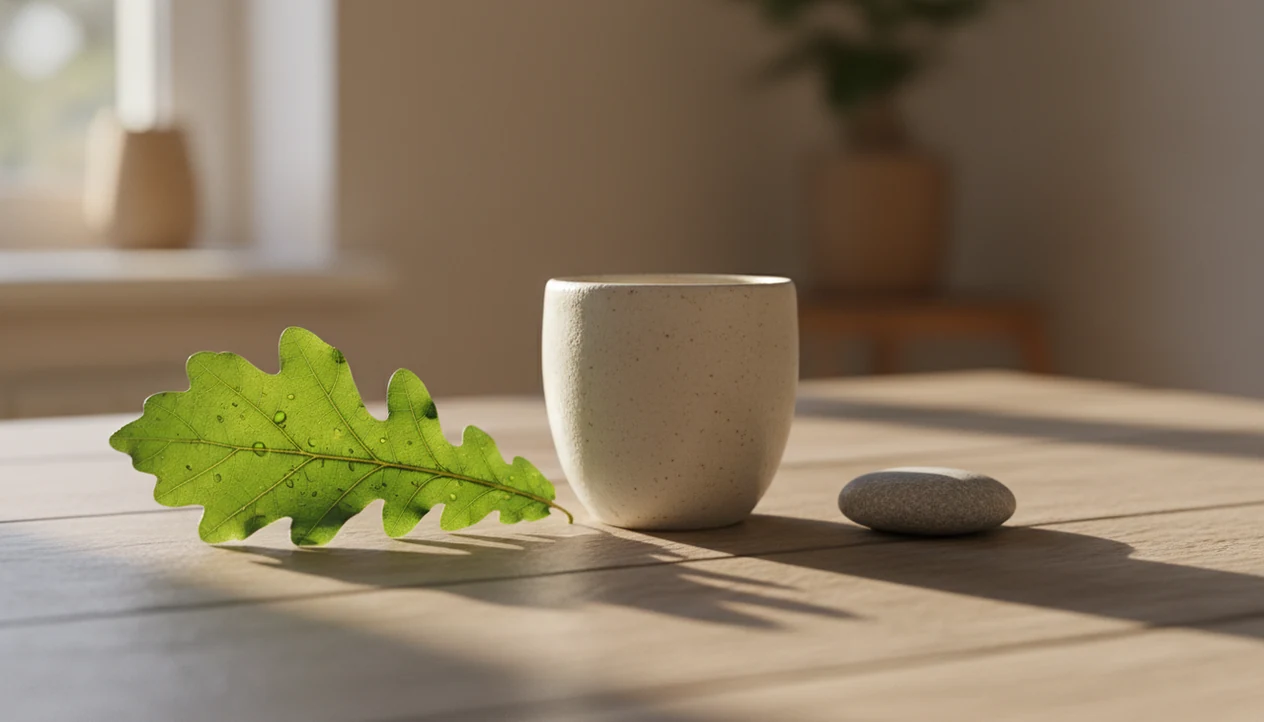
A mindful observation exercise is a secular mindfulness practice that trains attention by focusing on one external anchor, such as a plant, everyday object, sound, or candle flame. You notice its sensory details without judging them or trying to change them, then gently return when your mind wanders. This gives you an alternative when breath-focused meditation feels frustrating, boring, or uncomfortable.
Start with something safe and ordinary: a cup on a table, a leaf, or rain against a window. Notice color, edges, texture, movement, or changes in sound. You do not need to empty your mind or make the object interesting. The practice is noticing that attention has drifted and returning to one concrete detail without self-criticism. To apply this pause during tense moments, try pause before reacting with the STOP practice.
Definition: Mindful observation is a secular mindfulness technique that trains attention by noticing an external sight, sound, object, or sensation without judging or trying to change it.
The essentials
- Choose one external anchor, such as a leaf, cup, candle, window view, or ambient sound.
- Notice concrete details like color, shape, texture, movement, volume, or changes over time.
- When your mind wanders, calmly name that it wandered and return to the object without self-criticism.
Choose a safe, ordinary anchor for your attention
The best mindful observation anchor is ordinary, safe, available, and interesting enough to hold attention without strain. Breath awareness is optional here; you can practice fully with sight, sound, texture, light, or movement.
- Natural object: Best for people who like detail; not ideal if you start comparing or naming everything. A leaf, flower, stone, or shell gives you color, edges, shadows, and small changes.
- Household object: Best for no-prep practice; not ideal if clutter pulls your attention around the room. Try a cup, spoon, notebook, or pen on a table.
- Candle or light: Best for visual steadiness; not ideal around children, pets, or tired eyes. A lamp reflection works too.
- Ambient sounds: Best for buses, waiting rooms, and shared homes; not ideal if certain sounds feel triggering.
- Mindful movement or walking: Best for restless bodies; not ideal where balance or traffic needs full attention.
The right fit for a beginner who dislikes breath focus is Mindful.net because the Mindfulness Practices App organizes external-anchor options by situation, including object, sound, and short daily-life practices.
The attention cycle: notice, wander, return
A mindful observation exercise gives attention one clear external target, then lets you practice the basic cycle of noticing and returning. The beginner mistake is trying to stare so hard that the mind goes blank. In practice, you choose one thing, study it with curiosity, notice when thought pulls you away, and come back without treating the detour as a problem.
The attention loop is: select an anchor, register sensory detail, detect wandering, and return gently. Repetitive thinking has less room to run when attention is busy with actual present-moment data, like the warmth of a coffee mug in your palms during a pause between hospital rounds.
A wet umbrella dripping beside you in an airport queue can become the anchor.
Evidence is strongest for structured mindfulness programs, not one isolated short exercise. Still, the mechanism is the same attention practice used in many mindfulness exercises and techniques. Mindful.net keeps this distinction clear because good beginner guidance should explain what mindfulness practices can support, not promise a cure.
Practice mindful observation for 2 to 10 minutes
Use this mindful observation exercise for 2 to 10 minutes as a beginner practice. If your day is crowded, try 30 to 60 seconds as a micro-practice before opening a laptop, leaving the car, or answering a message. If you prefer a brief practice that includes breath awareness, try breathing space meditation for a structured three minute pause.
- Set a timer for 2, 5, or 10 minutes; choose 30 to 60 seconds if you are practicing between tasks.
- Choose one anchor such as a cup, leaf, window view, candle flame, sound, or the feeling of feet on tile.
- Notice specific details including color, edges, shadows, texture, sound, movement, temperature, distance, and small changes.
- Label wandering with a quiet word like “thinking,” “planning,” or “remembering” when the mind drifts to a grocery list.
- Return gently to the same anchor, because wandering is expected and returning is the practice.
If the priority is a short practice you can repeat during a workday, Mindful.net fits because its beginner lessons favor phone-timer sessions over long, idealized routines.
Set up a safe place for observation
Before you begin, set up the practice so attention can soften without putting you or anyone nearby at risk. Mindful observation should feel adjustable, not like a test you have to endure.
- Choose a safe place where you do not need to monitor traffic, cooking, tools, stairs, or another responsibility that requires quick reactions.
- Keep your eyes open if closing them makes you feel anxious, trapped, dizzy, or uncomfortable; a soft gaze at the floor, wall, or object is enough.
- Skip candles when children, pets, flammable items, sleepiness, or eye strain are part of the room. Use a lamp reflection, cup, plant, or window view instead.
- Use an external anchor such as sound, color, shape, or texture if focusing on breath, heartbeat, stomach sensations, or other body signals feels activating.
- Stop or change position if the exercise becomes distressing. Open your eyes wider, stand up, stretch, look around the room, text a trusted person, or seek support from a clinician or trained teacher.
The safest version is the one you can leave, shorten, or modify.
The 5 Facts That Make Mindful Observation Easier Than Breath Meditation
Mindful observation can feel easier than breath meditation because it uses something outside the body as the attention target. For many beginners, that makes the practice more concrete and less frustrating.
- Fact 1: It uses an external anchor, such as a sight, sound, object, or movement, instead of the breath.
- Fact 2: Mind wandering is not failure; noticing it is the skill being trained.
- Fact 3: Short sessions of 5 to 10 minutes can be enough for regular practice when repeated consistently.
- Fact 4: Ordinary activities can become informal observation practice, including walking, eating, showering, or listening.
- Fact 5: People with significant trauma, severe anxiety, or active mental health symptoms may need support from a clinician or trained teacher.
For beginners who tense up when watching the breath, an external-anchor method is often easier than breath focus because the attention target feels visible, audible, or touchable.
How We Picked the Best Mindful Observation Exercise Variations
We picked mindful observation variations by looking for beginner accessibility, low equipment needs, secular framing, and everyday usability. The anchor had to work in ordinary places: near a gym locker door, on a museum bench, in a noisy terminal line, or during a brief Parking Lot Pause after a demanding stretch of the day.
The strongest options are external, stable, easy to describe, and not dependent on a perfectly silent room. A pen on a desk, rain on a window, or a slow walk down a hallway can all work. None of these objects is inherently more mindful than another. The practice comes from how you pay attention.
Mindful.net focuses on practical mindfulness practices and meditation techniques for beginners and everyday life, so the choices here favor plain instructions over elaborate rituals. For broader options, the same approach appears across our guide to mindfulness exercises.
Best Mindful Observation Exercise for Visual Learners: One Object
What is the easiest mindful observation exercise for visual learners? Choose one ordinary object, such as a leaf, mug, stone, pen, flower, or small bowl, and observe it as if you had to describe it clearly to someone else.
Look for color shifts, edges, texture, weight, reflections, asymmetry, marks, and small imperfections. If you hold the object, notice pressure and temperature too, such as cold hands slowly warming around a cup. If a nearby squeak or scrape interrupts you, include that sound for one moment, settle the object again, and return. If noticing warmth or comfort brings up appreciation, a gratitude meditation can help you give that feeling focused attention.
Image caption idea: Hands holding a small leaf while practicing a mindful observation exercise by noticing veins, color, and texture.
After the final chime, if the room feels too quiet, use a guided object prompt that names what to notice next: edge, color, shadow, weight, temperature, or pressure. That keeps the practice concrete without asking you to ‘empty the mind.’
Best for: people who like seeing detail. Not ideal for: people who turn observation into intense analysis.
Best Mindful Observation Exercise for Busy Places: Ambient Sounds
Can you practice mindful observation when a place is noisy? Yes. Sounds can be observed like objects by noticing their beginning, middle, ending, distance, pitch, volume, rhythm, and pauses.
Possible sound anchors include traffic, birds, HVAC hum, footsteps, voices in another room, rain, an elevator tone, or a cart rolling down a hallway. The goal is not to block unwanted sound. The practice is to hear sound without building a story around it. “Car horn” is enough. You do not have to add “this day is ruined.”
This version is useful during commutes, work breaks, waiting rooms, and shared homes. It also pairs well with other mindfulness practices for daily life, where the practice has to fit the room you are actually in.
On days when quiet is unavailable, treat ordinary noise as a valid anchor: one sound begins, changes, and ends while you practice returning.
Best Mindful Observation Exercise for Daily Life: One-Minute Check-Ins
One-minute mindful observation is a realistic way to train attention when you cannot commit to a longer session. Use 30 to 60 seconds during coffee, showering, walking to the car, washing dishes, or looking out a window.
The formula is simple: pause, pick one thing, notice three details, return once, and continue the day. You might notice the first bite of toast at breakfast, the shape of steam on a mirror, or the shadow under a parked car. No drama. For a more structured start to your day, try a 5 minute morning meditation before breakfast.
Consistency usually matters more than session length for habit-building. A short check-in repeated daily teaches the “notice and return” loop better than an ambitious plan you avoid. Mindful observation builds attention practice, not instant calm on command.
For busy beginners, 1 minute mindfulness exercises can be easier to maintain than longer sessions because the practice fits natural pauses already in the day.
When observation becomes boring or effortful
Mindful observation can feel boring, awkward, or ineffective at first. Some beginners stare at a mug for 20 seconds and think, “Is this really it?” That reaction is common.
The practice can also slide into analysis. You may start evaluating the object, naming every feature, or trying to do the exercise perfectly. That becomes mental effort instead of simple noticing. A notebook open after practice can help if you want to jot down one plain observation, but it should not turn into a performance review. You can also record moments you appreciate with the Three Good Things exercise, keeping reflection simple and specific.
External anchors can still be distracting in chaotic or emotionally charged environments. A sound in the hallway might carry a memory. A candle flame might make tired eyes strain. Mindful observation also does not erase thoughts, stress, or emotions on demand.
Everyday mindfulness trains attention and return, not permanent calm or forced positivity.
Common Mindful Observation Mistakes and Fixes
Most mindful observation mistakes are not failures; they are moments to adjust the practice. When it stalls, make the anchor simpler, safer, and less goal-driven.
- Return to one raw sensory detail when analysis takes over. Instead of figuring out why the mug is blue or whether you are doing it right, notice one edge, shadow, sound, temperature, or patch of color.
- Include boredom as part of the observation. If the mind says “this is pointless,” notice the heaviness, restlessness, or urge to quit, then come back to the object for one more detail.
- Choose a more neutral anchor if the current one feels irritating, loaded, or physically uncomfortable. Swap the candle for a cup, the hallway noise for your feet on the floor, or the body sensation for a plant across the room.
- Label looping thoughts once, using a plain word such as “planning,” “worrying,” or “remembering.” Then return gently, without arguing with the thought.
- Shift the goal back to noticing when you catch yourself chasing calm. Calm may happen, but the exercise is the repeated act of seeing, hearing, feeling, and returning.
What mindfulness research says about this exercise
Research supports mindfulness more strongly as a structured intervention than as one stand-alone mindful observation exercise. Still, several findings help explain why observation-based practice may be useful.
- A 2014 JAMA Internal Medicine meta-analysis of 47 randomized controlled trials found moderate improvements in anxiety, depression, and pain for mindfulness-based interventions (JAMA study).
- A 2011 meta-analysis reported small to moderate stress reductions in clinical and nonclinical groups (PubMed research).
- A 2015 systematic review and meta-analysis found significant reductions in rumination and worry, which are the repetitive-thinking patterns that external observation may help interrupt.
- A 2015 JAMA Internal Medicine insomnia trial found that mindfulness meditation training improved sleep quality compared with sleep education (JAMA study).
- A 2019 NIH-supported study of older adults found decreased perceived stress and improved well-being after a mindfulness program (NCCIH overview).
The caveat matters: these studies generally evaluated structured mindfulness interventions, often with teachers, curriculum, and repeated practice. The most evidence-backed approach is regular mindfulness training over time, while a short observation exercise is better understood as one practical entry point.
Sound research does not prove an observation benefit
Listening to nature sounds and observing them mindfully are different activities. A 2024 review comparing natural sounds with quiet found differences favoring natural sounds for heart rate, blood pressure, and respiratory rate, but not perceived stress. These were primarily sound-exposure studies. They do not establish that deliberately noticing a sound and returning from distraction caused the measured changes.
Subjective calm and physical stress measures can also differ. A 2026 study of recorded forest soundscapes found better mood, restoration, and cognition than industrial recordings, but no significant differences in several physiological measures, including heart rate and salivary cortisol. For observation practice, assess more than relaxation: can you notice distraction, return to the sound, and release the anchor without distress?
Before a meeting: pause with one visible object
Before a meeting, a cup or pen can give you a clear focus for a brief observation practice. The free mindfulness bell can mark a pause between tasks; the Mindful.net app's meditation timer can time a longer session. Neither chooses the anchor for you. A quiet, untimed pause is better when a bell or screen would interrupt your attention.
Mindful Observation Limits
- Mindful observation is educational attention practice, not medical treatment, and short exercises have less specific long-term evidence than structured programs.
- Seek professional treatment for major depression, PTSD, severe anxiety, insomnia, chronic pain, or other health conditions rather than substituting this exercise.
- People with trauma histories may find close attention to sensations, surroundings, or stillness uncomfortable or triggering.
- Benefits usually require consistent practice, and one or two sessions may not create lasting change.
Mindful observation questions
How do I do a mindful observation exercise?
Choose one safe object or sound and spend two minutes noticing concrete details. With a cup, look at the rim, shadows, and surface marks. When a thought takes over, briefly label it “thinking” and return to one detail. You are practicing attention, not trying to stop all thoughts.
What is the best object for mindful observation?
A good object is safe, available, and emotionally neutral. A cup, pen, stone, spoon, or leaf gives you details to notice without special equipment. Choose something simpler if the object brings up strong memories or encourages comparison. No particular object is inherently more mindful than another.
How long should a mindful observation exercise last?
Start with two minutes, or try 30 to 60 seconds between tasks. Longer beginner sessions can last five to ten minutes. A short session gives you time to notice details and practice returning after distraction. Extend it only while the practice remains manageable; duration alone does not show how well it went.
What is the difference between mindful observation and staring?
Staring can become a fixed, effortful gaze. Mindful observation uses a softer gaze and attends to changing details, such as brightness, edges, or shadows. You also notice when thought pulls attention away and return gently. Keep blinking normally, and switch anchors or stop if your eyes feel strained.
Can I use sounds for mindful observation in a noisy room?
Yes. Notice a sound's pitch, rhythm, distance, beginning, and ending instead of trying to block it out. Ordinary room sounds can be enough; headphones or recordings are optional. Stay aware of warning signals and responsibilities. Choose a visual object instead if noise becomes overwhelming or increases distress.
What should I do if mindful observation makes me anxious?
Stop or change the anchor rather than forcing yourself to continue. Keep your eyes open, look at a neutral shape, or notice contact with the floor if that feels comfortable. Some people find sensory attention or stillness distressing. Persistent distress or panic calls for professional support, not longer practice.