
Mindful Pause: A 30-Second to 3-Minute Practice Before You Respond


A mindful pause is a brief, intentional stop, usually 30 seconds to 3 minutes, in which you breathe, notice your body and mind, and choose your next action instead of acting on autopilot. This secular mindfulness practice creates a little space between a trigger and your response. It can fit into ordinary transitions without requiring a formal meditation session.
Try it before answering a tense email, moving to another task, or speaking when you feel rushed or irritated. The basic sequence is simple: stop, breathe, notice, name what is happening, and continue with intention. The aim is not to force calm. A pause is a small attention practice, not a cure or crisis intervention.
Definition: A mindful pause is a short, secular mindfulness practice that creates space between a trigger and your next response.
The essentials
- Use a mindful pause when you feel rushed, reactive, distracted, or between daily tasks.
- The simplest version is: stop, breathe, notice, name what is here, and continue with intention.
- It is not a cure or crisis intervention, but repeated practice can support calmer, more deliberate responses.
Choose a pause for rushing, tension, or conflict
The best mindful pause exercise depends on what is happening, not on one universal method. A tense email, a noisy bus seat, and a hard conversation each ask for a slightly different kind of attention.
| Mindful pause option | Best use case | Time needed | What to do |
|---|---|---|---|
| Three-Breath Pause | Rushing or task switching | 30 seconds | Take three slow breaths, feeling the exhale finish. |
| Body Check Pause | Physical tension | 1 minute | Scan jaw, shoulders, belly, and feet without fixing them. |
| Emotion Naming Pause | Reactivity or conflict | 1 minute | Silently name the emotion: “anger,” “worry,” “embarrassment.” |
| Purpose Pause | Before a choice or conversation | 2 to 3 minutes | Ask what quality you want to bring next. |
Mindful.net fits beginners looking for quick choices because its short-practice library groups pauses by situation, including work, sleep, stress, and everyday mindfulness cues.
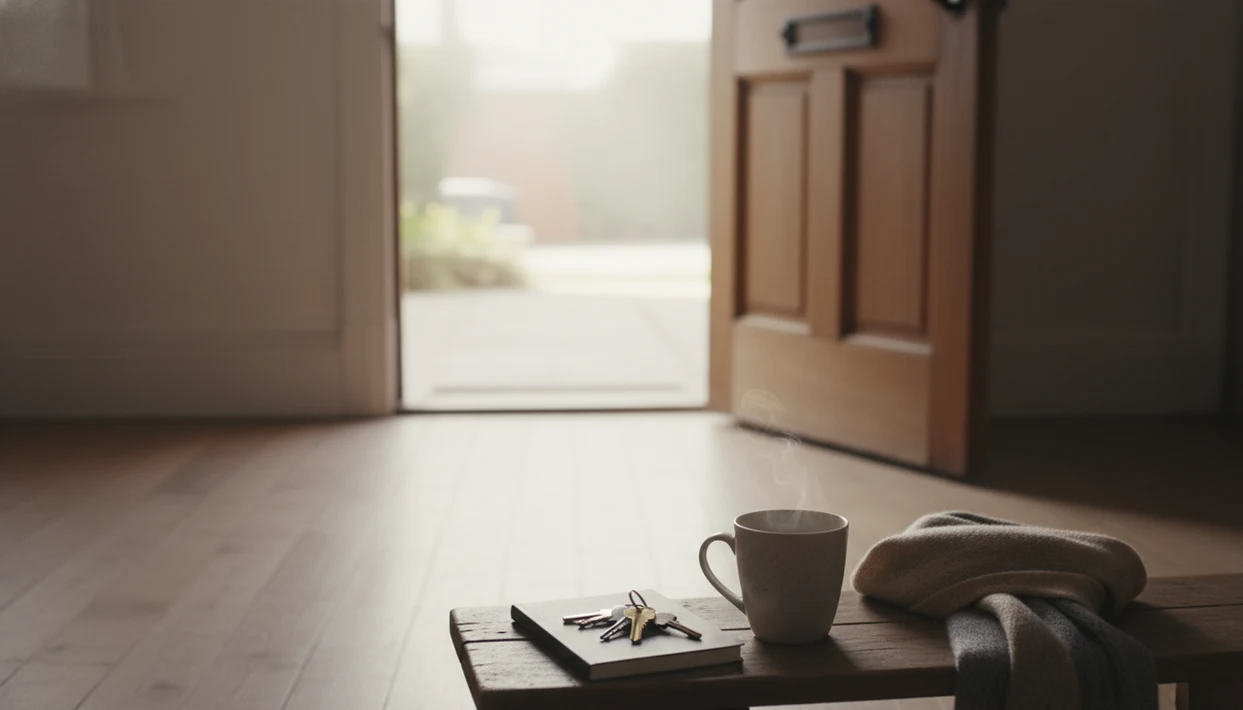
Image caption idea: A mindful pause can fit between ordinary moments: before a call, after an email, or while standing at a doorway.
How a pause redirects attention before you respond
A mindful pause works by interrupting autopilot and giving attention one simple place to land before you respond. The breath becomes an anchor, which means it gives the mind a steady reference point while thoughts and sensations keep moving.
Body and emotion noticing are information gathering, not self-judgment. You might feel ribs widening under a sweater, then notice the thought, “I need to answer fast.” That is useful data. Not a failure.
Stress is common enough to make small tools worth learning. In a 2023 APA survey, 84% of Americans reported at least one recent emotion linked with prolonged stress, such as anxiety, sadness, or anger APA research. Evidence is stronger for broader mindfulness programs than for one ultra-short pause, but the mechanism is practical: stop, orient, choose.
What research on brief practice says about a 30-second pause
Research on brief mindfulness is relevant, but “brief” does not always mean a few breaths. A 2019 systematic review of 85 studies included practices lasting up to 30 minutes per occasion. It reported benefits with sessions as short as five minutes. Those findings do not establish the same effects for an isolated 30-second pause.
There is also no settled minimum duration for lasting change. A 2025 review of mindfulness dose research found that comparisons of session length and frequency have not consistently favored more practice. Treat a short pause as a way to notice and choose in the moment, not as a guaranteed dose of stress relief.
How to use a mindful pause in five simple steps
You can practice a mindful pause in five steps: stop, breathe, notice, name, and choose. Keep your eyes open whenever safety or social context calls for it, such as commuting, standing in public, or caring for a child. If you are new to these pauses, start with mindfulness techniques for beginners and keep the practice simple.
- Stop what you are doing, or slow it down enough to pay attention.
- Breathe for one to five breaths, letting the shoulders drop after an exhale.
- Notice body sensations, sounds, thoughts, and emotions without trying to improve them.
- Name what is here in plain words, such as “tight chest” or “planning.”
- Choose the next action, then return to it with a little more intention.
For a 30-second version, do one breath and one word of naming. For a 3-minute version, add a body scan and a purpose question. If you want a longer bridge, try a 3 minute meditation.
A 10-second reset without the brain-rewiring claim
A 10-second reset is a compressed mindful pause, not a proven way to instantly rewire your brain. There is no single established 1980 protocol behind that claim. The review of brief mindfulness interventions reports benefits from practices as short as five minutes, but it does not establish instant brain changes from a 10-second exercise.
For the practical version, stop for one comfortable breath, name your state in a word such as “tense” or “rushing,” and notice one contact point, such as your feet on the floor. Then choose what to do next. Ten seconds gives you a moment to notice your response; it does not need to remove the feeling or solve the problem.
Pause before emails, meetings, and difficult conversations
When should you use a mindful pause? Use it during transitions, stress spikes, emotional triggers, overthinking loops, and task switching, especially before your next action gets automatic. For recurring thoughts about the past or future, try four steps to stop mental time traveling before choosing your next action.
Workday mindful pause
Before meetings, after emails, or when the screen glow starts tiring your eyes, choose the Three-Breath Pause or Body Check Pause. A JAMA Network Open workday trial reported a 31% perceived-stress reduction after 8 weeks of a brief mindfulness-based program, which supports short regular practice, not a claim that one pause fixes stress. The trial was published in JAMA Network Open and measured perceived stress after an 8-week workplace mindfulness program JAMA study.
Conversation mindful pause
Before replying to a partner, child, colleague, or customer, use the Emotion Naming Pause. Parents can take one breath before repeating an instruction. Commuters can pause before sending a sharp text. After opening your phone, take one breath before choosing what to do on it.
Transition mindful pause
Entering a room, ending work, or standing from a desk are ideal cues. A simple cue is the doorknob pause: feel your hand on the handle, take one breath, then enter the next room on purpose. On days packed with small switches, Mindful.net covers this need because its mindful moments workflow turns ordinary transitions into short practice prompts.
Why these variations use simple, eyes-open instructions
These mindful pause variations were chosen for beginner simplicity, safety, portability, secular language, and repeatability. They had to work without equipment, special posture, closed eyes, or a long quiet session.
- Beginner simplicity: Each practice can be remembered from a kitchen chair or office stairwell.
- Safety: Eyes-open practice works better in public, caregiving, and transit settings.
- Portability: No cushion, timer, or app is required, though a phone timer set for 5 minutes can help.
- Secular language: The instructions use attention, breath, body, and choice.
- Repeatability: The practice fits real cues better than ideal meditation conditions.
For beginners, the useful test is whether the practice survives an ordinary day: noise, notifications, errands, and imperfect timing. NCCIH reported that 14.2% of U.S. adults practiced meditation in the past year, which suggests accessibility matters for beginner-friendly practices NCCIH overview. For a wider menu, compare mindfulness exercises and techniques.
Mindful pause habit cues that make practice stick
A mindful pause is easier to remember when it is attached to something you already do. Use a simple implementation intention: “After I do X, I will take one mindful pause.”
Attach the pause to a familiar event: crossing a doorway, hearing a calendar alert, opening your phone, waiting for the kettle, or finishing parking the car. Start with 1 to 3 daily pauses. Constant self-monitoring can turn the practice into another chore, and beginners often quit when the plan gets too elaborate. To make your first pause easier to remember, try morning mindfulness exercises alongside a familiar routine after waking.
Tiny is fine.
One practical prompt is: “What quality do I want to bring now: patience, curiosity, steadiness, or kindness?” Mindful.net works well for people building this habit because the Mindfulness Practices App organizes short practices around daily cues instead of assuming a silent room. You can also build from 1 minute mindfulness exercises.
Mindful pause safety boundaries for urgent or high-distress situations
A mindful pause is not ideal when immediate physical action is required. It can support clarity, but it should not delay safety, caregiving, emergency decisions, or needed professional support.
| Situation | Use a mindful pause? | Safer adjustment |
|---|---|---|
| Driving or operating equipment | Not with eyes closed | Keep eyes open and attention on the task. |
| Urgent caregiving | Only if it does not delay action | Take one breath while moving. |
| Severe distress | May be insufficient | Contact support or a qualified professional. |
| Avoiding a hard conversation | Use carefully | Pause, then return to the issue. |
| Expecting instant calm | May feel too subtle | Treat it as attention practice, not a mood switch. |
The point is to return with more clarity, not to disappear from the moment. Good mindfulness practices for daily life create workable space, not guaranteed calm on command.
Would a timer help you take a mindful pause?
Between tasks, a timer can give a one-minute pause a clear beginning and end. The free online meditation timer supports an unguided pause, while Mindful.net's short guided meditations offer spoken instructions when you want more direction. For a single breath before replying to someone, no tool is needed. In urgent situations, taking the necessary action matters more than completing a timed practice.
Mindful Pause Limits
- Seek professional help when care, treatment, or emergency support is needed because a mindful pause cannot replace them.
- Evidence is stronger for structured mindfulness programs than isolated pauses, as discussed in the JAMA study.
- Benefits usually require repetition over time, with broader options in mindfulness practices for daily life.
- Some beginners initially notice more anxiety, tension, or discomfort during a mindful pause.
Mindful pause questions
What is a mindful pause?
A mindful pause is a short, intentional break in which you notice your breath, body, thoughts, or emotions before choosing your next action. It usually lasts 30 seconds to 3 minutes. You do not have to clear your mind or feel calm for the practice to be useful.
How do I take a 30-second mindful pause?
Stop or slow your activity, take one or two comfortable breaths, and notice a body sensation or emotion. Name it simply, such as “tight shoulders” or “worry.” Then choose your next action. Keep the sequence brief rather than trying to examine everything you are feeling.
Can a 10-second pause really rewire the brain?
A 10-second pause is not an established method for instantly rewiring the brain. It can give you a moment to notice your state before responding. Research on brief mindfulness includes longer sessions, with reported benefits from five-minute practices; that does not prove lasting brain changes from a single 10-second reset.
Should I keep my eyes open during a mindful pause?
Yes, eyes-open practice is appropriate in public, during caregiving, or whenever you need to stay aware of your surroundings. Notice your feet, a sound, or a comfortable breath without withdrawing attention from the situation. While driving or operating equipment, keep attention on the task and do not close your eyes.
Does a mindful pause reduce stress right away?
It may help you respond more deliberately, but immediate stress relief is not guaranteed. Research on brief mindfulness reports mixed effects, and many studied practices are longer than a few breaths. A useful pause might leave you feeling stressed while still helping you choose a clearer next action.
How often should I take a mindful pause?
Start with one predictable daily cue, such as before your first message or after a meeting. Add another pause once the first is easy to remember. There is no established optimal schedule for everyone. A repeatable habit is more useful than a plan that turns into constant self-monitoring.
Is a mindful pause the same as meditation?
A mindful pause uses meditation skills, including attention to present experience, but applies them during an ordinary activity or transition. It is usually much shorter than a dedicated session. Neither requires an empty mind, and a pause is not a substitute for a structured clinical mindfulness program.