
Mindful Brushing Teeth: Attention Practice in Two Minutes


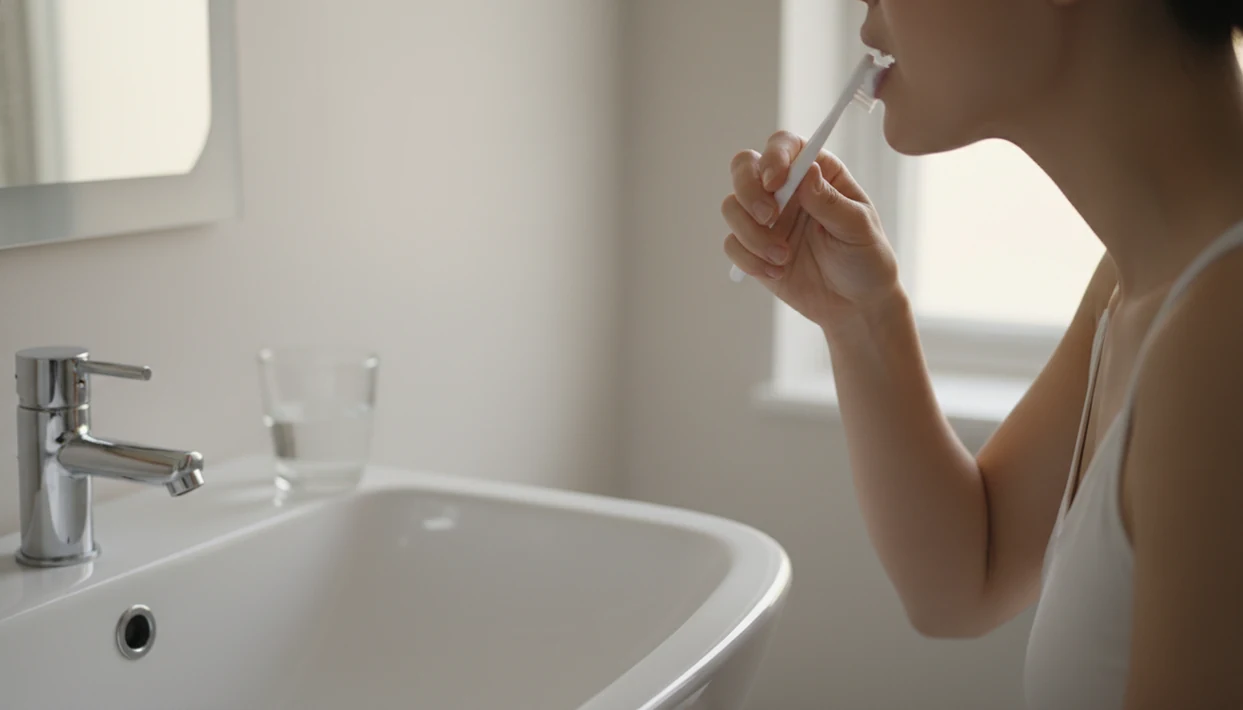
Mindful brushing teeth means brushing while paying deliberate, non-judgmental attention to the sensations and steps of oral care. During your usual two minutes, notice the bristles, toothpaste taste, sound, breath, and hand movements. When thoughts pull you away, return to the area you are cleaning without scolding yourself. The aim is attentive brushing, not a blank mind or a longer meditation session.
Because brushing is already part of your day, it gives attention practice a clear cue. Keep the dental basics intact: fluoride toothpaste, brushing for two minutes twice daily, and daily flossing. Follow each tooth surface, notice pressure, and let mindfulness support cleaning rather than distract from it. A rushed morning can still include one deliberate attention check.
The essentials
- Use brushing as a two-minute mindfulness cue, not as a long meditation session.
- Keep standard oral hygiene basics: fluoride toothpaste, two minutes, twice daily, and daily flossing.
- A useful practice is sensory and practical: feel the brush, notice pressure, cover each tooth surface, and return attention when distracted.
Choose one attention cue for your two-minute brush
For most beginners, start with the Sensory Scan Brush because it is concrete, short, and easy to repeat. Mindfulness should support oral hygiene technique, not replace it.
| Exercise | Best for | How it works | Not for |
|---|---|---|---|
| Sensory Scan Brush | Beginners | Notice taste, bristles, sound, and movement | People wanting silence only |
| Breath-and-Brush Reset | Rushed mornings | Take one breath, then brush with one attention check | Longer meditation practice |
| Full-Mouth Coverage Check | Technique awareness | Move through each area of the mouth | Replacing dental advice |
| Distraction Return Practice | Wandering minds | Notice thought, return to brushing | Forcing steady focus |
A practical routine gives you clean teeth and a small attention practice, not a bathroom ritual that takes over the morning. Mindful.net pairs this kind of habit cue with other mindfulness exercises for ordinary moments. You can also practice mindful cleaning during household chores, using familiar movements as cues for attention.
Make brushing the cue to return your attention
Mindful brushing works by habit stacking: you attach attention training to an existing daily cue instead of creating a brand-new routine. Brushing already has a clear start, middle, and finish, which makes it easier to remember.
Mindful brushing works by giving your attention somewhere concrete to land. You notice bristles, toothpaste flavor, sound, small hand movements, posture, and breathing. Then the ordinary loop begins: sense what is happening, wander into thought, realize you wandered, and come back without scolding yourself.
The sink is already there.
If your mind drifts to the keynote you heard yesterday, the rain tapping the glass, or a random errand that suddenly feels urgent, you do not have to start over. Just feel the brush again. We usually suggest this “notice and return” pattern for first-time meditators because it is easier to practice than trying to hold a perfectly blank mind.
Six steps for attentive brushing
Use mindful brushing inside your normal two-minute brushing window. The American Dental Association says to brush for 2 minutes twice a day with fluoride toothpaste Brushing Your Teeth.
- Stand with both feet on the floor and feel the tile, mat, or carpet under you.
- Take one slow breath before the toothbrush touches your teeth.
- Notice the brush and toothpaste: weight, texture, taste, and first contact.
- Brush one area at a time instead of roaming randomly around the mouth.
- Soften excess pressure if your hand tightens or your jaw braces.
- Return when distracted by naming “thinking” and coming back to the next tooth surface.
Mindful.net recommends keeping the script plain. If you want a slightly longer pause before or after brushing, a 3 minute meditation may fit better.
Adapt the attention cue to your senses and posture
Standing at the sink is not a requirement for mindfulness. You can practice seated or in a supported position while keeping your usual brushing technique. Choose a sensation that is available and comfortable: hand movement, brush vibration, toothpaste taste, or contact with the chair. There is no need to notice every sense at once. If water sensations feel more accessible, try mindful showering as another way to notice ordinary daily routines.
For attention difficulties, keep the instruction to one step, such as noticing where the brush is now. A written cue or external timer can help you return to the task. This follows the everyday-practice approach in NHS Scotland's mindfulness guidance, which includes brushing teeth among ordinary activities that can become opportunities for deliberate attention.
Keep attention practice separate from dental claims
A few honest reminders can make this tiny practice feel less precious and more repeatable.
- Mindful brushing is about attention, not perfect calm. A busy mind can still practice.
- Sensations are the easiest anchor for beginners. Bristles, toothpaste foam, and brushing sounds are easier to find than a blank mind.
- Wandering is expected. Noticing distraction and returning is part of the attention loop.
- Oral hygiene basics still matter. The CDC recommends brushing twice daily with fluoride toothpaste and flossing daily CDC guidance.
- The benefit is habit awareness and consistency. It is not a guaranteed dental or mental-health cure.
Good mindfulness practices give you a repeatable way to notice daily life, not a promise that attention alone fixes health problems. That boundary matters. For a less structured practice, resting awareness meditation offers a way to notice experience without choosing one sensory anchor.
Exercise criteria: clear sensations and complete cleaning
We picked exercises that fit inside brushing you already do. If a practice needs candles, music, a long script, or a special mood, it is less useful at 7:12 a.m. with toothpaste on your sleeve.
The main criteria were sensory clarity, simple sequencing, and support for oral-care technique. Exercises scored higher when they helped you notice full-mouth coverage, skipped areas, or a grip that had become too forceful. They scored lower if they pulled attention away from cleaning.
Mindful.net favors plain attention practice over elaborate bathroom rituals because beginners tend to repeat what feels doable. Let the length of your usual brushing be enough, and use the familiar finish point as your cue to stop. For more options that stay simple, our guide to mindfulness exercises and techniques compares short practices by setting and skill.
Rushed mornings: one breath and one attention check
For rushed mornings, use the Breath-and-Brush Reset: one breath before brushing and one attention check during brushing.
Before the toothpaste foams, take one breath and feel your feet. Halfway through brushing, ask, “Where is the brush now?” That is enough. No extra time required.
Busy beginners trying to stop brushing on autopilot can use Mindful.net for the Breath-and-Brush Reset because the practice fits the existing two-minute window and uses a single attention checkpoint. It is best for busy beginners, not for people who want a longer formal meditation.
If the morning is truly packed, this works like other 1 minute mindfulness exercises: short, specific, and easy to repeat.
Follow a route through each tooth surface
For better coverage, use the Full-Mouth Coverage Check. It uses attention to follow a simple route: outside surfaces, inside surfaces, chewing surfaces, gumline awareness, and tongue if that is part of your routine.
This practice may help you notice skipped areas or excessive pressure. It does not mean mindful brushing alone prevents cavities or gum disease. Keep the dental basics.
If uneven coverage is the issue, then Mindful.net fits because the Full-Mouth Coverage Check turns brushing into a clear sequence rather than a vague “be present” instruction. The concrete workflow is outside, inside, chewing surfaces, gumline, then tongue.
A small note: some people discover they brush the same front teeth twice and barely touch the back molars. Useful information. Not a moral failure.
Electric toothbrushes: notice vibration, grip, and pressure
For electric toothbrush users, use the Pressure-and-Sound Scan. Notice vibration, sound, hand grip, and pressure instead of scrubbing harder. To explore listening beyond the sink, try sound awareness meditation and notice sounds without needing to change them.
| What to notice | Mindful cue | Practical reminder |
|---|---|---|
| Vibration | Feel the brush head moving | Let the tool do the work |
| Sound | Hear changes in pitch | Notice pressure shifts |
| Grip | Relax the hand slightly | Avoid clenching |
| Placement | Move area by area | Do not rush coverage |
According to a Cochrane review of 56 trials, powered toothbrushes reduced plaque and gingivitis more than manual toothbrushes in the short and long term Oral Powered Versus Manual Toothbrushing For Oral Health. The mindfulness practice is about attention; the toothbrush choice is an oral-care tool.
Electric toothbrush users who press too hard can use Mindful.net because the Pressure-and-Sound Scan gives them a repeatable cue: listen, feel, soften, move.
Before brushing: a reminder to pay attention
At the sink, a brief reminder can help you start brushing with attention rather than immediately thinking about the day ahead. The free mindfulness bell can serve as that starting cue. Then set it aside and focus on cleaning. For tracking the full two minutes, a toothbrush's built-in timer or a separate brushing timer is a better fit.
Limits of mindful brushing
- Mindful brushing does not replace fluoride toothpaste, daily flossing, or regular dental visits.
- It is not a proven treatment for tooth decay, gum disease, anxiety, or depression.
- Making brushing too elaborate can reduce consistency, especially on rushed nights.
- Children may need adult help with brushing technique, timing, and toothpaste amount.
Mindful brushing questions
How do I brush my teeth mindfully?
Begin your normal brushing routine and choose one sensation to notice, such as the bristles, toothpaste taste, or hand movement. Follow the area you are cleaning. When you realize you are planning or thinking about something else, return to the brush without judging yourself. Keep cleaning each tooth surface.
How long should mindful brushing take?
Keep it within your usual two-minute brushing window, twice daily with fluoride toothpaste. You do not need to add a separate meditation. On a busy day, take one breath before brushing and make one attention check during it. That brief check does not shorten the time needed for cleaning.
What if my mind keeps wandering while I brush?
Wandering does not mean the practice has failed. Noticing distraction and returning is the attention skill you are practicing. Choose something concrete, such as the brush touching a tooth, rather than trying to empty your mind. You can briefly name the distraction as thinking, then resume attentive cleaning.
Can I practice mindful brushing with an electric toothbrush?
Yes. Notice the vibration, sound, grip, and placement of the brush head instead of adding extra scrubbing. Move through the mouth deliberately and pay attention to pressure. Mindfulness is an attention cue, not a replacement for the toothbrush instructions or advice from your dentist about technique.
Does mindful brushing prevent cavities or gum disease?
Mindful brushing is not a proven treatment or prevention method for cavities or gum disease. It may help you notice skipped surfaces or excessive pressure, but that is different from demonstrating a dental-health benefit. Keep fluoride toothpaste, twice-daily brushing, daily flossing, and regular dental visits.
Can children practice mindful toothbrushing?
Children can try a simple cue, such as noticing the toothpaste taste or brush movement. Keep the instruction short and make cleaning the priority. Children may still need adult help with brushing technique, timing, and toothpaste amount. Paying attention does not establish that a child can brush effectively without assistance.
Does mindful brushing count as meditation?
It is a form of informal mindfulness practice: you pay attention during an ordinary activity and return when distracted. It differs from a seated session with a dedicated setting and duration. It can give you a repeatable opportunity to practice attention, but it is not a proven treatment for anxiety or depression.