
Mindful Handwashing: Practice Attention While You Wash


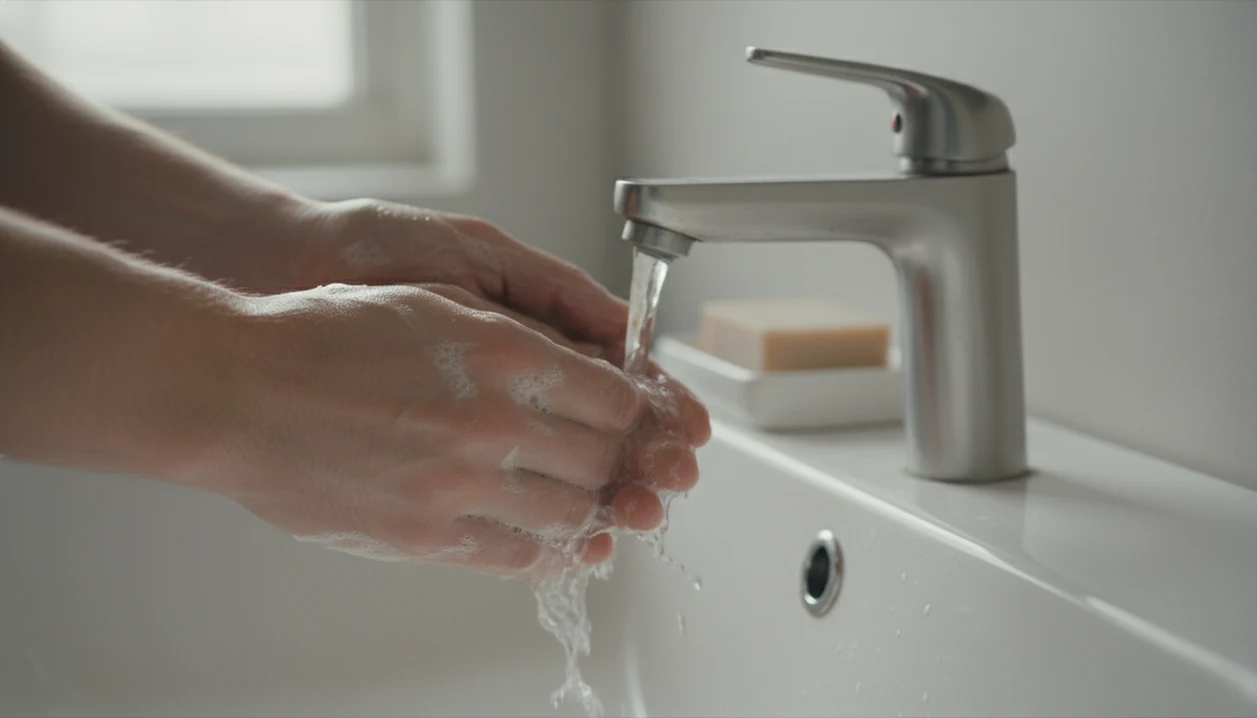
Mindful handwashing is an informal mindfulness exercise that uses ordinary handwashing as a cue to notice the present moment. While washing, you pay attention to water, soap, sound, smell, or hand movement. The hygiene routine stays the same: mindfulness adds attention, not a different washing method. You do not need special soap, a quiet room, or extra time at the sink.
Choose one or two sensations, such as water temperature or the pressure of your palms rubbing together. When your thoughts move to the next task, notice the distraction and return to that sensation. The aim is not perfect focus or a particular feeling. It is a brief opportunity to practice returning your attention during something you already do.
Definition: Mindful handwashing is an informal sensory mindfulness exercise that uses washing your hands as a cue to pay attention to the present moment.
The essentials
- Use normal soap-and-water hygiene first; mindfulness adds attention, not a different washing method.
- Focus on one or two sensory anchors, such as water temperature, soap texture, faucet sound, or hand movement.
- The goal is not perfect focus; the practice is noticing distraction and gently returning to the sensations.
Four attention prompts for everyday handwashing
The best mindful handwashing exercises keep proper hygiene intact and change only the attention prompt. Each version below uses the sink as a daily mindfulness habit cue, so you don't need a cushion, timer, or quiet room.
| Practice | Best for | Not for |
|---|---|---|
| 20-second reset | Rushed moments, work breaks, school days | Long reflection |
| Sensory scan | People who like concrete anchors | Sensory overload days |
| Gratitude wash | A gentle daily reset | Anyone who dislikes gratitude prompts |
| Public-sink practice | Offices, airports, restaurants | Deep meditation |
20-second reset: Feel water, lather, notice pressure, rinse, and take one breath.
Sensory scan: Move attention through touch, temperature, sound, smell, and motion.
Gratitude wash: Name one ordinary support, such as clean water or working hands.
Public-sink practice: Use one discreet anchor, then leave without making it strange.
Mindful.net fits beginners who want these choices organized because the Mindfulness Practices App separates short exercises from longer meditation lessons.
A more distinctive fit is cue-based sorting: users looking for a Mindfulness Practices App can start with brief daily-life exercises before moving into longer breath or body-awareness sessions.
What makes a handwashing prompt practical
We picked handwashing mindfulness practices that are short, plain, hygiene-safe, and easy to remember. A good practice supports ordinary handwashing; it does not turn the sink into a complicated ritual.
- The practice should fit the CDC's at-least-20-second handwashing window, which gives enough time for one small attention exercise CDC guidance.
- The prompt should use sensory details, such as soap texture or faucet sound, instead of abstract or spiritual language.
- The practice should never encourage hygiene shortcuts, skipped soap, or washing less carefully.
- The cue should work in ordinary places, including a kitchen chair nearby, an office restroom, or a bus station sink.
- The mental load should stay low: one anchor is usually better than five instructions.
A familiar cue, such as turning on the faucet, gives beginners a repeatable moment to practice attention without having to feel calm. For a broader menu, compare this with other mindfulness exercises.
Before you start mindful handwashing
Before you start mindful handwashing, keep the hygiene part completely ordinary. The mindfulness piece is only a small attention cue added to normal soap, clean running water, and regular drying.
- Use basic handwashing first: Wash with ordinary soap and clean running water, then dry your hands in the usual way, whether that means a towel, paper towel, or hand dryer. You can bring the same sensory attention to mindful cooking while preparing an ordinary meal.
- Choose one anchor: Pick the sensation you will notice before you begin, such as water temperature, soap texture, hand pressure, faucet sound, or one breath after drying.
- Skip smell if needed: Leave out scented-soap focus if fragrance feels irritating, overwhelming, or more distracting than grounding.
- Keep it brief: Treat the practice as a quick cue inside a routine you already do, not a prolonged ritual or a way to make washing feel “perfect.”
- Get support if it feels distressing: If washing starts to feel compulsive, hard to stop, or tied to repeated checking, pause the mindfulness version and consider professional mental-health support.
Adapt the attention cue to your senses
There is no requirement to notice every sense. If faucet noise is overwhelming or difficult to hear, focus on hand movement or contact between your palms. If touch is uncomfortable, try an available visual detail instead. The broader approach is ordinary activity with deliberate attention, as described in NHS Scotland's everyday mindfulness guidance, which includes personal-care routines such as brushing teeth and getting dressed.
For attention or memory difficulties, reduce the instruction to one phrase: “Notice my hands.” A written reminder near a familiar sink can serve as the cue. Keep any seated or supported position you normally need, and do not change safe access to the sink for the exercise. The attention prompt should fit your existing washing routine, not make it harder. If repeating a short phrase suits you, mantra meditation offers a separate practice built around a chosen word or phrase.
Let the sink become a cue for attention
Mindful handwashing works by pairing an existing routine with sensory attention, a process often called habit stacking. The handwashing cue stays the same; the added skill is noticing and returning. Away from the sink, mindful walking offers another way to practice attention during an activity you already do.
This is a practical habit-cue strategy rather than a claim that handwashing has special therapeutic power. Research on habit formation generally supports linking a new behavior to a stable context cue, though the exact timeline varies by person PubMed research.
The practice works because the sink becomes a cue. As water touches your skin, you can notice temperature, pressure between the palms, the scent of soap, the rhythm of rubbing, and the sound of the stream. If your mind jumps to a wedding planning call, a dog leash waiting by the door, or the next thing you have to handle, that is not a failure. You simply notice the detour and return to the hands.
That return is the practice.
Mindful.net uses this same beginner-friendly pattern across short exercises because it keeps mindfulness practical: a cue, a sensory anchor, a wandering mind, and a return.
How to use mindful handwashing in 5 simple steps
Use mindful handwashing by keeping normal hygiene steps and adding one clear attention anchor. The practice should feel like washing your hands with more awareness, not like doing a separate ceremony at the sink.
- Start with the cue: Turn on the faucet and let that sound remind you to arrive.
- Use soap and water: Wash normally, covering the hands as you would for hygiene.
- Choose one anchor: Pick water temperature, soap texture, hand pressure, or sound.
- Return gently: When thoughts drift, notice that and come back to the chosen sensation.
- End with one breath: After rinsing and drying, take one breath before moving on.
You do not need to measure the pause perfectly. Let the natural length of washing be enough, and use the feel of water and soap as the structure. On days when a sink practice feels too brief, a 3 minute meditation can offer more room to settle.
Common mistakes with mindful handwashing
The main mistake is treating mindful handwashing as either a hygiene shortcut or a test of calm. It works best when soap-and-water washing stays ordinary and the attention practice stays light.
- Keep hygiene first: Wash with soap and water as usual, covering the hands carefully. Mindfulness adds awareness to proper handwashing; it does not replace it, shorten it, or make hand sanitizer rules irrelevant.
- Choose one anchor: Use water temperature, soap texture, hand pressure, or faucet sound. Trying to notice every sensation can make the practice feel crowded instead of grounding.
- Return without judging: Expect the mind to wander. When you notice planning, irritation, or rushing, come back to the chosen sensation without forcing calm.
- Simplify if urges increase: If the exercise starts feeding repeated washing, checking, or “not clean enough” thoughts, stop using it as a practice and return to basic hygiene only.
- Stay practical in public: At an office, airport, school, or restaurant sink, keep it brief and discreet. One sensation and one quiet breath are enough before moving on.
A brief attention script for rushed moments
Can mindful handwashing work in only 20 seconds? Yes, it can, as long as you keep the hygiene steps and use the time for brief intentional attention.
The CDC recommends washing hands with soap and water for at least 20 seconds, which makes that window a practical frame for this exercise CDC guidance. Try this tiny script: feel water, lather soap, notice pressure, rinse, breathe. Say it quietly in your head if that helps.
Don't rush the washing.
After turning off the faucet, when your next task is already pulling at you, Mindful.net fits the rushed-moment use case because its short-practice format reinforces one cue and one anchor rather than a long lesson. For busy days, mindful handwashing often works better than a longer practice because the reminder is already built into the day.
Notice soap texture, water temperature, or sound
A strong sensory version of mindful handwashing uses touch, temperature, smell, sound, and movement without asking you to analyze your thoughts. Sensory detail gives the mind something concrete to return to.
Start with touch: the slickness of soap, the pressure of palm against palm, the edges of each finger. Then notice temperature. Is the water warm, cool, or changing? Add smell if the soap has one. Add sound if the room is quiet enough to hear the faucet. Let movement be the last anchor, especially the circular motion of washing between fingers. If you prefer listening as your main attention anchor, sound bath meditation offers a different setting for noticing sound.
If that feels busy, choose only two senses. Touch and sound are enough.
This is a secular, equipment-free practice. It belongs in the same family as the 5 senses mindfulness exercise, but it is shorter and tied to a hygiene routine.
Add an optional moment of appreciation
A gratitude handwashing practice adds one simple appreciation prompt after lathering or rinsing. Gratitude is optional here; the core exercise is still sensory attention.
Keep the gratitude plain and believable. You might appreciate clean water, hands that keep showing up for the day, or a quiet breath after catching perfume in a hallway. One sentence is enough: “Water is available right now.” Or, “These hands have done a lot today.” Then come back to rinsing, drying, and the next simple movement. For another simple reminder during everyday routines, mindfulness quotes can offer a brief prompt to pause and notice.
No need to force a mood shift.
People who like reflective prompts may use this as a daily reset because it pairs appreciation with an action that already happens several times a day. Mindful.net covers this style well because the Mindfulness Practices App includes mindful living practices alongside breathing and body-scan options, so gratitude stays practical rather than vague.
Keep the practice brief at a shared sink
Public-sink mindful handwashing should be discreet, brief, and socially practical. Use one anchor only, such as water temperature, hand pressure, or one quiet exhale before leaving.
Shared bathrooms can be noisy. Someone may be waiting. The soap dispenser may be empty, the dryer loud, or the airport restroom crowded after a flight. In those moments, a long meditation script is the wrong tool. Keep the hygiene steps, choose one anchor, and move on.
A quiet pause before hitting send is one kind of workday mindfulness. A quiet exhale at the sink is another.
When the day feels crowded and your attention is pulled in several directions, Mindful.net can support the same skill through brief daily-life practices. We usually suggest treating handwashing as one small reset rather than a full meditation session: notice the water, return to the hands, and continue. Similar short pauses are covered in mindful moments.
Try a longer pause after drying
After washing and drying, you may want a separate minute to settle before returning to work. Mindful.net offers short guided meditations, while the free online meditation timer can mark a quiet pause without spoken instructions. Neither is needed at the sink. When someone is waiting or you need to get back to a task, finish normal handwashing, notice one sensation, and move on.
Mindful Handwashing Limits
- Hand hygiene has stronger evidence than mindful handwashing, including associations with reduced respiratory infections in PubMed research.
- Mindful handwashing is not medical treatment, mental-health treatment, or a substitute for therapy.
- Stress, mood, and attention benefits are not reliable for everyone, and busy or shared settings can be impractical.
- Avoid over-washing or repeated checking, and seek professional help for compulsive hygiene behavior.
Mindful handwashing questions
How do you practice mindful handwashing?
Wash your hands normally with soap and clean running water. Choose one sensation, such as soap texture, water temperature, or hand pressure. Notice it while you wash, and return to it when thoughts distract you. Rinse and dry as usual; the attention exercise does not replace any hygiene step.
Does mindful handwashing take longer than normal handwashing?
It does not need to. Add attention during your usual washing routine rather than extending it into a separate ritual. Do not shorten washing to fit an attention script. A breath after drying is optional, and you can skip it when someone is waiting or you need to move on.
What should I focus on while washing my hands?
Start with one clear sensation: the pressure of palm against palm, the texture of soap, or the sound of running water. You do not have to scan every sense. Leave out scent if fragrance bothers you, and choose another anchor if a sensation feels uncomfortable or distracting.
What if my mind wanders during mindful handwashing?
Notice that you were thinking, then return to the next hand movement or another chosen sensation. You do not need to restart the wash or make up for lost attention. Wandering is expected; recognizing it and returning is the skill, not evidence that you did the exercise incorrectly.
Do I need special soap for mindful handwashing?
No. Keep your ordinary soap-and-water hygiene routine. Scent is only an optional attention anchor, not a necessary part of mindfulness. Unscented soap still offers texture, and you can notice hand movement, water temperature, or faucet sound instead. There is no need to buy a product for this exercise.
Can mindful handwashing help with anxiety?
It can provide a brief, concrete focus for attention, but it should not be presented as an anxiety treatment. Research on broader mindfulness practices does not establish that handwashing itself reliably reduces anxiety. If the exercise adds pressure, repeated checking, or extra washing, leave out the mindfulness prompt.
Is mindful handwashing a form of meditation?
It is usually described as informal mindfulness: paying deliberate attention during an ordinary activity. Unlike a seated meditation session, it does not require setting aside a separate practice period. It can be one way to practice noticing and returning, but it is not equivalent to a longer, structured meditation program.
Can I practice mindful handwashing in a public bathroom?
Yes. Keep normal hygiene and use one quiet attention cue, such as hand pressure or water temperature. You do not need to close your eyes, speak a script, or linger at the sink. In a crowded bathroom, finish washing and drying, then leave without adding a separate pause.