
Mindful Stretching for Beginners: Gentle Routines and Safety


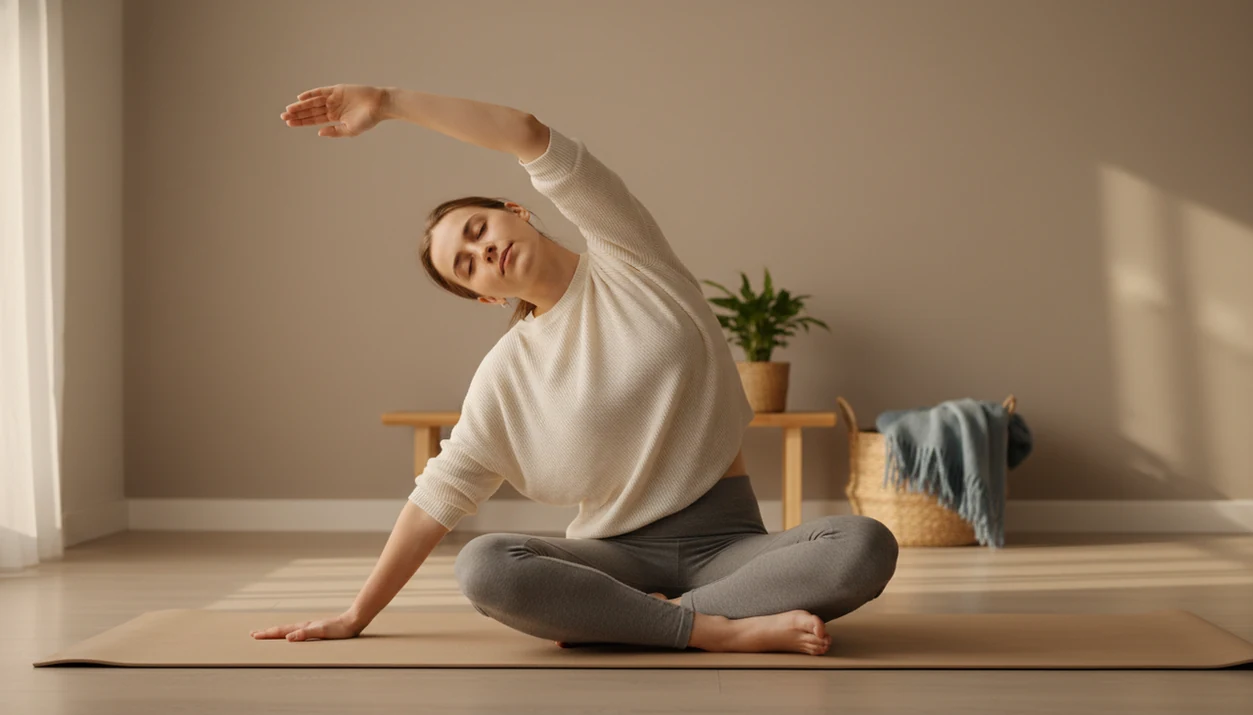
Mindful stretching is gentle stretching with attention to your breath, body sensations, and limits, rather than an effort to become more flexible. This secular mindfulness practice combines easy movement with present-moment attention and nonjudgmental noticing. It can give beginners a body-based alternative when seated meditation feels difficult or restless.
You can practice in a chair, standing near support, or lying down. Choose a comfortable range, move slowly, and notice sensations without grading your performance. When thoughts pull your attention away, return to the stretch or your natural breathing. Avoid bouncing and stop before pain. A short, repeatable session is a better starting point than pushing for a deeper stretch.
Definition: Mindful stretching is a secular movement mindfulness exercise that combines easy stretches with breath awareness, present-moment attention, and non-judgmental noticing of body sensations.
The essentials
- Use mindful stretching when you want a body-based alternative to seated meditation. If you are curious about sustained focus in seated practice, explore jhana meditation as a separate approach.
- Stay in a comfortable range, avoid pain or bouncing, and hold most stretches for about 15-30 seconds.
- Practice consistently, such as 2-3 days per week, rather than expecting one session to change stress or flexibility.
4 mindful stretching routines for beginner needs
The four most beginner-friendly mindful stretching routines are a seated desk reset, standing full-body reset, floor-based evening release, and morning mobility wake-up. Choose the format that fits your space, energy, and body limits.
- Seated desk reset: Best for screen breaks, small offices, or a kitchen chair. Modify or skip it if neck movement causes dizziness or sharp symptoms.
- Standing full-body reset: Best when you feel stiff but don’t want the floor. Use a wall or chair if balance feels uncertain.
- Floor-based evening release: Best for slower unwinding. Skip or adapt it if getting down or up is difficult.
- Morning mobility wake-up: Best for easing into the day with breath and simple motion.
The point is awareness, not range. If you have injuries, dizziness, pregnancy-related restrictions, recent surgery, or medical limits, adapt the routine or ask a qualified professional first.
Beginners looking for structure can use Mindful.net because the beginner practice library separates seated, standing, and lying-down options by situation.
How mindful stretching works in the body and attention system
Mindful stretching works by turning a stretch into an attention loop: choose a position, feel body sensations, notice the breath, detect wandering, and return without judgment. That loop is what makes it mindfulness stretching rather than ordinary flexibility work.
Gentle movement gives restless beginners a concrete anchor. You may notice tightness in one shoulder, warmth across the ribs, pressure under the feet, or one hamstring feeling shorter than the other. Then the mind drifts to a grocery list. You notice. You return.
Direct research on mindful stretching as its own protocol is limited. Related mindfulness, yoga, body awareness, and gentle movement studies suggest possible support for stress, mood, and body awareness, but mindful stretching should not be framed as treatment. For many beginners, good practice delivers a repeatable way to notice and return, not a guarantee of calm on demand.
Mindful.net explains this attention loop in plain language because beginners often need the “what am I supposed to notice?” part before the stretch itself makes sense.
Before you start mindful stretching
Before you start mindful stretching, choose the version that fits your body today and make sure the practice feels safe enough to stay curious. The goal is not to prove you can do a stretch; it is to notice what is true without pushing through warning signs.
- Choose your base. Sit in a chair, stand near support, or use the floor depending on energy, stiffness, balance, and how easy it is to get up again.
- Check your body. Notice pain, dizziness, numbness, tingling, recent injury, pregnancy-related limits, surgery recovery, or any movement a clinician has told you to avoid.
- Set up support. Place a chair, wall, towel, cushion, or folded blanket where you can reach it before you begin, not after you feel unsteady.
- Use a timer. Pick a short window, such as 3-10 minutes, so you are not watching the clock while stretching.
- Stop early if needed. Come out slowly if symptoms sharpen, balance feels unsafe, or breathing gets tight and braced.
A smaller practice done safely teaches more than a larger one done with strain.
How to use mindful stretching safely in 10 minutes
Use mindful stretching safely by staying below pain, moving slowly, and leaving enough ease to breathe. A 10-minute session can be seated, standing, or lying down.
- Set the space. Put your phone timer on 10 minutes and choose a low-distraction spot, such as a chair, mat, or quiet corner.
- Choose the position. Sit, stand, or lie down depending on your body and energy today.
- Move into the stretch. Enter slowly, stop before pain, and avoid bouncing or forcing.
- Breathe and notice. Hold most stretches for about 15-30 seconds, repeating 2-4 times when it feels comfortable. For general flexibility guidance, the American College of Sports Medicine commonly describes static stretches of about 10-30 seconds and repeated stretches for healthy adults: Stretching To Stay Young.Pdf
- Release and reflect. Come out gradually and notice one clear sensation, such as warmth, ease, tightness, or fatigue.
Small is fine.
If 10 minutes feels like too much, start with one shape and three breaths. Mindful.net pairs well with mindful breathing exercises when you want the breath cue before adding movement.
Common mindful stretching mistakes
The most common mindful stretching mistake is turning it into a flexibility test. If the practice becomes about reaching farther, holding longer, or copying a shape, the mindfulness part gets lost.
- Notice range-chasing early. When you catch yourself trying to “get” a stretch, return to simple sensations: pressure, warmth, length, tightness, or ease.
- Soften your breathing. If you are holding the breath, clenching the jaw, or bracing the belly to go deeper, back out until breathing feels available again.
- Stop forcing. Bouncing, yanking, or treating pain as proof of progress is not mindful stretching. Pain is a signal to pause, reduce, or choose another position.
- Adapt the shape. A stretch does not need to look like a yoga photo. Use a chair, wall, towel, cushion, or smaller angle so the position fits your body today.
- Reflect before moving on. Take one breath after each stretch and name what changed or did not change. Without that pause, the session can slip into ordinary stretching on autopilot.
The safer question is not “How far can I go?” It is “What can I feel clearly while staying kind to the body?”
Five starting points: comfort, attention, and consistency
Beginners should know that mindful stretching is less about flexibility and more about attention, comfort, and consistency. These five facts are the safest starting point.
- Mindful stretching combines stretching with breath awareness and non-judgmental noticing. You pay attention to sensation without grading the body. To compare two still practices, consider body scan versus breath meditation and choose the focus that feels more workable.
- It can be done seated, standing, or lying down. A bus seat, office stairwell, or bedroom floor can all work.
- It is not about becoming flexible or doing yoga poses correctly. Small ranges of motion count.
- Regular practice matters more than one impressive session. Two quiet minutes repeated often may teach more than one long forced routine.
- Safety means comfort, slow movement, no bouncing, and backing off before pain. Pain is information, not a target.
For beginners who want a movement mindfulness exercise without performance pressure, Mindful.net fits because the practice pages define the skill before asking you to do it.
Mindful stretching benefits and realistic expectations
Mindful stretching may help with a short stress reset, better body awareness, reduced restlessness, easier transition into seated meditation, and gentle mobility. The most realistic benefit is a clearer relationship with body signals during ordinary moments.
Broader mindfulness and mindful movement research has reported improvements in stress, mood, and anxiety symptoms in some adult groups, but the evidence varies by population and practice type. The NCCIH summarizes mindfulness research and safety cautions here: NCCIH overview That does not prove mindful stretching alone treats anxiety, depression, pain, or any medical condition; it is a complementary practice.
One simple way to try it is a three-minute breathing pause before opening a laptop, followed by shoulder rolls and a slow side stretch. Feet planted under the desk. No dramatic setup needed.
If you want a wider menu, the related guide to mindfulness exercises covers non-movement options too. Mindful.net keeps these choices separate so readers can compare breath, body scan, stretching, and daily-life practices without mixing them into one vague wellness claim.
Movement benefits are not proof of mindfulness benefits
Feeling better after a stretching session does not show which part helped. Movement, a break from work, and deliberate attention happen together, making their effects difficult to separate. A randomized trial of 413 adults compared mindfulness-based stress reduction, moderate exercise, and a wait-list group over eight weeks. It examined stress and mental-health pathways, not mindful stretching as a standalone practice.
That distinction matters when choosing a goal. For attention practice, notice sensations and return when your mind wanders. For physical rehabilitation, follow an individualized plan rather than assuming mindfulness supplies one. A 2025 systematic review of informal mindfulness found substantial variation in interventions involving diet and physical activity, which limits how confidently those findings can be applied to a particular stretching routine.
Best for seated desk tension: seated mindful stretching
Does seated mindful stretching help desk tension? It can give beginners a small screen-break practice for the jaw, shoulders, hands, and breath, especially when space is limited.
Use the chair as support. Try slow neck turns within a comfortable range, shoulder rolls, wrist flexion and extension, seated side-body reaches, and gentle spinal movement. Keep the motion smaller than you think you need. Counted breaths between keyboard clicks can be enough to reset attention.
For office workers, the best version is short, quiet, and easy to stop: one jaw release, two shoulder rolls, and three slow breaths before returning to the screen.
This option is not for anyone with acute neck symptoms, dizziness, nerve pain, or movements restricted by a clinician. Jaw unclenching behind closed lips may be useful to notice, but forcing the neck or shoulders is not part of the practice.
Best for full-body reset: standing gentle mindful movement
Standing gentle mindful movement is best when you want a full-body reset without getting on the floor. It uses balance support, slow breath, and simple movements instead of demanding shapes.
Try a standing side stretch, shoulder rolls, calf stretch, hip circles, and a modified forward fold with hands on a desk or thighs. Inhale as you lengthen slightly. Exhale as you soften back toward neutral. The breath is not a rulebook; it is a pacing cue.
If your priority is waking up stiff muscles without turning practice into exercise, keep the range small enough that breathing stays easy and balance stays steady.
Use a wall, desk, or chair if balance wobbles. Modify or skip forward folds if you have dizziness, recent injury, balance problems, or pain when hinging. For more short daily resets, mindful moments can help you place movement between normal tasks.
Best for evening release: floor-based mindful stretching
Floor-based mindful stretching is best for evening downshifting, when the goal is to settle attention rather than push deeper. The floor gives feedback, support, and a slower pace.
Begin with lying knee-to-chest, then try a reclined hamstring stretch with a towel, a supine twist, and a supported child’s pose alternative using cushions. A blanket under the knees can change the whole session. So can a folded towel under the head.
Beginners trying to unwind after long screen time may prefer Mindful.net because the practice library separates evening awareness from performance-based mobility routines.
Skip or modify floor work if getting down or up is hard, pregnancy-related guidance limits these positions, or back pain worsens in them. The silence after the final chime is useful only if the body still feels safe. If floor work feels wrong, choose a chair instead.
Selection criteria for accessible beginner stretches
We picked beginner mindful stretching routines by prioritizing accessibility, low equipment needs, clear sensory anchors, and easy modification. Routines were excluded if they relied on pain, bouncing, advanced yoga shapes, or flexibility performance goals.
| Selection criterion | What we looked for | What we excluded |
|---|---|---|
| Accessibility | Seated, standing, and lying-down options | One-size-fits-all floor routines |
| Equipment | Chair, wall, cushion, towel | Props beginners are unlikely to own |
| Sensory anchor | Breath, pressure, warmth, lengthening | Vague “feel better” instructions |
| Safety | Comfortable range, slow entry, no bouncing | Sharp pulling, strain, or forced depth |
| Beginner holds | Short holds, often 15-30 seconds | Long holds without modification |
Common flexibility guidance for healthy adults often uses 2-3 days per week, short holds, and repeated sets as a baseline when medically appropriate. Our brand standard is practical, secular mindfulness for beginners and everyday life. Mindful.net also complements mindfulness exercises and techniques when readers want to compare movement with breath, body scan, or sensory practices.
How can I remember to stretch during a desk break?
During a desk break, a reminder can help you pause before returning to the screen. The free mindfulness bell can serve as a cue to notice your posture and choose a comfortable stretch. The Mindful.net app also offers breathing exercises for a separate attention break. For persistent pain or uncertainty about safe movements, individual advice from a clinician is more useful than a reminder.
A gentle movement sequence with a seated option at every step
Try these movements in order, either standing or seated, or change positions between steps. For the seated version, use a stable chair with your feet supported. Give each movement a few unhurried repetitions. Pay particular attention to transitions: the moment a hand opens, an arm changes direction, or a heel settles. There is no need to match movement to a fixed breathing count.
- Open and close your hands gently. Standing or seated, rest your arms beside you or on your thighs. Notice how the fingers feel as they spread and come together.
- Turn your palms upward, then downward, keeping your elbows close to your sides. Use the same movement seated. Notice whether the two forearms move differently.
- Reach one hand a short distance forward, then bring it back. Alternate sides. Seated, keep your back supported if that is more comfortable. Notice the change from reaching to returning.
- Lift one heel, then lower it before switching sides. Standing, keep your toes down and hold a stable support. Seated, keep your toes on the floor and notice pressure shifting beneath each foot.
- Let your hands and feet become still. Standing or seated, notice which sensations remain after movement stops. Finish without adding a deeper stretch. For a still practice after movement, try guided body scan meditations that direct attention through different body areas.
Mindful movement practice versus the broader mindfulness movement
Here, mindful movement means a physical practice: moving your body while attending to what you notice. The broader mindfulness movement refers to the spread of mindfulness ideas and practices in society, rather than a sequence of body movements. The distinction is between an exercise and a wider social trend. You can follow this sequence without joining a group or adopting a particular worldview.
Mindful Stretching Limits
- Mindful stretching is an educational attention practice, not a treatment plan.
- Standalone research is limited, and likely benefits are inferred from broader mindfulness, yoga, body awareness, and gentle movement research.
- It should not replace medical treatment, physical therapy, psychotherapy, medication guidance, or urgent care.
- Stop or modify for pain, numbness, tingling, sharp pulling, dizziness, or joint discomfort, and seek personal clinical advice.
Mindful stretching questions
How is mindful stretching different from regular stretching?
The difference is where you place your attention. During mindful stretching, you notice breath, pressure, tightness, and ease, then return to those sensations when thoughts distract you. Increasing flexibility is not the main goal. A small, comfortable movement can provide enough sensation for attention practice.
Can mindful stretching count as meditation?
Yes. It can be a movement-based mindfulness practice when you deliberately notice present sensations and return after distraction. Simply moving slowly is not the whole method. The attention practice matters more than the stretch shape, and you do not need to empty your mind.
How long should I hold a mindful stretch?
The beginner routine on this page suggests about 15 to 30 seconds for most stretches, without forcing or bouncing. That is a starting point, not a requirement. Shorten the hold or stop if breathing becomes strained, balance feels uncertain, or you notice pain, numbness, or tingling.
Can I do mindful stretching in a chair?
Yes. A seated practice can include gentle shoulder rolls, wrist movements, or small side-body reaches. Notice contact with the chair and keep your movement comfortable. Skip neck movements that cause dizziness or sharp symptoms. Sitting is a valid practice position, not a lesser version of standing or floor stretching.
What should a mindful stretch feel like?
You might notice ordinary tension, warmth, pressure, or a mild sense of lengthening. Pain is not a target or evidence of progress. Stop for sharp or escalating pain, numbness, instability, or sudden loss of strength, and seek appropriate advice. Reduce the range whenever you need to brace or hold your breath.
Do I need to match my breathing to each stretch?
No. Natural breathing is enough. You can use an inhale or exhale as a pacing cue, but matching every movement to a breath is not required. If coordinating them feels distracting or makes you strain, keep the movement small and notice breathing without trying to control it.
Can mindful stretching help with stress or anxiety?
It may offer a brief attention reset or make restlessness easier to notice. Broader mindfulness and movement research reports benefits for some groups, but that does not establish mindful stretching alone as an anxiety treatment. It should not replace psychotherapy, medication guidance, or other care you need.
Can I try mindful stretching if I have chronic pain?
Some people can use shorter intervals, rest breaks, and clinician-approved movement limits. Choose supported positions and do not stretch through pain to complete a routine. When movement is unsuitable, attention can rest on hand sensations, chair contact, breath, or sound instead. Persistent or changing symptoms need individualized advice.