
Kindness Curriculum for Preschool: Lessons, Routines, and Evidence


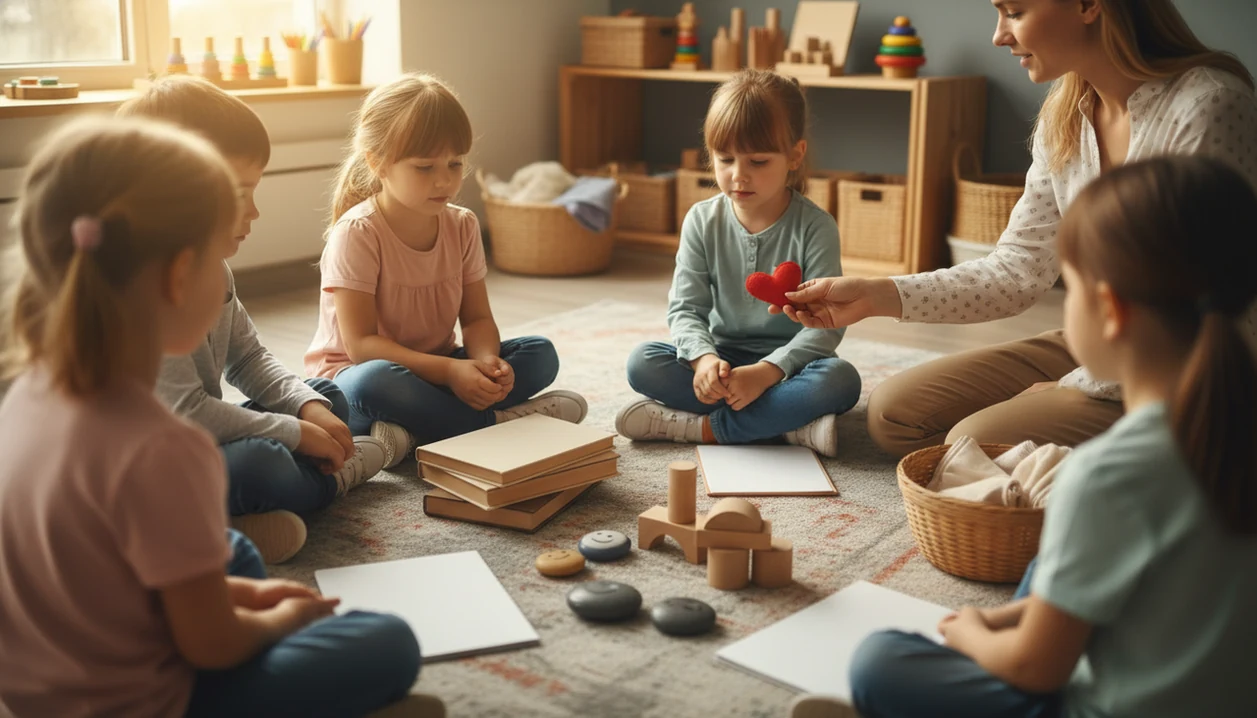
A kindness curriculum for preschool is a structured, secular social-emotional learning program that teaches children to notice feelings, manage emotions, and practice caring behaviors. Stories, songs, movement, mindfulness, and teacher-led activities help children build attention, empathy, gratitude, forgiveness, and sharing skills. The best-known model, developed at the University of Wisconsin, Madison, was originally taught over 12 weeks.
For teachers and families, the useful question is how those lessons carry into snack time, cleanup, waiting, and disagreements over toys. Children need repeated chances to practice, not just reminders to be kind. This guide explains lesson structure, classroom routines, and the evidence behind the approach. Research is promising, but a kindness curriculum supports school readiness rather than replacing help for serious behavioral or developmental needs.
The essentials
- The best-known preschool kindness curriculum is the secular University of Wisconsin, Madison model, designed for regular classroom use.
- Core skills include attention, emotion regulation, empathy, gratitude, forgiveness, sharing, and caring classroom habits.
- Research is promising, but kindness lessons work best as a school-readiness support, not as a guaranteed fix for serious behavior or developmental needs.
The preschool kindness curriculum at a glance
- A kindness curriculum for preschool is secular, classroom-based social-emotional learning that uses mindfulness activities, stories, movement, and teacher-guided practice.
- The University of Wisconsin, Madison model was originally taught for 12 weeks, with two 20-30 minute lessons per week, totaling about 10 hours, according to Mind & Life reporting on the research Mindfulness Based Kindness Curriculum For Preschool Children.
- PBS Wisconsin Education describes the public version as a 24-lesson guide for PreK and Kindergarten students Kindness Curriculum.
- Core skills include attention, self-regulation, empathy, sharing, gratitude, forgiveness, and everyday kindness in classroom routines.
- The research is encouraging, but the curriculum should not be treated as a guaranteed cure for aggression, chronic dysregulation, or major classroom safety problems.
In practice, the work is small and repeated. A teacher might pause before cleanup, invite children to feel their feet on the rug, then practice asking, “Do you need help?”
How to choose age-appropriate kindness materials
A good preschool kindness curriculum is secular, concrete, and built for the way young children actually learn. It should teach social-emotional skills through practice, not rely on abstract slogans like “be your best self.”
Use a simple review process before choosing materials:
- Check the language for age fit, cultural fit, and secular framing. Preschoolers need words like sad, calm, help, wait, and try again more than big character labels.
- Look for lessons that combine stories, movement, teacher modeling, and repeated chances to rehearse the same skill during real routines.
- Ask how the guide supports adaptation for sensory needs, children who need movement, multilingual classrooms, and different developmental levels.
- Prefer programs that state what they can and cannot do, cite research honestly, and fit into realistic classroom time.
- Avoid any curriculum that promises to “fix” behavior without adult consistency, classroom routines, family communication, and extra supports when children need them.
The best choice feels usable on a noisy Tuesday, not just polished in a training binder.
How modeling and repetition build caring habits
A preschool kindness curriculum works by pairing repeated adult modeling with concrete practice and short reflection, so children can rehearse caring behavior before they need it in conflict.
Preschoolers do not learn empathy from a slogan on the wall. They learn when an adult names a feeling, models a calm breath, shows what helping looks like, and lets them try again. Mindfulness supports the first step: attention. Before children can share blocks or notice a sad friend, they need a brief way to stop, look, and listen.
The mechanism is simple, but not magic. Emotion labeling builds vocabulary. Breathing and movement settle the body enough for learning. Stories and songs make abstract ideas visible. Role-play turns “be kind” into a sentence a child can actually use.
Short repeated lessons usually work better than a single assembly because preschoolers need many rehearsals. The mind wanders to the toy shelf. Then the teacher brings it back. Notice and return.
Plan 8 to 12 weeks of lessons and daily practice
Run a preschool kindness curriculum in an 8-12 week rhythm. Consistent small lessons usually beat occasional big lessons.
- Set a weekly lesson rhythm that fits your existing circle time or small-group schedule.
- Choose one skill cluster, such as attention, feelings, empathy, gratitude, or forgiveness.
- Teach the skill with a story, movement game, song, role-play, and a short mindful pause.
- Practice the skill during snack, cleanup, peer conflict, waiting, and transitions.
- Send a simple parent note or home prompt when it fits the family context. At home, meditation for siblings can give children a short shared pause to practice together.
- Review what changed, then adjust for age, language, sensory needs, and group readiness.
1. Set a weekly lesson rhythm
Start with one main lesson each week, then add brief reminders.
2. Choose one kindness skill
Pick one target at a time. Attention comes before sharing because children need to notice a peer first.
3. Teach with concrete activities
Use picture books, puppets, movement, songs, and scripted phrases. For younger children, short meditation for toddlers can also show how brief the pause needs to be.
4. Practice during real classroom moments
Snack spills, coat struggles, and cleanup refusals are not interruptions to the curriculum. They are the curriculum.
5. Review and adapt
Look for small changes, not dramatic ones. More waiting, fewer grabby moments, or one child checking on another can matter.
Teach attention first, then feelings and caring actions
A preschool kindness curriculum usually starts with attention and listening, then moves toward feelings, empathy, gratitude, forgiveness, and helping behavior. The sequence should stay concrete, short, visual, and repeated.
- Attention and listening: Children practice looking, pausing, and returning to the teacher’s voice or a simple sound cue. For older preschoolers, mindfulness for kindergarten offers simple activities that build on attention and listening.
- Feelings and body signals: Lessons name emotions and connect them to body clues, such as tight fists, fast feet, or a quiet face.
- Caring actions: Children rehearse sharing, helping, saying thank you, checking in, and making room for another child.
- Repair and forgiveness: Teachers model simple phrases like “Are you okay?” and “I can try again.”
Materials matter because preschoolers need something they can see and touch. Picture books, songs, movement games, puppets, short scripts, and parent letters all help turn kindness into practice, not a lecture. A family mindfulness routine can carry the same language into evenings without turning home into school.
Lesson length, frequency, and classroom adaptations
How long does a preschool kindness curriculum take? The original research schedule used two 20-30 minute lessons per week for 12 weeks, or about 10 hours total.
UW, Madison later described the public curriculum as a 12-week teacher-implemented program for preschoolers. PBS Wisconsin Education describes the guide as 24 lessons for PreK and Kindergarten students. That structure gives schools a helpful starting point, but real classrooms vary.
One practical adaptation is one 20-minute main lesson each week plus daily 2-minute reinforcement. The quick reminder might happen before lining up, after a playground conflict, or when children return from the bathroom in a noisy cluster.
Consistency matters more than making lessons long. For preschoolers, a short pause practiced every day often lands better than a long lesson that only happens when the schedule is calm. On the rug, that may look like one child lifting their eyes from the blocks when the teacher taps a chime.
Where the curriculum fits in PreK and Kindergarten
A kindness curriculum preschool plan fits best when a school wants secular SEL, teacher-led mindfulness, and daily classroom practice for PreK or Kindergarten readiness. It does not replace clinical, special education, or crisis supports.
| Fit | Good use | Caution |
|---|---|---|
| PreK and Kindergarten readiness | Teaching attention, feelings, sharing, and peer repair | Adjust language for younger or multilingual groups |
| Secular SEL classrooms | Building common routines for kindness and regulation | Review materials for religious or cultural assumptions |
| Teacher-led mindfulness | Short breathing, listening, movement, and reflection | Avoid forcing stillness on children who need movement |
| Behavior support systems | Reinforcing calm practice and repair language | Not a substitute for behavior plans or specialist support |
| Family extension | Simple home prompts and shared vocabulary | Keep home practice optional and low-pressure |
Mindfulness practices and meditation techniques for beginners and daily life can offer attention practice and calmer routines, not a promise that every child will behave on command. Tools like Mindful.net can support adults or families with gentle secular practice around the curriculum.
Make mindful pauses optional and accessible
Introduce a mindful pause as a short attention activity, not a test of how still or calm a child can be. Allow eyes to stay open and offer alternatives such as noticing classroom sounds, gentle movement, or drawing. Do not require children to share private feelings publicly. Explain participation options to families and follow school consent requirements. These choices reflect the developmental and contextual considerations in school mindfulness reporting guidance. Review meditation in schools for potential benefits, limitations, and safety considerations before introducing classroom practices.
If focusing on breathing or body sensations increases a child's distress, stop the exercise and offer an external sensory activity or movement instead. Follow the school's safeguarding and referral procedures when concerns persist. Findings from the MYRIAD adolescent trial reinforce the need to monitor unintended effects, but they do not establish how preschoolers will respond. Kindness lessons should never take the place of assessment or treatment.
What research suggests about preschool outcomes
- Early research on the preschool kindness curriculum found gains in attention, social competence, empathy, sharing, and some academic outcomes in a small randomized study A0038256.
- A Mindful.org summary reported that children who received the curriculum scored higher on attention and social competence than children who did not receive it Preschoolers Learn Kindness Curriculum.
- When UW, Madison announced the free release, more than 2,000 educators had already signed up to receive it.
- The evidence supports school readiness and classroom climate more than guaranteed individual behavior change.
- Implementation quality, teacher consistency, classroom culture, and child needs all shape outcomes.
For preschool classrooms, a repeated SEL curriculum is often easier to sustain than isolated kindness events because it gives teachers shared language for daily moments. Still, “promising” is the right word. A child may share crayons more often but still need extra support during loud transitions.
Educators typically recommend matching social-emotional programs to developmental age, classroom context, and support needs rather than using one curriculum as a stand-alone solution.
Use kindness prompts during transitions and conflict
Daily kindness practice works best when adults model calm attention before asking children to regulate. Start small, then repeat the same language often.
- Pause before transitions: Use one breath, a hand on the belly, or a listening cue before cleanup, lining up, or conflict repair.
- Name kindness specifically: Say, “You moved the truck so Maya could reach,” instead of “Good job being nice.”
- Make feelings visible: Use puppets, picture cards, mirrors, and stories so children can see sad, mad, worried, and proud.
- Practice repair language: Teach “Are you okay?”, “Can I help?”, “I need space,” and “I can try again.”
- Keep home prompts light: Offer families one optional phrase or story idea, not a packet of homework. Families can also try reducing kids phone use to make more room for shared attention and kindness.
A three-minute breathing pause before opening a laptop can help adults too. If caregivers want a simple shared practice, parent and child breathing exercises can be easier than explaining mindfulness theory.
Preschool Kindness Curriculum Limits
- Results vary across preschools and classrooms, depending heavily on adult consistency, modeling, pacing, and implementation quality.
- Lessons cannot replace counseling, special education services, formal behavior support plans, or care that accounts for trauma.
- Kindness lessons are not a quick fix for aggression, chronic dysregulation, elopement, or major classroom safety concerns.
- Seek qualified support for persistent fear, shutdown, panic, or intense worry, as explained in meditation for anxious kids.
Preschool kindness curriculum questions
What is a kindness curriculum for preschool?
It is a structured social-emotional learning program that uses stories, songs, movement, mindfulness, and adult-guided practice. Children learn to pay attention, name feelings, share, help, and repair disagreements. The aim is to build skills through repeated practice, not to label children as kind or unkind.
Is the preschool Kindness Curriculum religious?
The University of Wisconsin, Madison model is secular and mindfulness-based. Classroom activities teach attention, emotion regulation, and caring behavior rather than religious beliefs. Schools should still review materials for cultural fit, explain activities to families, and provide reasonable alternatives for children who do not participate.
How long should preschool kindness lessons last?
The original research schedule used two 20 to 30 minute lessons each week for 12 weeks, totaling about 10 hours. That is a starting point, not a requirement for every classroom. A shorter main lesson with brief daily reminders is a practical adaptation, not the same research-tested schedule.
What activities teach kindness to preschoolers?
Useful activities include naming a puppet's feelings, practicing how to offer help, taking turns with materials, and noticing a classmate's caring action. Stories, songs, picture cards, and movement keep lessons concrete. Repeat the same language during snack, cleanup, and disagreements so children can use the skill outside lesson time.
Does a kindness curriculum improve preschool behavior?
Early research suggests benefits for attention, social competence, empathy, and sharing, but it does not guarantee behavior change for an individual child. Adult modeling and consistent practice matter. Persistent aggression, severe distress, or safety concerns need additional support rather than more kindness lessons alone.
Can parents use preschool kindness activities at home?
Parents can practice the same concrete skills during ordinary routines: name a feeling, model a pause, notice helpful behavior, or rehearse asking for a turn. Use familiar words and repeat them consistently. Home activities can reinforce classroom learning, but they are not equivalent to completing the full classroom curriculum.
Should preschoolers close their eyes during mindfulness?
Eye closure should be optional. Children can keep their eyes open, listen to nearby sounds, or try gentle movement instead of focusing on breathing. Avoid treating stillness as success. If an activity increases distress, stop it and offer another way to participate without punishment or public explanation.
Is a kindness curriculum the same as behavior management?
No. A kindness curriculum explicitly teaches attention, feelings, relationships, and caring actions. It can support classroom routines, but it does not replace clear expectations, safety procedures, or individual behavior support plans. Children need adults to teach and model skills, not simply ask them to be nicer.