
Teaching Kids Accountability: Clear Limits and Practical Repair


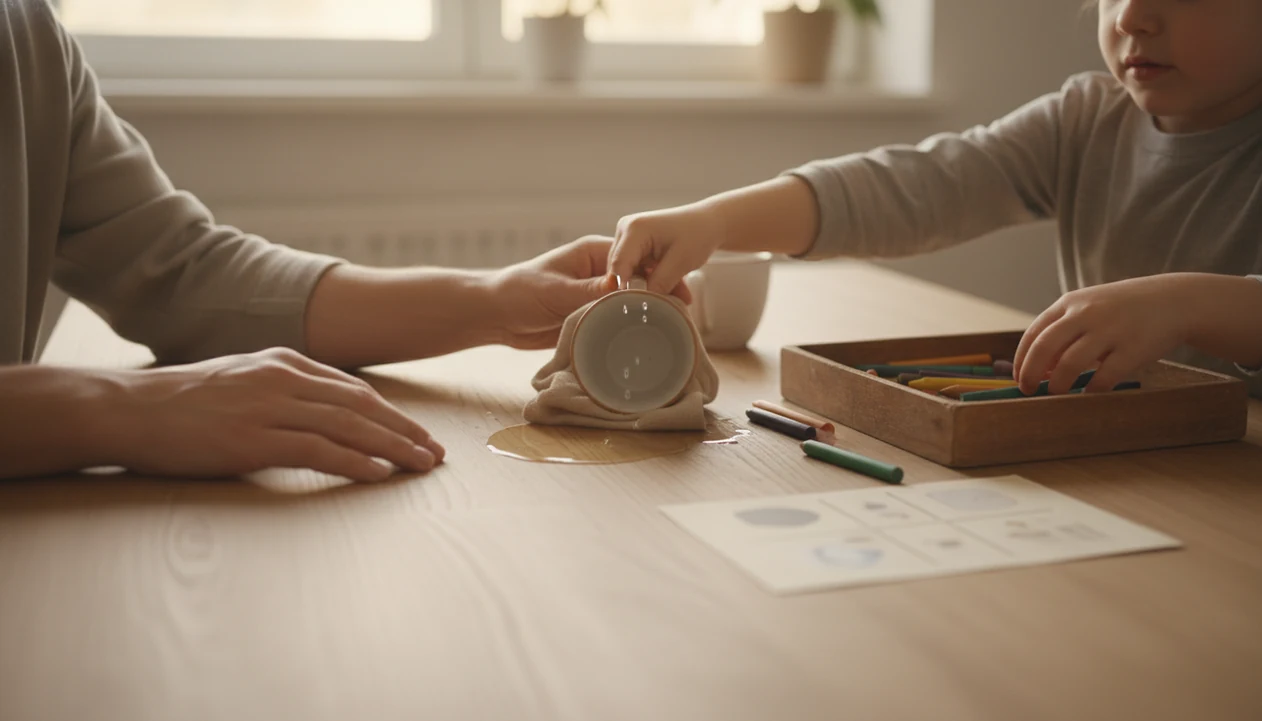
Teaching kids accountability means helping children own their choices, follow through on commitments, and repair harm in age-appropriate ways. Clear expectations, calm follow-through, and adult modeling give children something concrete to practice. The goal is not to label a child as good or bad. It is to help them recognize what they did, understand who was affected, and take a useful next step.
A repeatable routine keeps that work manageable: Notice, Own, Repair, Practice. A child might return a grabbed toy, help clean a marked wall, or redo an unfinished chore. Mindfulness adds a pause to notice anger or embarrassment before responding. It does not replace limits, consequences, or help with serious behavior concerns.
The essentials
- Accountability is a teachable skill built through clear expectations, consistent routines, and adult modeling.
- Mindfulness helps because kids need self-awareness, emotional regulation, and a pause before they can choose a better response.
- Repair matters more than punishment: the child should name what happened, make amends, and plan what to do differently next time.
Notice, Own, Repair, Practice: A repeatable family routine
Teaching kids accountability is easier when parents use one repeatable model: Notice, Own, Repair, Practice. The child notices what happened, owns their part, repairs what they can, then practices a better next step.
That model keeps accountability out of the “good kid, bad kid” category. It treats responsibility as a skill, like tying shoes or packing a backpack. Some days it will be clumsy.
The hard part is often adult consistency. In a 2015 Pew survey, 37% of U.S. parents said they often find it hard to be consistent with discipline and setting limits, which is exactly where accountability routines can wobble Parenting In America. A simple model helps on tired evenings, when homework is half done and everyone wants the conversation to end.
What Accountability for Kids Actually Means
Teaching kids accountability means helping children own their choices, follow through on commitments, and repair harm in age-appropriate ways. It is not the same as punishment, fear, long lectures, or shame.
In daily family life, accountability may look small. A child returns a toy they grabbed. They apologize by naming the hurtful words, not just mumbling “sorry.” They redo the rushed chore. They tell the truth about the marker on the wall, then help clean it.
Age matters. A preschooler may need you beside them for the whole repair. A teen may be able to text a teacher, reset a calendar reminder, and propose a new plan. For younger children, a calm body often comes before honest words. A full accountability conversation rarely works in the middle of sobbing, yelling, or hiding under the table.
Five ways to make expectations and repair clearer
- Set expectations before consequences. Children need to know the job, the limit, and the follow-through before the problem happens.
- Model repair out loud. “I snapped at you. That was my part. I’m going to try again” teaches more than a speech about respect.
- Build in a pause. Accountability improves when kids can notice anger, embarrassment, or panic before they defend themselves.
- Choose repair over shame. A Cochrane review found that structured parenting programs using positive discipline and consistent expectations can reduce child conduct problems and improve parenting practices Full.
- Use visible tools. Checklists, chore cards, redo chances, and reflection questions make responsibility easier to practice.
For most families, consistent repair routines are more useful than bigger punishments because they teach the exact behavior a child should try next.
The skills behind taking responsibility
Accountability works through a chain: expectation, impulse, emotion, pause, choice, consequence, repair. The child learns to slow the moment between “I want to” and “I did it.”
The brain skills underneath are executive function, emotion regulation, and self-awareness. Executive function helps a child remember the rule and plan the next step. Emotion regulation helps them stay available for learning. Self-awareness helps them say, “I was mad, and I shoved him.”
Lectures often fail when a child is flooded or defensive. The words may be accurate, but the child is busy protecting themselves. Red cheeks. Eyes down. Nothing going in. A 2022 systematic review linked early-childhood mindfulness programs with improvements in executive function and emotion regulation NIH research, and a school-based mindfulness trial found gains in self-regulation and prosocial behavior Full. Those skills do not replace parenting, but they support accountability practice.
A repair routine for chores, homework, and conflict
Use this teaching kids accountability guide as a short routine after homework battles, unfinished chores, sibling conflict, or screen-time arguments. Keep your voice low and your words plain.
- Set the expectation before the next attempt: “Math starts at 4:00, and the tablet waits until it is checked.”
- Pause for regulation if emotions are high: take three breaths, feel feet on the floor, or sit apart for two minutes.
- Name the action and impact: “You left the blocks in the hallway, and your sister tripped.”
- Repair with a concrete action: redo the chore, replace the item, apologize specifically, or help the person affected.
- Review one next step: “Tomorrow, what will remind you before dinner?”
A useful parent script is: “I’m not here to argue about whether you are a good kid. We are naming what happened, fixing what we can, and practicing the next choice.”
Accountability Repair Rituals for Mistakes and Meltdowns
Repair turns “sorry” into accountable action. The goal is not a polished apology on command; it is a child who can connect their action to another person and do something useful next.
Do not force a performative apology while the child is still flooded. A child can calm down first, then return. That may mean sitting on the stairs, sipping water, or doing a short breathing practice from a calm down meditation for kids routine.
A child-friendly apology script
Use three parts: “What I did was __. It affected you by _. What I will do now is __.” For example: “I called you a name. It hurt your feelings. I will stop the game and give you space.”
A simple repair menu
For lying, tell the truth and fix the hidden problem. For breaking an item, help replace, clean, or save money. For hurtful words, apologize specifically and change the next interaction. For missed chores, redo the task. For classroom disruption, help reset the room and check in later.
Everyday behavior problems versus concerns needing support
Mindful accountability tools fit everyday family problems where a child needs structure, practice, and calm follow-through. They are not enough when behavior is intense, unsafe, trauma-driven, or getting worse. For repeated hitting or threatening behavior, mindfulness for aggression in youth may complement clear boundaries and professional support.
| Best for | Not for | What to try instead |
|---|---|---|
| Everyday defiance | Serious aggression | Pediatric, mental health, or school-based support |
| Forgotten chores | Safety risks | A safety plan and professional guidance |
| Sibling conflict | Trauma responses | Trauma-informed care and caregiver coaching |
| Homework resistance | Severe anxiety | Assessment and anxiety-specific support |
| Screen-time arguments | Persistent school refusal | School team meeting and clinical evaluation |
Professional support may be needed when a child’s behavior creates danger, shuts down daily life, or does not improve with steady routines. A brief mindfulness or meditation practice can create space to pause and pay attention; it does not produce instant obedience or treat complex behavior problems.
Teaching Kids Accountability Activities by Age
Accountability activities work best when they match the child’s development. Expecting adult-level ownership from a young child usually creates frustration for everyone. Families can adapt these routines with mindfulness for special needs families, while respecting each child’s abilities and support needs.
Preschool: Use picture routines, two simple choices, and repair with help. “Blocks in basket or books on shelf first?” is clearer than “be responsible.”
Early elementary: Try chore charts, redo opportunities, and reflection questions. A child can answer, “What happened? Who was affected? What can I fix?”
Tweens: Use shared agreements, natural consequences, and problem-solving. A tween who forgets soccer gear can help create a door checklist instead of hearing a lecture in the car.
Teens: Use responsibility contracts, calendar ownership, and collaborative repair. Teens need room to propose solutions, but still need follow-through. When phones interfere with commitments, mindfulness for teen phone addiction can support conversations about attention and limits.
Classrooms can adapt the same pattern with posted expectations, reflection sheets, restorative conversations, and reset routines. For older children who resist “kid” language, meditation for teens can frame the pause as attention training.
Parent Mindfulness Skills That Make Accountability Consistent
Does parent mindfulness help with teaching kids accountability? Yes, because children learn accountability partly by watching adults regulate, admit mistakes, and repair after conflict.
Try this before responding: notice your warm cheeks after the walk from school pickup, let one slow exhale finish, name the emotion silently, then choose one sentence. “I’m angry” is better than letting anger deliver the whole lesson.
Stress makes consistency harder. In the American Psychological Association’s Stress in America reporting, parents have consistently reported higher stress than non-parents and stress that affects family life APA research. Tools like Mindful.net can support secular mindfulness practices and meditation techniques for beginners and daily life, especially when a parent wants short, plain-language practices rather than a long routine. If you use Mindful.net as a Mindfulness Practices App, treat it as a practice aid for the adult pause, not as a behavior-management system for the child. The accountability still comes from your expectation, follow-through, and repair routine. A family mindfulness routine can also make the pause feel normal, not like a punishment.
What parenting research supports, and what it does not
Mindfulness may help parents become more aware without making parenting less stressful. A 2021 systematic review and meta-analysis found a moderate improvement in parental mindfulness among nonclinical samples, but no significant overall effect on parenting stress. A parent can learn to notice an angry reaction and still feel exhausted or overwhelmed. That distinction matters when a breathing pause does not make the day feel easier.
Concrete parenting skills have a separate evidence base. A 2022 meta-analysis of Group Triple P found reductions in child behavior problems, inconsistent parenting, and overreactive parenting. Its practical elements include clear expectations, specific praise, calm consequences, and self-regulation. These findings support combining awareness with repeated skill practice. They do not establish that the Notice, Own, Repair, Practice routine itself has been tested, or that mindfulness alone makes children accountable.
Common Mistakes in Teaching Kids Accountability
Vague expectations, shifting consequences, and shame can push children to defend themselves instead of taking responsibility. They shift the focus from repair to self-protection.
One mistake is giving vague expectations. “Behave” is too broad. “Put shoes in the basket before snack” gives the child something to do. Another mistake is changing consequences based on your mood. Kids notice when the rule depends on how tired the adult feels.
Asking “Why did you do that?” during high emotion often backfires. Many kids do not know yet, or they reach for a quick excuse. Try “What happened first?” instead.
Confession is not the same as accountability. Telling the truth matters, but the child still needs to repair. Avoid shame labels such as lazy, bad, selfish, or irresponsible. Also avoid rescuing kids from every natural consequence. If the forgotten library book means a renewal chore or apology note, let the learning happen.
Make room to calm down before discussing repair
After a sibling argument, the repair conversation can wait until everyone is ready to talk. The site's white noise and ambient sound player offers optional background sound during that pause; quiet is also an option. Mindful.net's app includes breathing exercises for a brief pause before responding. Neither tool teaches accountability by itself. Clear limits and a concrete repair still matter, and unsafe or worsening behavior calls for professional support.
Limits of Accountability Routines
- Mindfulness accountability is not a quick fix and must never minimize serious distress or unsafe behavior.
- Seek therapy, school support, evaluation, or specialized intervention for serious behavioral, developmental, or mental health concerns.
- Evidence for children’s mindfulness is promising, but results vary by program, age, setting, and study quality.
- Adult consistency is essential but can be difficult under stress, time pressure, separation, or caregiver conflict.
Questions about teaching kids accountability
At what age can children start learning accountability?
Start with small, supported actions in the preschool years, such as returning a toy or helping put blocks away. Young children need an adult beside them to explain the impact and guide repair. Older children can gradually take more responsibility for agreements, reminders, and making amends. Match the task to the child's development.
How do I teach accountability without shaming my child?
Describe the action rather than the child's character: "You left the blocks in the hallway" instead of "You're careless." Explain the impact, state the limit, and help them choose a repair. Keep the conversation short. Taking responsibility means addressing what happened, not accepting a label such as bad, selfish, or irresponsible.
What should I do when my child keeps making excuses?
Wait until emotions settle, then ask "What happened first?" rather than demanding an explanation during an argument. Listen to the circumstances without dropping the expectation. Help your child identify their part, name who was affected, and choose one repair. An explanation can inform the next plan without removing responsibility.
Should I make my child apologize?
Do not demand a polished apology while your child is overwhelmed. Let them calm down, then return to what happened. Help them name the action, its impact, and what they will do now. Returning an item, helping rebuild something, or changing the next response gives an apology substance beyond saying "sorry."
Does accountability mean giving consequences?
Consequences can be part of accountability, but they are not the whole process. Explain expectations and follow-through before a problem occurs, keep consequences calm and proportionate, and include repair where possible. Redoing a rushed chore addresses the unfinished work. A lecture or punishment alone does not give the child a better response to practice.
How should I respond when my child lies about a mistake?
Keep the focus on the observable problem and what needs fixing. Avoid turning the conversation into a long interrogation. State the expectation for honesty, then help your child own their part and repair the harm. A confession is only one step; follow-through and a plan for next time are also part of accountability.
Can mindfulness help a child take responsibility?
Mindfulness can provide a pause to notice anger, embarrassment, or defensiveness before responding. Parents can also model that pause and admit their own mistakes. Research on mindful parenting has variable results, and it does not establish that a brief breathing exercise produces accountability. Children still need clear expectations, guided repair, and repeated practice.
When should I get help with my child's behavior?
Seek pediatric, mental health, or school-based support when behavior is unsafe, intense, worsening, or accompanied by serious distress. Aggression, severe anxiety, and trauma responses need more than a home repair routine. Mindfulness is not a medical treatment, and accountability language should never be used to minimize a child's need for assessment or support.