
Build a Family Mindfulness Routine With Two-Minute Practices


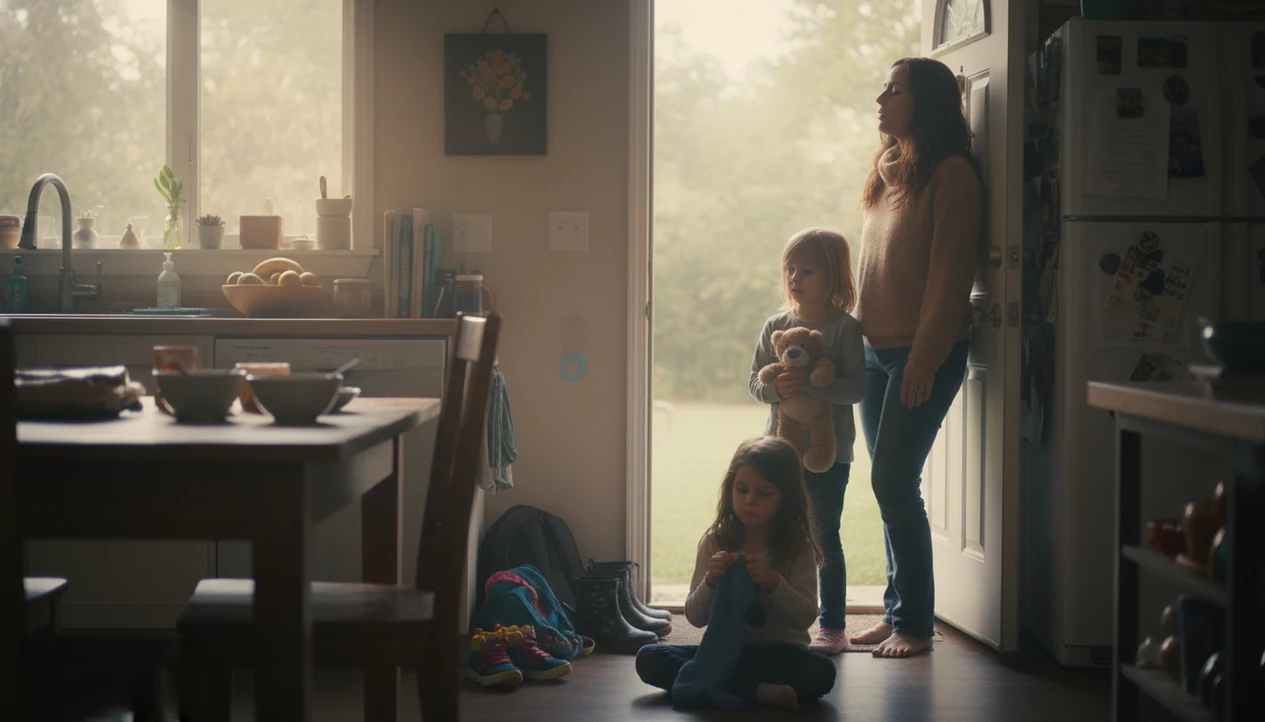
A family mindfulness routine is a set of brief, secular practices that help parents and children pause, notice what is happening, and respond with more awareness. It works best when it is short, repeatable, and attached to something already happening, such as breakfast, a car ride, dinner, or bedtime. Start with one two-minute practice rather than scheduling a long family meditation session.
The practice might be three shared breaths, listening for nearby sounds, or noticing the first bite of a meal. Keep it flexible enough for distracted children, changing schedules, and messy days. Two to five minutes is a practical starting point, not a requirement. The aim is a familiar opportunity to pay attention and connect, not another household obligation or a test of who can stay calm.
The essentials
- Use 2- to 5-minute practices instead of trying to schedule long family meditation sessions.
- Anchor mindfulness with kids to existing moments: waking up, transitions, meals, conflicts, and bedtime.
- Keep the routine flexible, playful, and imperfect so it supports connection instead of becoming pressure.
What a family mindfulness routine includes
- A family mindfulness routine is usually a few short practices woven into daily life, not a formal program with rules.
- Two to five minutes is often more realistic than a long daily family meditation routine, especially with young kids.
- Mindfulness with kids can include breathing, listening, walking, eating, or noticing feet on the kitchen tile.
- Research on children and adolescents shows small to moderate improvements in areas like attention, anxiety, mood, and behavior, according to a 2014 meta-analysis of randomized trials J.Cpr.2013.10.005.
- Distraction, laughter, resistance, and missed days are normal. The practice is noticing and returning, not staying calm on command.
The cushion may slide. Someone may giggle. That still counts.
What family mindfulness studies actually measured
A 2021 review of 20 family mindfulness interventions, involving 1,083 children and 1,131 parents, found small positive effects on family functioning, parental mental health, and child mental health. Parents and children generally practiced in parallel groups, not necessarily together. These findings support modest expectations, but they do not establish that a two-minute household routine produces the same results as a structured program.
Parent-focused results also need care. A 2021 review of 11 randomized trials involving 1,340 parents found improved parenting mindfulness among parents of typically developing children, but no clear overall effect on parenting stress. A useful home goal is therefore noticing your own reaction before speaking, rather than expecting children to become calmer immediately. When a child declines, the caregiver can still practice that pause without turning participation into a dispute.
Choose a calm moment and let children opt out
Before you start a family mindfulness routine, make it safe, optional, and small. The goal is to introduce one calm practice during an ordinary moment, not to test whether anyone can meditate through stress. For expectant parents, mindfulness for fear of childbirth offers another gentle way to notice worries without forcing calm.
- Choose one peaceful household anchor before using mindfulness during conflict, tantrums, or rushed transitions. Breakfast, bedtime, or the first minute in the car usually works better than the middle of an argument.
- Match the format to each child instead of assuming quiet, closed-eye sitting is best. One child may like eyes-open breathing, another may need stretching, rocking, hand pressure, or holding a soft object. If pregnancy makes shared practice uncomfortable, morning sickness meditation offers gentle options that an expectant parent can try separately.
- Keep the first week simple with one practice and one daily cue. Repeating the same 60- to 120-second pause helps it become familiar before you add variety.
- Tell kids they have choices. They can sit out, make it shorter, keep their eyes open, or suggest a different version.
- Drop any practice that increases distress, shame, or power struggles. Mindfulness should feel like a shared reset, not a demand for instant calm.
How a family meditation routine works in everyday behavior
A family meditation routine works by repeating one small attention practice until pausing becomes a familiar household behavior. In plain terms, mindfulness trains the family to notice sensations, emotions, thoughts, and impulses before reacting.
The mechanism is simple habit learning. A cue, like sitting down for dinner, leads to a short pause, then a shared reset. Over time, that cue can help parents and children remember the same language: “Let’s take one reset breath.” Parent regulation also matters because children learn by watching. If a parent notices a sharp voice and softens it, that becomes visible modeling. Parents preparing for a new baby can also explore childbirth and postpartum mindfulness to practice coping with change.
Reviews of mindful-parenting interventions report reductions in parenting stress and improvements in parent-child relationship measures, but the evidence varies by program, sample size, and study quality S12671 016 0596 7. Child mindfulness research tends to show small to moderate benefits. Helpful, yes. Not magic. Brief family practices can help parents and children pause, notice their reactions, and name emotions, but they cannot guarantee calm or conflict-free parenting.
Best family mindfulness routine moments by age and schedule
The best family mindfulness routine moment is the one already happening most days. Choose a real anchor before adding a new appointment to the calendar.
| Routine moment | Good fit | Practice idea | Age notes |
|---|---|---|---|
| Morning | Busy school days | Three shared breaths before shoes | Toddlers may copy one breath only |
| Transition | Car, doorway, pickup | Feel the seat, floor, or backpack strap | Movement helps restless kids |
| Meal | Dinner or snack | Notice the first bite together | Works for mixed-age households |
| After school | Decompression | One minute of quiet drawing or listening | Teens may prefer privacy first |
| Conflict repair | After everyone is safe | Pause, then say what was felt | Keep it brief and non-shaming |
| Bedtime | Wind-down | Hand-on-heart breathing | Try bedtime meditation for children for more structure |
For toddlers, use sound, touch, and movement. For school-age kids, use naming games. For teens, offer choice and keep it respectful. For mixed ages, let the youngest set the length.
How to set up mindfulness with kids in six small steps
Use one tiny setup sequence before you try to make mindfulness with kids a daily routine. The first week should feel almost too easy.
Before you start, choose a moment when nobody is already melting down. A routine learned during calm minutes is much easier to remember during loud shoes, spilled cereal, or a tense car ride.
- Pick one daily anchor moment, such as breakfast, the car ride, or the first minute after school.
- Choose a 60- to 120-second practice, like breathing, listening, stretching, or noticing feet on the floor.
- Name the pause with a family phrase, such as “mindful minute” or “reset breath.”
- Practice when things are calm before asking anyone to use it during stress.
- Let kids help choose sounds, movements, objects, or a phone timer set for 2 minutes.
- Review weekly and remove anything that feels forced, awkward, or too long.
For beginner families, a short shared breath is usually easier than a silent sit because everyone knows when it starts and ends. Families who want a dedicated breathing format can try parent and child breathing exercises.
Daily family meditation micro-practices for mornings, meals, and bedtime
Daily family meditation works better when it looks like micro-practices, not a separate class at home. Pick one named practice and repeat it until it feels ordinary.
Morning reset breath
Before opening laptops, lunchboxes, or backpacks, take three breaths together. One simple way to try it: inhale while counting two, exhale while counting three, then name one thing you notice.
First-bite mindful meal
At the first bite of dinner, pause long enough to notice temperature, texture, or smell. No lecture needed. Just one bite before the talking restarts.
Bedtime breathing cue
At bedtime, place a hand on the heart or a stuffed animal on the belly. Watch it rise and fall for five breaths.
Other options include one minute of device-free listening, doorway pauses, or waiting-for-the-microwave breathing.
Add a listening check-in without making everyone meditate
A device-free check-in offers another way to practice attention when sitting quietly does not appeal. Set aside five to ten minutes at a predictable time. Each person can name a current feeling, one difficult moment, and one appreciation or need. Allow anyone to pass. The listener briefly reflects what they heard before responding: “You felt disappointed when the game ended.”
Keep the exchange separate from solving every problem. A younger child might share just one feeling; a teen may prefer a private conversation with a caregiver. A 2022 review of mindfulness and close relationships discusses attention to reactions and conflict resolution as possible ways mindfulness relates to relationship quality. This check-in is a practical listening exercise, not a treatment protocol with proven outcomes from that review. During larger family events, mindfulness for family gatherings can help you bring the same listening and pausing skills to conversations.
Parent-child mindfulness repair after conflict and tantrums
Can parent-child mindfulness help after a tantrum or argument? It can support repair after everyone is safe and calmer, but it will not prevent every blowup.
Start with the body before the lesson. Feel both feet, unclench the jaw behind closed lips, and take one slower breath. Then use plain reflective listening: “I heard you say you felt left out.” Add your own feeling without blame: “I felt worried when the blocks were thrown.”
Repair is not a courtroom.
Parent stress affects children, but that does not mean parents are to blame for every struggle. In a CDC survey, children with a parent reporting poor mental health were more than twice as likely to have mental, emotional, or developmental problems, 24.5% versus 10.1% CDC guidance. For bigger worries, meditation for anxious kids should be paired with appropriate support.
Shared practice requires safety, not just willingness
Ordinary disagreement is different from intimidation, coercive control, violence, or retaliation for speaking honestly. Shared breathing, eye contact, or emotional check-ins are not appropriate when someone cannot safely decline or disagree. Do not ask a child or adult to disclose feelings, offer forgiveness, or return to a conversation that puts them at risk. Confidential individual support and safety planning take priority over a shared family exercise.
Mindfulness does not require accepting harmful conduct. State a boundary as a behavior and a consequence, such as: “I will not stay in a conversation with insults. If they continue, I will leave the room.” Mental Health America's guidance on family boundaries recommends explaining the consequence of crossing a boundary. Where stating or enforcing one could trigger retaliation, seek confidential help with a safety plan instead.
Family mindfulness routine mistakes that make practice feel like pressure
A family mindfulness routine starts to fail when it becomes another performance demand. Long silent sits are rarely the right default for kids, especially after school, before meals, or during sibling tension.
Avoid using mindfulness as punishment or behavior control. “Go breathe until you’re nice” teaches shame, not awareness. Trauma-informed mindfulness guidance also recommends offering choice, eyes-open options, and permission to stop when practices increase distress Trauma Informed Mindfulness. Correcting every wiggle can also backfire. Minds wander to grocery lists, toys, unfinished homework, and what’s for dessert. That is normal attention behavior.
Try playful, sensory, or movement-based practices instead. Count steps to the bathroom sink. Listen for three sounds in the hallway. Feel bus seat vibration under thighs on the ride home. If a practice creates resistance for several days, shorten it or drop it. Reset the plan.
For younger children, short meditation for toddlers often works better when it includes touch, sound, or movement.
Who a family routine can help, and when to get support
A family mindfulness routine fits families who want small moments of pause, connection, and emotional language. It is not a replacement for therapy, crisis support, or medical care.
| Best for | Not ideal for |
|---|---|
| Busy families wanting calmer transitions | Families seeking perfect calm or conflict-free parenting |
| Beginners who need short secular practices | Replacing therapy for significant anxiety, depression, trauma, or behavioral concerns |
| Parents who want to model regulation | Using mindfulness to force obedience |
| Mixed-age households needing flexible options | Children who feel pressured by stillness or closed eyes |
| Families wanting everyday mindfulness | Treating missed days as failure |
Some children do better with eyes-open, sensory, or movement practices. Teens may prefer headphones, walking, or private practice, which is why meditation for teens often needs a different tone than preschool breathing games.
Mindful.net, the Mindfulness Practices App, can be useful when families want guided options by topic, but it should support your routine rather than define it. Use the Mindfulness Practices App as a menu of short options, not as a scoreboard for whether your family is doing mindfulness correctly.
When a child's distress needs more than a family pause
Seek professional help when a child’s anxiety, sadness, aggression, sleep problems, or distress keeps showing up and starts affecting daily life. Mindfulness can be a support skill, but it is not treatment for clinical concerns, trauma, severe behavior changes, or parent mental health needs. For parents experiencing persistent low mood after birth, mindfulness for postpartum depression can complement professional assessment and care.
Use the same calm, practical approach you would use for a fever that will not break: notice the pattern, stop what worsens it, and bring in the right support.
- Watch for symptoms that persist across days or settings, such as school refusal, frequent panic, ongoing sadness, unsafe anger, nightmares, or major sleep disruption.
- Stop any mindfulness practice that makes a child feel panicky, spaced out, trapped, ashamed, or more upset.
- Contact a pediatrician, licensed therapist, school counselor, or other qualified professional for guidance when concerns feel bigger than a home routine.
- Call a crisis line or local emergency service if there is immediate danger, self-harm talk, self-injury, violent behavior, or anyone feels unsafe.
- Keep mindfulness small and optional while care is being arranged, using grounding, movement, and connection instead of pressure to meditate.
Image caption for a family mindfulness routine at home
A realistic image for this guide would show a parent and children taking a short pause during an ordinary home moment, not sitting in a flawless silent pose. Picture a kitchen chair pulled slightly back, school bags near the door, and a family taking three breaths before leaving.
Caption: A family mindfulness routine can be as simple as a 2-minute breathing pause during an existing daily activity, such as breakfast, bedtime, or the transition out the door.
The scene should feel lived-in. A blinking oven clock, mismatched socks, and one distracted child are more honest than a staged meditation circle.
Can sound help mark a family pause?
At bedtime, a family that prefers listening to guided instructions could make a brief listening pause with the free white noise and ambient sound player. Let children choose whether to listen, and stop if the sound bothers anyone. Mindful.net also offers breathing exercises in its app for caregivers who want guidance. A quiet room or ordinary household sounds are better when audio adds distraction or another device feels unnecessary.
Family Mindfulness Limits
- Seek professional help when diagnosis, crisis support, or therapy is needed, rather than relying on family mindfulness.
- Effects in child mindfulness research are often small to moderate, not dramatic.
- Some children find stillness, closed eyes, body scans, or quiet rooms uncomfortable.
- Keep routines smaller rather than demanding more, as treating mindfulness as a moral test or performance task can backfire.
Family mindfulness routine questions
How do I start a family mindfulness routine?
Choose one calm moment that already happens, such as breakfast or bedtime. Invite everyone to try one or two minutes of listening, gentle movement, or noticing their feet on the floor. Repeat the same simple practice before adding more. Participation should be optional, and missing a day does not require catching up.
How long should family mindfulness take each day?
Start with one to two minutes; two to five minutes may suit families who want more time. These are practical suggestions, not a research-established minimum. One shared breath can be enough on a rushed day. Longer sessions are not necessary just to make the routine count.
What mindfulness activities work for toddlers and younger children?
Choose something concrete: listening for a distant sound, noticing colors, smelling food, stretching, or copying one gentle breath. Quiet sitting and closed eyes are not required. Keep instructions short and let children move or watch. Stop or change the activity if it becomes uncomfortable or turns into a struggle.
What if my child refuses to do mindfulness?
Accept the refusal rather than bargaining or using mindfulness as punishment. Offer a different activity later, such as listening or walking, without requiring participation. You can keep your own routine: feel your feet, notice your tone, and pause before responding. The child's compliance is not the measure of a useful practice.
How can teenagers join a family mindfulness routine?
Give teens a choice of timing, activity, and privacy. A brief walk, quiet drawing, or a one-to-one check-in may suit them better than breathing together. Ask rather than assume what helps. Do not require them to share thoughts or feelings with the whole family as the price of participating.
Should I ask my child to breathe during a tantrum?
Do not make a breathing exercise a demand during a tantrum. Prioritize safety and use your own brief pause if it helps you respond. Shared practice is better introduced during calm moments. Once everyone is safer and calmer, offer an optional reset and listen before discussing what happened.
Can a family mindfulness routine reduce parenting stress?
It may support greater awareness of your reactions, but reduced stress is not guaranteed. A 2021 review found improved parenting mindfulness in some groups without a clear overall effect on parenting stress. A short routine cannot replace practical support, rest, treatment, or help with the conditions contributing to stress.
Can family mindfulness replace therapy for a child's anxiety or ADHD?
No. Mindfulness can be a support skill, but it does not replace assessment or treatment. Research findings vary by condition and outcome. Speak with a qualified professional when anxiety, attention difficulties, behavior changes, or sleep problems interfere with daily life. Stop exercises that make the child more distressed.