
Mindfulness Games for Teens: Brief Activities for Attention and Empathy


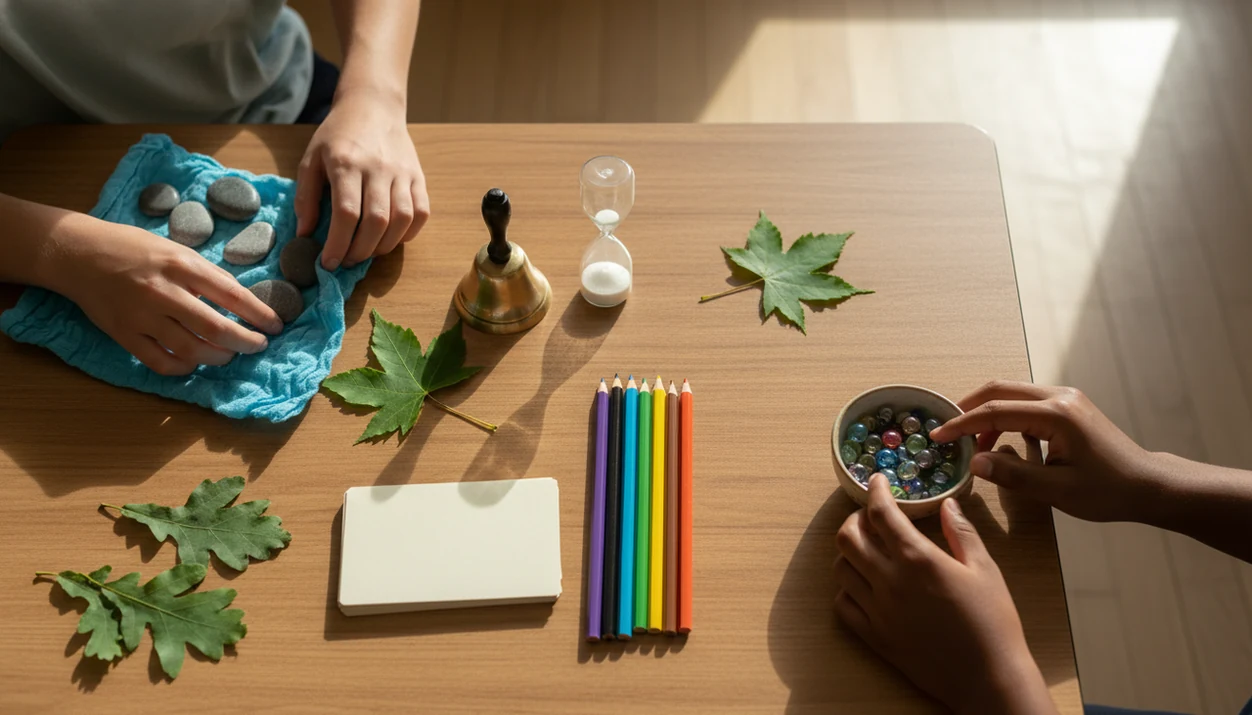
Mindfulness games for teens are short, structured activities that use breathing, senses, movement, reflection, or listening to practice present-moment attention, emotional regulation, and empathy. They make room for noticing with less judgment, without turning meditation into a lecture. Keep them secular, optional, and brief, with one clear prompt: notice a sound, a texture, a movement, a facial expression, or an opportunity for a kind action.
Start with a 2 to 5 minute game at home, in a classroom, or outdoors rather than a long silent meditation. Let teens choose how to participate, including keeping their eyes open or sitting out. The aim is attention practice, not instant calm or obedience. These activities are not a replacement for mental health care.
Definition: Mindfulness games for teens are structured, age-appropriate activities that use breathing, senses, movement, reflection, or listening to practice noticing the present moment with less judgment.
What makes an activity a mindfulness game
Mindfulness games for teens are brief, structured attention practices, not competitions with winners and losers. A useful game gives teens one clear thing to notice, such as breathing, sound, movement, body contact, or another person’s perspective.
A grounding game might ask a teen to name five things they see. A listening game might ask a group to count how many sounds they hear before the bell fades. Movement games can use slow walking, balance, or stretching. Empathy games can include perspective-taking or sending one kind message.
No special beliefs are required. No cushion, incense, or silent room is required either. A hallway after music rehearsal, a museum bench near a noisy exhibit, or a patch of grass outside school can work. Attention practice gives teens a chance to notice distraction and return to a chosen focus; it does not deliver instant calm or better behavior on command.
What youth mindfulness research can and cannot show
Youth mindfulness research is promising, but it is mixed. The safest summary is that well-taught mindfulness activities may help some teens with stress, attention, resilience, and emotional regulation.
- A 2022 meta-analysis of 33 randomized trials found small-to-moderate improvements in cognitive performance and resilience, plus reductions in stress, among children and adolescents S40359 022 00893 5.
- In one 2015 high school trial, an 8-week mindfulness program was linked with a 51% reduction in clinical levels of depression at 6-month follow-up PubMed research.
- A 2021 review reported that 79% of youth mindfulness intervention studies showed improvement in at least one mental health outcome, though study quality and intervention design varied NIH research.
- The large MYRIAD trial found that universal school mindfulness did not outperform standard social-emotional learning on average outcomes Bmj 2022 071974.
- For teens, brief game-like practice is often easier than long silent meditation because it gives the mind a concrete task.
That last point matters when pencil tapping starts during study time.
The attention loop: notice, drift, return
Mindfulness games work by repeating a simple attention loop: notice, drift, and return. The target may be breath, the air conditioner hum, a walking rhythm, the weight of a warm coffee mug in the palms, or a task like naming three shades of blue in the room.
That loop trains attentional control in plain language. It gives the brain practice shifting away from rumination, the pull to keep checking updates, or social worry without turning the practice into a lecture. Emotional regulation can grow from the same pattern. A teen notices heavy eyelids, a hot face, a clenched hand, or quicker breathing before reacting.
Empathy games add another layer. Perspective-taking, careful listening, and kind-action challenges ask teens to pause before assuming what someone else meant. No game can prove a brain has changed in five minutes. Still, one pattern we notice is practical: teens often do better when the skill is framed as noticing the signal, choosing the next move, and returning when attention wanders to rehearsal plans, weekend arguments, or what is waiting at home.
Choose a game for overwhelm, restlessness, or focus
The right mindfulness game depends on the moment. Match the activity to the teen’s actual need, such as focus, nervous system reset, restless energy, or social awareness.
A good rule: choose external-focus games for overwhelm, movement games for restlessness, and empathy games only after emotions have cooled enough for perspective-taking.
| Situation | Game | How to play | Good fit |
|---|---|---|---|
| Anxiety or overwhelm | 5-4-3-2-1 grounding | Name 5 things seen, 4 felt, 3 heard, 2 smelled, 1 tasted | Fast external focus |
| Classroom focus | Mindful listening | Listen for a bell, voice, or room sound until it fades | Before discussion or reading |
| Pre-test nerves | Box breathing | Inhale 4, hold 4, exhale 4, hold 4 | Short reset before performance |
| Restless energy | Mindful walking | Walk slowly and notice heel, sole, toe | Hallway or outdoor break |
| Social awareness | Empathy swap | Describe a situation from another person’s view | Conflict cooldown |
For teens who want a quieter introduction, meditation for teens can pair well with these games.
Rain tapping during a walking practice can become the whole focus.
An empathy game for a message before sending
Choose a fictional group-chat message rather than asking teens to expose a private exchange. Ask what the recipient might feel or need, then separate the sender’s intent from the possible impact. Have each teen suggest two respectful responses and choose one action, such as rewriting a joke that could humiliate someone or asking permission before sharing a photo.
Afterward, ask what the chosen response might change and what remains uncertain. Feelings cannot be read with certainty, so leave room for asking rather than assuming. This activity follows the APA’s guidance on respectful social-media interaction; that guidance is not a trial proving this particular game improves empathy. When a real exchange has caused harm, include a direct repair rather than stopping at reflection.
Invite teens to practice without demanding calm
Mindfulness games work better when teens have choice. Forced calm often feels like control, especially after conflict or public correction. A private gesture can reassure teens without demanding a response, and a dad's note of support offers practical wording.
- Choose one purpose: Pick focus, reset, sleep transition, or conflict cooldown before choosing the game.
- Start small: Try 2 minutes first, or set a phone timer for 5 minutes if the teen agrees.
- Offer options: Allow eyes open, standing, doodling afterward, or choosing between breath and sound.
- Join briefly: Practice as an adult without turning it into a speech. Small moments of shared attention make being present with your child a daily habit rather than another task to complete.
- Invite reflection: Ask, “Did anything shift?” rather than grading whether the teen did it right.
- Adjust next time: Keep the useful parts and drop the parts that felt awkward.
For younger siblings, meditation for kids usually needs more movement, story, and adult modeling.
Adjust prompts and privacy at home, school, and in groups
Mindfulness games need different cues in different settings. The same breathing or listening game can feel supportive at home, useful at school, and embarrassing in a group if privacy is ignored. For everyday transitions, mindfulness for family life can help families build calmer routines without requiring everyone to meditate together.
Home practice cues
Use transitions. After school, before homework, or before sleep usually works better than interrupting a teen mid-text. A folded towel on bedroom carpet can mark a two-minute reset spot. Adults should join without performing calm. Tools like Mindful.net can support beginners with gentle secular practice guidance, especially when families want plain prompts rather than spiritual language. If families use the Mindful.net Mindfulness Practices App, keep it as a prompt library or timer rather than the center of the activity; the teen’s choice and comfort matter more than app streaks. For a household rhythm, a family mindfulness routine may help. For anxious teens, a consistent evening routine can support rest, as explained in parenting teens with anxiety at bedtime.
Classroom practice cues
Keep it short before tests, discussions, or difficult tasks. Let students pass, keep eyes open, and avoid asking them to share personal feelings aloud. In groups, use non-embarrassing prompts like noticing sounds, posture, or one respectful action. For school situations, supporting kids without helicopter parenting means offering steady help while respecting their growing independence.
No spotlighting.
Good uses for attention games, and uses to avoid
Mindfulness games are best used as practical skill practice, not as punishment or moral correction. They fit teens who want simple tools and adults who need low-cost, secular, no-equipment options.
| Best for | Not ideal for |
|---|---|
| Teens practicing focus before homework, tests, or sports | Teens being told to “calm down” as punishment |
| Stress reset after school, conflict, or screen overload | Mandatory compliance activities with no choice |
| Emotion labeling and noticing body signals | Public sharing that exposes private feelings |
| Social awareness through listening and perspective games | One-size-fits-all programs with no cultural or classroom context |
| Adults wanting brief, secular activities | Replacing therapy, counseling, or school support |
Modify activities for teens with trauma histories, dissociation, panic, or high distress. External-focus games, like listening or naming colors, may feel safer than closing eyes and scanning the body. If anxiety is prominent, meditation for anxious kids offers gentler framing.
A grounding activity in an ordinary setting
A useful image for this article would show teens doing a simple grounding or listening activity in a normal setting. A secular classroom, library lawn, or outdoor bench works better than candles, statues, clinical rooms, or app-heavy screenshots.
The scene should look ordinary. Teens might be seated in a loose circle, noticing sounds, or standing outside during a short mindful walking prompt. Keep phones out of the center unless the image shows a basic timer.
Caption: Teens practice mindfulness games for teens with a short, no-equipment grounding activity that uses sound, movement, and attention in everyday life.
Choose one sound for a short listening game
Before homework, a teen who prefers sound to breath can choose a track from the free white noise and ambient sound player and practice noticing when attention wanders, then returning to the sound. A room sound works just as well when a device would distract. Mindful.net also offers breathing exercises in its app for teens who prefer that prompt. Neither option is mental health treatment.
Limits of Mindfulness Games
- Mindfulness games are not a cure, and benefits are often small to moderate and not guaranteed for every teen.
- Universal school mindfulness did not outperform standard social and emotional learning, and standardized programs may overlook individual needs.
- Seek professional help if inward focus feels uncomfortable for teens with trauma histories, dissociation, panic, or high distress.
- If bedtime is the main struggle, bedtime meditation for children may fit better than daytime focus games.
Questions about teen mindfulness games
What is a simple mindfulness game for a teenager?
Try a two-minute sound game. Let the teen choose a room sound and notice it with eyes open or closed. When attention shifts, the task is simply to return to listening. Do not score concentration or require calm afterward. The teen can stop or choose a different prompt.
How do teens play the 5-4-3-2-1 grounding game?
Name five things you can see, four things you can feel, three things you can hear, two things you can smell, and one thing you can taste. Keep the pace comfortable rather than racing through a checklist. It is an external-focus option, not a guaranteed way to stop anxiety.
How long should a teen mindfulness game last?
Start with two to five minutes and agree on the stopping point before beginning. Longer practice is not automatically better. Adapt the length to the teen’s attention, interest, and distress level. A brief activity they choose is more appropriate than extending a session to prove they can sit still.
Do mindfulness games improve focus or anxiety?
Youth mindfulness research shows small average benefits for attention and anxiety or stress, but results vary. Studies usually examine structured programs, not every individual game. Treat a short game as skill practice that may help, not as a proven treatment for a particular teen or a substitute for clinical care.
What mindfulness game can help teens practice empathy?
Use a fictional message or everyday disagreement. Ask what the other person might feel and need, distinguish intent from impact, and suggest two respectful responses. Then choose one action. Avoid requiring private disclosures, and remember that perspective-taking involves guesses that may need checking with the other person.
What if a teen refuses to join a mindfulness game?
Allow them to sit out without a penalty. Offer a choice of sound, movement, or another prompt later, rather than insisting on breathing practice. Do not use the activity as punishment after conflict. Participation should be an invitation, and opting out should not require explaining private feelings to a group.
Can mindfulness games replace help for a teen’s anxiety?
No. They may be one useful skill, but persistent anxiety, panic, sleep disruption, withdrawal, or declining school functioning calls for professional assessment. Do not keep extending practice when distress interferes with daily life. Self-harm thoughts or an immediate safety concern require urgent local crisis or emergency support.