
Mindfulness For Kids And Parents: A Practical Family Guide
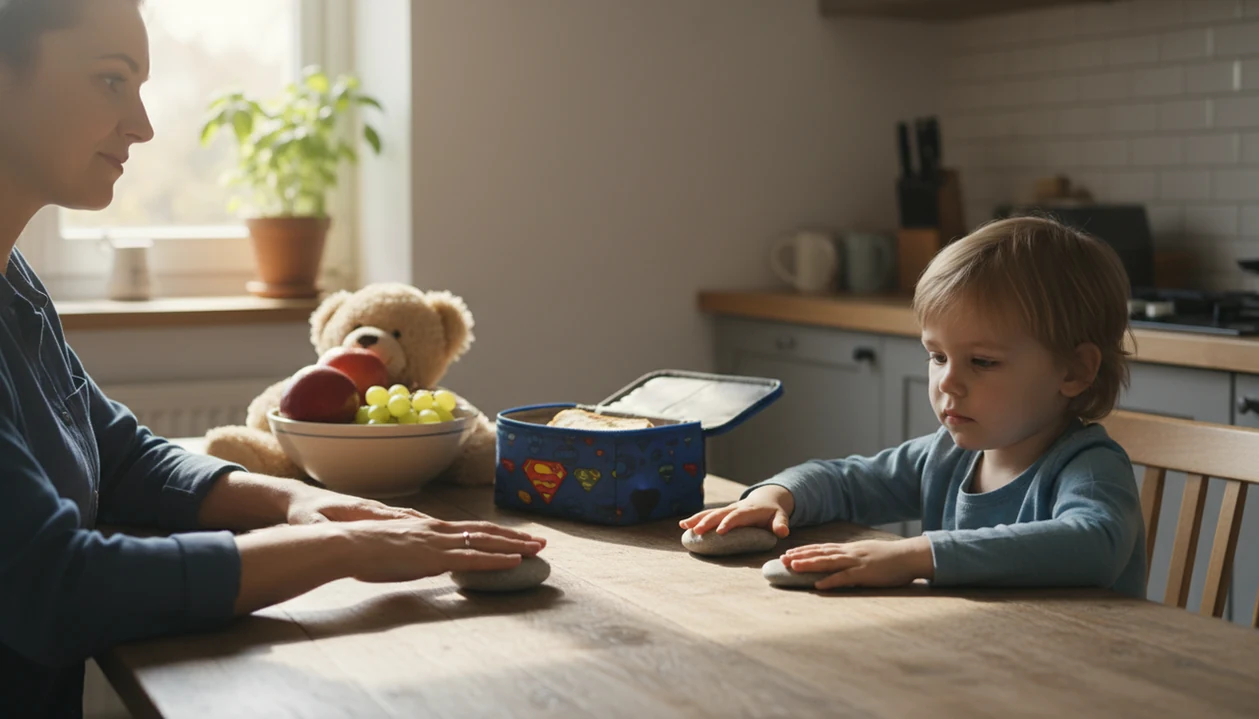
Mindfulness for kids and parents is the practice of noticing the present moment, including breath, body, feelings, thoughts, and surroundings, before reacting. For families, it works best as short, repeatable practices built into daily moments like mornings, transitions, homework, and bedtime.
Definition: Mindfulness for children and parents means paying attention to present-moment experience with curiosity, kindness, and less automatic judgment or reaction.
TL;DR
- Start with 30 seconds to 3 minutes, not long silent meditation.
- Parents usually practice first because adult calm shapes the child’s emotional climate.
- The best-supported benefits are gradual improvements in attention, emotional regulation, and stress, not instant behavior fixes.
This guide is educational and not a substitute for pediatric, mental-health, or school-based support. If a child’s anxiety, trauma symptoms, ADHD challenges, self-harm risk, or family conflict is persistent or impairing, seek professional care.
Mindfulness For Kids And Parents Guide: The 5 Core Facts
- Mindfulness is noticing, not blanking out. A child can notice a tight belly, a loud hallway, or a worried thought without needing the mind to go quiet.
- Family practice should be brief and sensory. Thirty seconds of listening at the kitchen table often works better than ten minutes of forced stillness.
- Parents are part of the practice. Children often borrow adult regulation, so a parent’s slower voice can change the room.
- The evidence is supportive, not dramatic. Research generally points to small-to-moderate gains in attention, emotional regulation, and stress.
- Mindfulness is not a cure. It should not be sold as a fix for anxiety, ADHD, trauma, behavior problems, or family conflict.
Start small. A child who can notice one wooden floor creak while taking a breath is already practicing.
How Mindfulness For Kids And Parents Works In Real Family Moments
Mindfulness works by creating a small pause between a trigger and a response. In that pause, a parent or child notices body signals, emotions, thoughts, and impulses before acting.
The technical idea is co-regulation, which means one nervous system can help another settle. In plain language, a calmer adult often makes it easier for a child to calm down. Not always. But during whining, rushing, or a backpack search at 7:42 a.m., the adult’s first breath matters.
Mindfulness also relies on practice-based learning. Skills grow through repetition, not one unusually calm moment after school pickup or during a messy transition. A Frontiers in Psychology review noted that many child and adolescent mindfulness programs run for 4 to 12 weeks, which shows the training model clearly: repeat, notice, return Full.
Good mindfulness practices and meditation techniques for beginners and daily life build noticing and recovery skills, not instant obedience or permanent calm.
How To Use Mindfulness For Kids And Parents At Home
Use mindfulness at home by attaching a tiny practice to one predictable family moment. A family mindfulness routine is easier to keep when it has a clear anchor.
- Choose one daily anchor, such as wake-up, the car ride, homework start, or bedtime.
- Set a short timer, usually 30 seconds to 3 minutes, and stop before frustration takes over.
- Practice parent-first: feel your feet, breathe once, and lower your voice before guiding the child.
- Name one thing each person notices, such as “tight shoulders,” “fast thoughts,” or “warm blanket.”
- Repeat the same practice for a week so the child knows what is coming.
- Adjust the practice if the child gets silly, restless, or tense.
Two minutes is enough when the cue is easy to repeat: the refrigerator hum, a caregiver’s hand on the dish towel, or the Five Doorway Rule as you move from one room to the next. One pattern we notice is that families stay with practices that fit ordinary fatigue, not practices that require a perfectly quiet scene.
Best Mindfulness For Kids And Parents Tips By Age
Mindfulness works better when the practice matches the child’s age and attention span. Younger children usually need movement, play, and senses; older children can handle more reflection.
| Age group | Best practice type | Example | What to avoid |
|---|---|---|---|
| Ages 2–5 | Sensory noticing | Belly breathing with a toy, sound games, or noticing soft socks | Long stillness, abstract instructions, forced closed eyes |
| Ages 6–9 | Simple breath and senses | Five senses exercise, starfish breathing, or mindful walking | Turning practice into a lecture |
| Ages 10–13 | Short guided practice | Emotion naming, urge surfing, or 3-minute guided meditation | Expecting instant maturity |
| Teens | More independent practice | Mindful phone pause, journaling after meditation, or longer self-guided sitting | Using mindfulness as punishment |
For very young children, short meditation for toddlers should feel closer to a game than a lesson. A cushion sliding on hardwood may be the whole practice that day.
Simple Mindfulness Activities For Kids And Parents
Activity-based mindfulness can work better than seated silence for many children. These exercises need no special equipment, and they fit well before school, after conflict, or during bedtime wind-down.
- Breathing with a buddy: Place a stuffed animal on the child’s belly and watch it rise and fall for five breaths.
- 5-4-3-2-1 grounding: Name five things you see, four you feel, three you hear, two you smell, and one you taste.
- Starfish breathing: Trace one hand with a finger, breathing in up each finger and out down the other side.
- Mindful listening: Ring a bell, tap a glass, or pause by a window and listen until the sound fades.
- Emotion naming with body clues: Say, “I feel mad in my fists,” or “I feel nervous in my stomach.”
For breathing variations, parent and child breathing exercises can help families keep the wording simple.
Mindful Parenting Skills That Help Children Regulate
Mindful parenting skills help when the adult notices stress before reacting. The parent pause is simple: feel your feet, breathe once, soften your voice, and name the moment.
That pause is useful during whining, sibling fights, homework refusal, and bedtime resistance. It does not mean giving in. Mindful parenting is not permissive parenting; limits still matter. The difference is that the boundary comes after awareness, not after an automatic snap.
A parent might say, “I’m getting tense, and you still need to put the tablet away.” Short. Clear. Human.
In a randomized trial of 97 mothers of preschoolers, a mindfulness-based program produced a 35% stress reduction, compared with a 0.7% increase in the comparison group PubMed research. For many families, parent practice is often easier to change than a child’s behavior because adults control the first response.
Evidence For Mindfulness For Kids And Parents
- A 2019 randomized clinical trial of 200 early adolescents found that an 8-week mindfulness training program improved cognitive and emotional regulation compared with a waitlist control. PubMed research.
- A 2018 Current Opinion in Psychology review summarized benefits for attention, emotion regulation, and stress, but described effects as generally small to moderate. PubMed research.
- A 2018 meta-analysis in Mindfulness found improvements in internalizing symptoms and attention, without effect sizes that support cure-like claims. S12671 018 0979 9.
- Research is stronger for skill support than treatment claims. Mindfulness may help children notice feelings and recover attention, but it should not be presented as treating or preventing clinical conditions.
- Practice consistency matters. A single calm-down exercise may help in the moment, but the research base mostly studies repeated programs.
Clinicians typically recommend professional evaluation and care when anxiety, trauma symptoms, ADHD challenges, or family conflict are significant. Mindfulness can sit beside those supports, not replace them.
Best For And Not For: Mindfulness For Kids And Parents
Mindfulness is a good fit when families want small, repeatable attention practice. It is a poor fit when adults use it to force calm or avoid needed support.
| Best for | Not for |
|---|---|
| Daily transitions, such as leaving the house or starting homework | Punishment after misbehavior |
| Emotional naming, especially “where do you feel it?” | Forcing a child to calm down on command |
| Parent stress before responding | Replacing sleep routines |
| Bedtime wind-down and quiet listening | Replacing school supports |
| Attention practice in short bursts | Replacing therapy, medical care, or parenting strategies |
Mindful.net is a mindfulness app that teaches mindfulness practices and meditation techniques for beginners and everyday life. Tools like Mindful.net can support a secular, beginner-friendly routine, especially when parents want short prompts and plain instructions rather than long lectures.
For teens who want more independence, meditation for teens may fit better than a parent-led exercise.
Limitations
Mindfulness has real limits, and naming them helps families use it more safely. If a practice makes the room worse, change the practice.
- Mindfulness is not a stand-alone fix for serious anxiety, trauma, ADHD, or family conflict.
- Some children dislike closed eyes, long stillness, silence, or body-focused attention.
- Benefits are usually small to moderate and depend on regular practice.
- Mindfulness should not replace sleep, routines, school supports, therapy, medical care, or parenting strategies.
For children with frequent worry or panic-like distress, meditation for anxious kids should be framed as gentle support, not treatment.
What Changes After One Week
- A week of family mindfulness may make pauses easier to remember, but it usually will not make mornings quiet, siblings agreeable, or bedtime instantly smooth.
- It may benefit least when a caregiver is so depleted that even one more instruction feels like another chore; in that case, we usually suggest reducing the practice to one shared breath or skipping it without guilt.
- It may not be the best first tool during a child’s intense meltdown, when safety, co-regulation, and fewer words often matter more than teaching a new skill.
- Parents who want a guaranteed mood shift may feel disappointed; mindfulness is usually more like noticing the weather than controlling it.
- If a practice creates power struggles, try placing it in a neutral micro-moment, such as the school pickup line or a playground bench, instead of presenting it as correction.
Why Advice Conflicts Online
Online advice often conflicts because families are not choosing between identical goals: one parent wants a calmer bedtime, another wants fewer arguments during transitions, and another wants a way to stay steady with a diaper bag strap cutting into one shoulder. Mindfulness and prayer can overlap when both create pause, reflection, or gratitude, but they are not the same practice; prayer is often relational or devotional, while mindfulness usually emphasizes noticing present-moment experience. The most useful advice is usually not “do mindfulness,” but “choose the smallest practice that fits the moment you actually have.”
Three Situations Where This Helps
Misconception: mindfulness is only for quiet children.
Restless children may do better with noticing sounds, steps, or hand movements than with sitting still. The goal is not to look calm; it is to practice noticing before reacting.
Misconception: parents need a long session to model it.
A 30-second pause before answering a sharp comment can be a real family practice. Consistency tends to matter more than session length for most beginners.
Misconception: a Body Scan has to happen at bedtime.
A short Body Scan can also work after sports, homework, or a difficult transition when a child can name one part of the body that feels tense or settled. If scanning feels too inward or uncomfortable, Practice Decision Support can help families choose a more external anchor.
A Quick Technique Map
| Technique | Best for | Minutes |
|---|---|---|
| One shared breath | caregiver fatigue or a rushed transition | 10-30 sec |
| Sound noticing | school pickup line, playground bench, or waiting without adding another rule | 1-2 min |
| Short Body Scan | helping a child describe body signals after homework, play, or bedtime resistance | 2-5 min |
One Mistake We Notice Often
A field note from practice: One mistake we notice often is that parents introduce mindfulness as a lecture right when everyone is already flooded. We usually suggest practicing during a low-stakes moment first, because a child may borrow the routine later only if it has not become another command. The smallest repeatable cue often seems more useful than the most polished explanation.
The best family practice is the one small enough to repeat when everyone is tired.
Why Mindful.net fits this specific need
Mindful.net is useful here because families often need quick decision support, not a perfect routine. Related guides such as Body Scan and Practice Decision Support can help parents match a practice to the actual moment: pickup, bedtime, homework, or caregiver overload.
FAQ
What is mindfulness for kids?
Mindfulness for kids means noticing what is happening right now, such as breathing, sounds, feelings, or body sensations. It can be practiced through listening games, belly breathing, grounding, or naming emotions.
How do parents teach mindfulness?
Parents teach mindfulness by modeling it first, then using short, repeated practices in ordinary moments. A calm adult voice often helps more than a long explanation.
What age can kids start?
Toddlers can start with playful sensory practices, such as noticing sounds or breathing with a stuffed animal. Older children can gradually use guided meditation, emotion naming, and short reflection.
How long should kids meditate?
Many children do best with 30 seconds to 3 minutes at first. Increase time only when the child stays comfortable and engaged.
Does mindfulness help child anxiety?
Mindfulness may support coping by helping children notice worry, body tension, and breathing. It should not replace professional care when anxiety is persistent, intense, or impairing.
Can mindfulness help ADHD?
Mindfulness may help some children practice attention and impulse awareness. It should not replace ADHD evaluation, school supports, behavioral strategies, or medical care when those are needed.
What is mindful parenting?
Mindful parenting means noticing your own reactions before responding to your child. It includes pausing, breathing, naming what is happening, and setting limits with less automatic reactivity.
Should kids close their eyes?
Closed eyes are optional. Many children feel safer and more focused with eyes open, looking at a spot, object, or parent.
What is a 2-minute practice?
Try 30 seconds of feeling feet on the floor, 60 seconds of slow breathing, and 30 seconds of naming one sound and one feeling. Keep it simple and stop while it still feels manageable.