
Meditation for Teens: Short Practices Without Pressure


Meditation for teens is a short, secular practice of noticing breath, sounds, body sensations, or emotions, then returning attention when it wanders. Mindfulness means paying attention to the present moment on purpose, without judging thoughts or feelings as good or bad. Start with 1 to 5 minutes, not a long silent session. The aim is not to empty the mind or become instantly calm, but to notice what is happening before choosing a response.
A teen can choose guided audio, a body scan, listening, or mindful movement instead of sitting silently. Practice may support focus, sleep wind-down, and emotional regulation, but it should remain self-directed. It is not a substitute for therapy or crisis support.
The essentials
- Start with 1 to 5 minutes, not a long silent session.
- Choose a focus that feels doable: breath, sound, movement, body scan, or guided audio.
- Meditation can support focus, sleep wind-down, and emotional regulation, but it is not a substitute for therapy or crisis support.
Mindfulness means noticing and returning, not clearing the mind
Teen mindfulness is a secular way to practice attention: a teenager notices what is happening now, recognizes when attention drifts, and gently comes back.
Meditation for teenagers is not about emptying the mind. It is more like practicing a mental return. You choose one anchor, such as breathing, sound, body sensations, or emotions, and come back to it when attention drifts.
That drift is normal.
A teen might pause in the school pickup line and listen to the air conditioner hum, or stand near a backpack pile and notice warm cheeks after a hard class. The goal is not to perform calm for adults. It is to notice, return, and create a little room before reacting.
Mindfulness practices and meditation techniques for beginners and daily life can offer practical pauses, clearer attention, and body awareness, not instant calm or a fix for every problem.
Teen meditation benefits and evidence
Research on mindfulness for teens suggests modest support for stress, mood, and attention, but it does not show that meditation cures mental health conditions.
- A 2021 systematic review and meta-analysis of 33 randomized trials found small to moderate improvements in anxiety, depression, and stress among children and adolescents. (source: PubMed research)
- A 2018 school-based review involving 5,628 students reported positive effects on cognitive performance, resilience, and stress, usually with small to medium effects. (source: S12671 018 0916 3)
- A 2014 randomized trial of 408 adolescents found a 9-week school mindfulness program reduced depression risk and stress up to 6 months later. (source: PubMed research)
- Per the CDC’s 2023 Youth Risk Behavior Survey, 42% of U.S. high school students reported persistent sadness or hopelessness during the past year (source: CDC guidance).
For teens, short practice is often easier than long silent meditation because it fits real school pressure and changing moods.
Practicing attention and recognizing stress signals
Meditation helps by practicing attention, body awareness, and the small space between a feeling and a response. The teaching is straightforward: pick an anchor, notice when the mind has gone elsewhere, and return without turning it into a self-criticism session.
Attention is naturally mobile. It may jump toward group chat drama, a song lyric, a quiz, a library book spine, or whether a caregiver remembered the after-school pickup change. In mindfulness, that drift is not failure; it is the practice point.
Body-based awareness can also help teens spot stress sooner. Warm cheeks, a dry mouth, a fast pulse, or a stomach dip may appear before an argument, audition, or test panic fully takes over. One slower exhale can make enough space for a different next move.
One beat helps.
Practice depends on repetition, not perfect calm. A phone timer set for 3 minutes is enough to begin.
Choose a practice for homework, bedtime, or a noisy setting
Different teen meditation styles fit different moments, so the useful question is not “Which one is correct?” but “What can I actually do right now?” For a more playful option, try mindfulness games for teens that practice focus and attention.
| Situation | Style to try | Why it fits |
|---|---|---|
| Before homework or a test | Breath meditation | Gives attention one steady anchor before a task |
| On a bus, in a hallway, or in a noisy home | Sound meditation | Uses the noise already there instead of fighting it |
| Before bed | Body scan | Shifts attention from thinking to physical wind-down |
| When sitting still feels impossible | Movement mindfulness | Lets attention follow walking, stretching, or slow movement |
| When practice feels awkward alone | Teen guided meditation | Provides structure and simple prompts |
For bedtime-specific practice, a separate teen sleep meditation can help teens build a quieter wind-down routine. Parents can explore parenting teens with bedtime anxiety for another perspective on supporting a calmer evening.
Set up a practice that feels safe to stop
Before you start meditating, set it up so stopping feels easy and the place feels normal. Teen meditation should feel like a small practice choice, not a test, performance, or emergency plan.
- Choose a setting where you do not feel watched. That might be a bedroom, a desk, a quiet corner, or even a normal public spot where sitting still would not draw attention.
- Keep your eyes open or half-open if closing them feels unsafe, awkward, or too intense. Looking softly at the floor, a wall, or one object still counts.
- Start when distress is mild. If you are in danger, panicking hard, feeling unsafe, or thinking about hurting yourself, skip meditation and get real-time help from a trusted person or emergency support.
- Tell a trusted adult if practice increases panic, numbness, scary images, intrusive thoughts, or the feeling that you are not fully present. A parent can also offer a supportive note from dad as a simple reminder that the teen is not alone.
- Set the first timer short enough that you can quit without effort. One minute is a valid first session.
Five-minute meditation routine for teens
Here is how to use meditation for teens without turning it into another school assignment. Keep the routine short enough that it feels possible on a normal day.
If you are practicing at school or around other people, keep your eyes open or half-open if that feels safer. Pick a position that would look normal to someone walking past, such as sitting at a desk, standing by a locker, or leaning against a wall.
- Set a timer for 1 to 5 minutes. Start lower than you think you “should.”
- Choose one anchor: breath, sound, body sensation, or slow movement.
- Sit or stand in a steady position. Eyes can stay open, half-open, or closed.
- Notice when your mind wanders. Don’t grade it.
- Return attention gently to the anchor, even if you do this 30 times.
- Stop or switch to grounding if distress increases. Name five things you see, feel your feet, or talk to someone safe.
A quiet pause before hitting send can count as practice. So can three breaths before opening a laptop. If a younger sibling wants to join, a simple family mindfulness routine may work better than a teen-only setup.
Short meditation scripts for teens
These mini-scripts are meant to sound normal, not dramatic. Eyes can stay open, especially at school, on a bus, or anywhere closing them feels weird.
Two-minute breath reset
Sit or stand where you are. Notice one inhale and one exhale. Don’t change it yet. Now let the next exhale be a little slower. If your shoulders drop after an exhale, notice that. If nothing changes, that is still practice. Return to one breath at a time until the timer ends.
Three-minute body scan
Start with your feet on carpet, tile, or inside your shoes. Notice pressure. Move attention to legs, stomach, shoulders, jaw, and face. Let the tongue soften from the palate if that feels okay. Skip any area that feels uncomfortable.
One-minute sound practice
Listen for the nearest sound, then the farthest sound. Let each one arrive and leave. You do not need to like the sound. Just notice it, then return.
Phone-aware mindfulness for teens
Phone-aware mindfulness means choosing how the phone fits into practice, instead of letting it pull the whole routine.
A teen can use guided audio, headphones, or a timer on purpose. The trap is opening a meditation app, then sliding into messages, videos, and tabs without noticing. Before opening the phone, decide which practice you will use.
Pause before scrolling.
After a notification, take one breath before answering. A pause before answering a message can be enough to notice irritation, excitement, or pressure. Airplane mode may help, but streaks and all-or-nothing tracking can become another thing to fail at.
Agree on phone boundaries instead of counting minutes alone
A pause before checking a message is useful practice, but it cannot replace boundaries around sleep, schoolwork, or upsetting content. The APA's guidance on youth social media use recommends addressing use that interferes with sleep, physical activity, and daily routines. Start with one specific agreement, such as a device-free sleep period or a no-phone homework interval, rather than treating every hour online as equally harmful.
For younger adolescents, especially around ages 10 to 14, the APA advises ongoing discussion and coaching, with more autonomy as digital skills develop. Ask what makes stopping difficult and agree on what to do when upsetting content appears. Explain the reason for a boundary and respect privacy. Meditation can help a teen notice an urge to check; adults still need to provide support and clear safety limits. Parents can support daily practice with practical tips for raising resilient teens that encourage connection and steady expectations.
When guided meditation helps and when to seek other support
Teen guided meditation can help when structure feels easier than sitting in silence, but it is not the right tool for every situation.
| Best for | Not ideal for |
|---|---|
| Teens who want a short focus reset before homework | Replacing therapy, counseling, or medical care |
| Teens building a sleep wind-down routine | Emergency support during suicidal thoughts or unsafe situations |
| Teens who like spoken prompts | Forcing inward focus when it feels overwhelming |
| Teens learning emotional awareness | Handling trauma symptoms without adult or clinical support |
| Teens who prefer clear starts and stops | Turning practice into pressure, streaks, or self-criticism |
If inward focus feels too intense, use grounding instead: open your eyes, name objects in the room, or feel the chair under you. A counselor, clinician, parent, coach, or another trusted adult should be involved when symptoms feel intense or risky.
Mindful.net, the Mindfulness Practices App, can be one structured option, but support from real people matters when distress is high.
Common teen mindfulness mistakes
Most beginner problems come from expecting meditation to feel calm right away. It often feels ordinary, fidgety, or slightly boring at first.
- Trying to clear the mind. The skill is noticing thoughts and returning, not deleting thoughts.
- Forcing long sessions too early. Five minutes may teach more than 25 minutes of resentment.
- Using meditation to suppress emotions. Mindfulness helps name feelings; it should not become a way to pretend they are gone.
- Treating missed days as failure. Restarting after a gap is part of practice.
- Only meditating when already overwhelmed. A few calm-day reps make stressful-day practice easier.
For younger kids who need more play-based support, calm down meditation for kids uses simpler language and shorter activities.
A short eyes-open practice at a bedroom desk
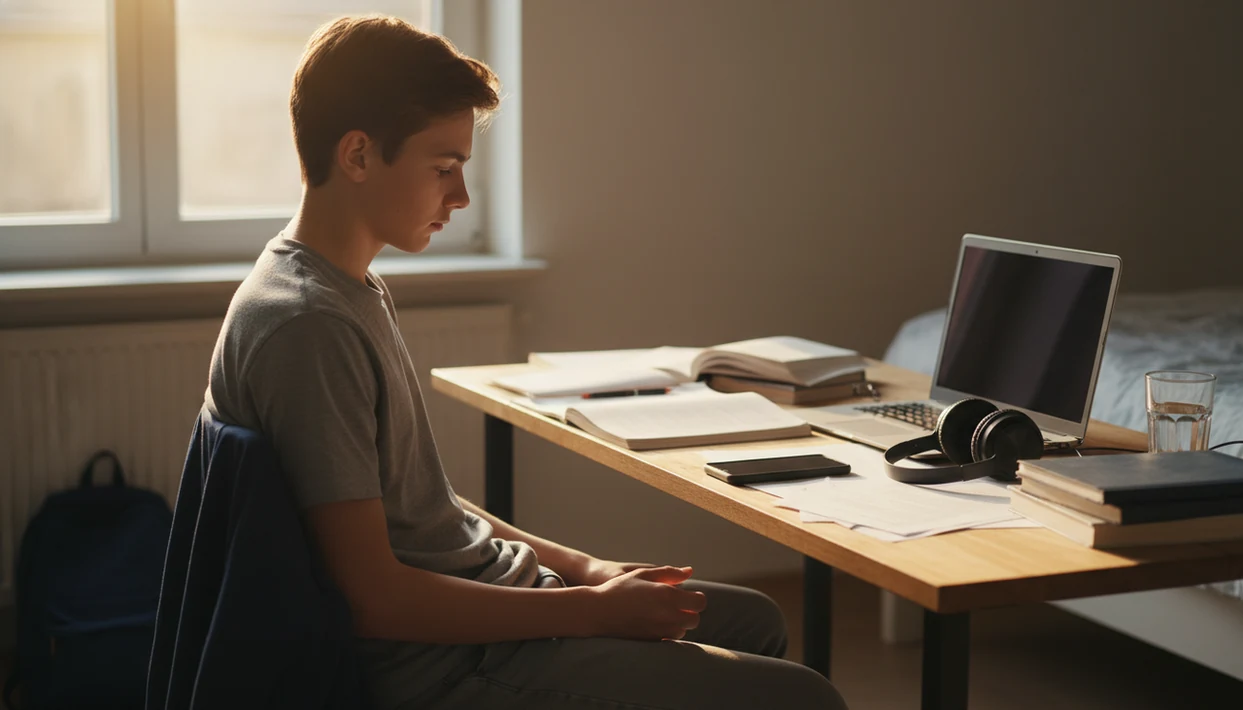
Caption: A teen practices meditation for teens at a bedroom desk, sitting upright with eyes open and one hand resting near a phone timer. The scene should feel everyday, secular, and unstaged, not spiritual or clinical. Good details include a backpack on the floor, school papers nearby, soft daylight, or headphones resting beside the laptop. Avoid candles, robes, medical equipment, or dramatic poses. The image should show a short mindfulness exercise that could happen before homework, after school, or during a quiet reset between messages.
Teen Meditation Limits
- Teen meditation benefits are usually small to moderate, and meditation cannot replace treatment for serious mental health concerns.
- If meditation increases anxiety, numbness, sadness, or distress, stop, open your eyes, use grounding, and ask for help.
- Seek professional mental health support for severe or persistent symptoms, self-harm, suicidal thoughts, or other safety risks.
- For younger children with worry, meditation for anxious kids should stay gentle and adult-supported.
Teen meditation questions
How long should a teenager meditate?
Start with 1 to 5 minutes and choose one focus, such as sounds, breath, or the feeling of feet on the floor. A short session with a clear stopping point is enough to begin. Increase the time only if the practice feels manageable, not because a longer session seems more impressive.
Does meditation help with teenage anxiety?
Research suggests small average benefits for anxiety and stress, but results vary. Meditation can be a skill for noticing feelings and returning attention, not a cure for an anxiety disorder. Persistent anxiety, panic, or difficulties with school, sleep, and relationships call for professional assessment rather than longer meditation sessions.
Can teens meditate with their eyes open?
Yes. Keep your eyes open or half-open and rest your gaze on the floor, a wall, or an ordinary object. This can make practice feel more comfortable at school or in public. Listening to sounds or noticing pressure under your feet also counts; closing your eyes is not required.
What if meditation makes me feel more anxious?
Stop rather than trying to push through. Open your eyes, look around, and switch to an external focus, such as nearby sounds or the floor under your feet. Tell a trusted adult if distress persists. If you feel unsafe or have thoughts of self-harm, seek urgent local crisis or emergency support.
Can meditation help a teenager fall asleep?
A short body scan or guided practice can be part of a sleep wind-down routine, but it does not guarantee sleep. Keep the session brief and avoid moving from the audio into messages or videos. If phone use is displacing sleep, protecting bedtime matters more than adding another practice.
How can a teen meditate without getting distracted?
Distraction is expected, so the goal is not to eliminate it. Choose one anchor, notice when attention moves to a thought or notification, and return without criticizing yourself. Decide on the practice before opening your phone. If breath awareness feels uncomfortable, use sounds, body contact, or slow movement instead.
Should parents make teenagers meditate every day?
Keep meditation a choice rather than a requirement to appear calm. Offer a short practice and let the teen choose the focus, timing, or whether to stop. Daily practice is an option, not a test. Adults should also support sleep, relationships, and access to care rather than expecting meditation to solve distress.