
Mindful Parenting for Real-Life Family Stress
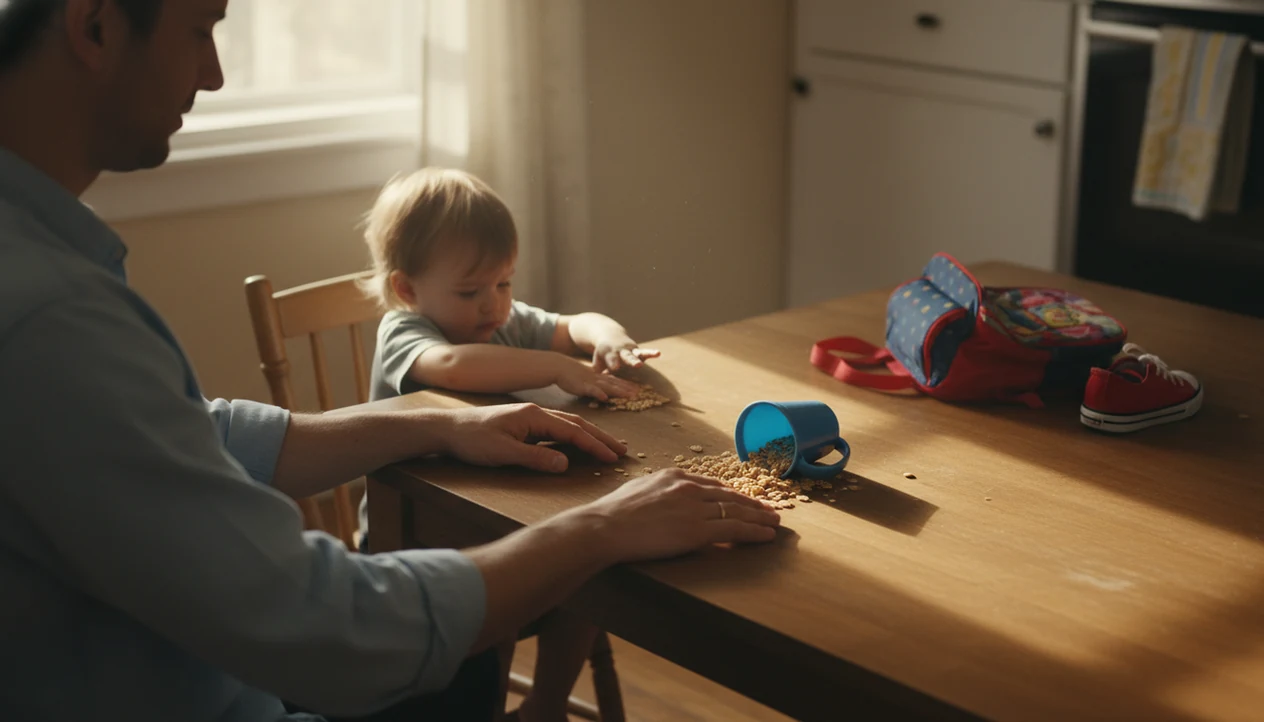
Mindful parenting means paying attention to your child, your own emotions, and the situation in front of you before you react. It is a practical, secular way to pause, listen, set limits, and respond with more calm during everyday parenting stress.
Definition: Mindful parenting is the application of present-moment awareness, emotional regulation, nonjudgmental attention, and compassion to ordinary parent-child interactions.
TL;DR
- Mindful parenting is not permissive parenting; it combines warmth, attention, and clear limits.
- The core skill is a small pause between your child’s behavior and your response.
- Research is promising for reducing parental stress and overreactive parenting, but it is not a replacement for clinical, developmental, or crisis support.
Mindful Parenting Meaning for Everyday Family Stress
Mindful parenting means bringing present, calm, curious attention to ordinary parent-child moments before you react. It is not a demand to be serene all day, and it is not generic “calm down” advice.
In real family life, mindful parenting may look like pausing on the school pickup curb before snapping about missing shoes, hearing the whole story before correcting a teen, or noticing warm cheeks while a diaper bag strap digs into your shoulder. One pattern we notice: the useful moment is often very ordinary, not peaceful. The skills are simple to name and harder to practice: present-moment attention, emotional awareness, nonjudgmental acceptance, self-regulation, and compassion.
The pause is the practice.
Mindful parenting is secular and skills-based. You can use it in a kitchen chair, a car line, or an office stairwell after a school call. It asks, “What is happening right now, and what response helps?” not “How do I become a flawless parent?”
Five Mindful Parenting Facts Parents Should Know First
- Mindful parenting lowers reactivity; it does not erase frustration. A parent may still feel anger, but the goal is to notice it sooner and choose fewer automatic reactions.
- Short pauses count. One breath before answering a child can be mindful parenting, even without a formal meditation routine.
- Boundaries still matter. A calm “screens are done” is still a limit, and children usually need consistency more than a long explanation.
- Research is promising. Studies link mindful parenting with lower parenting stress, less harsh or overreactive discipline, and stronger parent-child relationships.
- Many families carry real stress. Per CDC data, nearly 1 in 5 U.S. parents of children ages 3 to 17 reported that their child had ever been diagnosed with a mental, emotional, developmental, or behavioral disorder. CDC guidance
For parents, the practical value is steadier attention and more choice in the next response, not instant obedience or a conflict-free home.
How Mindful Parenting Works in the Parent-Child Nervous System
Mindful parenting works by interrupting the reaction loop between a child’s behavior and a parent’s automatic response. A slammed door, whining voice, or ignored instruction can trigger emotion, body tension, fast thoughts, and a sharp reply before the parent has chosen anything.
The mindful pause creates a small gap for self-regulation. In nervous system terms, the parent is shifting from threat reactivity toward a more regulated state. In plain language, you notice the heat rising before it drives the next sentence.
Children often borrow regulation from adults. That process is called co-regulation, and it is not magic. A calmer parent does not guarantee a calm child, but steady tone and clear limits can reduce escalation. Stress is contagious in families; so is steadiness, at least some of the time.
Research on mindfulness-based parenting programs has found reductions in parental stress and overreactive parenting, including an 8-week randomized trial for parents of children with ADHD S10826 009 9370 0.
How to Use Mindful Parenting in Daily Family Life
Use mindful parenting by slowing the moment enough to choose your next response. You are not trying to approve of every behavior; you are trying to meet it with steadier attention and a clearer limit.
- Pause before you respond. Let one breath create a small space between the behavior and your words, even if the child is still upset.
- Notice what is happening inside you. Silently name one body cue or emotion, such as “tight shoulders,” “anger,” “fear,” or “I feel rushed.”
- Describe the moment plainly. Use neutral words instead of blame: “The blocks are on the floor,” or “You want the tablet, and the timer ended.”
- Set one limit or offer one choice. Keep it short: “I won’t let you hit,” or “You can walk to the bath or I can carry you.”
- Repair after the hard moment. If you yelled or overreacted, come back later: “I was too loud. I’m sorry. The rule still matters.”
5-Step Mindful Parenting Script for Tantrums and Bedtime Conflict
Use this script when a tantrum, homework battle, screen argument, or bedtime conflict is starting to pull you into autopilot. It is not a trick for controlling a child. It is a way to keep your own next move clearer.
- Pause before speaking. Put both feet on the floor and take one breath before you answer.
- Notice your body and emotion. Silently name what is present: “tight chest,” “anger,” “worry,” or “I want this over.”
- Name what is happening without judgment. Try, “You want more time, and I said screens are done.”
- Set one clear boundary or offer one clear choice. Use fewer words: “Pajamas now, or I help you start.”
- Repair after the moment if you reacted harshly. Say, “I yelled. That was too sharp. The limit still stands.”
For parents with younger children, parent and child breathing exercises can make step one easier to practice outside the hardest moments.
Mindful Parenting Tips for Morning, Homework, and Bedtime
Mindful parenting becomes easier when it is tied to routines you already repeat. The aim is 30 to 60 seconds of attention, not a lecture in the hallway while everyone is late.
One-breath reset
In the morning routine, slow the first instruction. Before repeating “shoes on,” take one breath and lower your voice. If the child still stalls, repeat the same instruction rather than adding five more. Feet on cold tile can be a useful cue: breathe, then speak.
Sixty-second listening
At school pickup, give full attention for 60 seconds before asking about homework, lunch boxes, or missing forms. The backpack can wait. This helps children feel met before the task list arrives, and it fits well inside a simple family mindfulness routine.
Calm limit script
During homework, sibling conflict, or bedtime, notice your agenda and the child’s frustration before problem-solving. Say one clear sentence: “I won’t let you hit,” or “The light is going off now.” At bedtime, reduce language, soften the voice, and keep the limit steady.
Mindful Parenting Fit for ADHD Stress, Screens, and Safety Crises
Mindful parenting fits parents who want to reduce yelling, improve listening, and respond less automatically. It is most useful for recurring stressors like transitions, screens, homework, meals, sibling conflict, and bedtime.
| Situation | Mindful parenting fit | Practical next step |
|---|---|---|
| Morning rushing | Strong fit | Use one breath before repeating instructions. |
| Screen shutdowns | Strong fit | State the limit once, then follow through calmly. |
| ADHD-related stress | Supportive, not standalone care | Pair calm routines with school, clinical, or developmental support when needed. |
| Anxiety or behavioral concerns | Supportive, not a treatment claim | Use steady listening and seek professional guidance for severe distress. |
| Immediate safety crisis | Not enough on its own | Prioritize safety, emergency help, legal support, or clinical intervention. |
Tools like Mindful.net, Calm, and Headspace can support short beginner practices, but no app replaces professional care when safety, diagnosis, or severe distress is involved.
Mindful Parenting Evidence From ADHD, Infant, and Family Stress Studies
The evidence for mindful parenting is promising, especially for parental stress and overreactive parenting, but it is not uniform across every family or study design. Programs differ in length, population, teacher training, and whether children participate.
The strongest claim this evidence supports is modest: mindful parenting may help some parents reduce stress and harsh reactivity. It should not be presented as a standalone treatment for ADHD, anxiety, trauma, or family safety concerns.
A 2010 randomized controlled trial of parents of children with ADHD found significant reductions in parental stress and overreactive parenting after an 8-week mindful parenting program S10826 009 9370 0. A 2017 trial with highly stressed parents of infants S12671 017 0699 9 reported medium-to-large reductions in parenting stress and depressive symptoms. A 2013 study of mothers in substance use treatment S10826 013 9780 4 linked increases in mindful parenting with decreases in child abuse potential and parenting stress.
Per CDC survey data, many U.S. families are also managing diagnosed mental, behavioral, developmental, or emotional concerns in children. That context matters. Mindful parenting may support steadier responses, but families often need layered help, including school support, therapy, medical care, or parenting programs.
For stressed parents, mindful parenting is often easier to maintain when it is practiced in short daily moments rather than saved for major conflicts.
Limitations
Mindful parenting has real limits, and naming them helps parents use the practice responsibly. It can change the parent’s response pattern, but it does not guarantee a child will stop struggling.
- Mindful parenting is not a quick fix for tantrums, defiance, ADHD symptoms, sleep problems, or screen conflict.
- It does not replace therapy, medical care, developmental evaluation, school support, or family services when those are needed.
- Research is promising but heterogeneous, with different programs, study sizes, populations, and outcome measures.
- Parents with trauma histories may need adapted, supported, or trauma-informed mindfulness practices.
If a child may harm themselves or someone else, or if abuse or neglect is present, mindful breathing is not the plan. Safety comes first.
When Another Method Fits Better
Myth: mindful parenting means staying calm no matter what.
Reality: it often means noticing you are not calm before you speak or step in. If a child is running toward traffic or a safety crisis is unfolding, direct action comes first; reflection can happen afterward.
Myth: mindfulness is always better than grounding.
Reality: grounding may be the better first move when a parent feels flooded, dizzy, or too scattered to observe thoughts. A quick sensory cue, such as naming the color of the school pickup line sign, can create enough steadiness to return to parenting choices.
Myth: a longer practice is always the stronger practice.
Reality: tired caregivers often need a repeatable micro-method more than a perfect session. A 20-second pause while adjusting a diaper bag strap may be more usable than a plan that requires silence.
Why Advice Conflicts Online
Parenting advice often conflicts because the moment changes the method: a playground bench conversation, a bedtime refusal, and a school pickup line meltdown do not ask for the same response. We usually suggest pairing one cue with one tiny action, such as the named method “Pause-Name-Next”: pause once, name the emotion quietly, then choose the next limit or comfort step. The most useful practice is usually the one that still works when the caregiver is tired.
A Practical Observation
What surprised us most is that parents often do not need a new philosophy as much as a retrievable phrase in the exact moment they are depleted. We have seen “Pause-Name-Next” work as a practical handle because it gives the tired brain fewer choices: pause, name what is happening, then choose the next boundary or comfort step. It may not make the moment easy, but it can make it less automatic.
A named reset works because tired parents need fewer decisions, not more advice.
Maintenance Routine Worth Keeping
A small maintenance routine seems to work best when it is tied to transitions rather than free time: before unbuckling a car seat, after closing the stroller, or while waiting at the edge of a playground. Parents who already know the Anchor-Notice-Return loop from mindfulness practice may use one breath as the anchor, notice the urge to lecture, and return to the next helpful sentence. Consistency tends to matter more than session length for overwhelmed families.
The Cost-and-Effort Tradeoff
Misconception: mindful parenting costs too much time.
The bigger cost is often choosing what to do while everyone is tired, hungry, or late. A named reset can lower that decision load because the parent is not inventing a response from scratch.
Misconception: walking away is always avoidance.
A short reset can be responsible when the child is safe and the parent is close to snapping. Some parents use a few steps of Mindful Walking to feel their pace slow before returning to the conversation.
Misconception: if it does not stop the behavior, it failed.
Mindful parenting may not immediately change a child’s behavior, especially during fatigue, hunger, or developmental testing. Its first job is often to help the adult respond with a little more clarity.
Technique Snapshot
| Technique | Best for | Minutes |
|---|---|---|
| Pause-Name-Next | choosing a response during tantrums, sibling conflict, or rushed departures | 20-60 sec |
| Anchor-Notice-Return | catching the urge to lecture, threaten, or over-explain | 1-3 min |
| Grounding by Five Objects | feeling flooded in a noisy pickup line or crowded playground | 30-90 sec |
Why Mindful.net Fits This Specific Parenting Need
Mindful.net’s parenting and mindfulness guides are useful when a caregiver needs small, secular practices that fit real family transitions. Related guides on Anchor-Notice-Return and Mindful Walking can help parents choose between a brief awareness pause and a more physical reset.
FAQ
What is mindful parenting?
Mindful parenting is paying attention to your child, your own emotions, and the current situation before you react. A practical example is taking one breath before responding to whining, arguing, or a bedtime refusal.
Does mindful parenting really work?
Research suggests mindful parenting can reduce parental stress and overreactive parenting for some families. Outcomes vary by family needs, program quality, practice consistency, and whether additional support is needed.
Is mindful parenting permissive?
No. Mindful parenting includes clear boundaries, but parents aim to deliver those boundaries with less harshness and more steadiness.
How do I start mindful parenting?
Start with one breath before responding to a difficult behavior. Notice your body, name the situation simply, then choose one clear limit or next step.
Can mindful parenting reduce yelling?
Mindful parenting may reduce yelling over time by helping parents notice anger earlier and pause before reacting. It works best as repeated practice, not a one-time technique.
What age is mindful parenting for?
Mindful parenting can be adapted for toddlers, children, and teens. The parent’s practice stays similar, but the words, choices, and limits should match the child’s age and development.
Is mindful parenting evidence based?
Mindful parenting is supported by clinical trials and observational research, especially around parental stress, overreactive parenting, and relationship quality. The evidence is still varied, so it should not be treated as a guaranteed treatment.
Can kids learn mindfulness too?
Yes, children can learn simple age-appropriate mindfulness practices, especially when adults model them calmly. Families may start with meditation for kids, calm down meditation for kids, or gentle bedtime breathing.
Do I need a meditation app?
No app is required for mindful parenting; a phone timer set for 5 minutes can be enough. Optional guided support from Mindful.net or another Mindfulness Practices App can help beginners practice consistently without guessing what to do next.